

Pokémon TCG 30th Celebration Introduces a New Rarity
Pokémon TCG: 30th Celebration arrives worldwide on September 16, and much of the early attention has centered on the set’s headline cards, including the 30 Pikachu illustrations and the Classic Collection reprints. Beneath that spotlight, though, the release also brings a structural change that may matter just as much to collectors over time.
The set introduces a brand-new rarity called Futuristic Rare. New rarities in the Pokémon TCG have a mixed history, and that makes this debut worth a closer look before collectors decide how much long-term value it may carry.
What Futuristic Rare Is in 30th Celebration
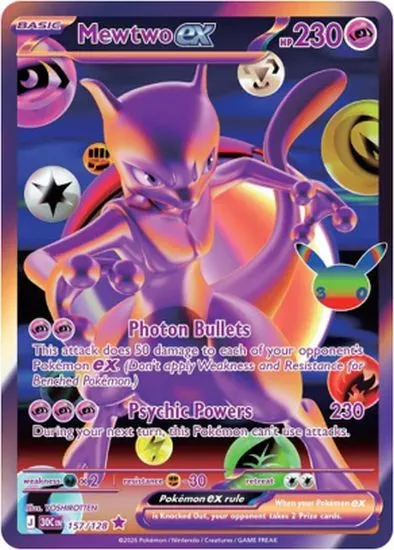
Futuristic Rare, abbreviated FUR, appears on two cards in the main set: Mewtwo ex (157/128) and Mew ex (158/128). Both cards are illustrated by YOSHIROTTEN, who also handled the set’s key visuals and the anniversary Basic Energy cards, giving the release a consistent design style across multiple parts of the product.
The cards feature Pokémon rendered with a metallic texture in holographic colors against a futuristic background. The artwork includes all nine Energy symbols, a visible Poké Ball, and the anniversary logo stamped in holographic colors. According to The Pokémon Company, the artwork is intended to evoke hope toward an unknown future.
The rarity symbol is a star tinted to match each card’s dominant hue, giving the new tier a distinct visual identity within the set.
Where Futuristic Rare Fits in the Set
The two Futuristic Rare cards appear at the end of the set list, following the Special Illustration Rare Pikachu ex cards numbered 149/128 and 150/128. That placement makes them the final main-set chase cards in 30th Celebration, but it does not by itself establish a formal rarity hierarchy.
No official tier ranking has been published for Futuristic Rare. Reference databases cataloging the set place it between Ultra Rare and Special Illustration Rare, but collectors should note that this is a cataloging convention rather than an announced ranking from The Pokémon Company.
How Pokémon TCG New Rarities Have Performed Before
Pokémon TCG history offers a useful guide when a new rarity appears. Some rarities become permanent parts of the game, while others are tied to a specific product cycle or gimmick and then disappear.
Related coverage includes Pokémon TCG’s Futuristic Rare Is a Big 30th Celebration Chase, but Its Staying Power Is Unclear.
Amazing Rare debuted in Vivid Voltage in November 2020 and returned in Shining Fates in February 2021. Across those two sets, there were nine cards with the Amazing Rare designation. Radiant Pokémon arrived later, debuting in Astral Radiance in May 2022 and continuing across the back half of the Sword & Shield era before not carrying into the Scarlet & Violet base set.
By contrast, Illustration Rare and Special Illustration Rare launched with the Scarlet & Violet base set on March 31, 2023, and have remained fixtures ever since. Those rarities now help define the chase structure for the game as a whole.
The difference comes down to context. Illustration Rare and Special Illustration Rare were introduced as part of a new era and built into the game’s long-term framework. Amazing Rare and Radiant were tied to specific concepts that eventually rotated out. Futuristic Rare arrives in a one-off anniversary set built around a single guest artist, which makes it look more like a special event rarity than a permanent addition.
Why Scarcity Alone Does Not Set the Price
Collectors and speculators often assume that a rarity disappearing after one set automatically creates strong value. Scarcity does matter, but it is not enough on its own. A short-lived rarity can be uncommon without becoming especially desirable.
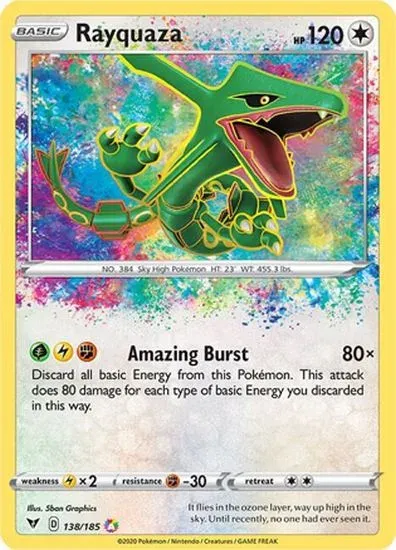
Rayquaza (138/185) from Vivid Voltage is a useful example. It is one of the best-known cards from a rarity that ran for only a short period and never returned. Even so, ungraded copies sit around $26 on the secondary market. That shows how a rarity can remain scarce for years without necessarily producing a major price spike.
The real driver is demand. A card needs both limited availability and a character that collectors actively want. In the case of Futuristic Rare, Mewtwo and Mew are both among the most commercially reliable names in the Pokémon franchise. The artwork is also unlike anything else in the hobby, and the cards sit inside a 30th anniversary set. Those are the factors that can support interest, not the rarity symbol by itself.
Why Mewtwo ex and Mew ex Matter to Collectors
When a new rarity lands on two of the franchise’s most recognizable Pokémon, the cards immediately have more built-in appeal than a novelty rarity attached to lesser-known characters. Mewtwo and Mew have long histories as collector favorites, and their presence as the only two Futuristic Rare cards in the set gives them a clear identity.
That identity is strengthened by the anniversary context. 30th Celebration is already positioned as a milestone release, and the Futuristic Rare cards add another layer to that presentation. The combination of a new rarity, a distinctive art style, and two major Pokémon names gives the cards a profile that collectors will likely watch closely once the set is in hand.
Still, the long-term story will depend on how the market responds after release. A rarity can generate early attention because it is new, but sustained value usually comes from collector demand, not from the label alone.
What Collectors Should Watch After Release
Because Futuristic Rare is tied to a single anniversary set, its future beyond 30th Celebration is uncertain. That uncertainty is part of what makes it interesting. If the rarity does not return, the two debut cards will remain the only examples of the tier, which could help define their place in the hobby. If the rarity does return in a future product, its meaning may shift quickly.
For now, collectors have a clear starting point. Futuristic Rare belongs to Mewtwo ex and Mew ex, both cards are illustrated by YOSHIROTTEN, and the design language ties directly into the anniversary theme of the set. The cards are positioned at the end of the main checklist and stand apart from the rest of the release through both their visual treatment and their rarity designation.
That combination makes them one of the most notable parts of Pokémon TCG: 30th Celebration, even if the market ultimately decides that the artwork matters more than the rarity name. In a set built around nostalgia, reprints, and anniversary presentation, Futuristic Rare is the clearest sign that the product is also looking ahead.
30th Celebration Checklist Context
The source details make clear that the set’s main chase structure includes the 30 Pikachu illustrations, the Classic Collection reprints, the Special Illustration Rare Pikachu ex cards, and the two Futuristic Rare cards. Together, those pieces frame 30th Celebration as more than a nostalgia release. It is also a product that experiments with presentation and rarity structure in a way collectors have not seen before in the Pokémon TCG.
That is why Futuristic Rare deserves attention beyond the initial excitement. Even if the rarity ends up being short-lived, its debut on Mewtwo ex and Mew ex gives it a place in the set’s identity and in the broader conversation about how Pokémon TCG handles special release formats.



Join the Sports Card Portal Page thread for this story.
Comments
0You must be signed in to comment.
Sign In