

Record Sales, Softer Show Floors
The Nashville Card Show, known to many collectors as The Nash-ional, remains one of the biggest events on the hobby calendar. With 1,400 tables spread across three buildings, the show draws hundreds of dealers and thousands of collectors. Even so, one recent experience on the floor captured a growing theme in the sports card market: strong sales data on one hand, but slower show activity on the other.
From October 30 to November 1, a Topps Dynasty Chipper Jones autograph sat in a showcase and drew only one expression of interest. The card, with its grey, red, and blue stripes, silver filigree, bold blue autograph, and black label with the Dynasty script, never found a buyer during the show. That was notable not only because of the card itself, but because other Atlanta Braves autographs in the case also failed to move.
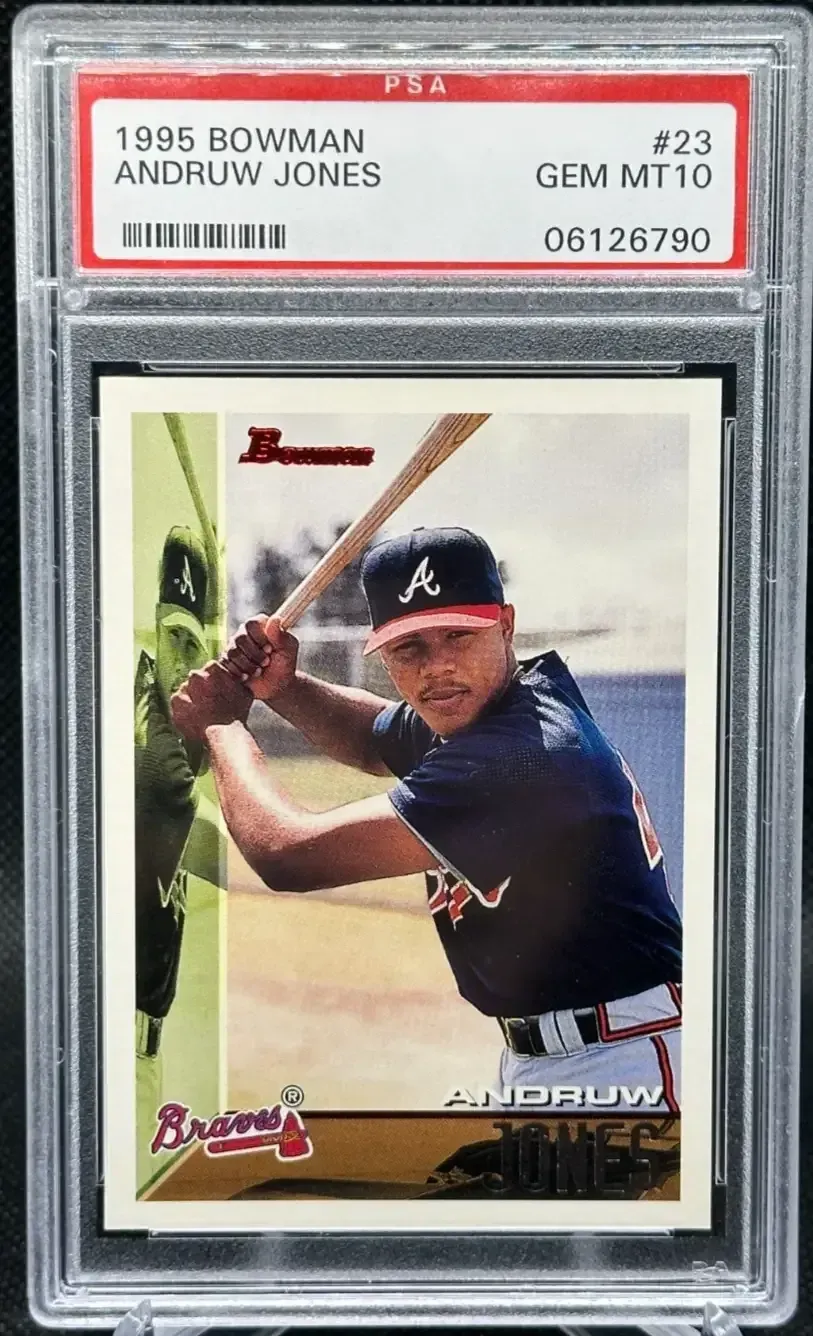
Tom Glavine, John Smoltz, and Andruw Jones never even came out of the case for consideration. For a dealer who has long seen Braves autographs sell well at the Nashville show, the result stood out as an unusual and memorable example of what many sellers are experiencing right now.
When Expected Sellers Do Not Move
At the end of the show, sales goals were still met, but the cards that did not sell became the story. The reaction was not isolated. As the show wrapped up, several other dealers described similar experiences, with some saying the items they expected to sell never got traction and others reporting a generally weak weekend.
For more collecting context, read October Card Sales Top $1 Billion, Led by TCG and Sports.
That kind of disappointment can quickly turn into bigger questions on the floor. Dealers asked whether the hobby is finally slowing down, whether the market is crashing, or whether the recent pace of buying has simply changed. Those concerns are understandable, especially when a show does not produce the results a seller expected.
Still, the broader picture is more complicated than a single slow weekend. The hobby is not always moving in one direction at once, and what dealers see in person does not always match the full picture of total spending across the market.
Two Different Realities In The Hobby
Card Ladder sales data shows that in October of 2026 alone, more than $1,000,000,000 was spent on trading cards in reportable online sales. That figure does not include everything happening in the hobby, either. It leaves out in-person show transactions, card shop sales, live selling, and purchases at big-box retailers.
Related coverage includes Sports Card Spending Tops $1 Billion Online as Show Buyers Turn Selective.
At the same time, dealers are still reporting a slowdown in both foot traffic and sales volume at shows. That contrast has led to a familiar question: how can the market be so active overall while many sellers feel the floor is quieter?
The answer, according to the market view reflected on the show floor, is reallocation. Money is still moving through the hobby, but it is moving differently than it was before.
How Spending Has Shifted
This summer and early fall already showed signs of a broader shift. Money that had been concentrated in the ultra-modern segment started moving toward 1990s and 2000s GOAT-era cards. That trend appears to have continued, but with another layer now taking shape. Instead of simply moving between eras, spending is also shifting from higher-dollar cards into lower price bands.
That change is visible in more than one part of the market. Repack products are heavily focused on the $25 to $100 range, and graded cards are drawing even more attention than before. For many buyers, the appetite has not disappeared. It has just moved to a different level of spending.
That kind of adjustment is not unusual in a healthy market. When buying is driven too heavily by fear of missing out, prices can rise quickly and the market can become overheated. Once that pressure eases, a reset often follows. The result is not necessarily a collapse. It is often a shift in where collectors are choosing to spend.
Why Dealers Are Feeling The Change
For dealers, the shift shows up in practical ways. Foot traffic is down slightly, especially at smaller shows. Buyers are more hesitant, particularly on higher-priced cards. A collector who once might have bought a $10,000 card may now be more comfortable at $5,000. Another who used to spend $100 may now be shopping in the $50 range.
That does not mean the market has disappeared. It means the market has moved. Dealers who are carrying cases filled with $1,000 cards may feel the slowdown more sharply if their customer base has drifted toward lower price points. In that situation, the issue is not necessarily a crash. It is a mismatch between inventory and current buyer behavior.
That distinction matters. A market can feel slower at the table while still generating enormous total sales across the hobby. The pressure point is often not whether collectors are still buying, but what they are buying and how much they are willing to spend at one time.
A Healthier Market Can Still Feel Slower
Market corrections are rarely exciting for sellers in the moment, but they can be part of a healthier long-term cycle. As the hobby grows and more money enters the space, short-term volatility becomes more likely. That volatility can affect dealers who depend on one type of buyer or on fast-moving inventory with thin margins.
In that sense, a slower show floor does not automatically signal trouble. It may instead reflect a market that is settling after a hot stretch. The pace of buying can cool even while the hobby remains strong overall. For dealers, that means adjusting expectations, inventory mix, and pricing strategy to match where collectors are currently spending.
The recent experience at the Nashville Card Show fits that pattern. The show was still large, still busy, and still capable of producing solid business. But the cards that once might have been easy movement were not guaranteed to sell, and the buyers who did show up were more selective than before.
What The Chipper Jones Card Says About The Moment
The Topps Dynasty Chipper Jones autograph became a symbol of the weekend because it was the kind of card that would normally attract attention. Instead, it sat through the entire show and stayed in the case. The same was true for the other Braves autographs that were expected to draw interest.
That outcome does not erase the card’s appeal. It simply shows that even strong cards can be affected by a changing market. A collector at the right show, at the right time, may still fall in love with it. Until then, it remains a reminder that the hobby’s current momentum is not always visible in the same way from one table to the next.
For dealers, that is the challenge and the opportunity. The money is still in the market, but it is moving with more caution and more selectivity. The cards that sell, the price points that work, and the kinds of buyers who are active may all look different from a few months ago.
Gary LeMaster, one-half of The BallCard Show and a co-host of Pardon the Nonsense, uses The Dealer's Corner to share what he is seeing from the show floor. In this case, the message is clear: the hobby is still spending, but the spending is shifting, and dealers are feeling that change in real time.
As the show circuit continues, that shift will likely remain one of the most important stories to watch, especially for sellers trying to understand where collectors are willing to spend next.
Join the Sports Card Portal Page thread for this story.
Comments
0You must be signed in to comment.
Sign In