

Pokémon TCG 30th Celebration Arrives Worldwide September 16
Pokémon TCG: 30th Celebration is set for a worldwide release on September 16, marking the first simultaneous global launch in the game’s history. The anniversary set is built around a mix of nostalgia and new presentation, with a Classic Collection that spans 30 reprints from Base Set through the modern era.
The set’s structure gives collectors several different talking points at once. There are vintage-era callbacks, anniversary branding, and a few details that immediately stand out to anyone following the secondary market. Two cards have been formally announced so far, including the one that will draw the most attention from long-time collectors: 1999 Base Set Charizard.
Japan’s official 30th Celebration website also showed 28 additional cards in an animation back in June, and that list has served as the working lineup since then. Those cards have not been individually confirmed, so the full checklist should still be treated carefully until more official information is released.
Every card in the set carries a Holofoil treatment and the anniversary logo, including Basic Energy. Each pack also includes one of 30 uniquely numbered Pikachu cards. A new Futuristic Rare also debuts on Mewtwo ex and Mew ex, adding a separate chase element beyond the reprints.
Why Vintage Charizard Still Matters
Whenever a major reprint set is announced, the same question comes up quickly: does the new version hurt the original? In this case, the early market reaction suggests the answer is not as simple as a blanket yes. The source data points to recent sales activity that has remained relatively steady, even after the reprint news.
That matters most for Base Set Charizard, which remains one of the most recognizable cards in the hobby. The card is not expensive only because of nostalgia. It is expensive because it is old, scarce in higher grades, and still one of the most desired pieces of Pokémon cardboard ever printed. A modern anniversary release does not change those core factors.
The 25th anniversary set in 2021 offers a useful comparison. It reprinted Base Set Charizard in the Celebrations Classic Collection, and enough time has now passed to see how that card and the original have behaved in the market. The result is a clear split between the two versions rather than a collapse in value for the vintage card.
Base Set Charizard 4/102 Market Snapshot
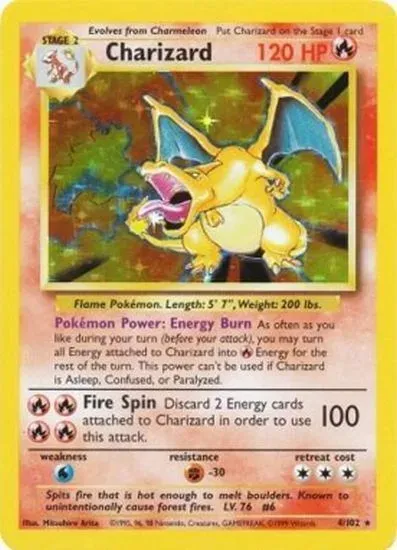
The original Charizard from Base Set, card 4/102, remains the headline card in the Classic Collection discussion. Illustrated by Mitsuhiro Arita, the 120 HP Stage 2 Charizard is still one of the most iconic cards in the hobby.
According to the source, raw copies have covered a wide range this year. Beat-up examples sold in the $230 to $300 range through the first half of the year, while Near Mint singles have sold for $650 to $900. Graded copies are easier to track, with graded 7 copies around $765, graded 8 copies around $1,330, and graded 10 copies reaching $28,144.
Since the 30th Celebration reveal, those numbers have not moved much. Raw and mid-grade copies have softened slightly, but the high end has stayed flat. The overall picture looks more like normal seasonal drift than a meaningful reprint-driven drop.
That stability is important because it suggests the original card is being valued on its own terms. Collectors who want the 1999 release are still chasing the 1999 release, and the new anniversary version does not appear to be replacing that demand.
The Celebrations Charizard Comparison
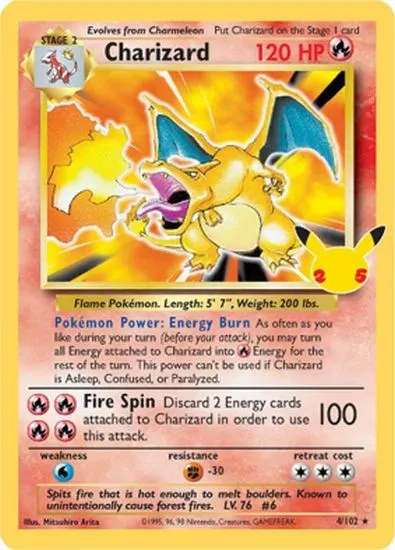
The 25th anniversary Celebrations set reprinted Base Set Charizard under the same collector number, 4/102, with an anniversary logo. That card now sells for about $175 raw. Graded 9 copies command over $200, and graded 10 copies sit closer to $300.
Those are strong numbers for a modern reprint, and they show that anniversary Charizard cards can hold real collector value on their own. Even so, the Celebrations version never came close to displacing the original Base Set card. The vintage copy still trades for several times as much in comparable condition.
Part of the reason is presentation. The Celebrations Classic Collection cards were designed as close replicas, but they are still visibly different from the original 1999 print. The Confetti Holofoil pattern and etching make the anniversary version easy to identify at a glance. That distinction helped the market separate the two cards quickly.
Collectors who wanted the original were not likely to settle for the reprint, and the two cards have continued to run on separate tracks. That history is one reason the current Charizard conversation is drawing so much attention. The market has already shown that a reprint can be valuable without erasing the appeal of the vintage card.
Pikachu & Zekrom-GX Adds a Different Kind of Test
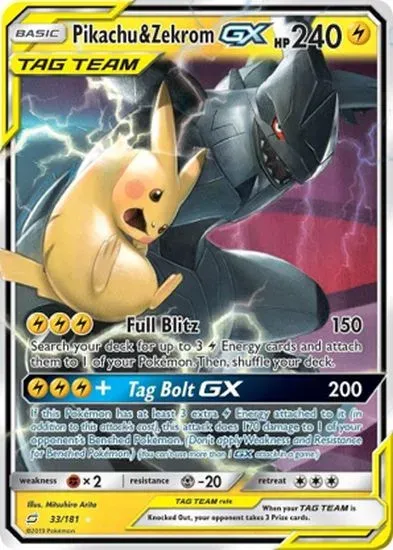
Another card in the discussion is Pikachu & Zekrom-GX 33/181 from Team Up. The card features another Mitsuhiro Arita illustration and currently changes hands in the mid- to upper-$30s ungraded.
This card is useful because it highlights a different kind of collector demand. Base Set Charizard is driven by age, scarcity, and condition sensitivity. Pikachu & Zekrom-GX is driven more by artwork, character pairing, and broad appeal. That makes it a better example of how a fresh anniversary printing can split demand between versions.
In this case, the English 30th Celebration version is described as a straight reprint of the Team Up regular print, with the anniversary logo doing most of the work to distinguish it from the original. That is a different approach from the visibly altered Celebrations Charizard replica.
The source notes that only the Asian releases carry a new set symbol and numbering. English buyers are getting the same card twice, which creates a more direct comparison between the original and the anniversary version.
That distinction matters because it frames the remaining reveals in the set. Some cards may behave more like the Celebrations Charizard, where the original and reprint are easy to separate and can coexist. Others may feel closer to a direct duplicate, where collector demand is more likely to be divided between versions.
What the 30th Celebration Checklist Suggests
Even with only part of the checklist formally confirmed, 30th Celebration already looks like a set designed to reach across multiple eras of the Pokémon TCG. The Classic Collection spans 30 reprints, and the source indicates that those cards run from Base Set to the modern day.
That broad range creates several different market questions at once. Vintage cards such as Base Set Charizard are protected by scarcity and condition. More modern cards, especially popular Ultra Rares and character-driven cards, can be influenced more directly by artwork demand and collector preference.
The set’s Holofoil treatment and anniversary logo apply across the board, including Basic Energy. That means the anniversary branding is not limited to the chase cards. It is part of the identity of the entire release.
The 30 uniquely numbered Pikachu cards also give the product another layer of collectability. Even before the full checklist is confirmed, that detail alone suggests a wide range of pack-opening outcomes and a strong appeal for collectors who like set-building challenges.
How Collectors Are Likely to Read the Market
The biggest takeaway from the current data is that reprints do not affect every card in the same way. Some cards are insulated by scarcity and historical importance. Others are more exposed because their value is tied to demand that can be split between multiple versions.
Base Set Charizard is the clearest example of the first category. Its value is anchored by factors that a new print run cannot recreate. The original card’s age, condition sensitivity, and place in hobby history remain intact no matter how many anniversary cards are released.
Pikachu & Zekrom-GX is a better example of the second category. A modern card with strong artwork appeal can be affected more directly when a new version enters the market, especially if the anniversary release is presented as a near-identical reprint.
That is why collectors are watching the remaining 28 reveals so closely. The key question is not just which cards are included, but how each one is presented. A close replica, a straight reprint, or a card with a new treatment can each lead to a different market reaction.
What to Watch Next
With release day set for September 16, the final details around 30th Celebration will matter just as much as the early headline cards. Collectors will be looking for confirmation on the remaining Classic Collection entries, the exact treatment of the Pikachu cards, and how the Futuristic Rare cards fit into the broader product.
For now, the market is giving a useful reminder that not all reprints function the same way. The original Base Set Charizard remains expensive, the Celebrations version has established its own place, and the new anniversary set is likely to create another layer of comparison rather than a simple replacement.
That makes 30th Celebration one of the more interesting Pokémon releases in years, not just for pack openers but for anyone tracking how nostalgia, scarcity, and collector demand interact when one of the hobby’s most famous cards returns to the spotlight.

Join the Sports Card Portal Page thread for this story.
Comments
0You must be signed in to comment.
Sign In