

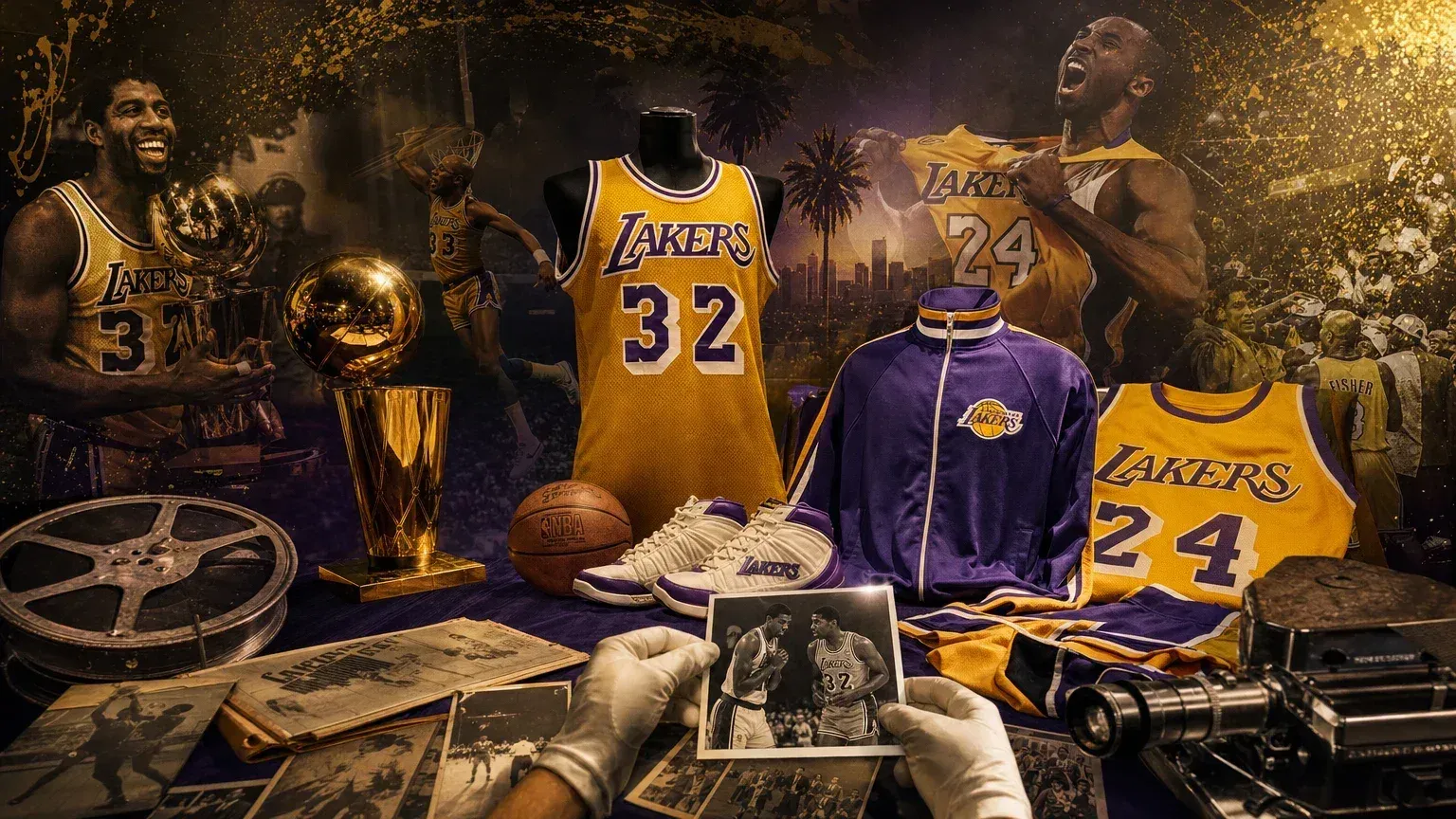
Live Lakers Memorabilia Sales Put the Focus on Process, Not Hype
A recent Goldin Access announcement tied to a live Lakers sale from Los Angeles offers a useful lesson for collectors: the value in a live memorabilia event is not the excitement itself, but the information attached to the item, the documentation that supports it, and the discipline a buyer brings before clicking or bidding.
The originating Goldin community post promoted a live eBay event featuring Ken Goldin, Magic Johnson, Kurt Rambis, and Derek Fisher. The event page also described game-used gear and memorabilia, including 2026 Media Day jerseys and a historic game-used ball. Those details are best understood as event context and promotional framing, not independently verified collecting claims. For buyers, the bigger takeaway is how to evaluate opportunities like this without confusing access with authenticity or urgency with value.
Collectors who focus on modern game-used material, team-issued pieces, and event-driven sales tend to face the same questions every time. Is the item truly game-used or just team-issued? Does the lot include enough documentation to support the claim? Is the format built for impulse buying, or does it give you enough time to compare examples and set a limit? Those questions matter whether the subject is the Lakers or any other team.
Why Live Sales Can Be Useful for Memorabilia Buyers
Live sales and show-based drops can be helpful because they combine presentation, storytelling, and item handling in one place. For collectors, that creates a rare chance to see how a seller describes provenance, condition, and lot structure before money changes hands. The Goldin Access listing is a good example of that format because it frames the sale around Lakers history and presents the items as part of a live shopping experience rather than a static catalog page.
That format can matter for memorabilia buyers because many of the most important questions are visual and procedural. How is the piece described on camera? Are identifiers shown clearly? Does the listing copy match what is said during the stream? If a seller can explain the item consistently and the lot still makes sense after the show ends, buyers have a stronger base for due diligence.
The key point is that live events are not valuable simply because they are live. They are valuable when the live presentation improves your ability to evaluate the item. If the format makes you rush, distracts you from reading the terms, or encourages you to skip documentation, then the entertainment value may exceed the collecting value.
- Live format can improve inspection only if details are shown clearly.
- Promotional framing should not replace item-level verification.
- A strong live event still needs readable terms, solid descriptions, and room for comparison.
Game-Used vs. Team-Issued: Why the Difference Matters
One of the most important distinctions in memorabilia collecting is between game-used and team-issued items. Game-used implies actual competitive or event use, while team-issued usually means produced for team purposes but not necessarily worn or used in play. Both can be collectible, but they are not interchangeable and should not be priced or judged as though they are the same thing.
The Goldin Access event page references game-used gear and memorabilia alongside Media Day jerseys. That is a useful reminder that not every jersey connected to a team setting carries the same collecting meaning. A jersey made for a photo session, promotional appearance, or media event can still be appealing, but it tells a different story than an item tied to in-game use. Collectors should read descriptions carefully and ask what exact event or setting the piece comes from.
Related coverage includes How Collectors Should Approach Live Lakers Memorabilia Sales Before Bidding.
For practical buying, the question is not only whether the item is authentic, but what kind of authenticity is being claimed. A team-issued jersey may offer a cleaner display piece or a direct connection to a player appearance, while a game-used item may appeal because it preserves signs of wear and participation. Neither is automatically better. The better purchase is the one that matches the purpose of your collection.
If you collect by player, era, or team, it helps to create separate buckets for game-used, team-issued, and event-used pieces. That discipline makes it easier to compare like with like and prevents a polished description from blurring the lines. It also helps later if you revisit a purchase and need to remember why you chose one item over another.
- Game-used, team-issued, and event-used are different collecting categories.
- Media Day items can be meaningful, but they are not the same as in-game material.
- Comparing like with like helps prevent overpaying for the wrong category.
Provenance Questions That Should Come First
Provenance is the chain of information that helps explain where an item came from and why the claim attached to it should be trusted. In memorabilia collecting, that chain may include photo matching, team paperwork, event references, seller documentation, or clear in-hand presentation. The best sale formats do not just show the item; they show enough surrounding context that the buyer can understand the item’s path.
A live event can be a helpful starting point, but it is rarely the final word. If an item is presented as historic or game-used, ask what makes it identifiable as such. Is there a specific event, date, or player context? Is the description precise enough that you could repeat it in your own records? The more specific the claim, the more carefully it should be documented.
The challenge is that promotional language often compresses a lot of uncertainty into a short phrase. “Own a piece of history” is a marketing line, not a research conclusion. Collectors should treat it that way. The real value comes from the evidence that remains after the stream ends: lot descriptions, condition notes, images, and any supporting paperwork shown or provided with the item.
A useful test is to ask whether the item would still make sense if the promotional language disappeared. If the answer is yes because the piece has a clear use case, clear documentation, and a collecting niche of its own, then you are dealing with a stronger candidate. If the answer is no, the lot may be relying too much on atmosphere and not enough on substance.
For more on the line between honest upkeep and misleading improvement, collectors can review Card Care vs. Card Alteration: Where Is the Line? The same general discipline applies to memorabilia: be clear on what is original, what is restored, and what is merely presented attractively.
- Provenance is the story, evidence, and continuity behind the item.
- Marketing copy is not proof; supporting details are what matter.
- Ask whether the item still stands on its own without the promotional framing.
How to Judge Condition on Jerseys, Balls, and Other Memorabilia
Condition in memorabilia collecting is broader than mint or used. A game-used item may be desirable precisely because it shows wear, but that wear should be consistent with the claimed use. Fading, scuffing, repairs, and material fatigue can all be part of the story, yet they should not become excuses for vague description. The goal is to understand the item’s state honestly, not to force it into the grading logic of a card.
For a jersey, look at seams, numbering, tagging, and any wear areas that should reasonably reflect use or handling. For a ball, consider surface marks, panel wear, signature placement if present, and whether the item’s condition matches the event or display purpose claimed. Collectors do not need to be experts in every manufacturing detail to make good decisions, but they do need to notice when condition and story do not align.
Live sales can make condition judgment harder because the pace encourages quick decisions. That is why collectors should treat the listing page and any pre-show photos as the core reference, and the live presentation as a supplement. If the item is important enough to matter long term, it is important enough to inspect slowly. A rushed purchase can leave you with an attractive object that is hard to explain later.
Storage and preservation matter as well. Even if an item arrives exactly as described, the way you handle it afterward affects its long-term appeal. If you are considering display, climate, textile support, or archival storage, the right choice depends on the material type, exposure, and how often you plan to handle it. Thoughtful care preserves both the object and the story attached to it.
- Wear can support the story, but only when it matches the claim.
- Use listing photos and pre-show details as your main condition reference.
- Plan for storage and display before you buy, not after.
What Smart Buyers Do Before a Live Purchase
Live buying rewards preparation. In a setting built around a specific show time, the best collectors already know their ceiling, their target categories, and the type of item they are willing to chase. That preparation turns the stream from an emotional trigger into a decision point. Without it, even a well-presented lot can lead you to spend beyond your plan.
It also helps to understand the house rules before the show begins. Live event formats can differ on reserve behavior, payment timing, shipping, buyer premiums or fees, and what happens if a lot is represented one way on screen and another way in the listing. Those details are not glamorous, but they are part of the buying decision. For practical guidance on event participation, see Break Rules to Read Before Joining: Multi-Player Cards, Retired Teams, and Points. The principle is similar for memorabilia: know the terms before the moment arrives.
A good habit is to set three boundaries in advance. First, decide your maximum spend. Second, define which item types are in scope. Third, decide what level of documentation you require before committing. If a lot fails any of those tests in real time, pass. That kind of discipline is not restrictive; it is what lets you keep buying for the long term.
Live events can also be useful as research windows even when you do not buy. Watching how an organizer describes similar items over time can help you learn terminology, recognize recurring categories, and understand how sellers position different tiers of material. That knowledge has durable value because it sharpens your eye for future opportunities.
- Prepare your ceiling, target categories, and documentation standard before the show.
- Read event terms carefully, since live formats can vary.
- Passing on a weak lot is often the smartest move in a live setting.
Separating a Collectible Moment from a Collectible Object
A live event built around team history often blurs two things: the memory of an occasion and the physical item being sold. Collectors should separate them. The moment may be memorable because of who appeared, where the stream took place, or how the event was framed. The object, however, should be evaluated on its own collecting merits: authenticity, category, condition, scarcity within its niche, and fit with your goals.
That distinction matters because emotional context can inflate interest without improving the item. A collector may feel drawn to a piece because it was offered during a special live show, but once it enters a collection, the show is gone and the item remains. The best purchases are ones you would still want after the live feed ends and the social energy fades.
This is especially important for team-themed memorabilia, where the appeal can come from the broader story of a franchise rather than a single player. A jersey, ball, or warmup piece can be satisfying because it ties to a season, event, or team identity. But that appeal should still be supported by documentation and clear description. Story adds value only when it does not obscure substance.
Collectors who keep this separation in mind often build stronger collections because they are less likely to chase atmosphere. They can appreciate the event, enjoy the presentation, and still ask the hard question: if I removed the live-show setting, would I still want this item? If the answer is yes, the purchase is probably rooted in collecting logic, not just momentary excitement.
- Separate the event memory from the object’s long-term collecting value.
- Ask whether you would still want the piece after the live show ends.
- Franchise story is useful, but it should never replace item-level evidence.
What the Lakers Example Teaches Team Collectors
Although the event is Lakers-themed, the underlying lesson applies to almost any team collection. Strong team collecting is not about owning anything with a logo on it. It is about building a coherent body of material that reflects meaningful categories: game-used, player-used, team-issued, event-used, or visually distinctive pieces with well-understood provenance. A focused collection usually beats a noisy one.
Team-specific sales can also tempt collectors into chasing the biggest names in the room rather than the best fit for their budget and purpose. That is why it helps to define your collecting lane in advance. Some collectors prefer a single player, some prefer a championship era, and others prefer one artifact type, such as balls or jerseys. The right lane narrows the field and improves judgment.
The Lakers setting also highlights an often-overlooked principle: context matters as much as celebrity. A common-format item can become compelling if it is tied to a clear event with credible documentation, while a headline-grabbing item can be weak if the story is vague. Collectors who learn to weigh context against fame become better buyers over time.
If you are building a team collection, keep the inventory question simple. Does this item deepen the story I am already telling, or does it only widen the pile? That question prevents over-accumulation and helps you stay intentional. It also makes later upgrades easier, because you know exactly what role each item plays in the collection.
- A strong team collection is coherent, not merely crowded.
- Define your lane before you shop: player, era, or artifact type.
- Context can matter more than celebrity when documentation is stronger.
The Safest Mindset for Time-Sensitive Sales
The safest mindset is curiosity with restraint. A time-sensitive live sale can be fun, but it should never erase your normal standards. The best buyers understand that an exciting presentation and a useful collecting opportunity can coexist without forcing a purchase. You can enjoy the show, learn from the item descriptions, and still walk away if the fit is wrong.
Another smart habit is to treat promotional claims as provisional until you have the item in hand or the paperwork in front of you. If an event says something is historic, game-used, or rare in a particular way, that language may be accurate, but it still needs context. Good collectors do not assume bad faith; they simply avoid relying on unsupported enthusiasm.
Speed is not the same as value. A live event creates urgency because the moment passes, not because the item becomes inherently better at that instant. Durable collecting decisions are usually the opposite of impulsive ones: they are calm, specific, and repeatable. That is true whether you are buying a memorabilia lot, a team-issued piece, or any other sports object with a story attached.
The Goldin Access Lakers event is a useful reminder that the format can be part of the fun without becoming the reason to buy. When collectors focus on provenance, category, condition, and fit, they are more likely to enjoy the experience and less likely to regret it later.
- Treat live urgency as entertainment, not as proof of value.
- Promotional descriptions should be verified, not assumed.
- The best purchases remain sensible after the stream is over.
Frequently Asked Questions
Is a live memorabilia event automatically better than a standard listing?
No. A live format can help with visibility and presentation, but it is only better if it improves your ability to evaluate the item, compare details, and understand the terms.
What is the biggest mistake collectors make with game-used items?
Confusing categories. Game-used, team-issued, and event-used pieces can all be collectible, but they do not mean the same thing and should not be treated as interchangeable.
Should I trust promotional phrases like “own a piece of history”?
Treat them as marketing language, not as proof. Look for specific details, documentation, and clear descriptions that support the claim.
How should I prepare for a time-sensitive live sale?
Set a budget, define the item types you want, and decide what documentation you require before the event starts. Preparation keeps the live format from pushing you off plan.
Can a common-looking memorabilia item still be a strong buy?
Yes, if the provenance is clear, the category fits your collection, and the item has a documented connection to a meaningful event or use case.
Community inspiration: @GoldinCo on X. Product, listing, and availability details may change, so verify the original source before acting.
Join the Sports Card Portal Page thread for this story.
Comments
0You must be signed in to comment.
Sign In