


Breaks look straightforward until a product throws in a card with more than one player, a retired-player checklist designation, or a point system that sounds official but means something different from room to room. That is where disputes start: not because the product is illegitimate, but because the breaker’s rules were never pinned down clearly enough before money changed hands.
The safest approach is simple. Treat the checklist, the break post, and the room rules as three separate documents that have to agree. Product checklists can show multi-player cards, retired-player editions, and point values. Manufacturer redemption and replacement policies can also affect what eventually reaches the buyer. None of those sources, by themselves, tell you how a specific break room will assign ownership.
If you join breaks often, this is less about memorizing every release and more about learning the questions that prevent surprises. Who gets a multi-player card? Does a retired player belong to the original team, the player’s current affiliation, or a random spot? What happens when the product lists points or when a redemption is substituted with something else? Those questions should be answered before you pay, not after the case is opened.
What problem do multi-player cards create in a break?
A multi-player card is exactly what it sounds like: one card that represents more than one athlete. In a break, that creates the first and most basic ownership problem, because the card can reasonably be argued as belonging to more than one spot. Product checklists show that cards can be cataloged with more than one player and still be treated as a single item in the release structure, which means the breaker still has to define how that item is awarded.
That definition matters most on hits, memorabilia cards, and low-population inserts. If the room does not spell out whether the card is randomized, split by a fixed formula, or awarded to one side by another rule, the result can feel arbitrary even when the breaker is trying to be consistent. A clear rule is not just good customer service; it is the only way to make a multi-player card predictable before the pack is opened.
The practical test is simple: if a card would make two different buyers say, “I should get that,” the room needs a written tiebreaker before the break starts.
- Ask whether multi-player cards are randomized, split, or assigned by a stated hierarchy.
- Ask whether all names on the card count equally, or whether the first-listed player controls ownership.
- Ask what happens if a multi-player card includes one active player and one retired player.
- Ask whether the same rule applies to base cards, inserts, relics, and autographs.
Why do retired-player cards cause so much confusion?
Retired-player cards are tricky because collectors often assume the assignment should follow a player’s current real-world situation, but that is not always how a break room operates. Product checklists can label some cards or editions as retired-player items, which is a reminder that the product itself may already be organized around a special designation rather than a current-team framework. The checklist is the first place to see whether you are dealing with a normal current-player card or something more specialized.
The key distinction is between a card that shows a retired player and a card tied to a retired team or a defunct team identity. Those are not always treated the same way in a break. A breaker might assign by the player’s original team, by a separate retired-player spot, or by a house rule that applies to all legends and retired subjects. None of that is universal. The manufacturer can show the product category, but the breaker has to define the assignment logic.
If the post does not say how retired subjects are handled, do not assume the answer. In practice, that is where the most frustrating post-break arguments begin.
- Check whether the breaker uses original team, current affiliation, or a dedicated retired-player spot.
- Confirm whether retired-team cards are treated the same as retired-player cards.
- Ask whether legends and veterans follow the same rule as fully retired subjects.
- Make sure the break post matches the checklist description of the product.
- source_ids
How should you read points in a break listing?
A points column can look authoritative because it appears on a product checklist, but checklist points are not automatically the same thing as break-room points. The manufacturer may be describing internal product structure, insert value, or release balance, while the breaker may be using points to price spots or weight teams. Those are related ideas, but they are not the same rulebook.
That is why a points-based break should always explain the conversion. One point may equal a dollar amount, a draft position, a team weight, or something more informal that only makes sense inside that room. If the listing says “points break” without stating how points are calculated and how they affect ownership, you are being asked to buy into an undefined system.
A smart buyer treats the word “points” as a prompt, not an answer. The question is not whether points exist; the question is what those points actually do in that specific break.
- Ask whether the point system is based on the manufacturer checklist or the breaker’s own chart.
- Ask what one point means in practice: price, rank, lottery weight, or spot selection.
- Ask whether high-point teams get premium pricing or simply a different allocation method.
- Ask how multi-player cards are scored if the break uses points for team weight.
- source_ids
What should a breaker say about redemptions before you join?
Redemptions are one of the clearest examples of why the product page and the break room need to stay in sync. A redemption exists because the finished card was not inserted at pack-out, so the buyer is holding a claim rather than the finished card itself. That means a redemption is not the same kind of item as a live card, and it should be identified that way in the break description.
Replacement policy matters just as much. Manufacturer rules show that a redemption may be replaced with another card if the original is unavailable, and that replacement is not always like-for-like. In plain language, the card that eventually arrives may not be the same player, same set, or even the same immediate visual type you expected from the break. That is especially important in rooms that use redemptions as live-hit equivalents.
Before joining, ask whether redemptions are counted as hits, placeholders, or deferred outcomes. If the room does not explain that in writing, you are taking on more uncertainty than the listing admits.
- Ask whether a redemption is treated as a live hit or a pending claim.
- Ask whether replacement cards can differ by player, set, or card type.
- Ask whether credit is offered if a redemption is not fulfilled as hoped.
- Ask whether the breaker handles redemptions by the manufacturer’s policy or by a room-specific rule.
Why does an ‘Authentic’ holder need special attention in breaks?
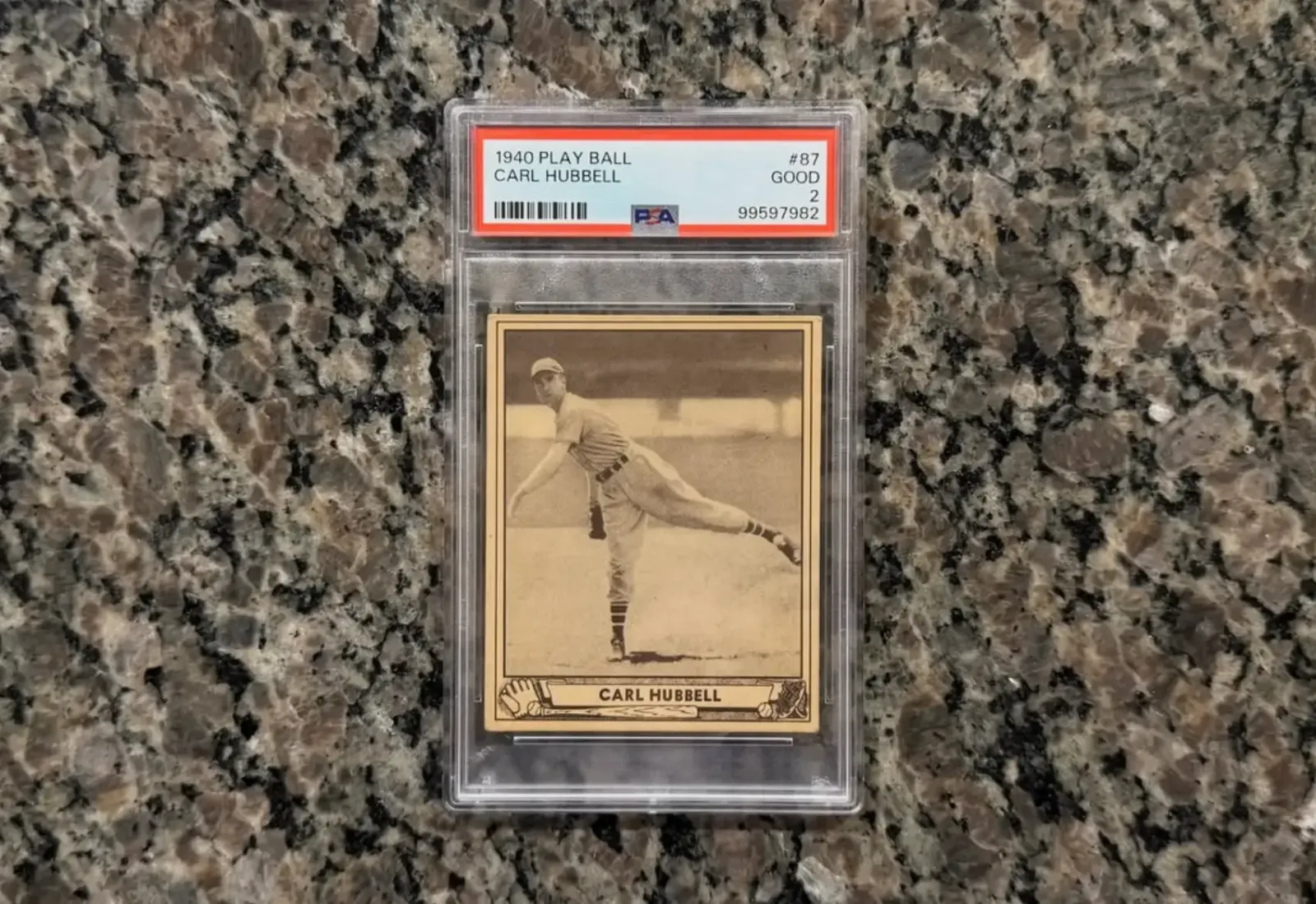
An authenticity-only holder is easy to misunderstand because many buyers see a slab and assume it always carries a normal numeric grade. It does not. Grading services distinguish between cards that receive a numeric condition grade and cards that are authenticated but not numerically scored. That difference is critical in a break, where a bonus card, consolation card, or hit description can quietly overstate value if the wording is sloppy.
Authentication-only holders can be perfectly legitimate. The problem is not authenticity; the problem is comparison. A card labeled authentic only is not the same as a card graded 8, 9, or 10, and those designations should not be treated as interchangeable. If a breaker describes a card as “graded” without saying whether it is numeric or authentic-only, ask for a precise answer before accepting the listing.
This is one of the easiest ways for a buyer to avoid disappointment: do not judge the slab by the word “encapsulated” alone. Judge it by the actual designation.
- Confirm whether a slab is numeric grade or authentic-only.
- Ask which grading company certified the card.
- Ask whether the breaker’s description matches the holder wording exactly.
- Do not let an authentic-only card be presented as a comparable numeric grade.
- source_ids
How do you verify a slab without assuming the label tells the whole story?
Verification tools are useful because they let you confirm the certification number, the card description, and in some cases the holder image. That matters in breaks, where a slab might be shown quickly on camera and then listed later from memory. The database record gives you a second check, especially if the card is being used as a hit, bonus, or trade bait.
Still, verification is not the same thing as blind trust in a database record. The safest habit is to compare the cert record with the physical slab shown in the break. That means checking the number, the grade or authenticity designation, and the visible label details, rather than assuming any photographed or screen-shared image is enough on its own. Verification tools reduce risk, but they do not replace attention.
The rule of thumb is straightforward: if the break includes graded cards, you should know how to confirm the holder, not just admire it.
- Match the certification number to the grading company’s lookup tool.
- Check that the designation is the same on the slab and in the database.
- Look for any mismatch in player, set, or grade wording before the break closes.
- Treat verification as a check, not a substitute for clear listing language.
What questions should you ask in a team-based break?
Team-based breaks look easiest because the spot names are familiar, but that is exactly why assumptions creep in. A product can contain multi-player cards, retired subjects, and redemptions all inside a team format, and each of those can challenge a simple “this card belongs to that team” mindset. The breaker’s written rule set should explain how each special case gets handled.
The most useful questions are direct. If a card shows players from different teams, who gets it? If the subject is retired, is the card tied to the original team, the player’s current affiliation, or a separate retired spot? If a redemption appears, is it a hit now or later? These are not edge cases in modern breaking; they are normal situations that deserve normal answers.
If the room cannot answer those questions before payment, the break is not simple enough to be safe for you.
- Ask how multi-player cards are assigned when the players belong to different teams.
- Ask how retired-player or retired-team cards are assigned in a team format.
- Ask whether redemption cards count as immediate hits.
- Ask whether the room has a written tie-break rule for ambiguous cards.
- source_ids
What changes in a points-based break compared with a team break?
A points-based break is supposed to reduce subjectivity, but it only works if the point system is clearly defined. Some rooms use points to weight better teams more heavily. Others use points to establish pricing tiers. Still others use them only as a descriptive layer with no direct effect on allocation. Without a definition, the same word can mean three different things.
That is why a buyer should ask where the points come from and what they control. Are the points copied from the checklist? Are they created by the breaker? Do they determine spot price, draft order, or bonus selection? If a multi-player card appears, does it get the sum of both players, the highest player, or one fixed number? Those details can change the value of the entry as much as the card itself.
A points-based listing is not safer just because it sounds mathematical. It is safer only when the math is explained in advance.
- Ask whether points affect price, order, or ownership.
- Ask whether checklist points and breaker points are the same thing.
- Ask how split-player cards are scored in the room’s system.
- Ask whether the point chart is fixed for the whole break or negotiated case by case.
- source_ids
What is the cleanest way to protect yourself before paying?
The cleanest protection is to require the breaker to state the assignment logic in plain language. You do not need a long policy document for every room, but you do need enough detail to answer the handful of questions that usually cause disputes. The rule should say how multi-player cards are handled, how retired subjects are assigned, how points function, how redemptions are counted, and how graded cards are described.
If any of those items are vague, ask once and ask specifically. Good breakers can usually answer in one message because they already know how the room runs. What you want to avoid is paying first and learning later that the room’s convention was different from your expectation. In a hobby where product structures can be complex, clarity is the real premium.
That is also why written rules matter more than verbal promises. A clear post protects the buyer, the breaker, and everyone else trying to compare one room against another.
- Look for a written rule set, not just a live-stream verbal explanation.
- Ask for clarification before payment if any special card type is mentioned.
- Save the listing if the breaker’s rules are unusual or especially detailed.
- Walk away if the room refuses to define ownership, scoring, or replacement logic.
- source_ids
Frequently Asked Questions
Are retired-player cards always assigned to the player’s old team?
Not always. That may be one room’s policy, but it is not a universal rule. The breaker should state the assignment method in writing.
Do checklist points automatically determine break pricing?
No. Checklist points may describe the product, but the breaker has to explain how, or whether, they affect pricing and ownership.
Is an authentic-only slab the same as a low grade?
No. Authentic-only means the card is genuine but not assigned a numeric condition grade.
Should redemption cards count as live hits?
Only if the breaker says so. A redemption is a claim to a card later, and the room should explain how it is treated in the break.
What is the safest rule before joining any break?
Make sure the breaker’s written rules explain multi-player cards, retired-player cards, points, redemptions, and graded-card designations before you pay.
Written with AI assistance. Featured image: AI-generated editorial illustration.

Comments
0You must be signed in to comment.
Sign In