

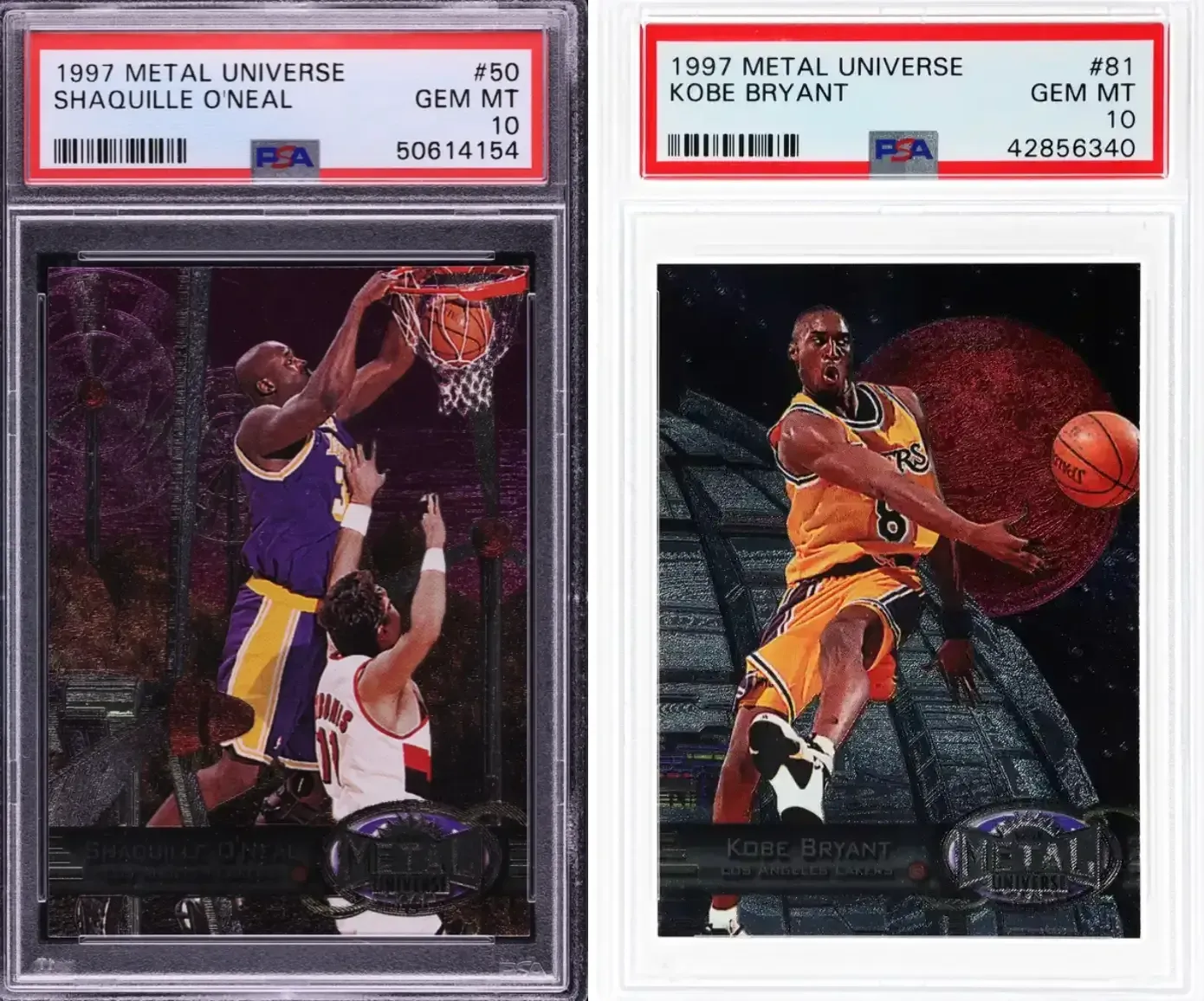
A baseball card that sells for $200 is worth $200 in that transaction. Calling it undervalued does not mean the market got the price wrong or that the next sale should be higher. It means the card looks relatively affordable next to comparable cards, particularly when the player behind it has a career that stands up to those of the stars commanding bigger prices.
That distinction matters because career accomplishments and card prices measure different things. Demand for a player, the appeal of a particular issue and the availability of a card in a given grade can all influence what collectors pay. Comparing cards from the same set and, where possible, the same PSA grade helps put those differences in perspective. It does not make the cards identical in scarcity or predict where either price will go next.
Sales tracked by Card Ladder illustrate the gap for five baseball legends across different collecting eras. The examples range from a $229 Eddie Collins Goudey to a $3,825 Greg Maddux Finest Refractor. Both sold below their same-set counterparts, though the size of the discount and what it can tell collectors vary from card to card.
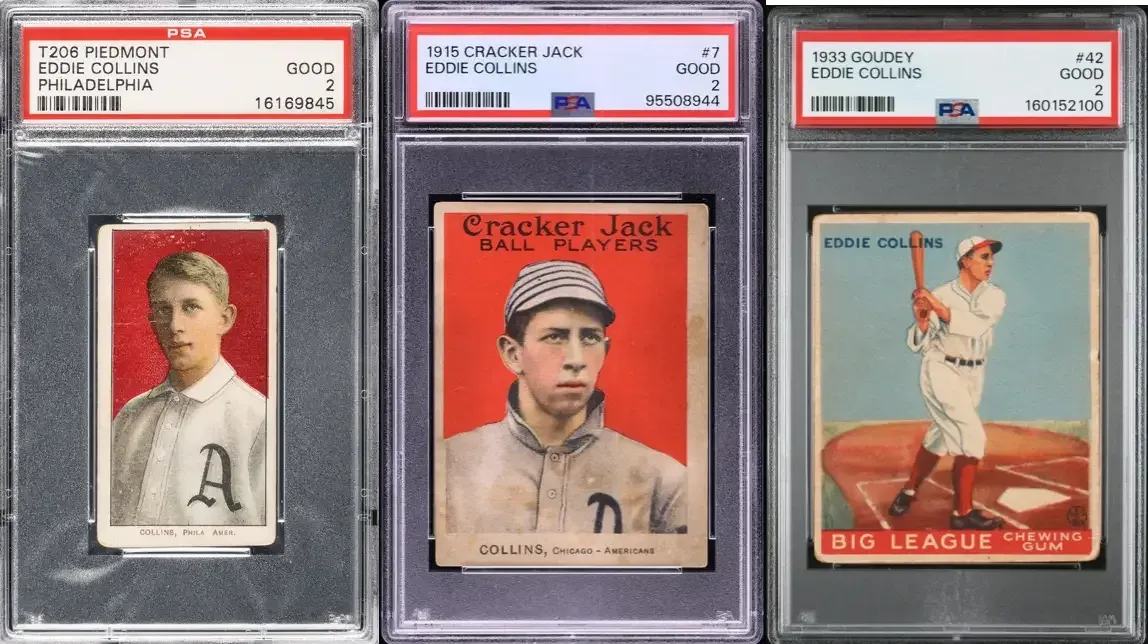
Eddie Collins: Prewar Baseball Cards at a Fraction of the Biggest Names
Eddie Collins finished a 25-year career with 3,315 hits, a .333 batting average, 741 stolen bases and six World Series championships. His 123.7 career wins above replacement, or WAR, puts him ahead of Ted Williams, Lou Gehrig and Mickey Mantle by that measure. Yet in three prewar sets, his cards sold for less than those of players he also surpassed in career WAR.
- 1909-1911 T206: Eddie Collins in PSA 2 sold for $661, compared with $1,020 for the Nap Lajoie portrait in PSA 2.
- 1915 Cracker Jack: Eddie Collins #7 in PSA 2 sold for $1,850, compared with $92,000 for Shoeless Joe Jackson #103 in PSA 2.
- 1933 Goudey: Eddie Collins #42 in PSA 2 sold for $229, compared with $1,103 for Jimmie Foxx #29 in PSA 2.
The T206 sales offer the closest comparison in price, with a $359 difference. The Cracker Jack results are at the other extreme: The Jackson sold for nearly 50 times as much as the Collins. That is not evidence that a Collins should trade anywhere near a Jackson. It shows how much more a collector paid for one specific card even when the set and assigned grade were held constant.
The Goudey comparison makes the case for Collins without relying on the exceptional Jackson price. The $229 result was about one-fifth of the Foxx sale. It was also the lowest price among the three Collins examples, giving collectors a much less expensive way to add the player than either the T206 or the Cracker Jack sale suggests.
Stan Musial: Vintage Topps Value and a Smaller Rookie Card Gap
Stan Musial collected 3,630 hits, seven batting titles and three MVP awards while batting .331 for his career. His 128.5 career WAR ranks 11th all-time, and ESPN, MLB.com and Bill James' Historical Baseball Abstract have each placed him among baseball's ten greatest players. His career hit total also included an unusual split: exactly 1,815 at home and 1,815 on the road.
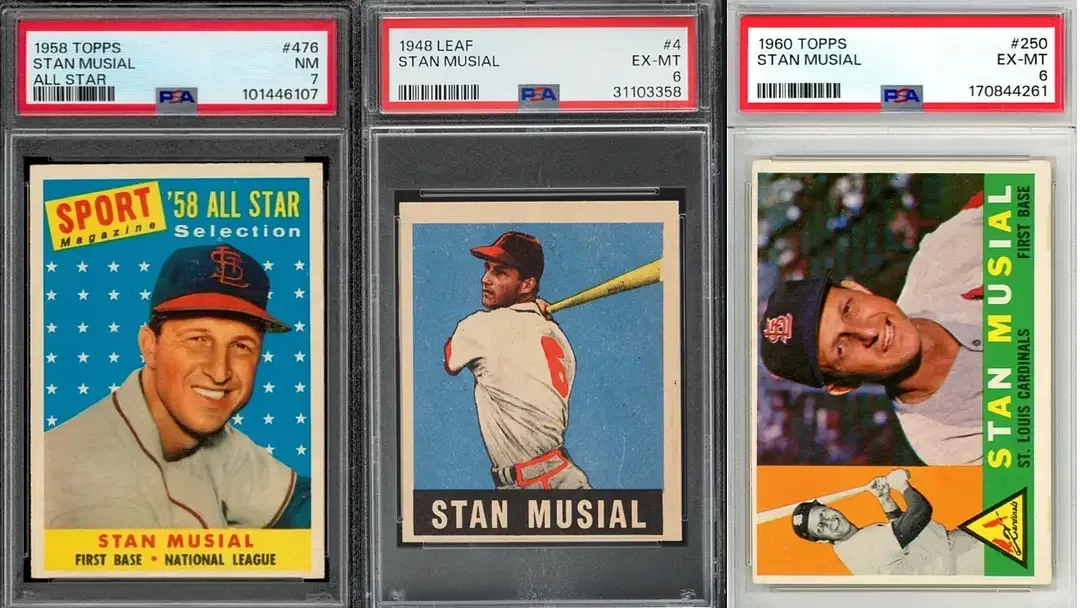
- 1958 Topps: Stan Musial All-Star #476 in PSA 7 sold for $188, compared with $1,100 for Mickey Mantle All-Star #487 in PSA 7.
- 1960 Topps: Stan Musial #250 in PSA 6 sold for $210, compared with $652 for Hank Aaron #300 in PSA 6.
- 1948 Leaf: Stan Musial rookie card #4 in PSA 6 sold for $6,000, compared with $9,040 for Joe DiMaggio #1 in PSA 6.
Musial spent his entire career in St. Louis, while Mantle and DiMaggio played in New York. The difference in attention is one possible explanation for why Musial cards can sell at a discount to those Yankees stars, but the size of the gap depends on the issue. In 1958 Topps, where the comparison pairs two All-Star cards in PSA 7, Mantle brought nearly six times as much. In 1948 Leaf, DiMaggio brought about 1.5 times the price of the Musial rookie.
Related coverage includes Five Baseball Legends Whose Cards Look Undervalued Next to Their Peers.
The Leaf result is also a reminder that relative value is not the same as a low sticker price. At $6,000, the Musial rookie was nearly 29 times the price of his 1960 Topps card in the same grade. The two Topps sales provide the more accessible examples, while the Leaf sale shows what it can cost to target his rookie instead.
Yogi Berra: A Three-Time MVP Behind Bigger Vintage Topps Prices
Yogi Berra won ten World Series championships as a player, earned three American League MVP awards and was selected to 18 All-Star Games. The Yankees catcher combined power with an ability to put the ball in play, hitting 358 career home runs while striking out only 414 times. His humorous sayings remain part of his public identity, but they can make it easy to overlook how accomplished he was on the field.
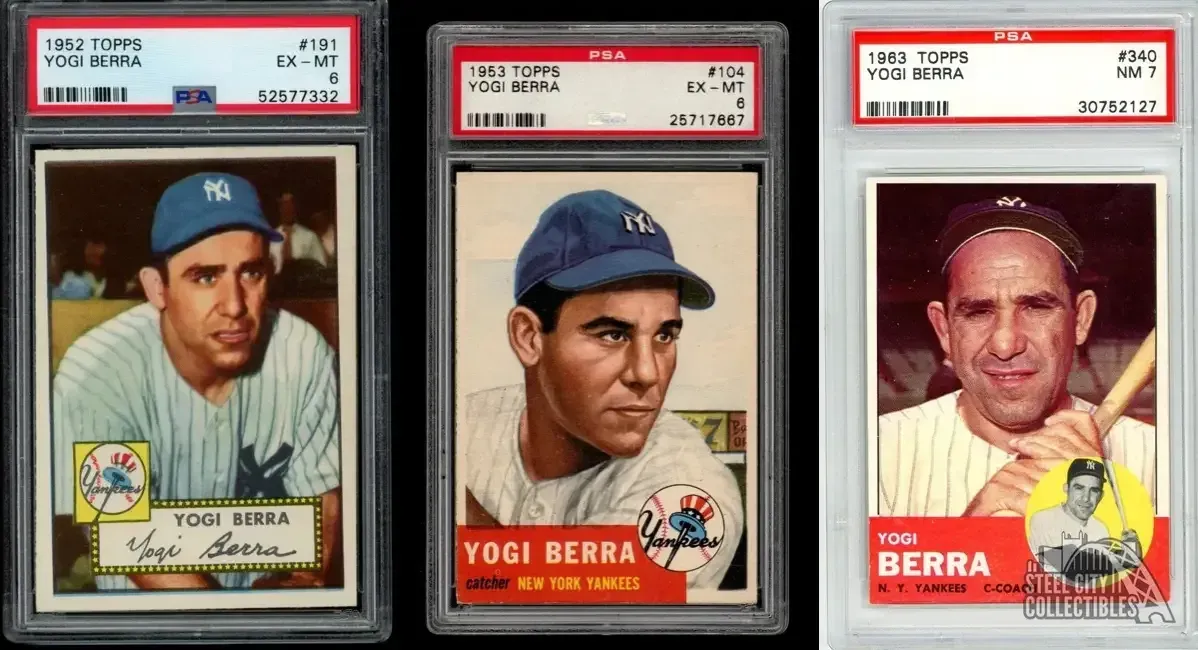
- 1952 Topps: Yogi Berra #191 in PSA 6 sold for $2,208, compared with $7,800 for Roy Campanella #314 in PSA 6.
- 1953 Topps: Yogi Berra #104 in PSA 6 sold for $985, compared with $15,000 for Jackie Robinson #1 in PSA 6.
- 1963 Topps: Yogi Berra #340 in PSA 7 sold for $449, compared with $2,950 for Mickey Mantle #200 in PSA 7.
The 1952 Topps sales provide a direct comparison between two celebrated catchers. Campanella sold for more than three times the Berra price in the same grade. The 1963 Topps pair is a comparison between Yankees teammates, with Mantle bringing more than six times as much. Berra shared the Yankees spotlight with both Mantle and DiMaggio during his career, and the Mantle comparison shows how differently collectors can price two stars from the same club.
The $15,000 Robinson sale produced the widest gap of the three, but it is not necessary to use that result to find a comparatively modest Berra price. His 1963 Topps card sold for less than half the price of his 1953 Topps card in these examples, even with the later card graded one step higher. For collectors focused on Berra rather than a specific early issue, the year can make a substantial difference to the purchase price.
Wade Boggs: Rookie Cards, Topps Tiffany and a PMG Numbered to 50
Wade Boggs reached 3,010 hits, won five batting titles and posted a .415 career on-base percentage. His 91.4 career WAR ranks third among third basemen, ahead of George Brett, Chipper Jones and Brooks Robinson. Boggs hit only 118 home runs, so the accomplishments that defined his career were more closely tied to batting average and reaching base than to power.
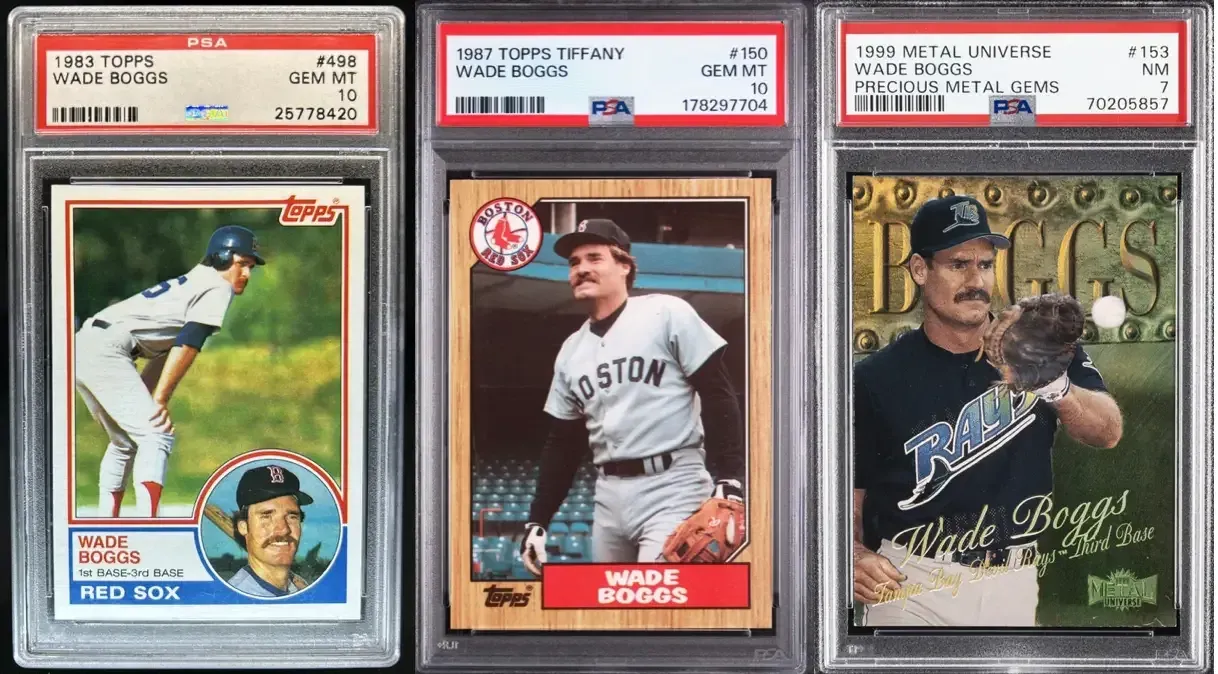
- 1983 Topps: Wade Boggs rookie card #498 in PSA 10 sold for $4,532, compared with $8,500 for Tony Gwynn rookie card #482 in PSA 10.
- 1987 Topps Tiffany: Wade Boggs #150 in PSA 10 sold for $125, compared with $833 for Jose Canseco #620 in PSA 10.
- 1999 Metal Universe: Wade Boggs PMG #153, numbered to 50, in PSA 7 sold for $838. Derek Jeter PMG #97, also numbered to 50, sold for $30,000 in PSA 6.
The 1983 Topps comparison is the closest match of the three: Two rookie cards from the same set in PSA 10, with the Boggs selling for a little over half the Gwynn price. The Tiffany result shows how different the outlay can be when the goal is a high-grade Boggs card rather than his rookie. That later card sold for $125 in PSA 10, compared with more than $4,500 for the rookie in the same grade.
The PMG sales show that an equal stated print run does not result in anything close to equal pricing. Both cards were numbered to 50, and the Boggs carried the higher PSA grade, yet the Jeter sold for nearly 36 times as much. The comparison does not isolate a grade premium, but it does show how far apart two cards from the same numbered parallel can trade.
Greg Maddux: Three Same-Grade Cards Against Nolan Ryan
Greg Maddux won 355 games, accumulated 106.6 career WAR and earned four consecutive Cy Young Awards from 1992 through 1995. He won at least 15 games in 17 straight seasons and collected a record 18 Gold Gloves. He is also the only pitcher in MLB history to reach 300 wins and 3,000 strikeouts while issuing fewer than 1,000 walks. A 78-pitch complete game against the Cubs in 1997 captured the efficiency behind those numbers.
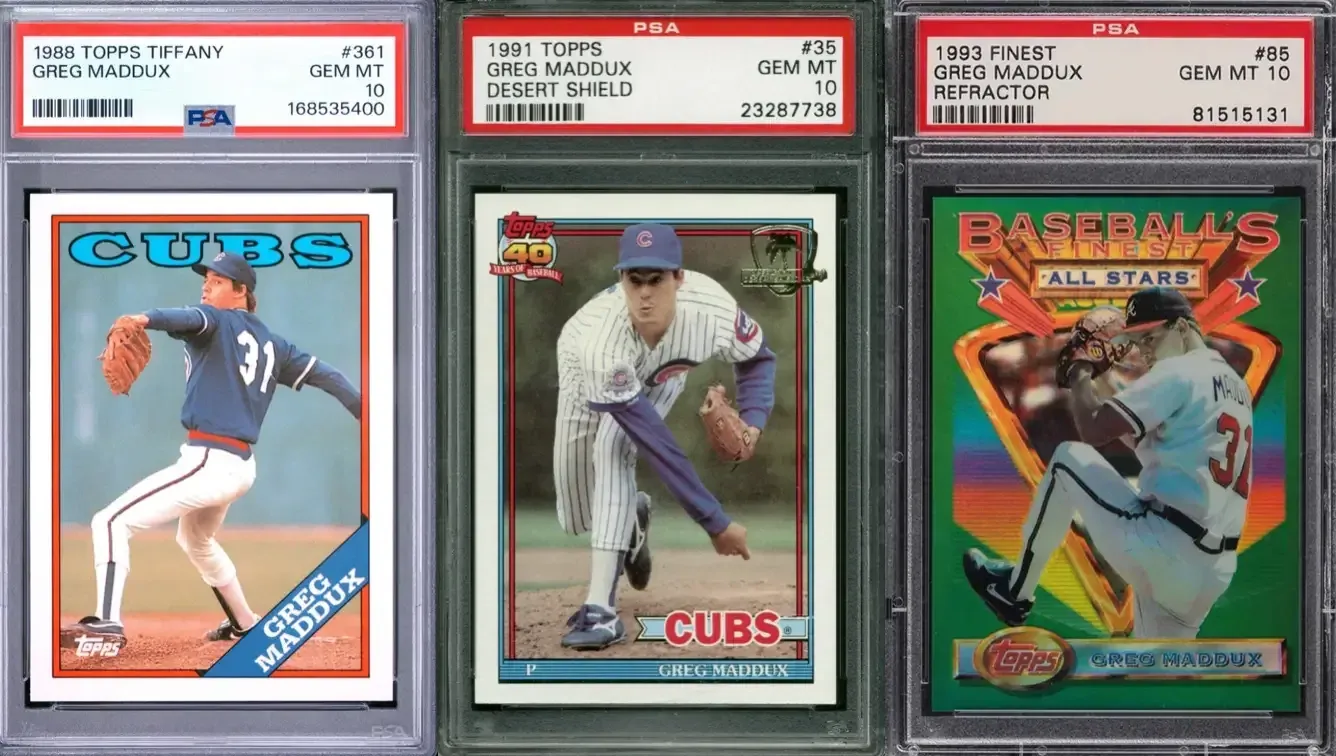
- 1988 Topps Tiffany: Greg Maddux #361 in PSA 10 sold for $225, compared with $634 for Nolan Ryan #250 in PSA 10.
- 1991 Topps Desert Shield: Greg Maddux #35 in PSA 10 sold for $1,125, compared with $5,160 for Nolan Ryan #1 in PSA 10.
- 1993 Topps Finest Refractor: Greg Maddux #85 in PSA 10 sold for $3,825, compared with $36,000 for Nolan Ryan #107 in PSA 10.
Maddux and Ryan are the only pairing here repeated across all three sets, and every card in the comparison is graded PSA 10. Ryan sold for nearly three times as much in Topps Tiffany, more than four times as much in Topps Desert Shield and more than nine times as much in Finest Refractor. Ryan never won a Cy Young Award in his 27-year career, but the results show why pitching awards alone are not a reliable guide to what collectors will pay.
For Maddux collectors, the sales also establish three distinct price points. The $225 Tiffany was the least expensive of the group, the Desert Shield crossed $1,000 and the Finest Refractor approached $4,000. The Refractor had the largest discount relative to Ryan, but it was still the most expensive Maddux card in the comparison. Which one looks like the better value depends on whether the priority is the lowest price for a PSA 10 or a particular issue that costs considerably more for another star.

Join the Sports Card Portal Page thread for this story.
Comments
0You must be signed in to comment.
Sign In