

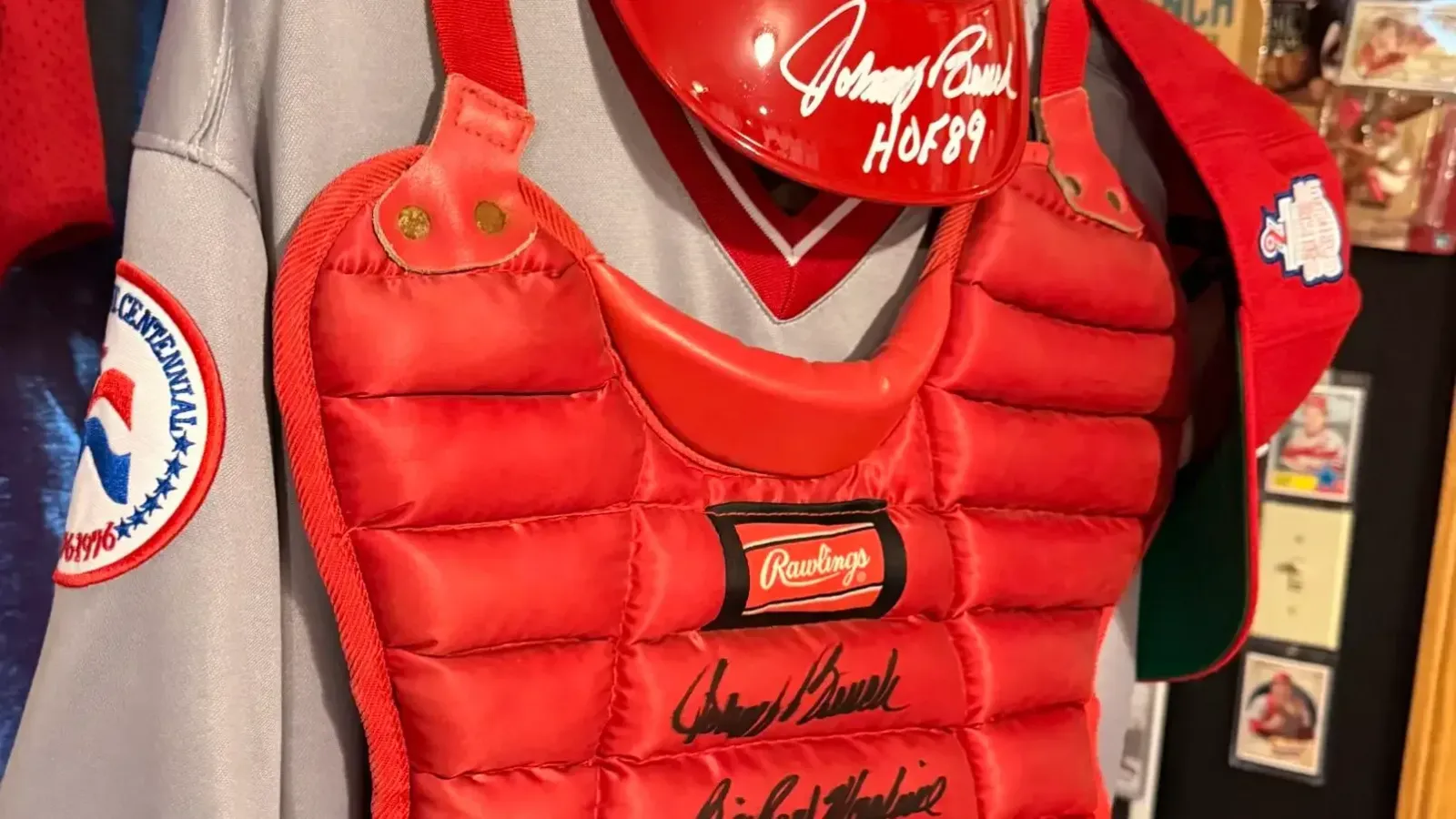
Johnny Bench fandom still runs deep with Reds collectors
Johnny Bench remains one of the most celebrated names in baseball history, and for many Cincinnati Reds fans, his legacy is more than a Hall of Fame résumé. It is a lifelong collecting pursuit built around the Big Red Machine, signed memorabilia, cards, and personal memories tied to one of the game’s most iconic eras.
That passion is easy to see in the online community built around Bench, including a Facebook page devoted to the Reds legend that has drawn tens of thousands of members. For collectors, the appeal goes beyond statistics and awards. Bench represents a standard of excellence that still resonates with fans who grew up watching Cincinnati dominate the National League in the 1970s.
Bench’s career numbers help explain the reverence. He finished with a .267 batting average, 2,048 hits, 369 home runs, and 1,376 RBI. His resume also includes 14 All-Star selections, two MVP awards, World Series MVP honors in 1976, NL Rookie of the Year, and 10 Gold Gloves. He was inducted into the Reds Hall of Fame and the Baseball Hall of Fame, had his number retired by Cincinnati, and was named to both the MLB All-Century and All-Time teams.
As the cornerstone catcher for the Big Red Machine, Bench helped anchor a Reds roster that included Pete Rose, Joe Morgan, Tony Perez, George Foster, Dave Concepcion, and Ken Griffey Sr., all guided by Hall of Fame manager Sparky Anderson. Cincinnati reached four World Series during that stretch and won two titles, cementing the team’s place in baseball history.
Two collectors, two different paths to Johnny Bench
To show how Bench collecting has evolved over the years, two longtime fans shared their stories and collections. Their backgrounds are different, but their admiration for Bench and the Reds is equally strong.
Ted Rich built his collection around game memories and autographs
Ted Rich, a pastor in Ohio, said his connection to Bench began in 1970 when he was 3 years old. A Cubs fan brother was teasing him during a Reds-Cubs game when Bench, wearing No. 5, hit a home run that changed everything. The Reds won, the teasing stopped, and Rich became a Bench fan for life.
Rich said he followed the Reds through games at Riverfront Stadium, on television, and on WLW radio, sometimes listening late at night with an AM transistor radio hidden under his pillow. Over the years, he met many members of the Big Red Machine multiple times and remains in contact with some of them. Bench, though, has always been his favorite, and Rich said he has had the privilege of meeting Bench and his parents many times.
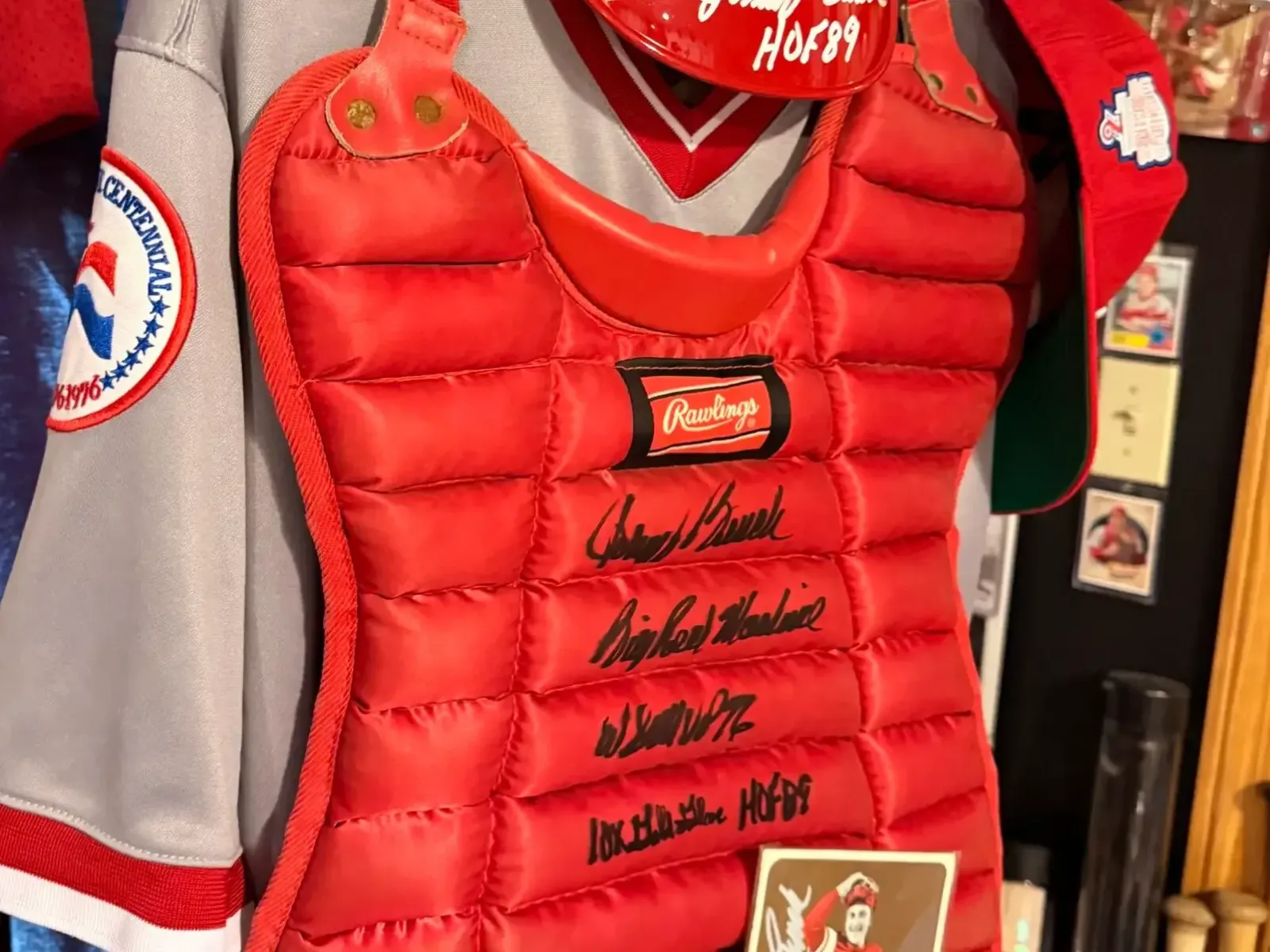
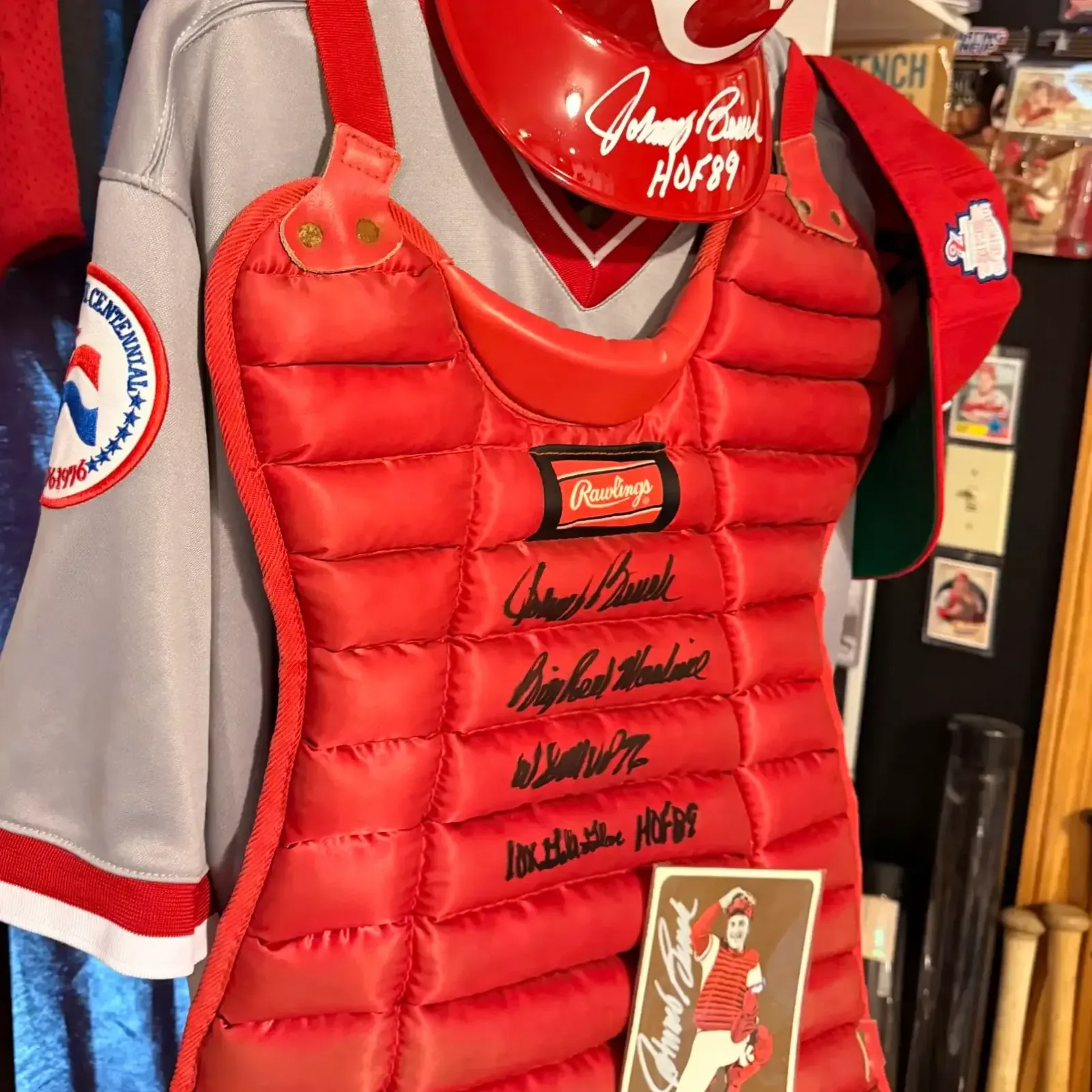
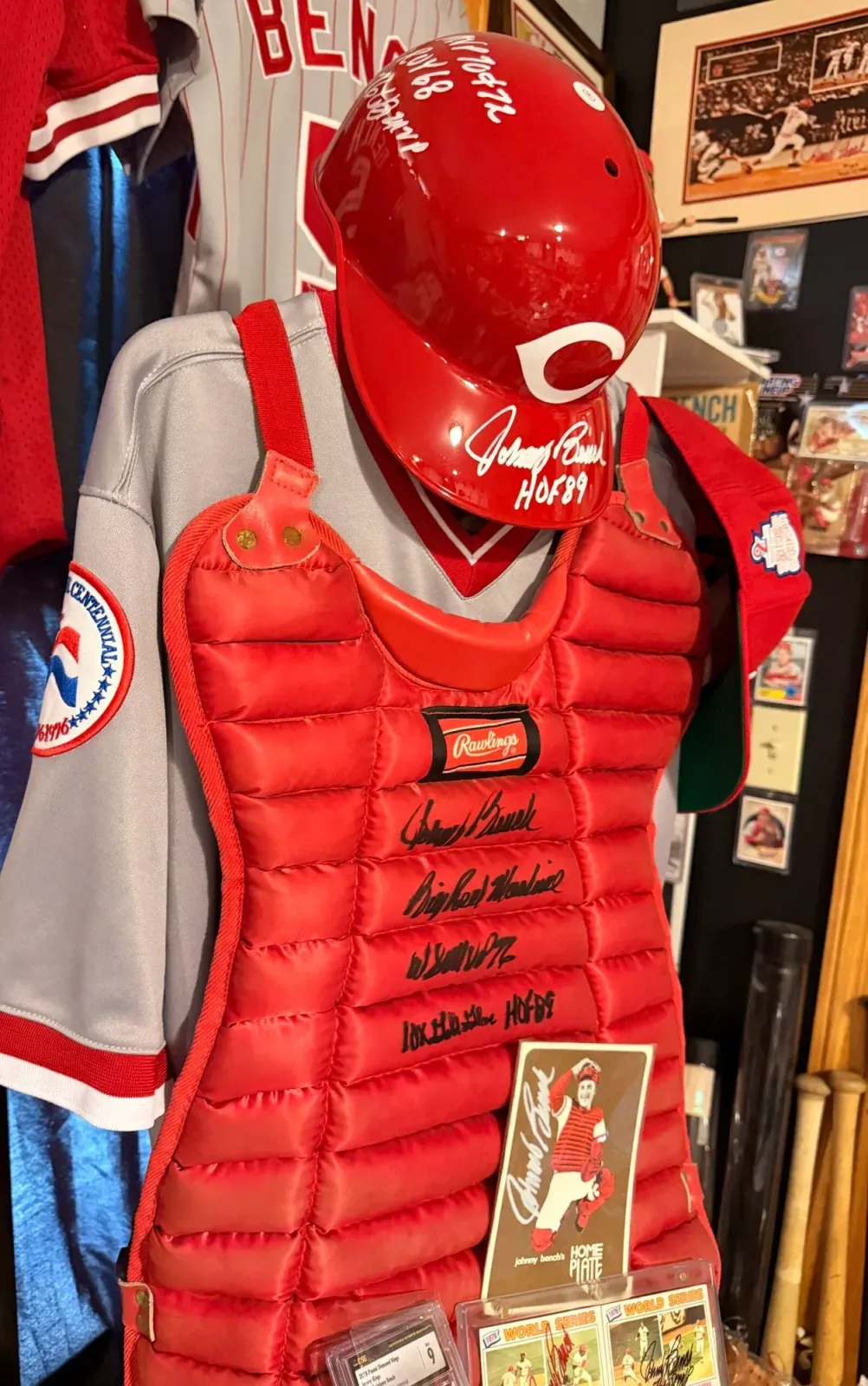
Rich’s collection grew through years of attending games and gathering autographs and memorabilia. He said he came home from many Reds games with signatures, often Bench’s, and also collected items such as bats, gloves, batting gloves, baseballs, hats, helmets, and catcher’s gear. His collection took a major hit after a fire at Purdue University nearly cost him his life and destroyed more than half of his boyhood collection. Afterward, people helped him rebuild, and he refocused the collection on Bench and the Big Red Machine.
Related coverage includes Johnny Bench Memorabilia Still Fuels Big Red Machine Collecting for Dedicated Reds Fans.
Today, Rich says he has nearly 555 signed items from Bench alone. His collection includes autographs on cards, jerseys, gloves, photos, scorebooks, and equipment. Among his favorites are signed 1976 baseball cards, including his all-time favorite Bench card, a 1976 black World Series team bat he won as a boy at the Reds 580 Shop and later had signed by Bench, and a 1976 game-issued bat signed in red with inscriptions.
Rich said he would still like to add a certified game-used glove, bat, or piece of catcher’s equipment signed by Bench. He also noted that he has duplicates of some items and is open to trading with other collectors.
Debbie Ward started with a pennant and built a lifelong Reds collection
Debbie Ward, a retired beauty editor from New York State, traced her fandom to her first baseball game at Shea Stadium in the summer of 1973. She was 11 years old and sitting with her family in a third-base field box when she noticed people talking to a man and woman nearby. The couple turned out to be Bench’s parents, Ted and Betty Bench.
Ward said her father encouraged her to take her Cincinnati Reds pennant over to them, and Ted Bench signed it. That moment turned her into a Reds fan and made Bench her sports idol for years to come.
As an adult, Ward attended nearly every Reds game at Shea when Cincinnati came to town. She finally met Bench at Shea Stadium on Aug. 28, 1981. She also held up a large white sheet reading “Thanks for the Memories Johnny” in red spray paint on the night the Mets honored him during his final season as a player. Her photo appeared in the New York Daily News the next day.
Ward also attended Johnny Bench Night at Riverfront Stadium on Sept. 17, 1983, and later went with her mother to Bench’s Baseball Hall of Fame induction ceremony.
Her collection began with photographs and grew through the 1970s and 1980s as she gathered anything related to Bench. She said she had two photos signed by Bench at Shea and used mail order to track down a Topps baseball card from every year he played. She also collected Johnny Bench children’s books and later added more items by attending card shows in New York City.
Ward’s favorite items include a Johnny Bench bobblehead given to her by friends for her 50th birthday, a Crush Cherry can given to her by the woman who sat next to her at Bench’s Hall of Fame induction, a small decorative plate, and a framed Bench poster sent by her aunt’s brother in Cincinnati.
What Bench collectors still hope to find
Even with extensive collections already in place, both collectors still have wish-list items. Rich said a certified, authenticated game-used glove, bat, or piece of catcher’s equipment signed by Bench would be the ultimate addition. Ward said the one item she has always wanted is one of Bench’s game-used catcher’s mitts.
For both collectors, the appeal is not just about scarcity or value. It is about preserving a connection to a player and team that shaped their lives. Rich said his ideal experience would be spending an uninterrupted afternoon talking baseball with the man he considers the greatest catcher of all time. Ward said she hopes to someday donate her photographs and much of her collection to the Johnny Bench Museum in Binger, Oklahoma.
Bench’s place in baseball history is secure, but stories like these show how his legacy continues to live on through collectors who have spent decades building personal archives around his career. From signed cards and bats to photographs, posters, and game-used dreams, the Big Red Machine still inspires collecting passion more than 50 years after its peak.
Collectors can contact Paul Ferrante by visiting paulferranteauthor.com.
Join the Sports Card Portal Page thread for this story.
Comments
0You must be signed in to comment.
Sign In