

Digital repacks give sports card collectors another way to open a mystery pack, but the pack price is only one part of the purchase. The checklist determines which cards are in play, the odds tell collectors how likely they are to land in a given value tier, and the platform's valuation can determine how much cash a collector gets for selling a card back. Those details matter in a market where collectors have raised concerns about card values and shipping delays.
What Is a Digital Sports Card Repack?
A digital repack is a mystery pack assembled by a third party rather than the original card manufacturer. Instead of opening a sealed product from Topps or Panini, a collector buys an opening from a platform that selects the cards available to pull. After the reveal, the collector can keep the card or, where the platform makes an offer, sell it back.
Many platforms organize packs into tiers based on the buy-in. In that setup, a lower-priced pack and a higher-priced pack can draw from different checklists. Some operators use one checklist across multiple price points instead. A shared checklist tells collectors which cards may be available, but it does not by itself explain what changes with a higher buy-in. That is where odds for each price point become important.
Digital Repack Prices Range From $1 to $10,000
PrizePicks has offered packs for as little as $1, while $25 is a more common starting point. Trove and Arena Club have offered packs priced as high as $5,000, and Courtyard has offered a $10,000 pack. Those examples show how widely buy-ins can vary, even though the basic premise of paying for an unknown card stays the same.
A low price limits what a collector spends on one opening, but it does not make a high-value pull likely. At the other end, a bigger buy-in is not enough to establish what a pack offers. When two prices come with different checklists, the comparison starts with the cards available in each. When they share a checklist, published odds are more useful than the headline cards for understanding the difference.
What Checklists, Hit Lists and Odds Can Tell Collectors
A full checklist identifies the cards available in a pack. A hit list is narrower: It can show the featured pulls without accounting for everything else a collector might receive. A platform may also publish odds for the different card levels within a tier. Those odds describe the chance of landing in a level, not necessarily the chance of pulling one specific card within it.
That distinction matters most when a pack is promoted around a handful of high-value cards. A featured autograph might be on the list, but its presence does not tell collectors how often cards of that value are pulled. And if a platform publishes odds without a full checklist, collectors may know the chance of reaching a given tier without knowing all the cards that tier contains. A checklist and an odds breakdown answer different questions, and each is more useful when it clearly applies to the pack being sold.
How Instant Buybacks Work
Once a card is revealed, the buyback offer gives collectors a choice between keeping the card and taking the amount the platform offers. Some digital repack companies have offered buybacks ranging from 80% to 100%. Trove has offered a 100% instant buyback for collectors who select that option within one minute of opening the pack.
Related coverage includes Digital Card Repacks Explained: Checklists, Odds, Buybacks and the Questions Collectors Should Ask.
The key question is what the percentage applies to. A 100% buyback based on the platform's card valuation is not the same as a refund of the pack price. If the platform values the revealed card below the buy-in, accepting the full valuation still returns less than the collector paid to open the pack. The percentage also does not establish what the card would sell for outside the platform.
The deadline can matter just as much as the rate. A one-minute window leaves little time to look up the exact parallel, confirm the grade and compare recent sales. For collectors who expect to use the buyback, knowing how the platform values cards and when the offer expires is more useful before the opening than after the reveal.
Why Card Valuations Deserve a Closer Look
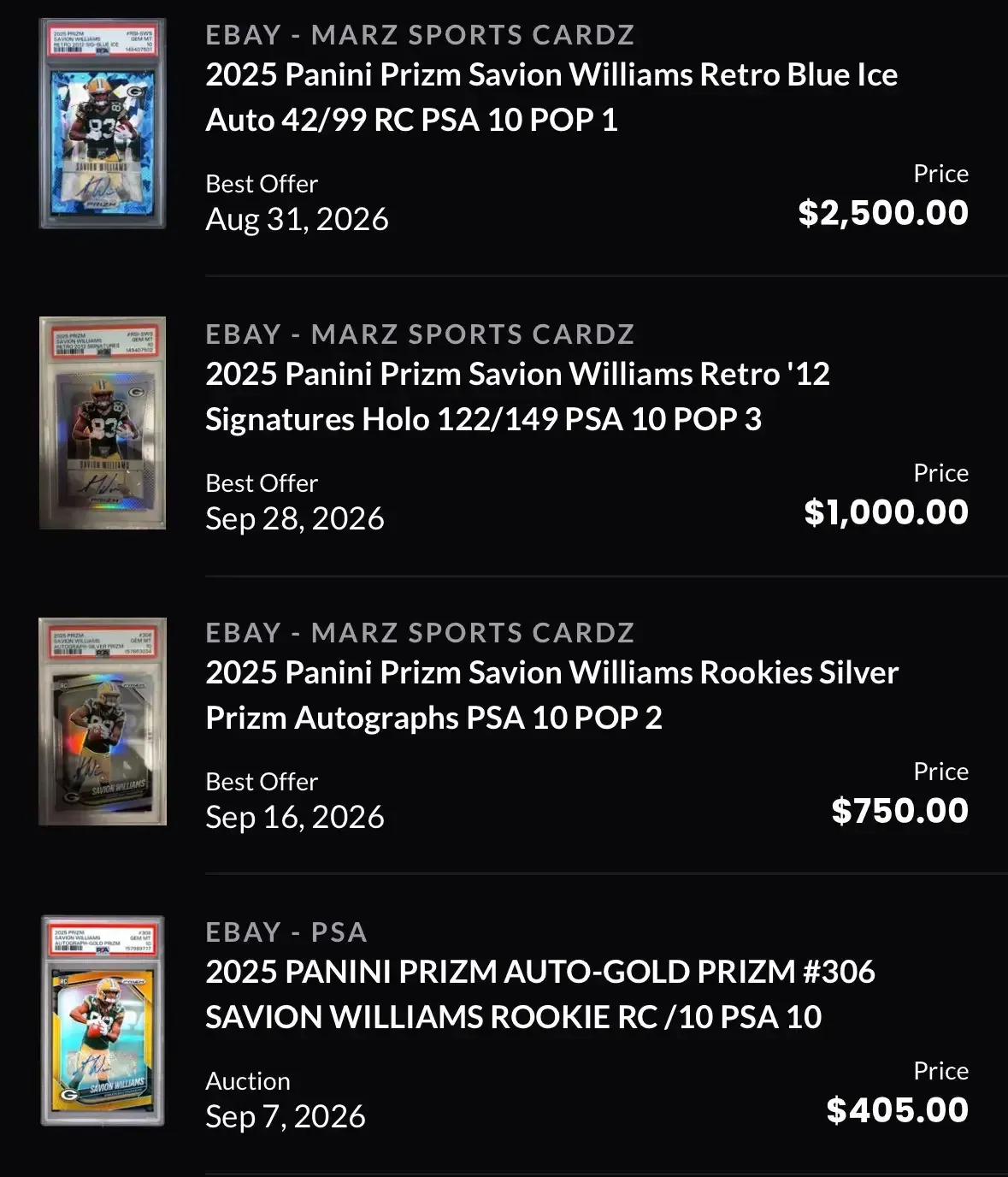
A reported example involving a Savion Williams Panini Prizm autograph illustrates the limits of relying on one sale. A Prizm autograph numbered to 99 was valued at $2,600, and a PSA 10 Savion Williams Cracked Blue Ice Prizm autograph had sold for $2,500. About a week later, a Gold autograph numbered to 10 sold for less than one-fifth of that $2,500 result. The three highest recorded sales cited in the comparison also came from the same seller.
Those results do not establish what either card should be worth. A Gold autograph numbered to 10 is a different parallel, so its sale is not a direct comparison to a Cracked Blue Ice autograph. Nor does one $2,500 sale establish that another buyer would pay the same amount. The gap illustrates why several sales of the same card, in the same parallel and grade where possible, provide better context than one standout result.
When exact matches are scarce, sales of other versions can offer context, but they are not substitutes. A sale for a PSA 10 does not necessarily establish the value of an ungraded copy, just as the price of one numbered parallel does not automatically carry over to another. The platform's displayed value, the amount it will pay in a buyback and the price a card might fetch on the open market are three separate figures.
Vault Storage, Grading and Other Platform Features
Not all repacks offer the same kinds of cards or the same options after the reveal. Some contain only graded cards, some specifically use PSA-graded cards, and others offer their own grading services. These differences affect how easily collectors can find sales of comparable copies, particularly when the same card appears in holders from different grading companies.
Trove uses the PSA Vault and has offered annual dividends of up to 4% based on vaulted cards in a collector's collection. That feature is separate from the instant buyback: One applies to cards kept in the vault, while the other applies when a collector sells a revealed card back to the platform. Trove has also offered winner-take-all pack battles with friends. Other repack operators have expanded beyond cards into items such as watches and sneakers.
What Happens When a Collector Keeps the Card?
For collectors interested in owning the card rather than selling it back, fulfillment is part of the purchase. The digital reveal shows what was pulled, but it is separate from the process of getting the physical card delivered. With shipping delays among the concerns raised about repacks, a platform's delivery terms matter even if its pack checklist and buyback terms are clear.
The relevant details are whether a kept card goes into a vault, how the collector requests shipment, what fees apply and what delivery estimates the platform provides. A collector who wants a card in hand has a different decision to make from one who plans to leave it in storage or take an instant buyback. The shipping and withdrawal terms determine what happens once the opening is over.
Join the Sports Card Portal Page thread for this story.
Comments
0You must be signed in to comment.
Sign In