

1968 Topps Baseball Cards Stand Out for Design and Scarcity
Topps took a sharp turn in 1968 after the cleaner look of its 1966 and 1967 baseball issues. The company used a rustic brown border design that many collectors compare to burlap or vintage kitchen wallpaper. The look was unusual, but the cards inside often featured familiar player photos, and that mix of odd design and recognizable images helped make the set memorable.
The familiar photography came out of a dispute between Topps and the Major League Baseball Players Association. Players were told not to pose for new photos while the two sides worked toward a new agreement, so Topps leaned on older archive images instead. That decision gave the set a distinct feel and added another layer to its place in hobby history.
There were also several unusual 1968 Topps releases beyond the main set. Some cards were distributed through Milton Bradley’s Win-A-Card board game rather than standard wax packs. Topps also produced an extremely scarce 3-D test set, and the company issued a 33-card Topps Game subset that was inserted into third-series packs and also sold as complete boxed sets.
For most collectors, though, the 598-card base set is best known for its Hall of Famers, rookie cards, and strong long-term market demand. Here are six of the most iconic and valuable cards from 1968 Topps baseball.
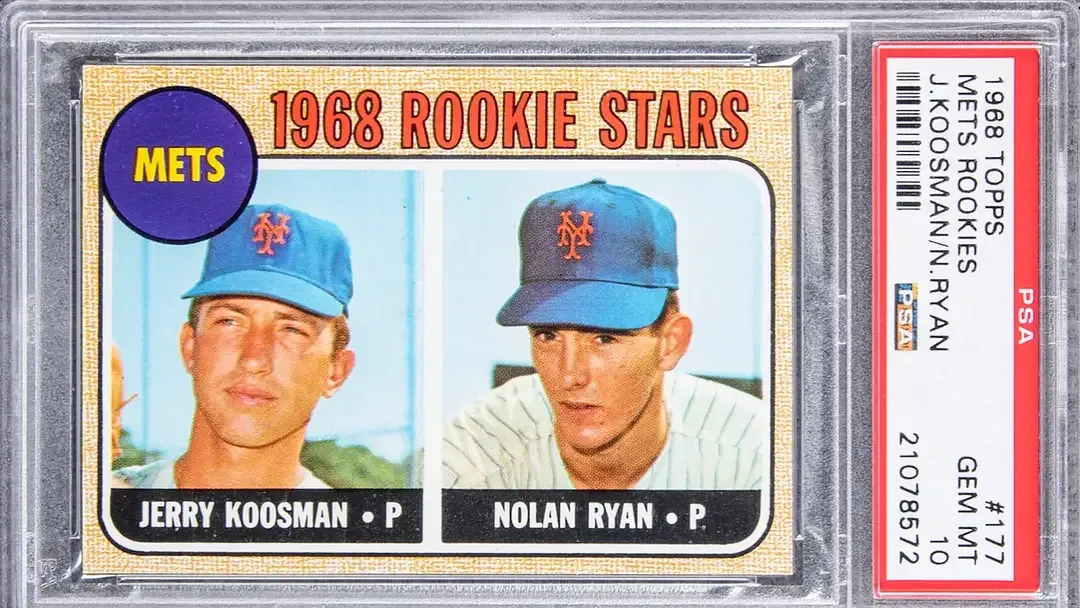
1. Nolan Ryan and Jerry Koosman Rookie Card #177
Nolan Ryan’s rookie card is widely regarded as the centerpiece of 1968 Topps and, for many collectors, one of the defining baseball cards of the entire 1960s. Ryan shares the card with fellow Mets pitcher Jerry Koosman, who was the more accomplished pitcher at the time the card was issued.
The card has become especially desirable because of Ryan’s long career and legendary strikeout totals. Ryan retired with 5,714 strikeouts, seven no-hitters, and one of the longest careers in baseball history, spanning 1966 to 1993.
Four distinct versions of the rookie card exist: Topps, Milton Bradley, O-Pee-Chee, and the rare Venezuela Topps version. Collectors often refer to them as the Nolan Ryan Four Horsemen.
On the field in 1968, Ryan was still early in his career. He had pitched only three major league innings before that season, then went 6-9 with a 3.09 ERA and 133 strikeouts in 134 innings. Koosman, meanwhile, won 19 games as a rookie and made the All-Star team.
Related coverage includes 1968 Topps Baseball Cards: The 6 Most Iconic and Valuable Cards in the Set.
Market data underscores the card’s status. A PSA 10 example sold for $600,000 at Goldin Auctions in 2020, and it is the only PSA 10 copy known to exist.
PSA 7 value: $6,100
PSA 3 value: $1,227
PSA population: 21,151
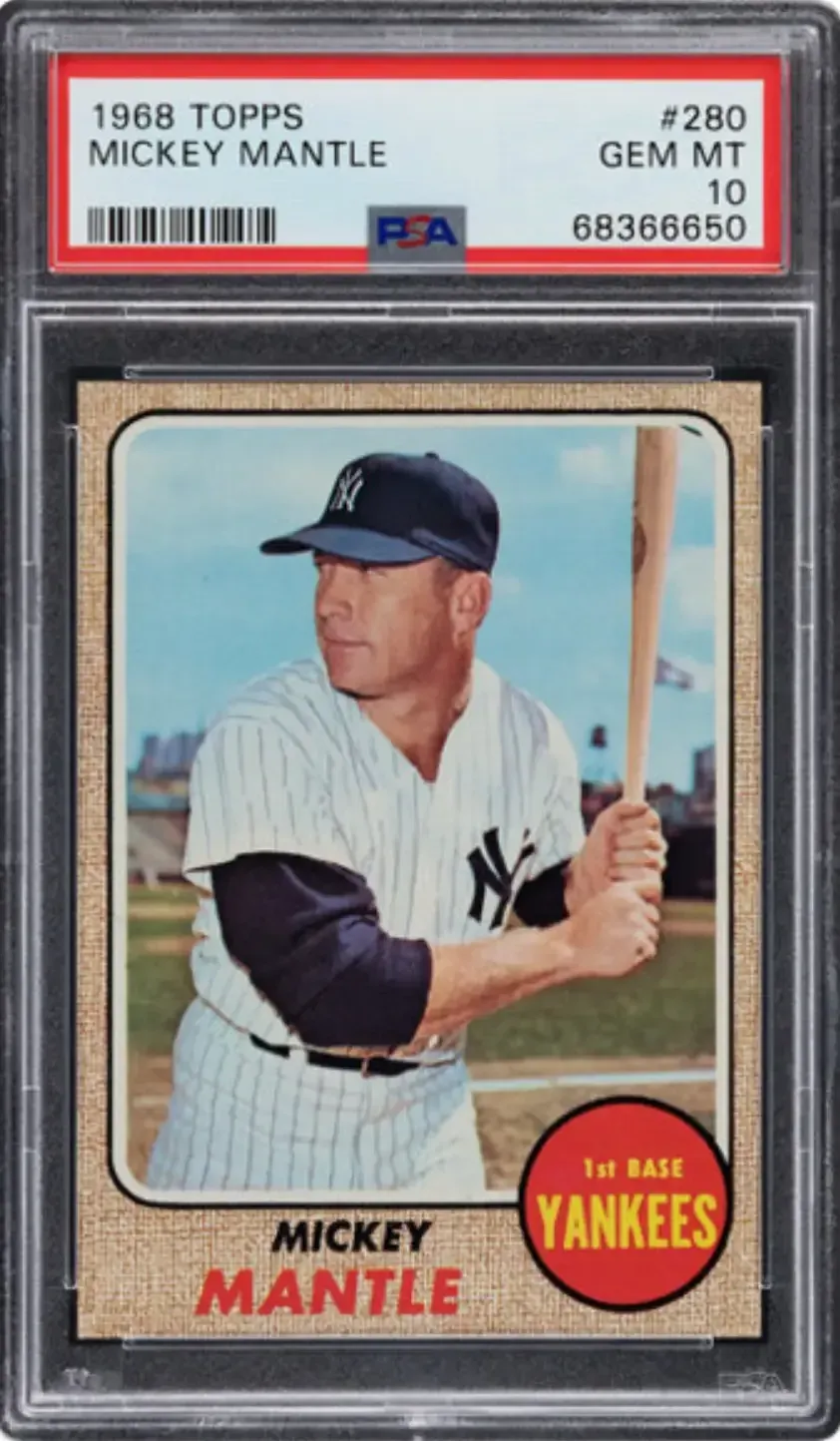
2. Mickey Mantle #280
Mickey Mantle’s 1968 Topps card is his final card from his playing career. Although he appears on a 1969 Topps card, he only reported to Spring Training in 1969 and officially retired before that season began.
The card has become one of the most sought-after Mantle issues in the hobby. A PSA 10 copy sold for $510,000 in 2023, while a PSA 10 example sold for $8,815 in 2009, showing how dramatically the market has changed over time.
Mantle was 36 in 1968, his final season. He hit .237 with 18 home runs, but he still showed elite plate discipline by drawing 106 walks and finishing with a .385 on-base percentage.
PSA 7 value: $1,214
PSA 3 value: $330
PSA population: 18,921
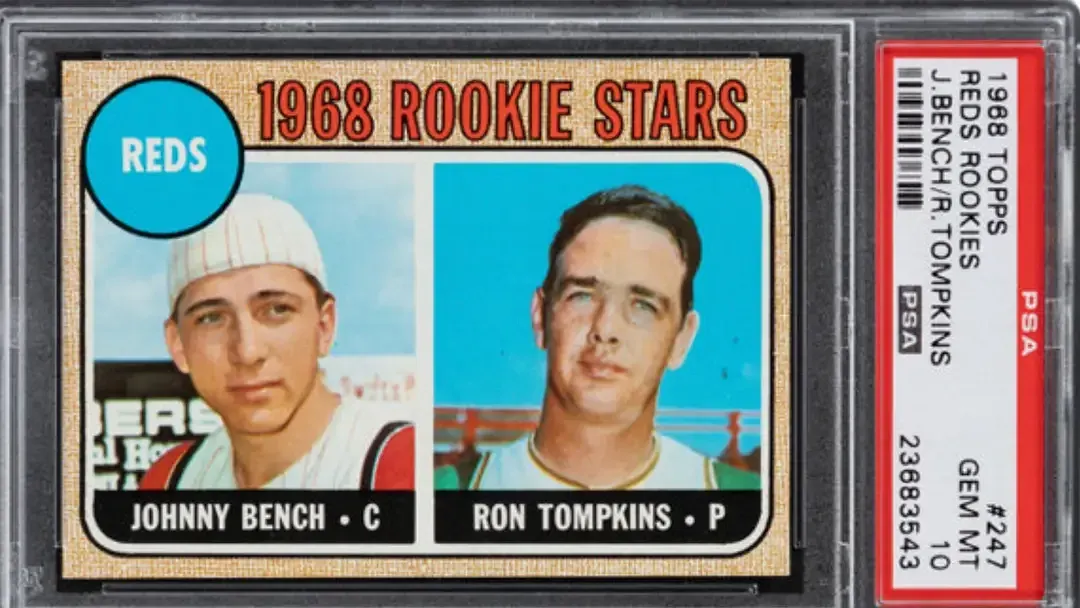
3. Johnny Bench Rookie Card #247
The Johnny Bench rookie card is another cornerstone of 1968 Topps. Bench appears on the card with Reds pitcher Ron Tompkins, which was common for Topps rookie cards during the 1960s.
Tompkins did not have a long major league career, but Bench quickly became one of the most important players of his era. He was only 20 years old in 1968, yet he hit .275 with 82 RBI, made the All-Star team, won a Gold Glove, and was named National League Rookie of the Year. He went on to win his first MVP award two seasons later and is widely considered one of the greatest catchers in baseball history.
The card remains highly desirable in high grade. A PSA 10 copy sold for $108,000 at Heritage Auctions in 2021.
PSA 7 value: $735
PSA 3 value: $156
PSA population: 16,116
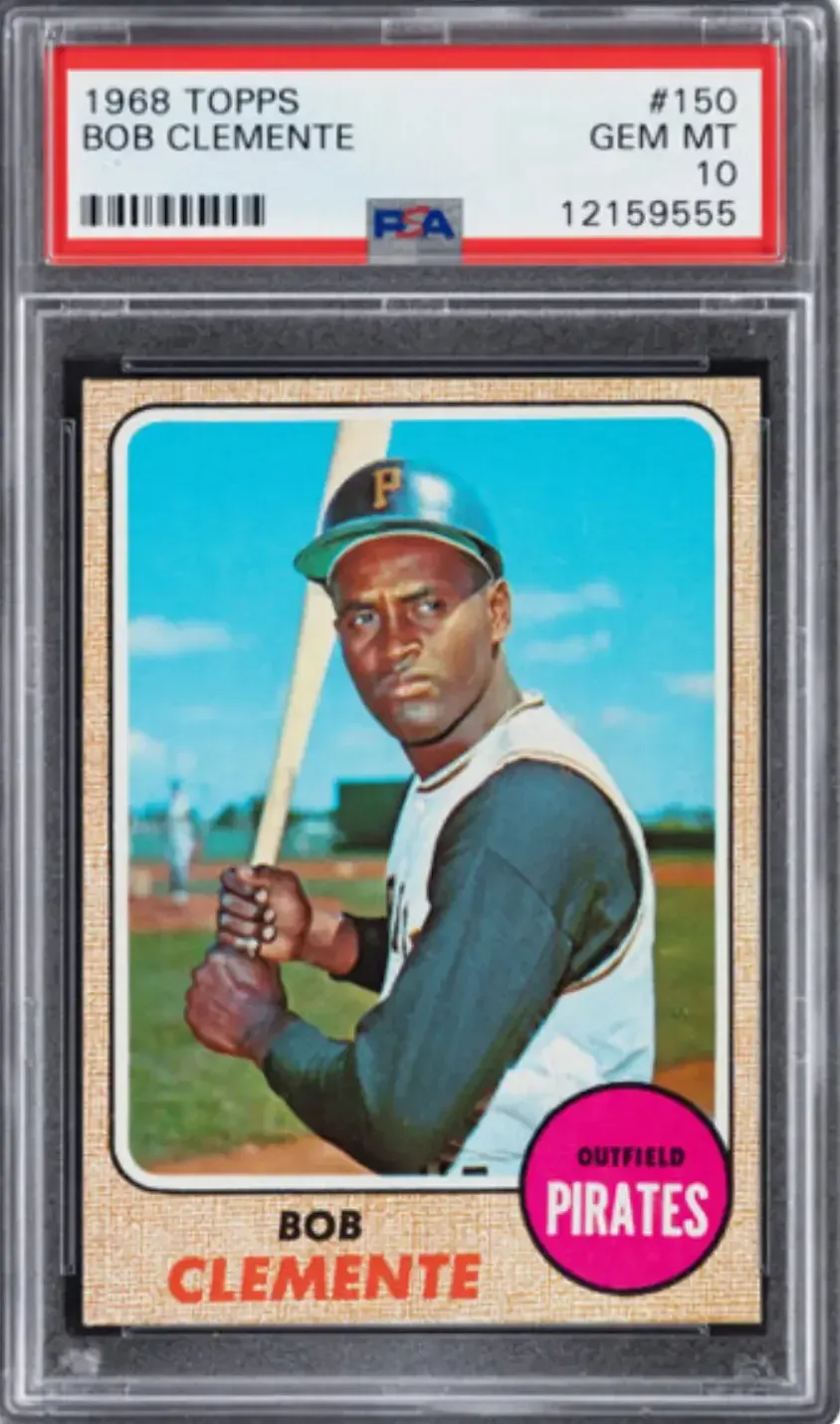
4. Roberto Clemente #150
Roberto Clemente’s 1968 Topps card remains one of the set’s most recognizable stars. Topps listed him as “Bob,” even though Clemente disliked being called that name.
Clemente was coming off a huge 1967 season in which he hit .357. In 1968, a pitching-dominated year across the league, his average dipped to .291, but he still delivered 18 home runs and an .838 OPS.
The card has strong collector demand in top condition. A PSA 10 copy with a population of five sold for $50,400 in 2021.
PSA 7 value: $520
PSA 3 value: $70
PSA population: 6,467
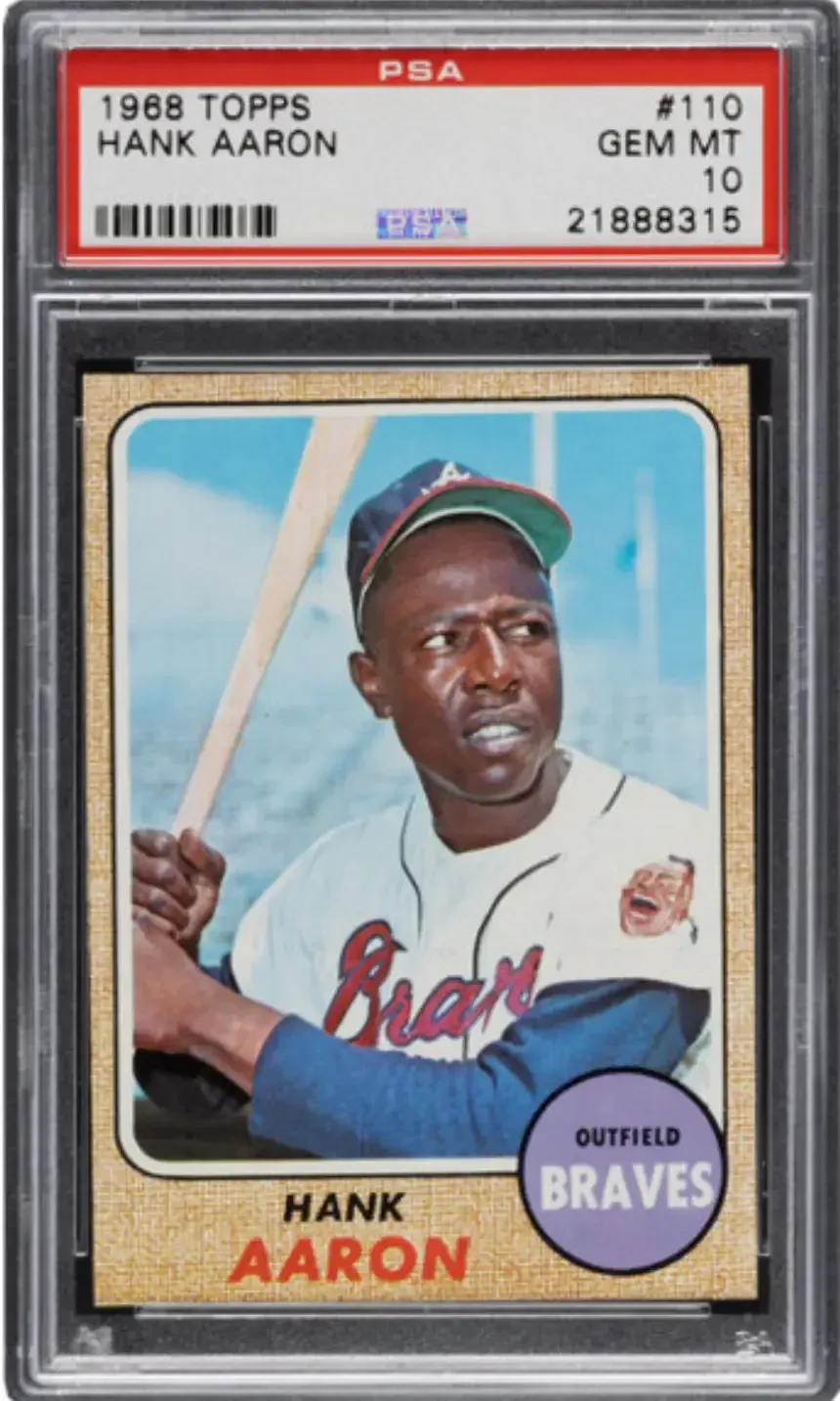
5. Hank Aaron #110
Hank Aaron’s 1968 Topps card is another classic from the set, and it is especially tough in top grade because of the dark borders, which are prone to chipping. Only five PSA 10 copies are known.
Aaron was 34 in 1968 and still among the game’s best hitters. He hit .287 with 29 home runs, 86 RBI, and 28 stolen bases. He was still five years away from breaking Babe Ruth’s all-time home run record.
The card has seen major high-end sales. The last PSA 10 example sold for $174,000 in 2023, while another PSA 10 copy sold for $10,600 in 2017.
PSA 7 value: $360
PSA 3 value: $73
PSA population: 7,001
6. Tom Seaver #45
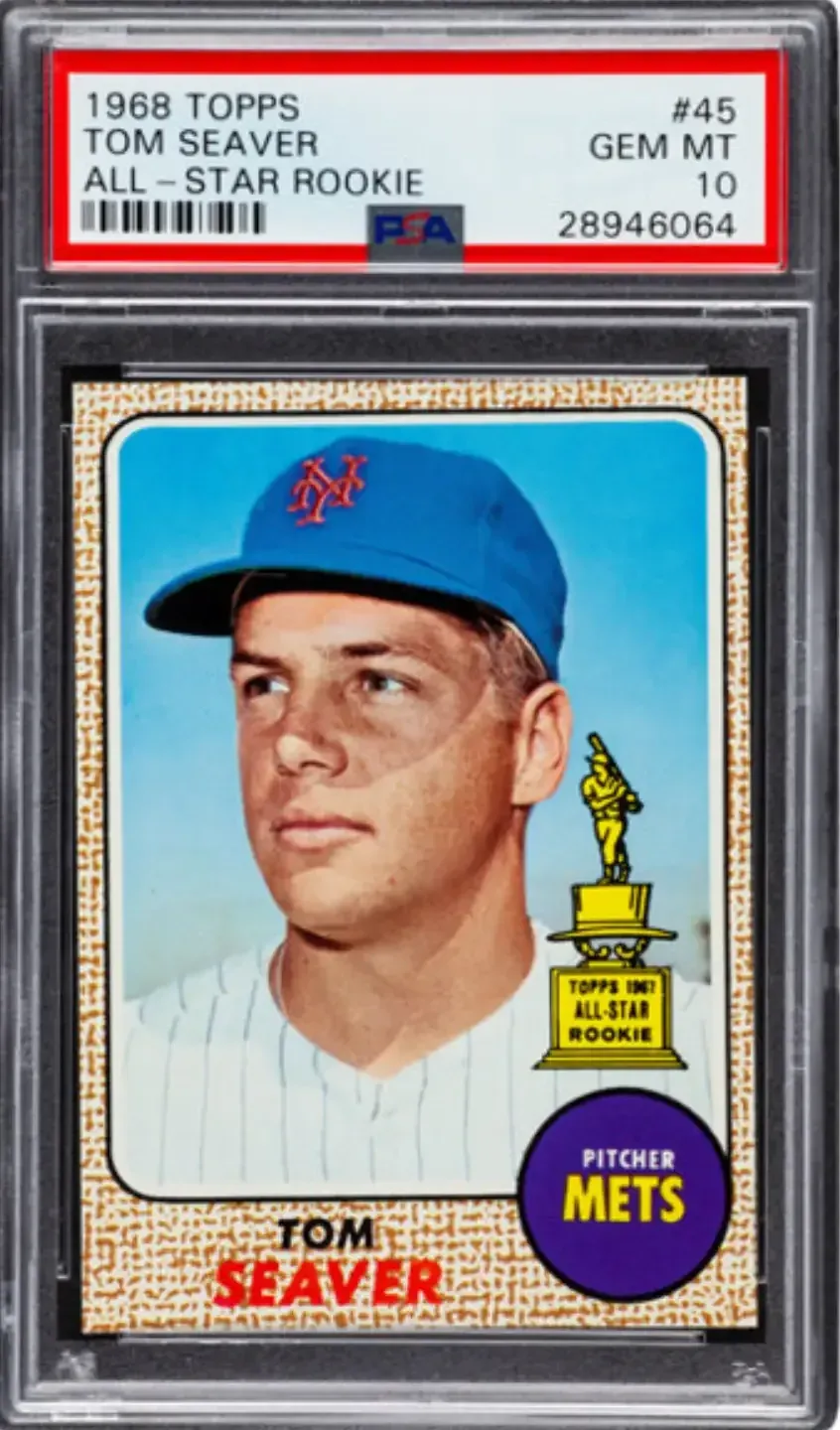
Tom Seaver’s 1968 Topps card is his second-year issue, but it is the first standalone card of “Tom Terrific.” It is also significantly more affordable than his 1967 Topps rookie card, which has also drawn strong interest in the hobby.
Seaver was already the face of the Mets by the time this card was released. He won National League Rookie of the Year in 1967 and followed that with another excellent season in 1968, going 16-12 with a 2.20 ERA and earning the first of his 12 career All-Star selections.
A PSA 10 example sold for $22,800 at Heritage Auctions in August 2018.
PSA 7 value: $350
PSA 3 value: $45
PSA population: 9,344
Other 1968 Topps Cards That Still Draw Attention
Several other cards from the set continue to attract collectors, especially in high grade. Willie Mays, Pete Rose, Rod Carew, Bob Gibson, and Ernie Banks all have notable 1968 Topps issues that remain well known in the hobby.
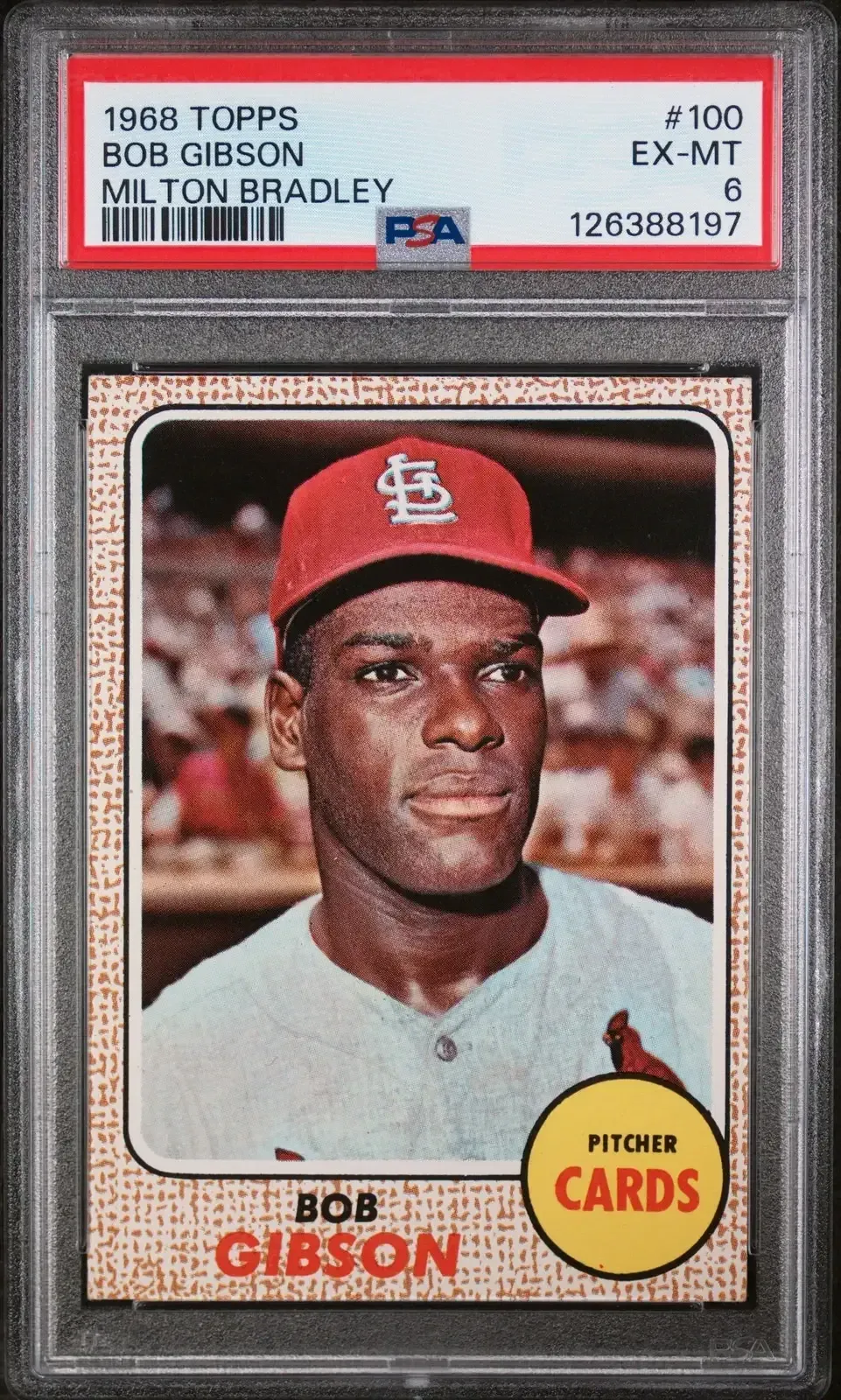
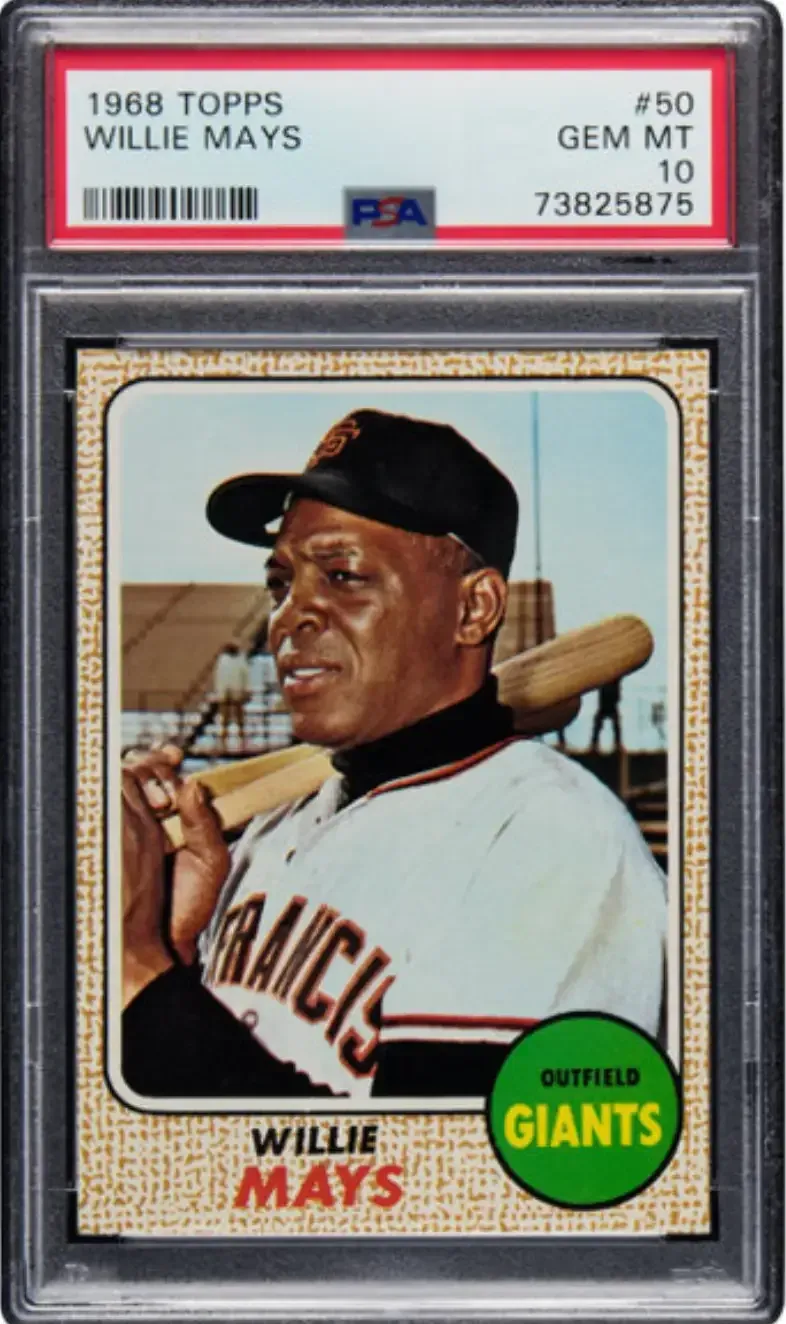
Among the standout honorable mentions, Willie Mays Topps #50 has a PSA 7 value of $350, and a PSA 10 example sold for $81,000. The Super Stars card featuring Harmon Killebrew, Willie Mays, and Mickey Mantle carries a PSA 7 value of $550. Pete Rose’s card #230 has a PSA 7 value of $273, Rod Carew’s card #80 is listed at $229 in PSA 7, Bob Gibson’s card #100 is at $209, and Ernie Banks’ card #355 is at $135.
1968 Topps Beyond the Main Set
The 1968 Topps release is remembered not only for its base cards, but also for its unusual side issues. The Milton Bradley Win-A-Card versions have brighter yellow backs and, in some cases, show traces of the white borders from the 1967 Topps football cards that shared printing sheets.
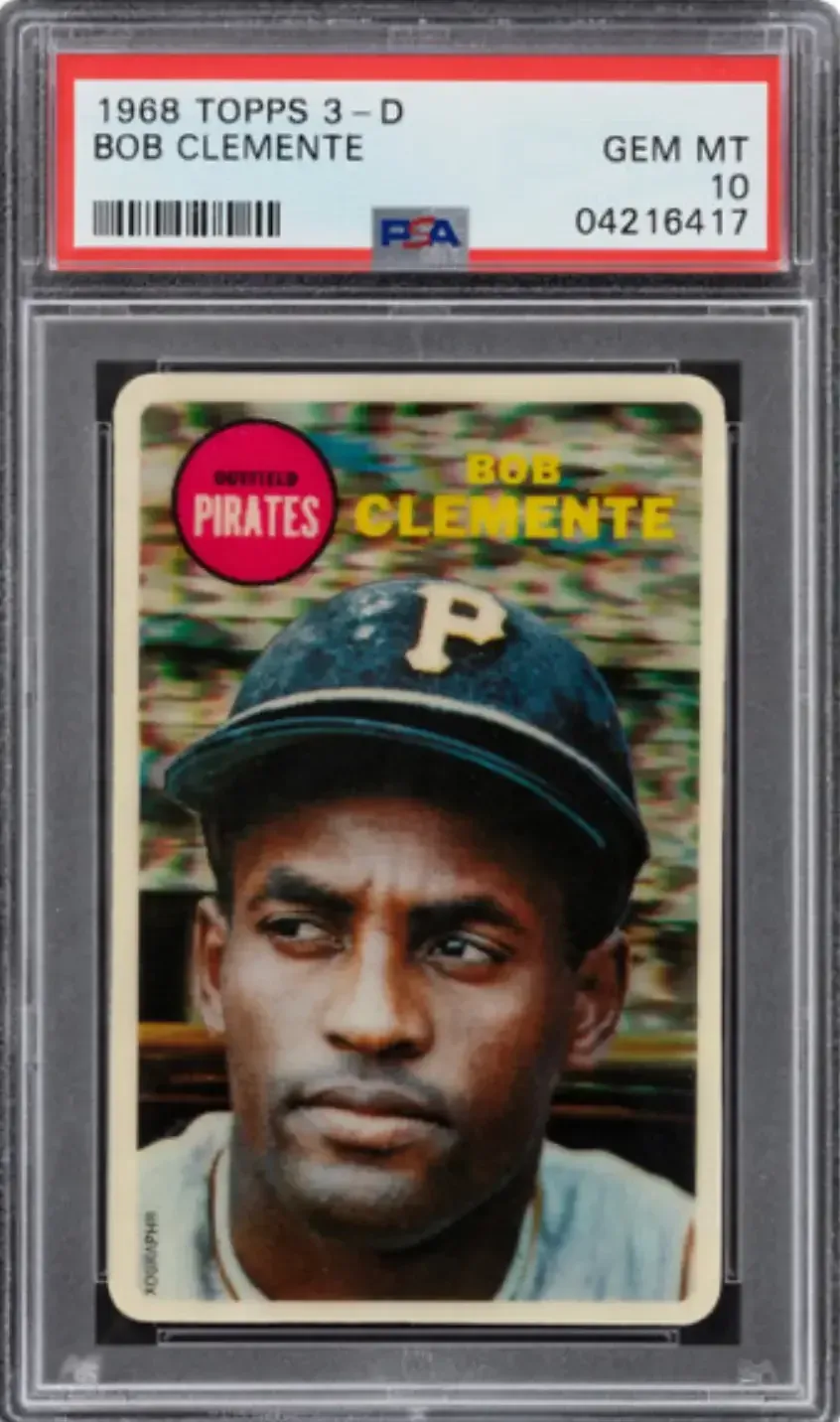
The 1968 Topps 3-D test set is another major rarity. It included just 12 cards, each covered by a plastic layer that created a three-dimensional effect. Surviving examples are extremely scarce more than 50 years later, and the Roberto Clemente card from the test set is the most valuable in the group. A PSA 10 example, one of just six graded at that level, sold for $162,000 at Heritage Auctions in 2022.
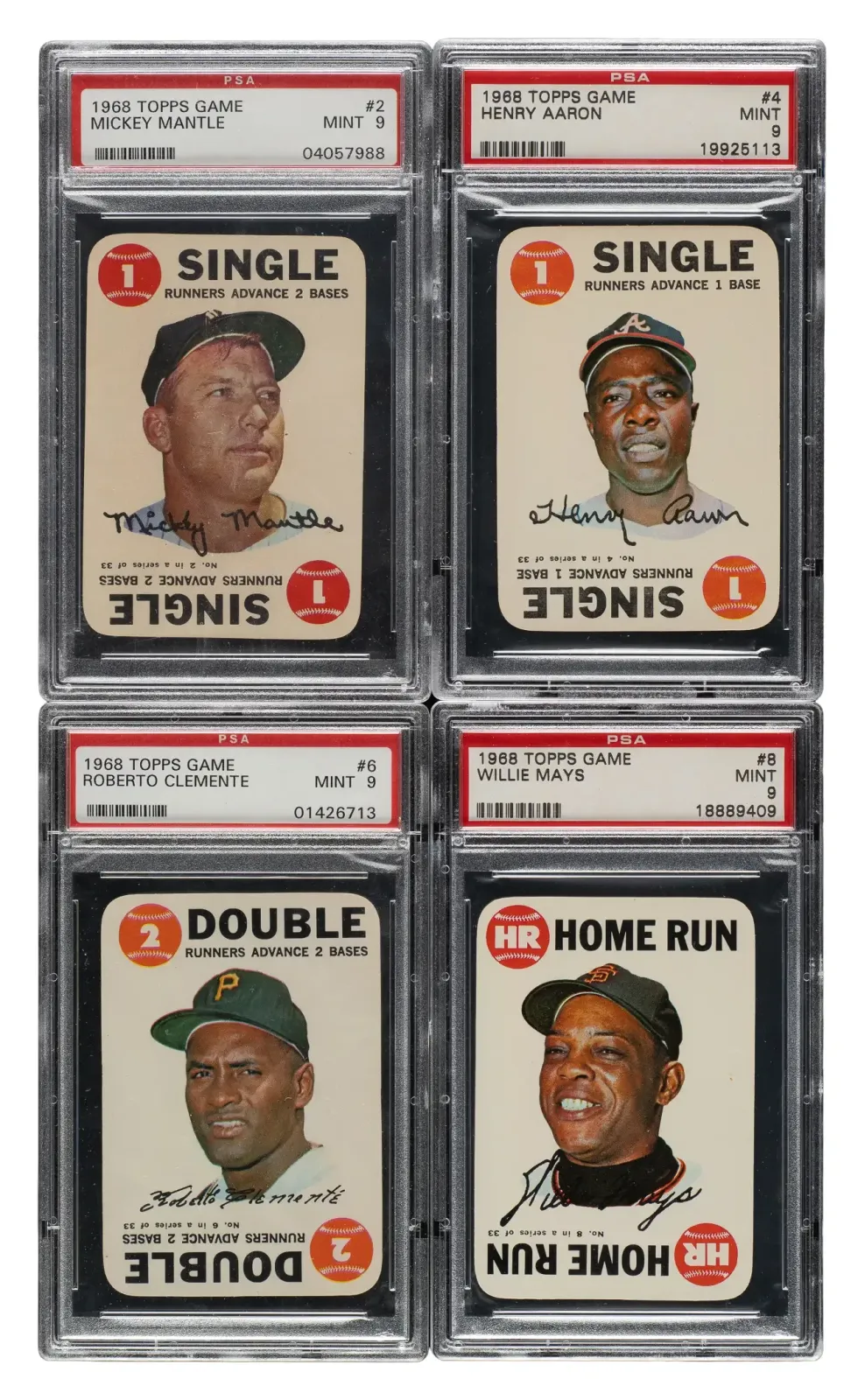
The 33-card 1968 Topps Game subset also has a place in hobby history. Modeled after Topps’ 1951 Red Back and Blue Back sets, it featured outcomes such as singles and home runs. The cards were inserted into third-series packs and were also available as complete boxed sets. A complete 33-card PSA-graded set sold for $5,781 at Robert Edward Auctions in April.
With its bold design, reused photography, rookie cards, and unusual test and game issues, 1968 Topps remains one of the most talked-about baseball sets of the era.
Join the Sports Card Portal Page thread for this story.
Comments
0You must be signed in to comment.
Sign In