


Formula 1 card collecting can be deceptively tricky because the hobby often uses the word rookie more loosely than the sport does. A driver may be young, featured prominently in a product, or labeled as a future star, yet still not meet a collector’s idea of a true rookie card. The safest approach is to stop guessing and start with two anchors: the official checklist for the card, and the verified Formula 1 timeline for the athlete.
That combination matters because F1 products frequently mix established drivers, feeder-series talent, inserts, autographs, and parallels in the same release. A card can be desirable without being a rookie, and it can be a rookie candidate without being the driver’s most sought-after version. When collectors separate card type from career timing, they make better decisions about identification, authenticity, and comparison.
This guide focuses on a practical research workflow you can actually use. It explains how to read a checklist, how to match the driver’s debut timing to the product year, how to tell a slabbed authentic card from a graded one, and where collectors most often go wrong when they assume a card is a rookie just because the player is new to them.
Why should rookie research start with the checklist instead of the card title?
A card title is not enough because Formula 1 products are built around a mix of career stages. In one checklist, you may find established race winners, younger full-time drivers, feeder-series prospects, and special subsets that are not meant to function as first-year base cards. The checklist tells you what the product actually contains, while the card front may only tell you what it looks like.
For 2024 Topps Chrome Formula 1, the official checklist shows a 200-card base set that includes F1 drivers, F2 Future Stars, and other categories. That structure is the reason collectors need to slow down and verify whether they are looking at a true first-year appearance, a prospect-style inclusion, or a different subset entirely.
The most useful habit is to record the product year, set name, card number, and card type before you decide anything else. Once those four details are in place, the checklist can tell you whether the card is a base issue, insert, parallel, or autograph. That is the foundation for rookie research, because rookie status and rarity are not the same question.
In practice, the checklist helps you avoid one of the hobby’s most common mistakes: treating any early-career driver card as a rookie. A driver can be featured in a release as a future star, yet the card may still fall short of what collectors mean by a rookie card. The checklist is what separates those categories cleanly.
- Record the exact product year and set name first.
- Confirm whether the card is listed as base, insert, parallel, or autograph.
- Do not rely on the front design or marketing language alone.
- Treat the checklist as the first filter before any timeline research.
How do you verify whether a Formula 1 card lines up with a driver’s rookie timeline?
Once you know the product details, the next question is whether the driver’s official Formula 1 timeline supports a rookie interpretation. Formula1.com is the right place to check this because it records when a driver first appears in the sport’s own bio pages and career summaries. If the driver’s first Grand Prix appearance or rookie season falls in the same general window as the card’s product year, the card becomes a rookie candidate rather than a routine early-career issue.
Oliver Bearman is a useful example because Formula1.com identifies his race debut in Saudi Arabia in 2024. That means any card from a 2024 product that features him deserves closer inspection as a possible rookie candidate, while later products would need a different explanation. The card’s release year and the driver’s first official F1 appearance should work together; if they do not, the rookie case weakens quickly.
This is not a universal hobby law handed down by any one company. It is a practical research rule built from two official sources: the product checklist and the sport’s own timeline. When those two sources disagree, the checklist still tells you what the card is, but the official debut date tells you whether rookie language is likely to fit the card honestly.
- Use Formula1.com for the driver’s official debut or rookie-season timing.
- Compare that timeline to the product year before making any rookie claim.
- If the card predates the driver’s first F1 appearance, it is better treated as pre-rookie or prospect-related.
- If the player already has a full season behind them, the card should not be called a rookie on timeline alone.
What is the difference between a rookie card, a prospect card, and a future-star card in F1?
In Formula 1 collecting, the words rookie, prospect, and future star can overlap in casual conversation, but they do not mean the same thing. A rookie card is tied to first-year or first-appearance timing. A prospect card usually points to a driver who has not yet established that timeline at the sport’s highest level. A future-star card is often a product label for someone the manufacturer believes has long-term appeal, whether or not the timing makes it a rookie.
That distinction matters because Topps products can place younger drivers in the same release as seasoned F1 names. A driver might be highlighted because of potential rather than because the card is the first official appearance collectors care about. The hobby language may sound flattering, but the checklist remains the better source for the card’s actual role within the product.
A practical way to handle this is to ask a simple question: if the driver were removed from the checklist, would the card still make sense as a rookie, or would it simply be another early-career insert? If the answer is the second, the card may be a strong collectable but not a true rookie in the strict sense collectors usually want.
That is why the safest wording is often the least dramatic. Instead of calling a card a rookie outright, describe it as a rookie candidate, a first-year card, or a debut-era issue when the checklist and timeline support that language. Precision protects you from overstatement and from buying into a label that the product itself does not fully justify.
- Rookie cards hinge on first-year timing.
- Prospect cards focus more on potential than on debut status.
- Future-star labels reflect product marketing, not always rookie definition.
- Use precise wording when the evidence is not fully conclusive.
How do inserts, parallels, and autographs affect rookie identification?
Collectors often blur rookie status with scarcity, but those are separate questions. A parallel can be rarer than a base card, an autograph can be more desirable than a standard issue, and an insert can be visually more striking than the base card, yet none of those features automatically make the card a better rookie candidate. The checklist is what tells you whether you are comparing like with like.
Topps checklists separate base cards, parallels, inserts, and autographs into different buckets. That separation matters because a rookie card discussion should start with the card’s place in the set, not with how hard it is to pull. A numbered parallel of a driver’s first-year base card is still a parallel of that rookie-era issue, not a different rookie category entirely.
This is where collectors sometimes make an expensive mistake. They see a refractor, color parallel, or autograph and assume it is the rookiest version simply because it is the most attractive or rare-looking example in the case. In reality, the base card may be the clearest rookie identifier, while the parallel is just a scarcer format of the same underlying checklist entry.
If you are comparing cards, ask two separate questions: is this the correct rookie-era card, and is this the format I want? The first question is about identity; the second is about preference. Mixing them leads to confusion and can cause collectors to compare a first-year insert to a first-year base card as if they were the same thing.
- A parallel is not automatically a more legitimate rookie than the base card.
- Autographs and serial numbering affect desirability, not rookie status by themselves.
- Use the checklist to see whether the card is base, insert, parallel, or auto.
- Compare identity first, then decide which version you prefer.
What should you check on a graded or slabbed Formula 1 rookie card?
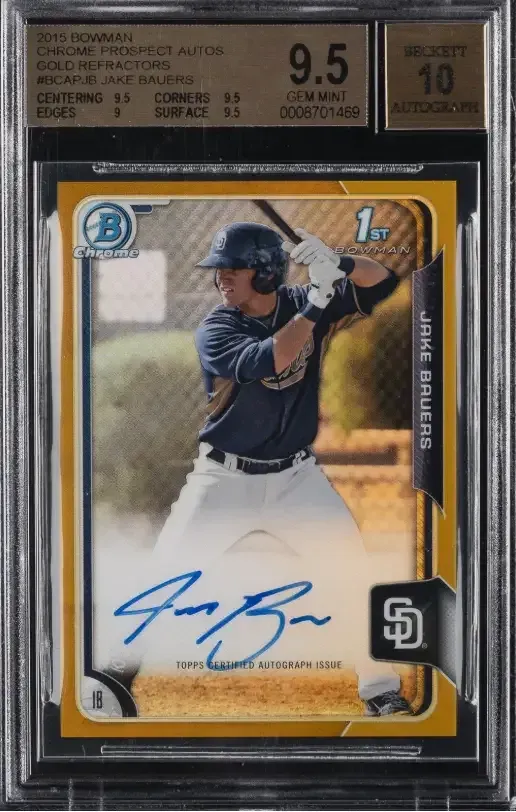
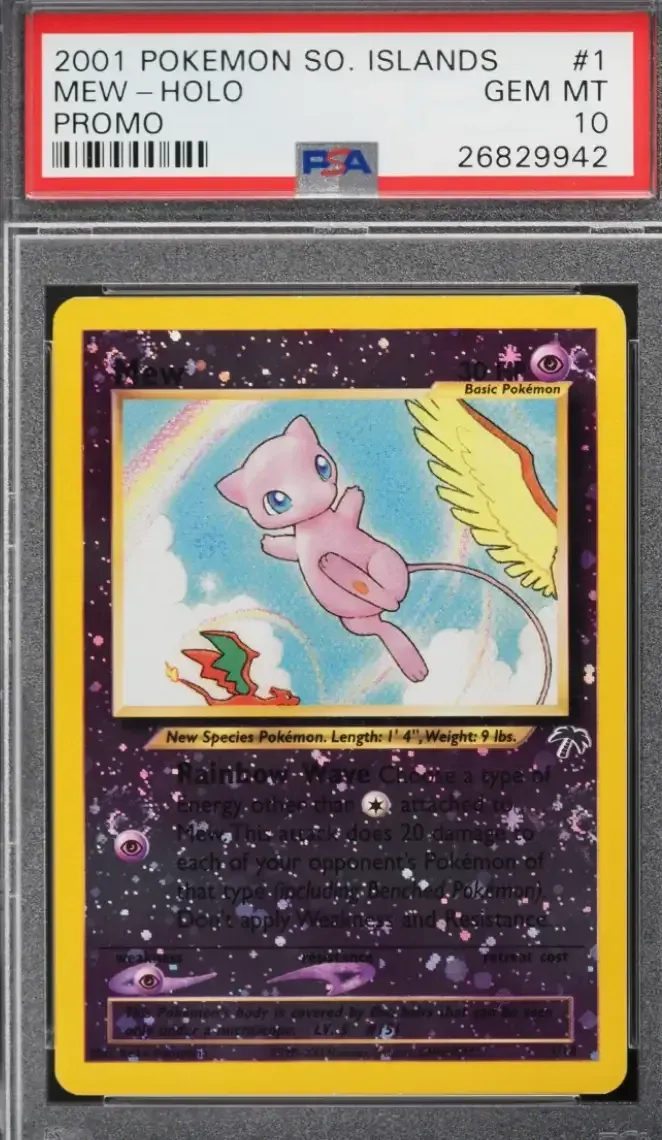
A slab can help with authenticity and condition, but it does not solve rookie research by itself. PSA explains that authentication verifies originality and genuineness, while grading assesses condition. CGC makes a similar distinction by offering both numeric grades and an Authentic designation for cards that are genuine but cannot receive a number. For Formula 1 collectors, those differences matter because a rookie candidate can be real, graded, and still not be the version you expected.
The holder itself also tells you something useful. PSA notes that removing a card from its holder breaks the protection framework tied to the card’s certification status. CGC likewise emphasizes holder integrity and original labeling. That means the slab should be treated as part of the research process, not as a substitute for it.
A strong routine is to read the label carefully, verify the certification number, and inspect whether the holder appears intact. Then, only after that, go back to the checklist and the official debut timeline. If the slab and the timeline disagree, do not let the holder override the underlying card history.
Collectors sometimes assume that a high grade proves the card is the right rookie. It does not. A PSA 10 or a CGC Gem Mint card may be excellent condition-wise, but the rookie question is still about product year, checklist placement, and the driver’s timing in the sport. Condition and identity should be evaluated separately.
- Authentication and grading are different functions.
- A holder can support research, but it cannot replace checklist verification.
- Check certification details and holder integrity before relying on the slab.
- A top grade does not prove rookie status.
How far can certification lookups take you, and where do they fall short?
Certification lookups are a useful screening tool, especially when you are trying to confirm whether a slabbed card matches its label. PSA provides a certification database, and that makes it easier to cross-check an item against the number printed on the holder. But PSA also warns that counterfeiters can reuse real certification numbers, which means a matching lookup is helpful rather than final.
That warning is important because a copied label can look convincing at first glance. A certification number can match a public database while the card in hand has been altered, swapped, or paired with a fake insert. For that reason, the lookup should be part of your process, not the end of it.
PSA’s security guidance also suggests that authentic labels have specific physical characteristics, such as visibility through the label when held to light. That kind of check can help you screen a card, but it still does not remove the need to compare the item against the checklist and the driver timeline. The holder is one layer of evidence, not the whole case.
The practical rule is simple: if the lookup fails, stop; if it passes, keep researching. Passing the lookup means the number exists, not that every other detail is correct. That distinction is especially important for rookie cards because a mistake in card identity can be more damaging than a grading disagreement.
- Use certification lookup as a first screen, not a final verdict.
- A real certification number can still be misused on a fake or swapped item.
- Inspect the holder’s physical consistency and label details.
- Confirm the rookie claim with checklist and timeline evidence after the lookup.
What are the most common mistakes collectors make with Formula 1 rookies?
The first mistake is assuming that every young driver is automatically a rookie-card subject. Formula 1 checklists routinely mix ages, experience levels, and series backgrounds, so youth alone proves nothing. A collector who sees a popular young name and stops there is more likely to misidentify a card than to discover a true rookie.
The second mistake is trusting the slab label without checking the underlying card. A label may say authentic or graded, but that does not tell you whether the card is a base rookie, a prospect insert, or a later-year parallel. It also does not guarantee that the card and holder have never been tampered with. The label is useful, but it is not self-sufficient.
The third mistake is collapsing condition into identity. A card can be authentic but poorly centered, or beautifully graded but not a rookie candidate. It can also be a rookie-era card in a lower grade and still be the correct first-year issue. Collectors make better choices when they stop treating grade and rookie status as the same measurement.
The last common mistake is failing to distinguish product-specific meaning from universal meaning. Topps may structure one release in a way that gives a card first-year significance, while another release turns the same driver into a later checklist inclusion. That is why rookie research in Formula 1 has to be product-by-product instead of assumption-by-assumption.
- Do not confuse youth with rookie status.
- Do not let a slab label replace checklist research.
- Do not combine condition, authenticity, and rookie identity into one judgment.
- Treat each release as its own case rather than using a universal shortcut.
How can you build a simple repeatable workflow for any F1 rookie candidate?
The easiest workflow is to move from the card outward rather than from the player inward. Start with the exact product and card number, then check the checklist to see where the card sits in the set. Once you know whether it is base, insert, parallel, or autograph, go to Formula1.com and match the driver’s first official F1 appearance or rookie season to that product year.
If the card is slabbed, add a holder review before you make your final call. Confirm the certification number, inspect the label and case, and remember that authentication and grade are separate. If the card survives all of those checks, you can classify it more confidently as a rookie candidate, a pre-rookie prospect card, or a later desirable issue.
This process works because it reduces the chance that one flashy detail overrides the rest. A beautiful autograph does not erase a later timeline. A debut-year card in a low grade is still the right card if the checklist and timing align. When the evidence is clean, the conclusion becomes much easier to defend.
If you want a reusable collector habit, keep a simple note template for every F1 candidate: product year, set name, card number, checklist category, debut date, holder status, and final classification. That one-page record will prevent most of the errors that happen when collectors rely on memory or on a marketplace title alone.
- Identify the card first, then the player, then the timing.
- Use the checklist to define the card’s role in the set.
- Use Formula1.com to verify debut or rookie-season timing.
- Add holder checks only after the card identity is clear.
- Keep a written template so you can compare cards consistently.
When is it fair to call an F1 card a true rookie card?
It is fair to use rookie language when the official checklist and the driver’s verified Formula 1 timeline support it together. That usually means the product year sits at or near the driver’s first official appearance, and the card is presented in a way that clearly belongs to that first-year context rather than to a later reissue, commemorative insert, or prospect-style subset.
It is less fair to call a card a rookie when you only know that the driver is talented, young, or heavily featured. Those traits may make the card collectable, but they do not answer the rookie question. If the card comes from a later product, or if the driver has already moved beyond the first-year threshold, the card is better described in more precise terms.
The best collecting language is careful language. Call it a rookie card when the evidence is strong. Call it a rookie candidate when the checklist and timeline are promising but not fully conclusive. Call it a desirable early-career card when you know it matters to collectors but does not cleanly fit the rookie definition. Precision is not dull; it is what keeps the research honest.
For Formula 1 specifically, that honesty is valuable because the hobby is still developing its habits around what counts as a rookie and what counts as a prospect. Product-by-product research is more work than a blanket rule, but it is the only approach that consistently avoids misidentification.
- Use rookie wording only when checklist and timeline evidence align.
- Reserve rookie candidate for cards that need a final evidence check.
- Use early-career card when the card is desirable but not clearly first-year.
- Avoid universal rules that ignore the release’s product structure.
Frequently Asked Questions
Can I identify a Formula 1 rookie card from the card front alone?
Usually not. The front design can suggest a driver’s importance, but the official checklist and the driver’s verified debut timeline are what determine whether the card is actually rookie-related.
Is a parallel automatically a better rookie card than the base version?
No. A parallel may be scarcer or more desirable, but rookie status comes from product placement and timing, not from rarity alone.
Does a PSA or CGC slab prove a card is the correct rookie?
No. Slabs help with authentication and condition, but you still need to verify the checklist entry and the driver’s official F1 timeline.
What if the driver appears in a later product after their F1 debut?
Then the card should not be treated as a rookie by timeline alone. It may still be a good card to collect, but it is better described as a later issue or an early-career card.
What is the safest research method for an F1 rookie candidate?
Use the official checklist to identify the card, confirm the driver’s first F1 appearance on Formula1.com, then check the holder and certification if the card is slabbed.
Written with AI assistance. Featured image: AI-generated editorial illustration.

Comments
0You must be signed in to comment.
Sign In