

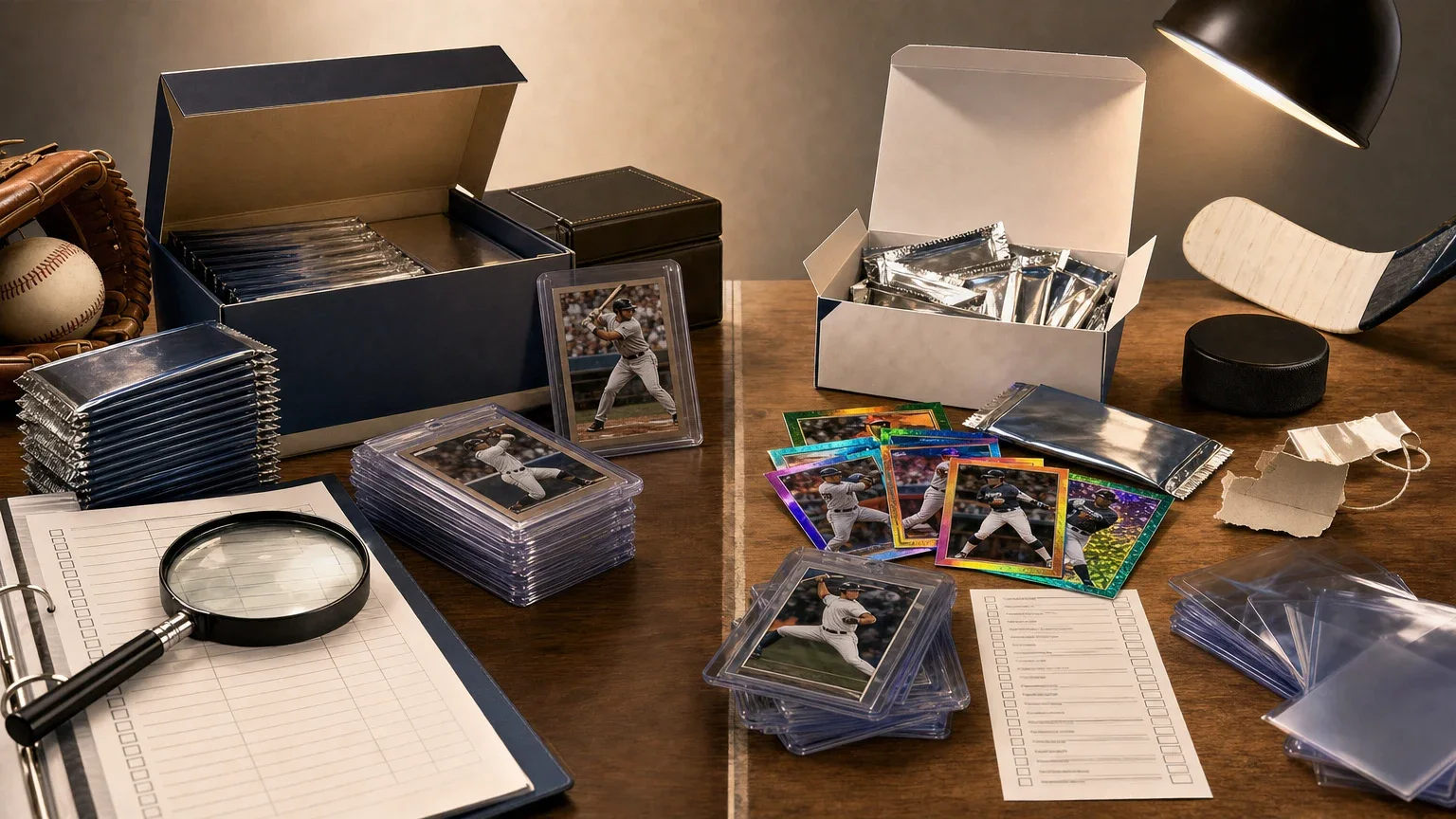
The easiest way to misunderstand a sports card release is to ask whether hobby is “better” than retail in the abstract. That question sounds simple, but the answer changes from product to product, and sometimes from version to version within the same line. Manufacturers frame hobby and retail as different configurations, not identical box types with a universal checklist and a universal set of odds.
In practice, hobby boxes often concentrate the more exclusive chase cards, while retail boxes can trade some premium access for lower price, wider availability, and occasionally their own exclusives. That broad pattern is useful, but it is not a rulebook. The real comparison lives in the product documentation: checklist, odds, configuration labels, and any notes about where specific parallels or inserts can appear.
That is why the smartest buying habit is not to judge the box by its label. It is to compare the exact checklist and the exact odds side by side, then ask a few concrete questions: Does the same insert family appear in both formats? Are there retail-only parallels? Are hobby-only autos or relics promised? Is there a guaranteed-hit structure, or only a distribution pattern?
What does hobby vs. retail actually mean?
Manufacturers generally use hobby and retail to describe separate distribution and configuration channels. Hobby products are commonly sold through hobby shops or direct channels, while retail products are designed for broader store and online availability. In that framework, hobby versions often carry the more exclusive cards, and retail versions may include cards that are only found in retail configurations.
Panini’s definitions also show why the labels matter beyond pricing. A First Off the Line version can mirror the content quantity of standard hobby while guaranteeing exclusive parallels. That means “hobby” does not automatically mean “one thing,” and “retail” does not automatically mean “another.” The category is a starting point, not the final answer.
Bullets to keep in mind:
- Hobby and retail are configuration labels, not universal quality grades.
- Some products are split across both formats; others are reserved for one.
- First Off the Line can sit alongside hobby and still change the chase structure.
- The same brand line may handle baseball, hockey, soccer, or basketball differently.
Why the checklist matters more than the box label
The checklist is where the real story lives. A box labeled hobby may include base cards, inserts, parallels, autographs, relics, or serial-numbered versions that never appear in retail. But the opposite can also happen: retail may carry its own exclusive parallels or insert families that hobby never sees. Without the checklist, you are guessing at what the box can actually contain.
Topps makes that caution especially clear by noting that checklist information reflects the intended configuration, while actual contents and odds may vary. That warning matters because even a well-built product does not guarantee every box will behave like an exact average sample. The checklist tells you the card universe; the odds tell you how that universe is distributed.
A practical example is Topps Series 1 Baseball Hobby, which lists 12 cards per pack, 20 packs per box, and 1 autograph or relic card per box. That is not just marketing copy. It defines the box structure, the expected pace of opening, and the basic hit floor. Then the checklist and odds files fill in the rest of the picture.
- Read the checklist first to learn the full card universe.
- Check whether the same parallels appear in both hobby and retail.
- Look for any format-exclusive autos, relics, or inserts.
- Treat box format as one variable, not the whole equation.
How do you read odds without overtrusting them?
Odds are best understood as a distribution map, not a promise about any specific box. They can show where a parallel appears, how often a hit may surface, and whether a card family is tied to hobby, retail, blaster, or e-Pack. But odds do not guarantee a result in any single opening. Two boxes from the same product can look very different, especially when the chase is low-numbered or autograph-heavy.
Topps’ disclaimer that contents and odds may vary is a useful reminder to avoid overreading a pack odds table. The right way to use odds is to compare formats, not to expect certainty. If hobby lists a scarce autograph family and retail lists a different retail-exclusive parallel, the question becomes which route fits your goal, budget, and tolerance for variance.
When the odds sheet is clear, it can also reveal a product’s design priorities. If the strongest chase cards are concentrated in hobby, you can see that in the configuration language. If retail has unique color or shimmer parallels, that’s visible too. The odds sheet is not there to guarantee a win; it is there to show you where the game is being played.
- Odds describe frequency, not certainty.
- Low-numbered cards can vary widely from box to box.
- A retail-exclusive parallel is still a chase card, even if it is cheaper to buy retail.
- Use odds to compare formats, not to predict a single box exactly.
What hobby boxes usually give you
Hobby boxes are usually built for collectors who want the deepest access to the premium checklist. Panini’s explainer says hobby variations tend to feature the more exclusive cards, and that is the main reason many collectors start there when a new release drops. Hobby is also where guaranteed-hit language is often most prominent, although the exact structure depends on the product.
Topps’ 2026 Series 1 Baseball hobby box illustrates the point well: the product page spells out the box format and states a guaranteed autograph-or-relic floor. Topps’ Finest UEFA Club Competitions hobby case shows a different configuration, with a smaller pack count and a different case structure. The lesson is not that hobby always looks one way. It is that hobby is where the manufacturer often places the premium version of a set’s chase architecture.
If you care about the highest-end base parallels, the best autograph access, or a more complete shot at the product’s advertised premium cards, hobby is usually the first box type to compare. That does not mean it is always the smartest buy, only that it is usually the most direct route to the set’s top tier of content.
- Hobby often concentrates the more exclusive cards.
- Many hobby boxes advertise guaranteed-hit structures, but not all do.
- Hobby configurations can vary dramatically by product.
- Use hobby when premium chase structure matters more than entry price.
What retail boxes usually give you
Retail boxes usually prioritize accessibility. Panini describes retail blasters as lower-priced and easier to find, and that alone changes the collector experience. A retail box is often the easier way to open a fresh release without paying hobby prices, especially if you want to rip more often or buy across multiple products instead of sinking your budget into one premium box.
Retail can also be more interesting than many collectors expect because it may include retail-exclusive parallels. That matters a lot. If a product’s checklist assigns specific colors, retail-only inserts, or blaster-only versions to the retail route, then the cheaper box is not merely a consolation prize. It is a different doorway into the same release, with its own chase logic.
The downside is equally important: retail may not carry the same premium hit structure as hobby. If the autograph or relic pool is concentrated in hobby, retail may offer broader access to the base set and selective exclusives, but not the same ceiling. That tradeoff is the heart of the hobby-vs-retail decision.
- Retail usually lowers the entry cost.
- Retail may have its own exclusive parallels or inserts.
- Retail may not share hobby’s best autograph or relic access.
- Choose retail when budget and availability matter most.
How configuration labels change the chase
Some of the most useful checklist pages do more than list card names. They tell you exactly where each card family can appear. Upper Deck’s Skybox Metal Universe Hockey checklist, for example, distinguishes between hobby, e-Pack, and blaster distributions inside the checklist itself. It even notes that some base cards appear in different quantities per pack depending on format. That kind of labeling is invaluable because it turns a vague box choice into a concrete comparison.
Once you start reading checklists this way, you see how format affects the chase. A parallel marked for hobby and e-Pack only is not a retail card, even if it exists in the same overall product line. A “random insert in hobby and e-Pack” is not the same as a blaster pull. The checklist is mapping the card’s actual route to market, not just its design.
This is why collectors who skip the configuration notes often overestimate what they can pull from a given box. A shiny card image or a familiar insert name may look universal, but the checklist can show it is format-specific. That distinction is often the difference between informed buying and wishful buying.
- Read format labels beside each card family.
- Different pack types can carry different base-card counts.
- A card can exist in the product without being in every format.
- Configuration language is often more important than design language.
Which box is better for hits, parallels, and value?
There is no universal answer, because the checklist determines what “value” means in each release. A hobby box with a guaranteed hit may be the better route if the hit pool is strong and the premium cards are concentrated there. But if the retail checklist contains desirable exclusives, the lower-cost box can deliver a better experience for a collector who cares more about variety than about one headline hit.
The key is to separate box price from chase structure. A higher-priced hobby box is not automatically the better buy, and a lower-priced retail box is not automatically a bargain. What matters is whether the box type gives you access to the cards you actually want, and how many of those cards are available only in that format. That is especially important when the product has multiple exclusive parallel families.
A useful mental test is this: if you pulled the best non-auto card from each format, which one would you rather own? If the answer changes once you read the checklist, that is a sign the product’s value is format-dependent. In other words, the label alone is too blunt to settle the question.
- Do not compare price alone; compare access.
- A guaranteed hit can still be less compelling than a strong retail-exclusive parallel.
- The checklist decides where the best cards live.
- Value is product-specific, not format-only.
How should a collector choose between hobby and retail?
Start with your goal. If you want the best shot at the premium checklist, hobby is usually the first stop. If you want a lower-cost entry point, easier availability, or a chance at retail-specific parallels, retail may fit better. If you are collecting for fun rather than building a top-tier chase, retail can stretch a budget further and still leave room for plenty of variety.
Then ask how much you trust the product’s odds structure. If the checklist is split cleanly and the odds are transparent, the choice may be straightforward. If the release uses multiple distribution routes, ambiguous wording, or several exclusive parallel families, it is worth slowing down. In those cases, the exact odds sheet matters more than the marketing headline.
For collectors who want a simple rule, here is the safest one: buy hobby for premium access, buy retail for affordability and format-specific exclusives, and buy neither until you have read the exact checklist if the release is split in multiple ways. That keeps the decision grounded in the product rather than the hype.
- Buy hobby when premium access is the main goal.
- Buy retail when price and availability matter most.
- Pause when a release has several split configurations.
- Let the checklist, not the box label, make the final call.
What is the PSA distinction between authenticity and grade?
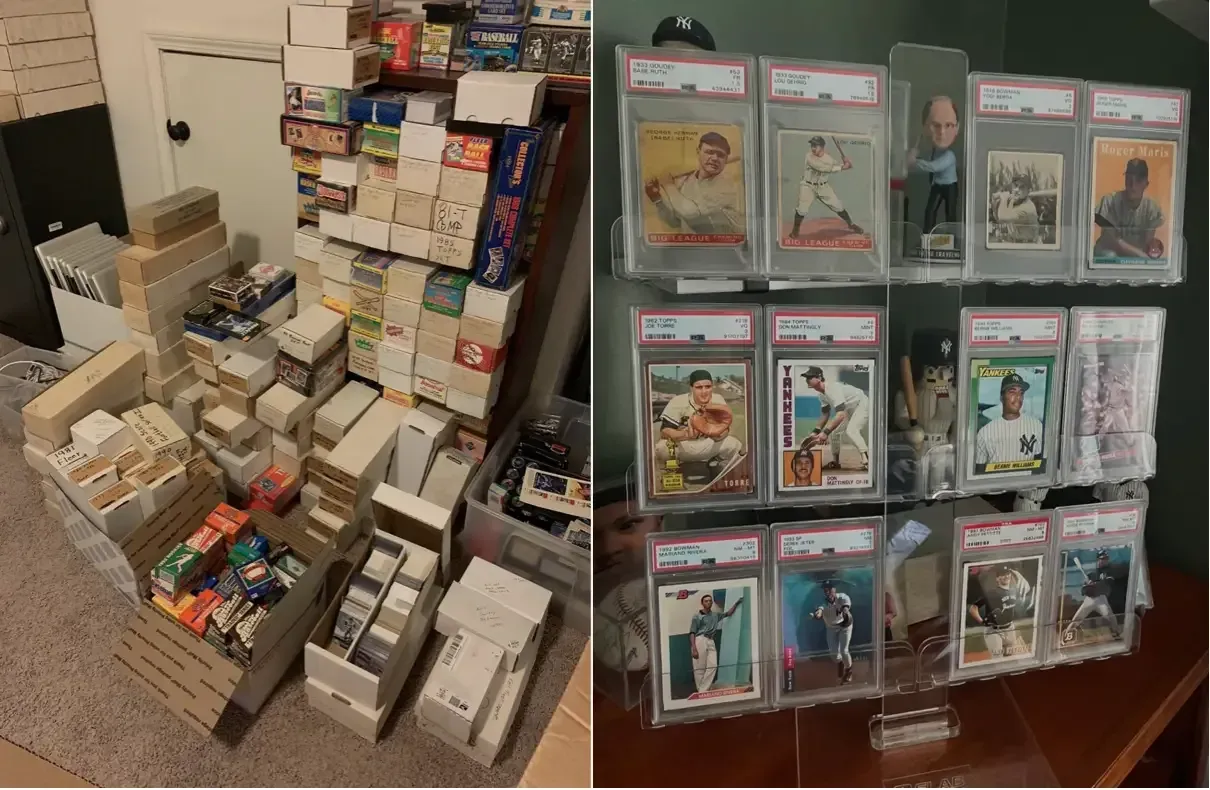
When collectors move from unopened boxes to graded or encapsulated cards, it helps to separate authenticity from numeric condition. PSA’s security page describes tamper-evident holders and certification verification tools for encapsulated collectibles. Its appraisal language also says PSA answers questions of authenticity and grade. Those are related ideas, but they are not identical.
The practical takeaway is simple. A holder or label can help confirm that a card or collectible is authentic and properly certified, but that alone does not mean you are looking at a specific numeric grade in every case. A graded card carries a condition score; an authenticated item may be encapsulated without the same kind of condition emphasis. Collectors should read the certification format carefully rather than assuming all holders mean the same thing.
That distinction matters when you are comparing cards from hobby or retail openings and later deciding what to submit, sell, or keep. The box type influences what you pull; the certification format influences how the card is presented and interpreted afterward. Those are separate decisions, and they should be treated that way.
- Authentication and numeric grading are not the same thing.
- Encapsulation can confirm certification without being a condition score by itself.
- Certification verification is helpful, but it should not replace inspection.
- Use the holder type to understand what has actually been certified.
The practical buying checklist before you open anything
Before you buy a box, compare the exact product page, checklist, and odds sheet. Then ask whether the format has its own exclusives, whether the premium cards are concentrated in hobby, and whether retail offers a better entry point for the cards you care about. That sequence is more reliable than any broad “hobby is better” or “retail is cheaper” shortcut.
It also helps to remember that the box type is only one piece of the puzzle. Pack count, guaranteed-hit language, base-set size, and configuration notes all shape the opening experience. Topps and Upper Deck show that those details are often printed right alongside the checklist, which is a signal to slow down and read them carefully. The more split the configuration, the more valuable that habit becomes.
If you collect across multiple sports, this approach travels well. Whether you are looking at baseball, hockey, soccer, or another league, the same basic questions apply: What cards exist, where do they appear, and what does the format change? Answer those three questions first, and the hobby-versus-retail choice becomes much clearer.
- Check the product page, checklist, and odds together.
- Identify exclusives before comparing prices.
- Treat pack count as one detail, not the whole story.
- Use the same method across every sport and brand.
Bottom line
Hobby vs. retail is not a popularity contest. It is a checklist-and-odds decision. Hobby often gives you the most direct access to the premium chase cards, while retail often gives you lower-cost access and sometimes its own exclusives. Neither is automatically superior, because the product itself decides where the best cards live.
The most reliable approach is to read the exact configuration notes before you buy. If the release is split across hobby, retail, blaster, or e-Pack, the checklist will usually tell you far more than the label on the box. Once you understand where the cards actually appear, the choice becomes practical instead of speculative.
- Hobby is usually about premium access.
- Retail is usually about affordability and availability.
- The checklist is the real comparison tool.
- The best box is the one that matches the exact chase you want.
Frequently Asked Questions
Is hobby always better than retail for sports cards?
No. Hobby often carries the premium checklist, but retail can include exclusive parallels or inserts that hobby does not have. The better choice depends on the exact product.
Can retail boxes have better value than hobby boxes?
Sometimes, yes. If the retail checklist includes strong exclusives or the hobby hit pool is too broad for the price, retail can be the better fit for some collectors.
Should I trust pack odds as exact promises?
No. Odds describe distribution, not certainty. Even when the checklist is clear, actual box contents can vary from one box to another.
What is the most important thing to compare before buying?
The checklist and odds sheet for the exact product. Box label, pack count, and price matter, but they do not tell you where the chase cards actually appear.
Does a PSA holder always mean a card is graded?
Not necessarily. PSA’s holder can authenticate and encapsulate collectibles, but authentication and numeric grading are related yet different ideas.
Written with AI assistance. Featured image: AI-generated editorial illustration.

Comments
0You must be signed in to comment.
Sign In