

Charles Barkley Cards Span Rookie Rarities, 90s Inserts and Modern Logoman Hits
Before Charles Barkley became one of the most recognizable voices in basketball broadcasting, he built a Hall of Fame resume as one of the most dominant and entertaining players of his era. Known for his power, rebounding and relentless style, Barkley produced a card market that reflects both his on-court greatness and his long-running popularity with collectors.
From scarce Star issues that predate his mainstream rookie card to 1990s inserts that have surged in value, Barkley offers one of the most interesting collecting runs in basketball. His cards cover multiple eras of the hobby, including the pre-wax-pack Star period, the 1986 Fleer rookie class, early 1990s inserts and modern autograph and memorabilia cards.
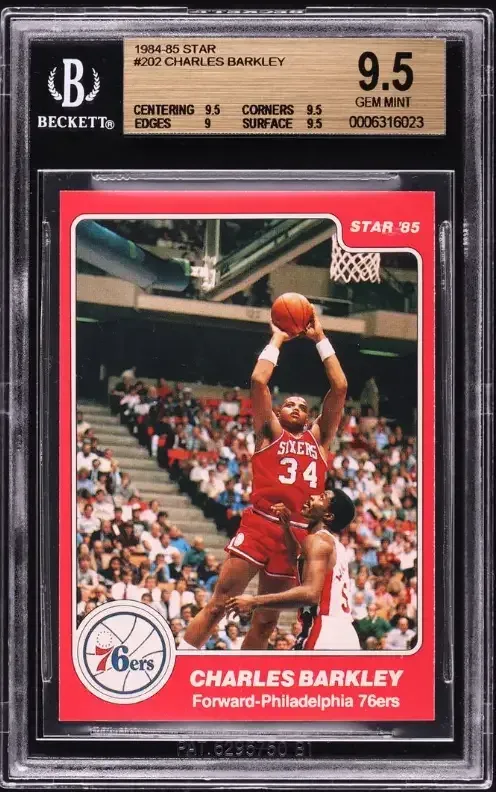
The Star XRC That Still Sparks Debate
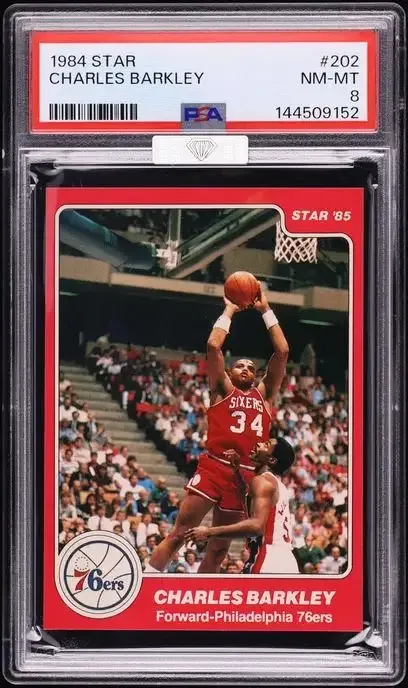
Barkley’s 1984 Star #202 remains one of the most discussed cards in his portfolio. At the time, Topps had exited the basketball market and Fleer had not yet returned, leaving Star as the only licensed NBA card producer. Because Star cards were distributed as team sets in sealed plastic bags rather than traditional wax packs, collectors still debate whether the card should be considered Barkley’s pre-rookie, extended rookie card or his true rookie.
Whatever label collectors prefer, the card is scarce in high grade. The source notes that only nine BGS 9.5 copies exist out of 943 in the population, or 0.95%. The most recent BGS 9.5 sold for $34,200 in a January Fanatics Premier Auction, while another copy brought $27,000 about a year earlier.
PSA did not accept submissions for Star cards from the early 1990s until July 2022, which has made PSA-graded examples even more notable. PSA’s database shows 429 total graded copies of Barkley’s Star card, with only 12 PSA 8s, one PSA 8.5 and none higher. The last PSA 8 sold for $21,000, up 66% from the previous sale two months earlier at $12,600.
1986 Fleer Rookie Card Remains the Iconic Barkley Issue
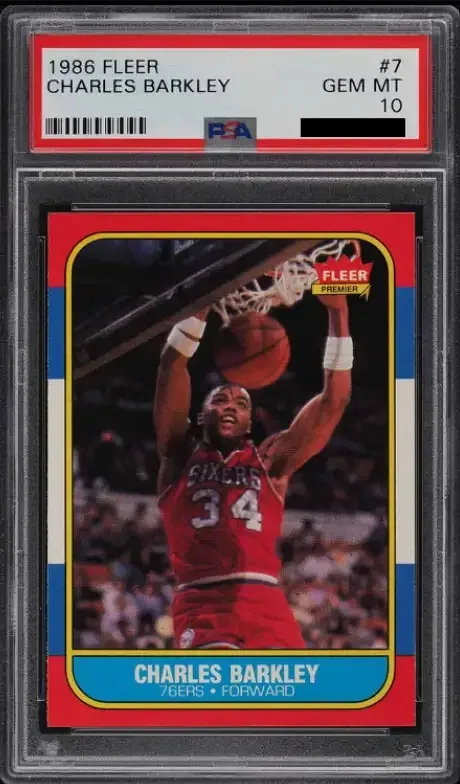
Barkley’s 1986 Fleer #7 is the card most collectors immediately associate with his playing career. By the time Fleer basketball returned to shelves, Barkley was already an All-Star, averaging 23 points, a league-leading 14.6 rebounds and 1.5 blocks per game. His rookie card is not his most expensive, but it remains his most iconic mainstream issue.
Market data in the source shows continued strength. A PSA 10 last sold for $9,900, up 21.10% year over year and 44.53% over the last two years. A PSA 9 has also climbed sharply, rising from $870 to $1,550 over the past 12 months.
1987 Fleer Second-Year Card Draws More Attention Than Ever
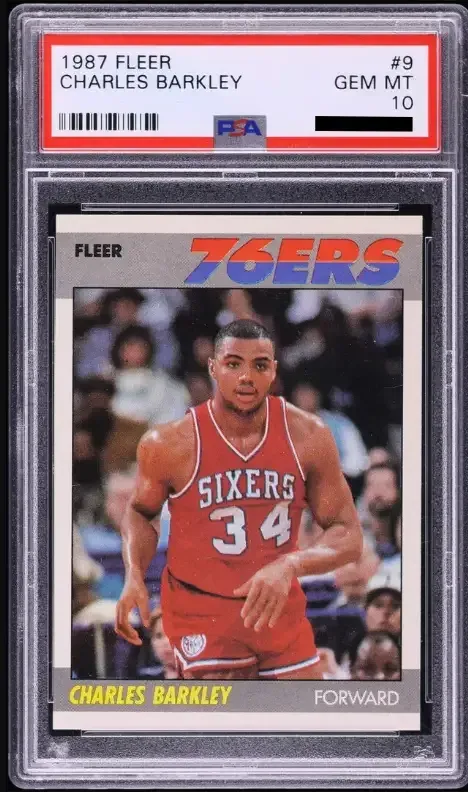
While Barkley’s rookie gets the most attention, his 1987 Fleer #9 has become a serious target for collectors chasing tougher high-grade examples. The card is substantially harder to find in PSA 10 condition than the 1986 rookie, with only 25 PSA 10s compared with 246 PSA 10s for the rookie.
Related coverage includes 8 Charles Barkley Cards That Chart His Hobby Legacy.
That scarcity has shown up in sales. The source says only five PSA 10 copies have sold over the past two years, and both examples that changed hands last month topped $10,000. That puts the second-year card above the current price of Barkley’s more famous rookie in the highest grade.
1992 Stadium Club Beam Team and 1993 Ultra Scoring Kings Stand Out in the 90s
Barkley’s Phoenix years produced some of his most recognizable insert cards. After being traded from the 76ers to the Suns in July 1992, Barkley arrived in Phoenix as an established superstar fresh off the 1992 Olympics. He won league MVP and led the Suns to the Finals, helping turn his Suns-era cards into hobby favorites.
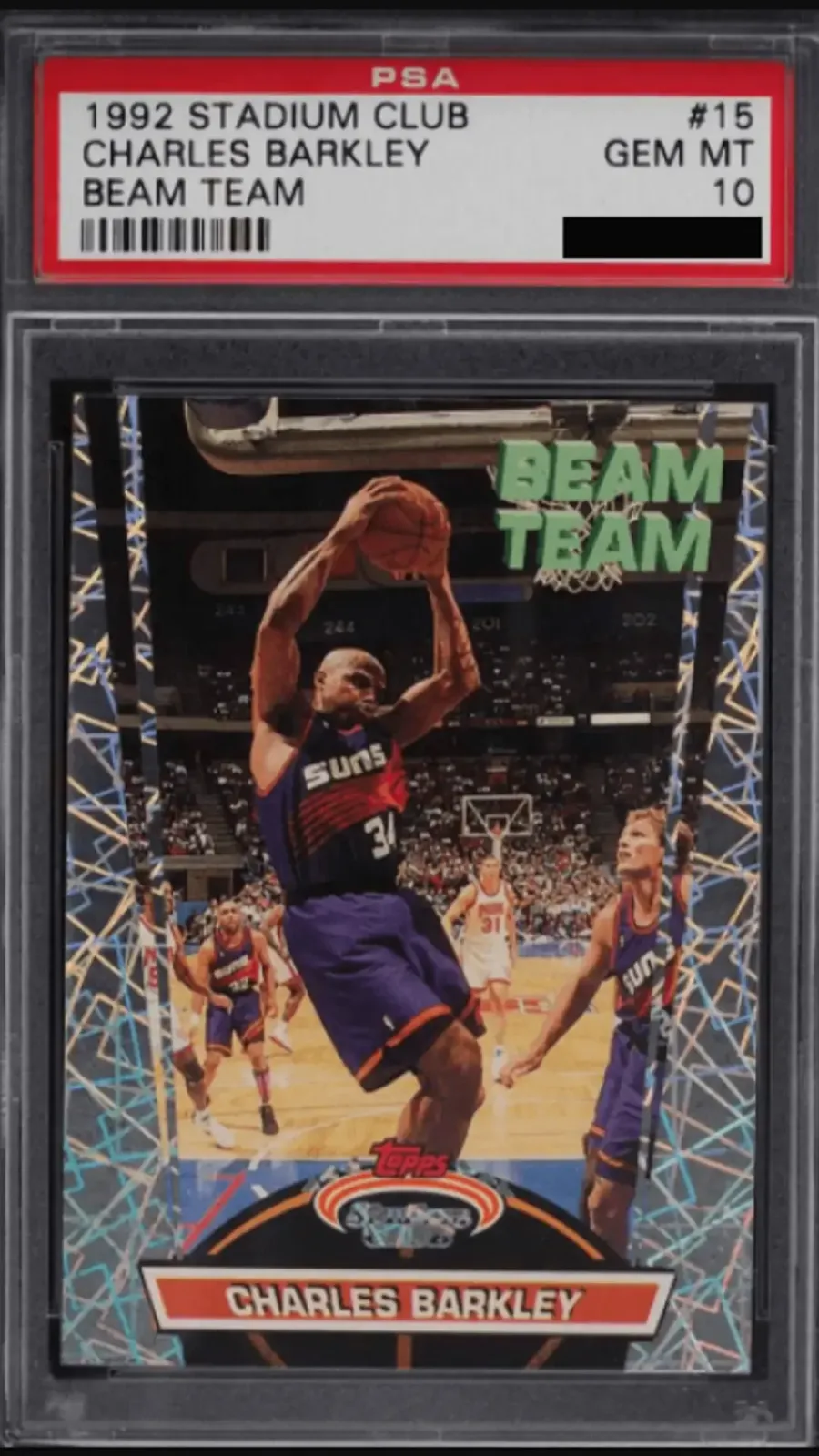
One of the most popular is 1992 Stadium Club Beam Team #15. A PSA 10 has climbed from $500 to $2,400 over the past year, while PSA 9 sales rose from $100 to a record $353.50.
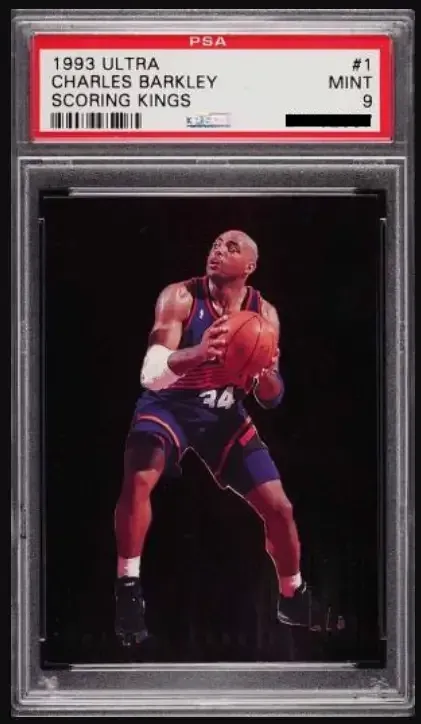
Another major mover is 1993-94 Ultra Scoring Kings #1. The source says three of Barkley’s four biggest year-over-year gainers in Card Ladder are different grades of this card. A PSA 9 rose from the $300 to $350 range in June to $965 in August and then reached $1,300 in its most recent sale. A PSA 8 jumped from $69 to $450 over 12 months, while the raw card moved from $41 to $100.
Houston-Era Cards and Late-Career Memorabilia Remain Strong
Barkley joined the Rockets in 1996 as part of a veteran core with Hakeem Olajuwon and Clyde Drexler. Houston did not produce a championship for the group, but Barkley remained a major hobby name through the late 1990s and into his post-playing years. The source notes that many of his highest-selling non-rookie cards either debuted between 1997 and 1998 or feature jersey swatches from those seasons.
Among the most valuable modern Barkley cards is a 2021 Panini Flawless Platinum Logoman Auto featuring a gold patch used to commemorate the NBA’s 50th anniversary during the 1996-97 season. The one-of-one sold for $144,000 on March 20.
Two other Barkley Logoman cards have also posted major sales in the past 10 months. A 2024 Panini Flawless Update ’22 card graded PSA 8 sold for $63,400, while a 2021 Immaculate Collection copy graded BGS 8 brought $37,200.
1997 Precious Metal Gems and E-X2001 Cards Rank Among His Top 90s Grails
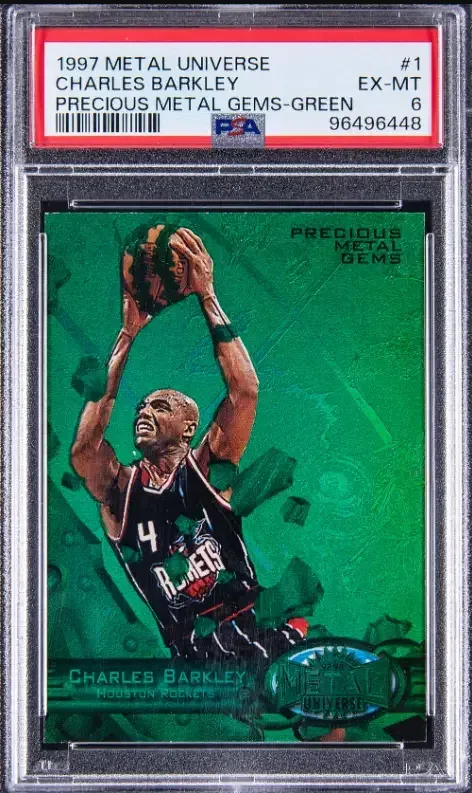
When collectors talk about Barkley’s biggest 1990s chase cards, the conversation often turns to the era’s most famous parallels. His 1997 Metal Universe Green Precious Metal Gems card, limited to 10 copies, sold for more than $79,000 in March in PSA 6 condition.
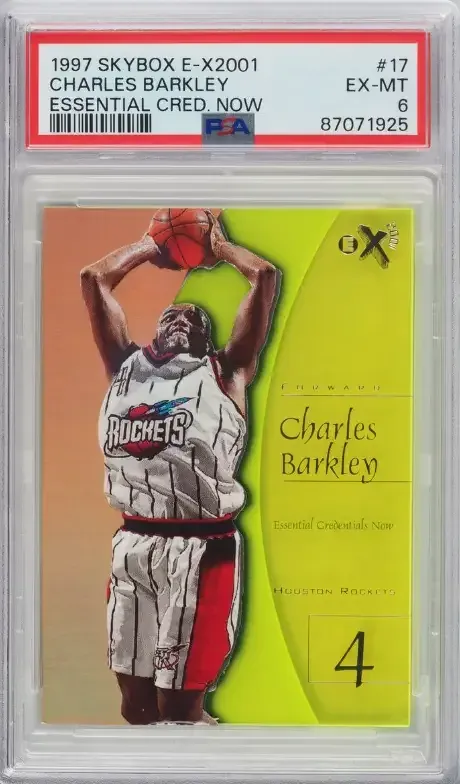
The Red and Championship PMG versions have also brought strong results whenever they surface, with the source placing them in the $30,000 to $35,000 range. Barkley’s 1997 E-X2001 Essential Credentials Now, numbered to 17, has also drawn serious money. A PSA 6 copy has sold for more than $20,000, while even a non-numerical Authentic example brought $17,000.
Why Barkley’s Card Market Still Matters
Barkley’s hobby appeal comes from a mix of production, personality and scarcity. He was a dominant rebounder and scorer, an MVP, a Finals participant and one of the most recognizable athletes of his generation. That combination gives his cards staying power across multiple collecting eras.
His market also reflects the broader history of basketball cards. The Star issues capture the sport’s early licensed-card gap. Fleer rookie and second-year cards anchor the mainstream era. 1990s inserts and parallels show how premium chase cards became central to the hobby. Modern Logoman autographs then extend his collecting story into the high-end patch and autograph market.
For collectors building a Barkley run, the checklist stretches from scarce early Star cards to the 1986 Fleer rookie, the tougher 1987 Fleer follow-up, Phoenix-era inserts such as Beam Team and Ultra Scoring Kings, and late-career or modern hits like PMGs and Flawless Logoman autos. That range is part of what keeps Charles Barkley one of basketball card collecting’s most enduring names.
Join the Sports Card Portal Page thread for this story.
Comments
0You must be signed in to comment.
Sign In