

Basketball card collectors often use the word licensed as if it covers everything at once. In practice, it rarely does. A modern basketball card can involve league trademarks, team marks, player name and likeness rights, autograph authentication, and separate memorability or grading services, all layered in different ways. If you want to read a box or a listing correctly, you need to know which right is actually being used.
That distinction matters more now because the basketball card landscape changed in 2025 and remains active in 2026. Topps returned to fully licensed NBA and NBPA basketball, while Panini still appears in NBA communications as the league’s exclusive trading card and sticker partner. At the same time, certain players and certain authenticated items can sit outside that mainstream licensing picture. The result is a hobby market where assumptions are easy to make and easy to get wrong.
For collectors, the practical goal is not to memorize every contract detail. It is to recognize the license bucket behind a card, understand when a product is relying on league rights versus player rights, and separate official licensing from third-party authentication. If you can do that, you will read checklist language, product labels, and seller claims with much more confidence.
The guide below focuses on the questions collectors actually face: who is licensed right now, what kind of rights a product may use, why player-specific exceptions matter, and how grading or authentication fits into the picture without being the same thing as licensing. It also points out where the sourced evidence is clear and where it remains incomplete.
What does “licensed basketball card” actually mean in 2026?
A licensed basketball card is not one single legal category. In the current hobby, league rights and player rights are usually separate, and the card may rely on both. League rights cover NBA trademarks, team names, and related identities. Player rights usually cover a current player’s name, image, and likeness through the NBPA framework. A product can be fully licensed, partially licensed, or tied to a narrower player-specific permission.
That is why collectors should be careful with broad product language. A box may look official because it features NBA logos or current players, but those visuals can come from different rights sources. The safest reading is to ask which entity authorized which part of the card, rather than assuming one license covers everything on the front.
This distinction also explains why some products feel similar but are not identical in rights structure. Two basketball cards can both be legitimate, yet one may lean on league and player association permissions while another may depend on a more limited player arrangement or a different treatment for retired figures. The label “basketball card” is broad; the rights behind it are not.
- League rights and player rights are separate questions.
- A product can be official without using the same permissions for every subject pictured.
- Collectors should read product language as a rights map, not just a brand name.
Which brands control the main current NBA basketball card rights?
As of the sourced 2026 evidence, Topps has returned as the NBA and NBPA’s official exclusive trading card licensee. NBA communications state that the company’s first fully licensed NBA and NBPA basketball release in this cycle is 2025-26 Topps Basketball, and that this is Topps’ first fully licensed NBA/NBPA basketball product since the 2009-10 season. That makes Topps a central brand to watch in the current basketball-card market.
Panini still appears in NBA communications as the NBA’s exclusive trading card and sticker partner under a multiyear agreement. The evidence available here confirms the partnership and Panini’s ongoing role, but it does not show a publicly visible end date for the current deal. Panini’s own basketball pages in late 2026 still show active basketball and WNBA product sections, which supports the conclusion that the company remains active in the space.
The practical takeaway is that modern basketball is not a one-brand hobby. Collectors may encounter both Topps and Panini in the same era, but the sourced materials indicate different official roles and different timing. When a seller says “official NBA card,” the first question should be which official arrangement the product is actually using.
- Topps is back in fully licensed NBA/NBPA basketball.
- Panini remains described in NBA communications as the NBA’s exclusive trading card and sticker partner.
- The available sources do not provide Panini’s exact current contract end date.
How do you read a Topps basketball card from a rights perspective?
Topps’ legal copyright page is useful because it separates categories rather than treating basketball rights as one block. It distinguishes NBA marks and team identities from active players, and it gives retired or other figures a different notice path. That structure tells collectors that a Topps basketball card is not automatically backed by the same permission package in every case.
For a current player card, Topps’ own legal page shows reliance on both NBA-side and NBPA-side notices. That is exactly what collectors should expect from a fully licensed active-player product: league marks, team identities, and player rights all need to align. This matters when comparing base cards, parallels, inserts, and autographs, because the same product line can still reflect different rights categories depending on the subject.
The retired-or-other-figures distinction is especially important for collectors who assume every basketball image works the same way. It does not. Topps’ own page suggests that retired players or other figures may sit under a separate rights framework, so it is a mistake to assume that a current-player licensing model automatically applies to legends or non-player subjects.
- Topps’ legal page distinguishes active players from retired or other figures.
- Current-player cards rely on both league-side and player-association-side permissions.
- Do not assume every image in a basketball set uses the same rights package.
Why does Panini still matter if Topps is back in the NBA/NBPA mix?
Panini still matters because collectors buy cards in the real world, not in abstract licensing charts. The NBA communications source confirms that Panini’s partnership with the league was extended under a new multiyear agreement and that Panini remains the exclusive trading card and sticker partner for the NBA globally. That keeps Panini highly relevant to collectors, dealers, and checklist readers in 2026.
Panini’s own basketball page also shows active basketball products and a Panini Authentic section for memorabilia verification. That is important because it reminds collectors that a company can be active in current products while also offering authentication services for items that may not fit neatly into a single licensing discussion. Product availability and authenticity tools are separate questions, even when they appear under the same brand umbrella.
So the right way to think about Panini in 2026 is not as a brand in the past tense. It remains part of the current basketball ecosystem, even as the market now includes Topps again. If you are comparing sets, checking a product date, or reading a seller description, the most useful question is whether the card comes from a current Panini release, an authenticated item, or a different product category entirely.
- Panini is still described as the NBA’s exclusive trading card and sticker partner in the sourced materials.
- Panini’s current pages show active basketball offerings.
- Authentication tools do not answer the same question as product licensing.
What is the Michael Jordan exception, and why should collectors care?
Upper Deck’s current company page says Michael Jordan renewed his agreement with the company and that Upper Deck has exclusive rights to produce his authenticated, autographed collectibles. That is a clear example of a player-specific rights arrangement. It is important because it sits beside, not inside, the general NBA card license conversation.
Collectors sometimes hear a famous name and assume it implies broad basketball rights. That is not safe. A player-specific autographed-collectibles deal does not mean a company controls the full NBA trading card market. It only means the company has that specific relationship for that player and that type of item.
This is why Jordan remains a useful case study for basketball collectors. It shows how a brand can have a major athlete relationship without holding the broader league and player-association rights that govern current NBA cards. In other words, a player exception is not the same as a league license, and the distinction affects how you read both product descriptions and autograph language.
- Jordan’s rights statement is player-specific, not a general NBA card license.
- Authenticated autographed collectibles are a narrower category than league-licensed cards.
- Do not treat a famous player deal as proof of full basketball licensing.
How do authentication and grading fit into basketball card licensing?
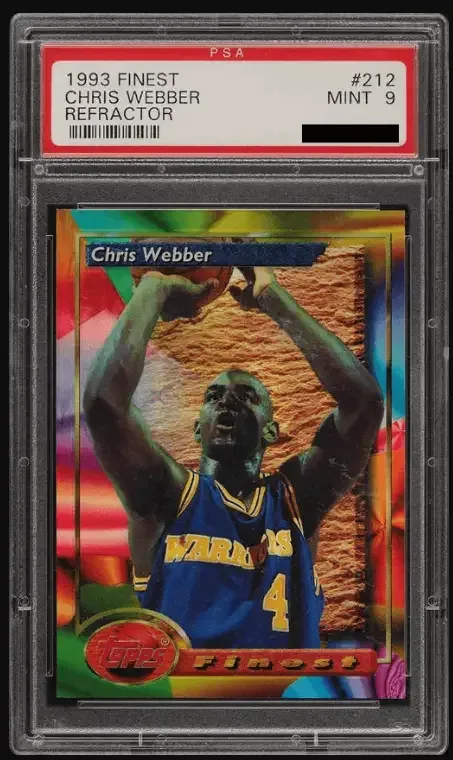
Authentication and grading are often discussed in the same breath as licensing, but they answer different questions. A card may be officially licensed and ungraded, graded but not officially licensed, or authenticated without being a league product. PSA’s materials make that separation clear by distinguishing numeric grades from Authentic or Authentic Altered style outcomes. That means a slab is not automatically a condition grade; sometimes the result is mainly an authenticity designation.
This matters especially for autographs and memorabilia items. PSA’s certification pages explain that certification numbers can be looked up, but they also warn that forged documents and copied numbers can exist. The database is a useful check, not a magic shield. Collectors should compare the item, the holder, the label, and the verification entry together rather than relying on one detail alone.
The best mindset is simple: licensing answers whether a product was authorized, grading answers what condition a card received, and authentication answers whether an item was examined as genuine. Those are related services, but they are not interchangeable. If a seller mixes those terms loosely, the safest response is to slow down and verify each layer separately.
- Licensing, grading, and authentication are different services.
- A PSA holder can be numeric-grade or authenticity-focused.
- A certification lookup helps, but it does not eliminate the risk of tampering or copied paperwork.
How should buyers verify a basketball card before paying?
Start with the product’s license bucket. Ask whether the item is NBA-licensed, NBPA-licensed, both, or something narrower such as a player-specific arrangement. That single question often clears up confusion before you even get to condition or price. If the seller cannot explain the rights structure, the listing may be too vague to trust.
Next, read the product page and the legal page together. For current Topps basketball, the NBA and Topps partnership announcement and Topps’ own legal page are the most useful starting points. For Panini, the NBA communications release and the company’s basketball pages help confirm that the brand is still active in the current basketball market. A product description without supporting context is not enough.
Finally, separate the card from any slab or autograph label attached to it. If you are buying an authenticated autograph or a graded card, check whether the certification number matches the item and whether the holder appears intact. That extra step is especially important when the listing emphasizes a label, a case, or a paper certificate more than the card itself.
- Identify the licensing category first.
- Use the product page and legal page together.
- Verify the holder and certification separately from the card’s licensing story.
What are the most common mistakes basketball collectors make?
The first mistake is treating “official NBA card” as if it always means the same thing. It does not. In 2026, the sourced materials show Topps back in the NBA/NBPA space while Panini also remains active in the league’s card market. Official status exists, but it can point to different companies and different rights structures depending on the product and date.
The second mistake is assuming every player image automatically comes with the same rights treatment. Topps’ legal page shows that active players are separated from retired or other figures, which tells you that a basketball card checklist may include multiple rights buckets in one set. A legend card and a current-roster card should not be read as identical from a licensing standpoint.
The third mistake is treating a slab as proof of everything. Grading or authentication can be helpful, but it does not settle licensing by itself, and it does not make tampering impossible. The better habit is to read the certification, inspect the holder, and then confirm that the product itself matches the claim being made.
- Do not assume one company controls every “official” basketball card.
- Do not assume every player image has the same rights path.
- Do not treat a slab or certificate as a substitute for careful verification.
What is still unclear from the public evidence?
The sourced pages provide a strong current picture, but they do not answer every detail. The most obvious gap is Panini’s exact contract end date. The NBA communications page confirms a multiyear extension and continued exclusivity, but it does not publish a visible expiration date in the material available here. That is enough to confirm the relationship, not enough to map every timing detail.
Another gap is the treatment of every possible retired-player, estate-based, or deceased-player rights scenario. Topps’ legal page gives a helpful framework, and Upper Deck gives a clear player-specific exception, but the public materials reviewed here do not comprehensively list every edge case. Collectors should be cautious whenever a listing makes sweeping claims about “all legends” or “all retired players.”
The final gap is a full league-side roster of every current card licensee in one place. The evidence here is enough to identify the major players and their roles, but not enough to treat the hobby as fully documented by a single public source. In practice, that means the safest approach is still to verify the product, the date, and the exact rights claim instead of relying on assumptions.
- Panini’s exact current contract end date is not disclosed in the sourced pages.
- Retired, estate-based, and other edge-case rights are not fully enumerated here.
- No single source reviewed here lists every current basketball card licensee in one place.
The collector’s bottom line for 2026
The cleanest way to think about basketball cards in 2026 is this: licensing is layered, not universal. Topps has returned to fully licensed NBA and NBPA basketball, Panini remains a major current NBA partner in the sourced material, and certain player-specific rights, such as Michael Jordan’s authenticated autographed collectibles relationship with Upper Deck, sit alongside the league picture rather than replacing it.
For collectors, the value of that knowledge is practical. It helps you interpret product checklists, spot overconfident listings, and ask better questions before buying. It also prevents a common hobby error: assuming that a familiar brand name automatically tells you everything you need to know about authorization, authenticity, or subject coverage.
If you want to buy basketball cards with more confidence, the habit to build is simple. Identify the rights bucket, check the date, read the product’s legal language, and treat authentication or grading as a separate layer rather than a shortcut. That approach will not solve every edge case, but it will keep you from making the most common and costly assumptions.
- Topps is back in fully licensed NBA/NBPA basketball.
- Panini remains active in the NBA card market in the sourced materials.
- Player-specific and authentication rights are separate from league licensing.
Frequently Asked Questions
Does “official NBA card” always mean the same thing?
No. In 2026, the sourced materials show different official roles for Topps and Panini, and “official” can refer to different rights structures depending on the product and date.
Is a PSA slab proof that a basketball card is officially licensed?
No. PSA grading or authentication is separate from league licensing. A slab may confirm a grade or an authenticity opinion, but it does not by itself prove the product was officially licensed by the NBA or NBPA.
Can a company have rights to one player without having the full NBA card license?
Yes. The Upper Deck and Michael Jordan example shows that a company can hold player-specific authenticated autograph rights without controlling the broader NBA trading card category.
Why should I care whether a card uses NBA rights, NBPA rights, or both?
Because different parts of a card can rely on different permissions. Knowing the distinction helps you understand checklist language, player coverage, and why two similar-looking products may not be authorized in exactly the same way.
Written with AI assistance. Featured image: AI-generated editorial illustration.
Comments
0You must be signed in to comment.
Sign In