

Why the Timing of an Autograph Matters
In the sports card market, the date a player signed a card can matter as much as the card itself. Across basketball, football and baseball, playing-day autographs often carry a major premium over signatures added after a player’s career ended. The difference is not a small quirk in pricing. In many cases, it is the main factor separating a modest card from a six- or seven-figure collectible.
The market also shows that post-career autographs are not automatically weak. If a card is scarce enough, or if the player’s signature is tied to an especially desirable era issue, later-signed cards can still bring strong results. The biggest challenge is volume. When a retired player signs too many cards, the value of those post-career autographs can fall far behind the rarest playing-day pieces.
Michael Jordan Sets the Standard in Basketball
Michael Jordan remains the clearest example of how the market rewards playing-day autographs. His autograph cards signed during his playing era have reached extraordinary levels, while later-signed cards need extreme scarcity to keep pace.
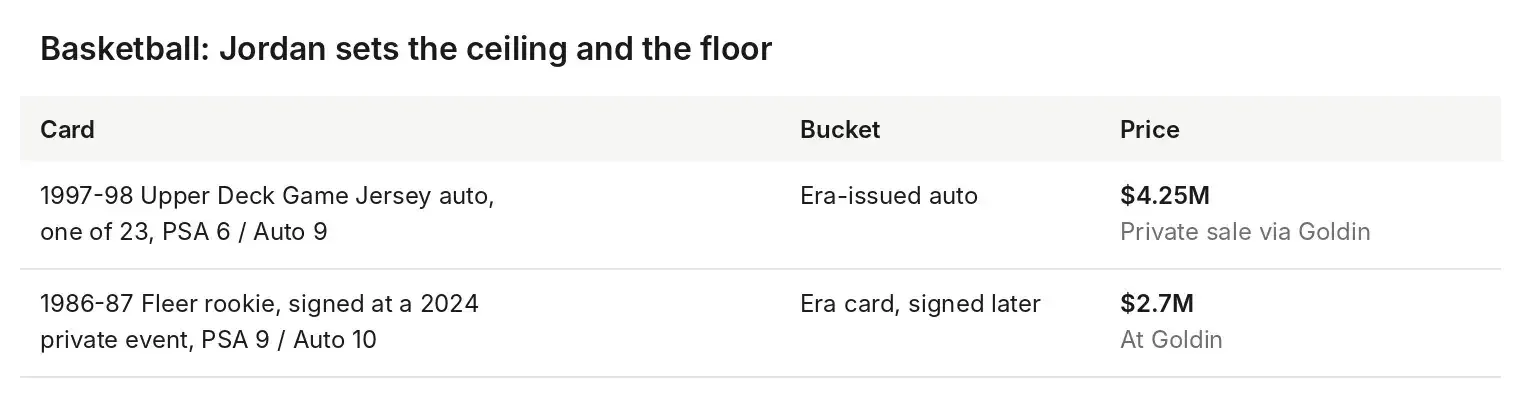
One of the strongest recent examples is a 1997-98 Upper Deck Game Jersey Autographed Michael Jordan numbered to 23, graded PSA 6, which sold for $4.25 million in a private sale through Goldin in April. That card was signed while Jordan was still a Chicago Bull, and its value reflects both the timing of the autograph and the limited print run.
By contrast, a 2006 Upper Deck Trilogy Auto Focus Michael Jordan graded BGS 10 Pristine Black Label with Auto 10, created after his retirement, recently sold on Fanatics Collect for $51,600. That is still a major result, but it sits far below the top tier of Jordan’s playing-day autograph market.
Other Jordan post-career autograph cards have also sold for impressive amounts, including examples ranging from $25,000 to $810,000. Even so, the market continues to show a clear split between era-issued autographs and later-signed cards. The lesson is simple: with Jordan, the card’s era often matters more than the signature alone.
Upper Deck holds Jordan’s exclusive autograph rights, and the company has reportedly limited the supply of certain buyback autographs. In one example, Jordan signed only 23 copies of a 2006 buyback card. That kind of scarcity can help a later-issued autograph compete, but it still does not erase the premium attached to cards signed during his playing days.
Tom Brady and the Football Premium
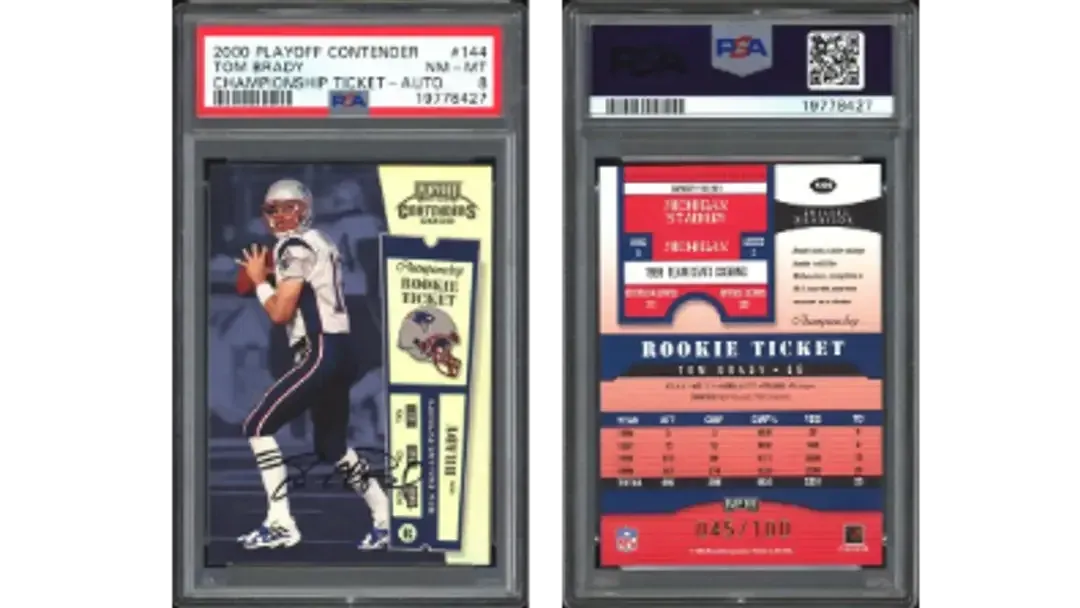
Football offers a similar pattern, and Tom Brady is the sport’s clearest case study. His top card is widely considered his playing-day autograph rookie, the 2000 Playoff Contenders Championship Ticket numbered to 100. It is also the only NFL-licensed, numbered Brady rookie with his signature.
Related coverage includes Why When an Autograph Was Signed Can Matter More Than the Ink Itself.
That card remains one of the most important football cards in the hobby. A PSA 8 example sold for $854,000 on October 17, underscoring how much demand remains for Brady’s rarest rookie autograph.
Brady’s market has also shown how retirement news can influence prices, at least in the short term. When his first retirement was announced, collectible sales jumped 198%, while rookie card sales rose 233%. Brady later announced a second retirement in February 2023, reinforcing the way major career milestones can briefly push attention and prices higher.
Even with those spikes, the long-term market still favors the playing-day cards. Brady’s 2000 Bowman Chrome rookie in PSA 10 has traded at very different levels depending on timing, with prices ranging from about $3,000 to $10,000 for earlier purchases and climbing to around $30,000 after his 2021 Super Bowl win. The card itself is not an autograph issue, but it shows how strongly Brady’s career timeline affects collector demand.
For Brady, the autograph rookie remains the key card because it combines rarity, licensing and a signature from his playing era. That combination is difficult to duplicate after retirement.
Baseball and the Rise of the Later-Signed Era Card
Baseball has its own version of the timing debate, and Topps has helped create a category built around later-signed cards. Topps Archives Signature Series takes original Topps cards from a player’s career, then has the retired player sign them on-card, number them and encase them. The product is built around the idea that an old card can become a new autograph collectible.
According to the source material, each box contains one card numbered to 99 or less, and a 2025 box in today’s market costs about $68.25. That structure makes the product accessible, but it also highlights the difference between mass-produced later autographs and the rarest era-issued signatures.
Derek Jeter is a strong example of how the market treats volume. Jeter retired after the 2014 season, and Topps signed him to a multi-year autograph deal in the fall of 2016. His rookie cards surged ahead of his Hall of Fame induction in 2021, then fell by more than 50% from their peak. The movement shows how Hall of Fame anticipation can lift prices, but also how quickly they can retreat once the event passes.
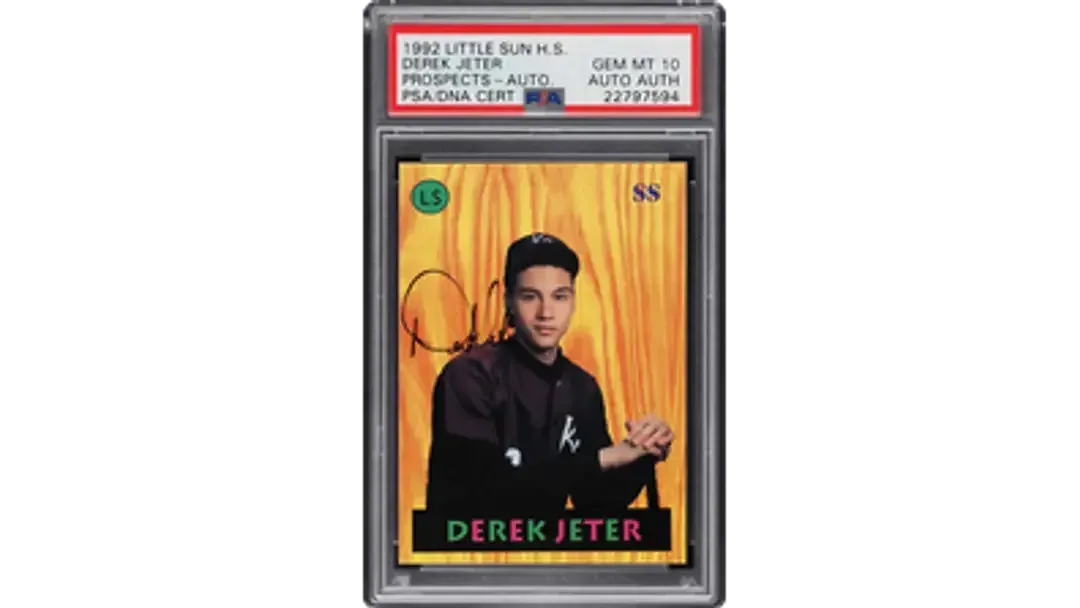
Jeter’s scarcest era autographs remain the most coveted. Among them is the 1992 Little Sun High School Prospects autographed card, which is described as one of his rarest era autos and one of the hobby’s prized baseball grails. That card stands apart because it connects the player, the era and the autograph in a way that later-signed issues often cannot match.
What the Market Says Across Sports
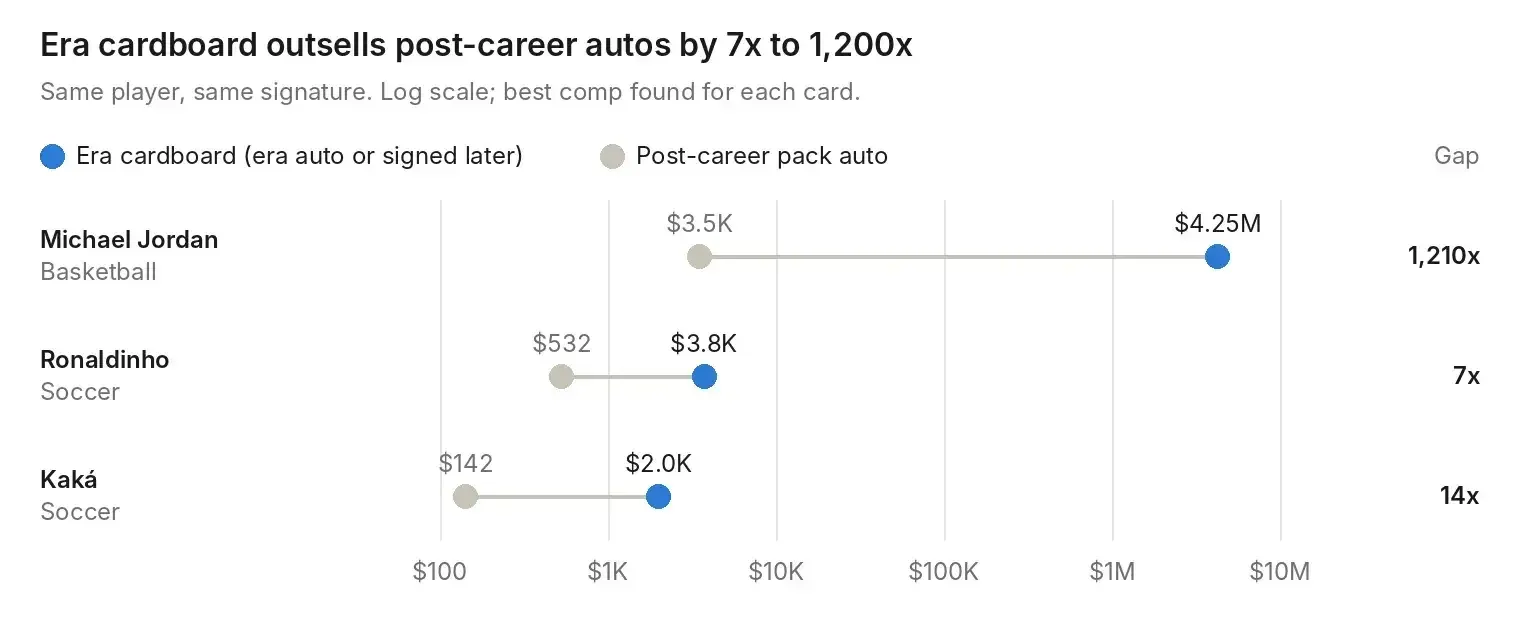
The same pattern appears beyond the major U.S. sports. Across the hobby, era cardboard can outsell post-career pack-issued autographs by huge margins. The source cites examples showing a 7x gap for Ronaldinho, a 14x gap for Kaká and a 1,210x gap for Michael Jordan.
Those numbers do not mean every playing-day autograph is automatically better than every later-signed card. Scarcity still matters, and some post-career autographs can become highly desirable when supply is limited. But the broad trend is hard to ignore. When a card is tied to the player’s actual era, collectors often pay far more for it than they do for a signature added years later.
That is especially true when the autograph is attached to a card with a direct link to a major season, a rookie year or a defining career moment. In those cases, the card becomes more than a signed piece of cardboard. It becomes a specific snapshot in time.
Scarcity, Timing and Collector Demand
The market’s biggest lesson is that autograph value is not just about the signature itself. It is about when the signature was placed on the card, how many copies exist and how closely the card connects to the player’s career.
For Michael Jordan, the premium is strongest when the autograph comes from his playing days. For Tom Brady, the 2000 Playoff Contenders Championship Ticket remains the benchmark because it is his only NFL-licensed numbered rookie autograph from his playing era. For Derek Jeter, the rarest era autos continue to hold special status even as later-signed cards entered the market.
That leaves collectors with a familiar decision. Some prefer the scarcity and historical appeal of playing-day autographs. Others look for later-signed cards as a more affordable way into a star player’s autograph market. Both approaches have a place in the hobby, but the long-term evidence continues to show that timing can be one of the most important factors in determining value.
As autograph products keep evolving, the market will likely continue rewarding cards that are tied to the right player, the right era and the right level of scarcity. In many cases, those three factors matter more than the signature alone.



Join the Sports Card Portal Page thread for this story.
Comments
0You must be signed in to comment.
Sign In