

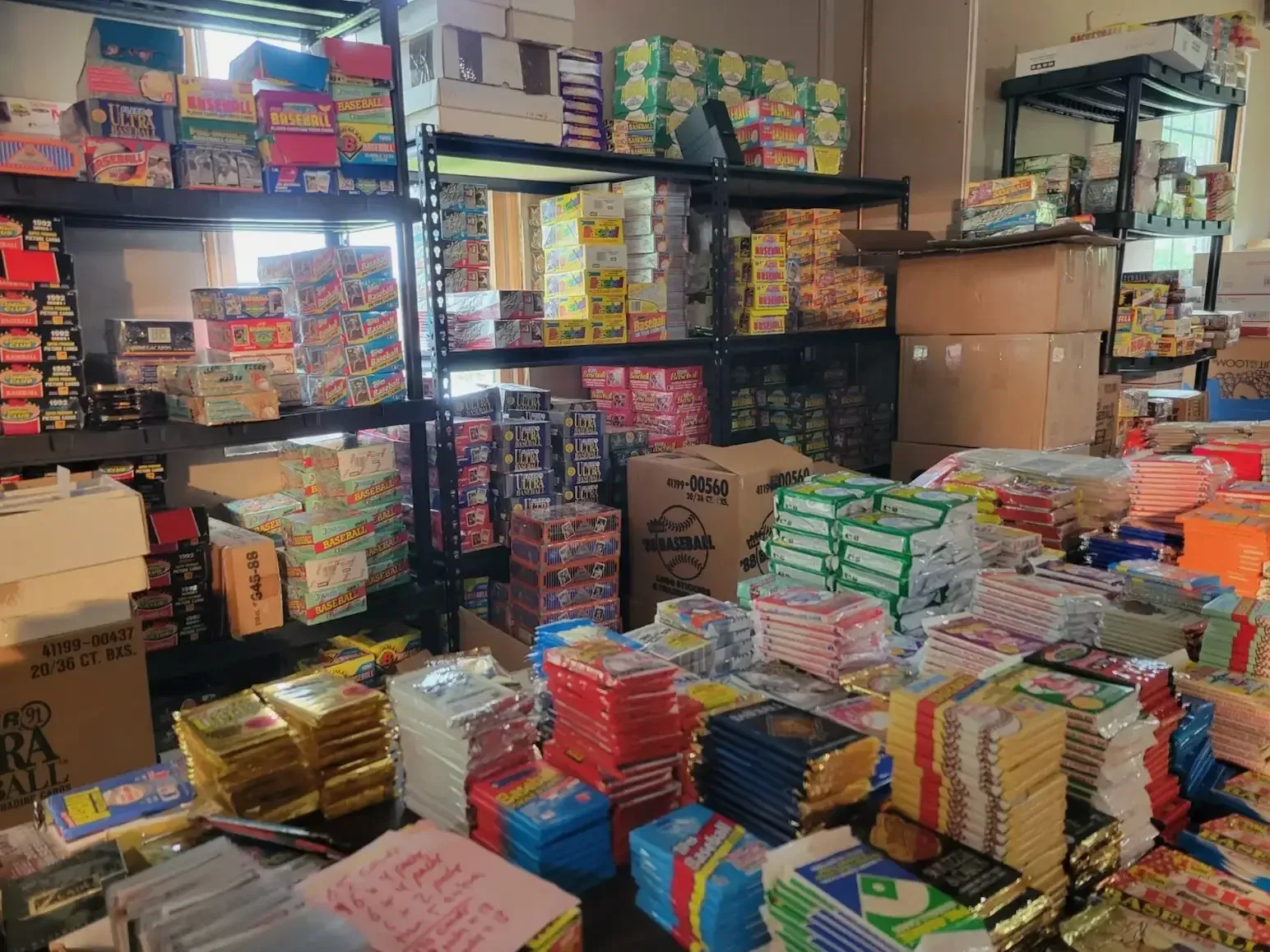
The 1980s baseball card boom changed the hobby
The 1980s produced some of the most recognizable baseball card sets ever made, but the most iconic releases are not defined by value alone. Design, historical importance, rookie-card strength, and how closely a set is tied to the decade all play a role in what collectors remember most.
The decade also marked a major shift in how collectors viewed rookies. For the first time, cards of baseball’s top young players were widely treated as financial assets rather than just childhood keepsakes. That change helped fuel a prospecting craze that became a defining part of the hobby.
Another reason 1980s sets remain so important is availability. Millions of cards were printed during the Junk Wax Era, and unopened boxes from the decade are still easy to find today. Even so, certain sets stand out because of their design, their checklist, or the way they altered the hobby.
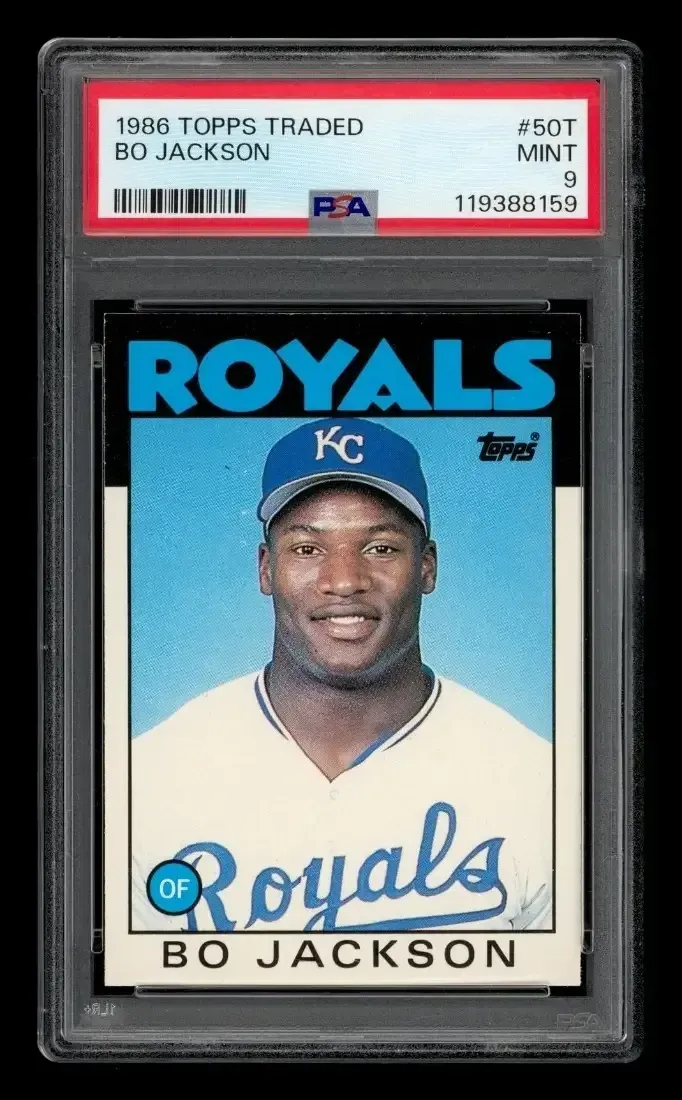
8. 1986 Topps Traded
Few sets from any era can match the rookie star power of 1986 Topps Traded. Barry Bonds, Bo Jackson, and Jose Canseco headline the checklist, while Will Clark, Andres Galarraga, and Kevin Mitchell also appear in the set.
Unlike the regular 1986 Topps release, Topps Traded was issued only as a factory set and was not available in packs. Its black-and-white border design is instantly recognizable, and the dark borders are notoriously prone to chipping. That condition sensitivity makes high-grade copies of the key cards especially desirable.
1986 Topps Traded Tiffany
Topps also produced a glossy premium Tiffany version of the set. With an estimated print run of only about 5,000 sets, the Tiffany edition is far scarcer than most cards from the Junk Wax Era. Recent PSA 10 sales cited for the Tiffany version include Bo Jackson at $25,500, Barry Bonds at $20,200, and Jose Canseco at $2,275.
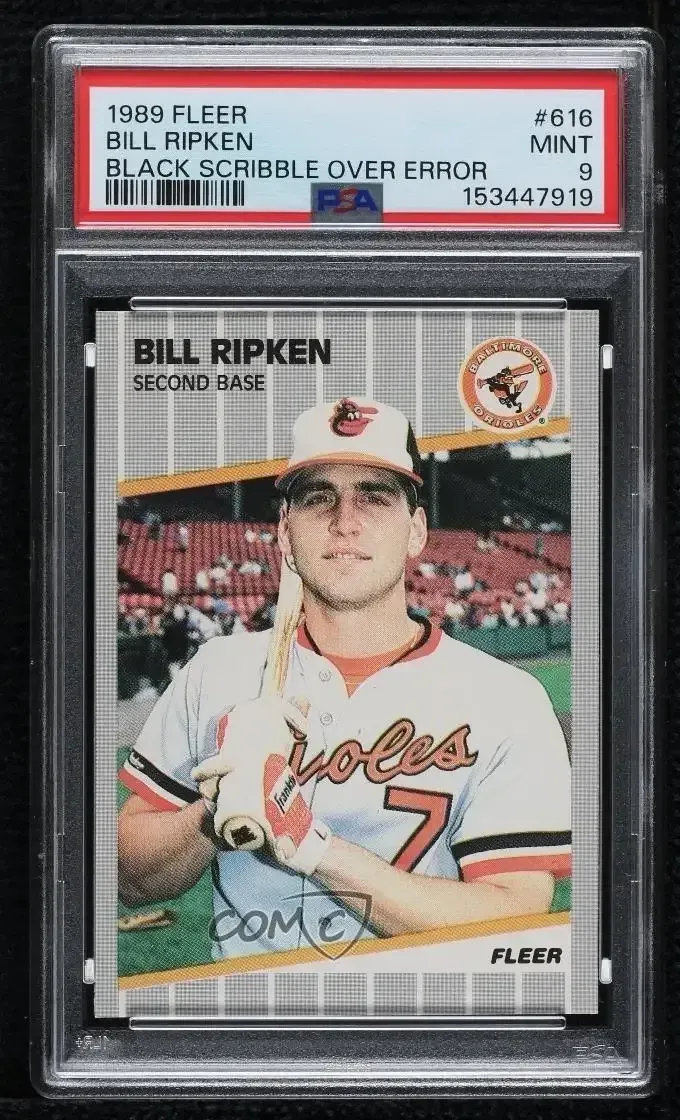
7. 1989 Fleer
1989 Fleer is one of the most memorable error-driven baseball card sets ever produced. Billy Ripken’s card, which showed an obscenity written on the knob of his bat, became one of the most famous error cards in hobby history. Randy Johnson’s rookie card also gained attention because of a Marlboro advertisement variation.
The set is also loaded with major rookie cards, including Randy Johnson, Ken Griffey Jr., Gary Sheffield, Craig Biggio, and John Smoltz. That combination of stars, errors, and variations gives the release a lasting place in hobby lore.
Related coverage includes The Eight Baseball Card Sets That Define the 1980s, From Wood Grain to Upper Deck’s Griffey Debut.
1989 Fleer Glossy Baseball
Fleer produced a Collector’s Edition Glossy version of the set in 1989. It was sold only in sealed display tins, with an estimated print run of around 30,000. The shinier cards are scarcer and typically more expensive than the standard issue. A PSA 10 Glossy Ken Griffey Jr. rookie sold for $8,100 on September 20.
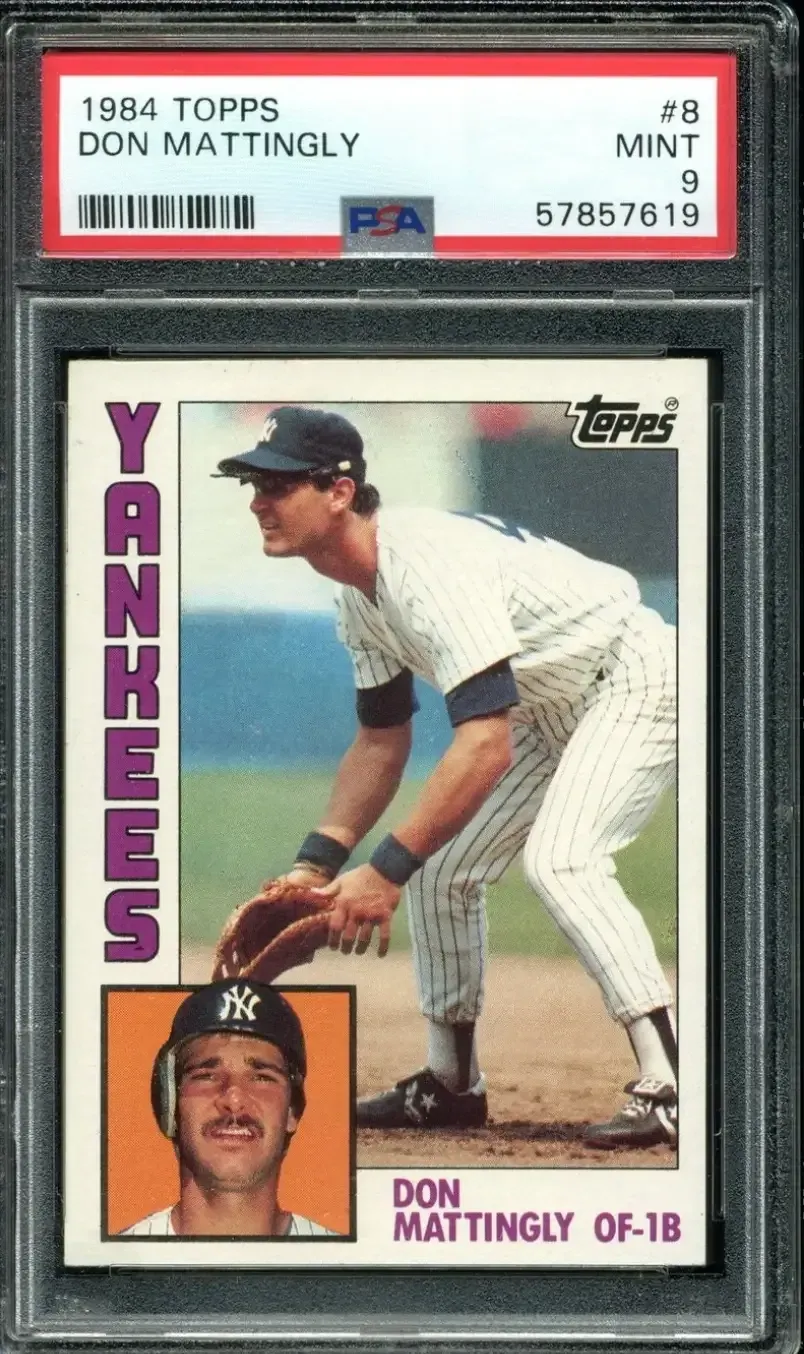
6. 1984 Topps
1984 Topps is remembered primarily for the Don Mattingly rookie card, which became one of the most sought-after cards of the decade as Mattingly emerged as one of baseball’s biggest stars in the mid-1980s. The set’s design also remains a favorite among collectors, with team names running vertically and an action photo paired with a secondary portrait.
That layout gave the cards a distinctive look that still stands out today. Beyond Mattingly, the set includes other notable cards such as Nolan Ryan and Darryl Strawberry’s rookie card.
1984 Topps Tiffany
Topps introduced Tiffany, officially known as Collector’s Edition, in 1984. It was the company’s first high-end alternative to the mass-produced base set. An estimated 10,000 1984 Topps Tiffany factory sets were produced, and the cards were not available in packs. A PSA 10 Tiffany Don Mattingly rookie last sold for $11,800 in December.
5. 1985 Topps
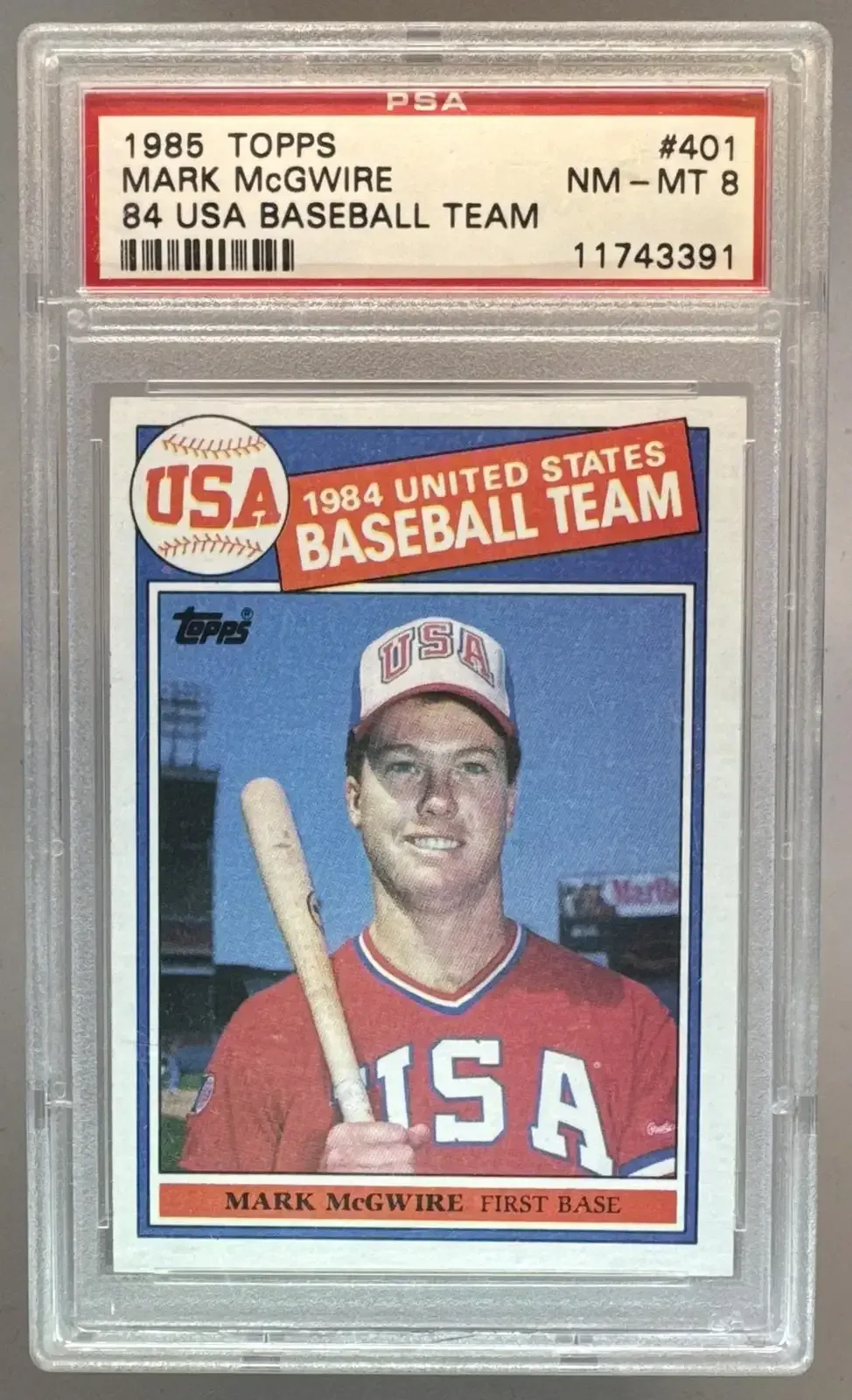
With its clean white border and colorful team-name banner at the bottom, 1985 Topps has one of the most popular looks of the decade. The set arrived as collectors were beginning to view rookie cards as serious investments, and Dwight Gooden’s rookie card was a centerpiece of the hobby when the product was released.
The checklist also includes Mark McGwire’s Team USA rookie card, which has remained one of the most recognizable cards of the era. McGwire’s card has seen renewed interest over the years, including during the 1998 home run chase and again amid broader 1980s and 1990s nostalgia.
1985 Topps Tiffany
The Tiffany version of 1985 Topps featured glossy fronts, brighter colors, and a print run of about 5,000 sets compared with several million for the standard release. Recent PSA 10 sales cited for the Tiffany McGwire reached $26,900, while a PSA 10 Tiffany Roger Clemens sold for $22,600.
4. 1983 Topps
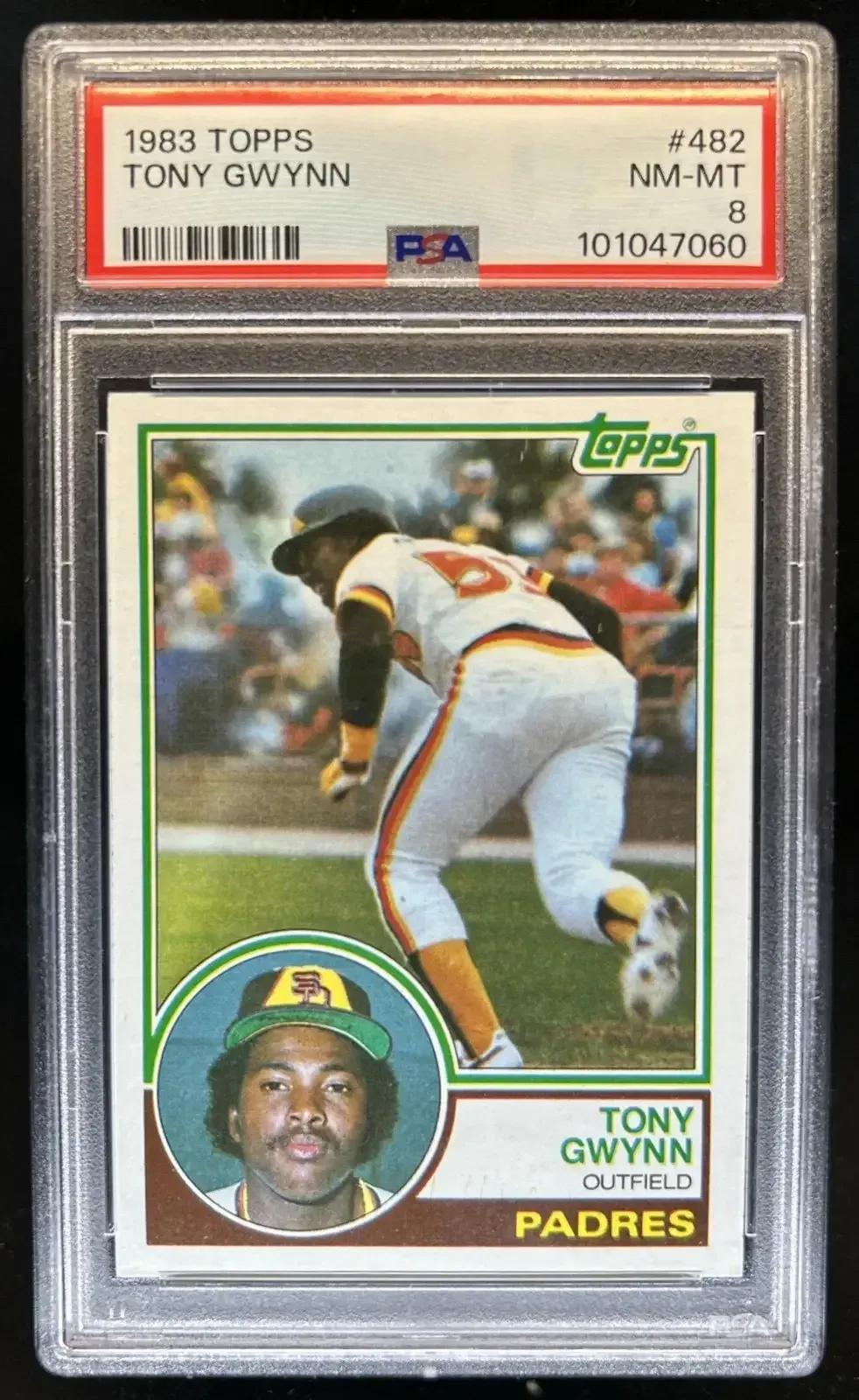
1983 Topps is widely regarded as one of the best-looking sets of the decade. Its small circular secondary photo is a clear nod to the classic 1963 Topps design, and that retro touch helped the set stand out immediately.
The release also came before the overproduction of the mid-to-late 1980s Junk Wax Era, which helped many of its cards retain stronger value than later mass-produced issues. The rookie-card class is exceptional, featuring Tony Gwynn, Wade Boggs, and Ryne Sandberg, all of whom went on to Hall of Fame careers.
3. 1984 Donruss
1984 Donruss helped establish Donruss as a legitimate competitor to Topps. Its clean portrait design, perceived higher quality, and more limited availability made it more appealing to many collectors at the time. The set also introduced the Rated Rookie brand, which remains closely tied to Donruss to this day.
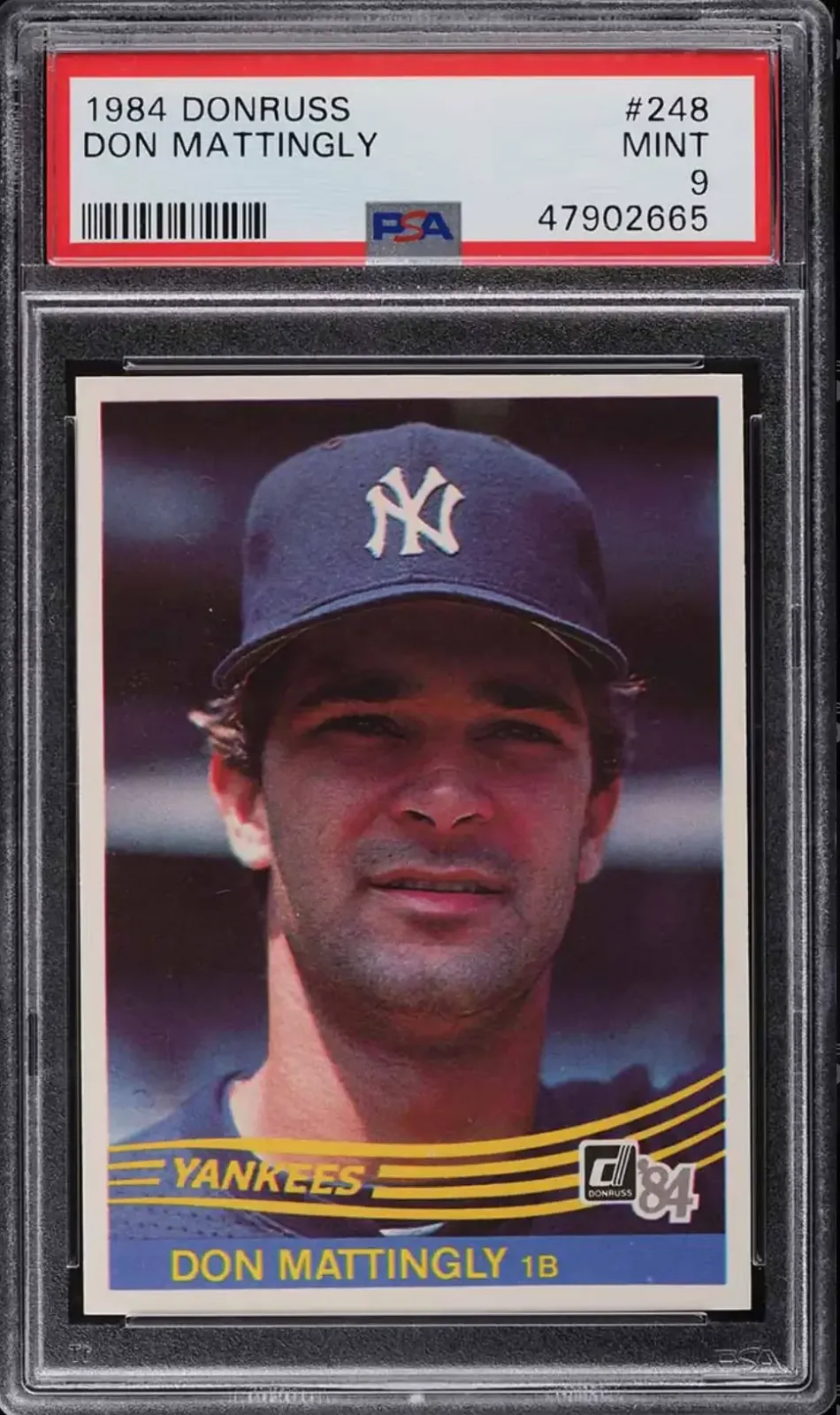
The clear centerpiece is the Don Mattingly rookie card. Even though Mattingly also appeared in Topps and Fleer in 1984, his Donruss card became the most coveted of the three and is often viewed as the signature card of the entire decade. Other notable cards include Darryl Strawberry and Joe Carter’s Rated Rookie.
Price differences between grades can be dramatic. A PSA 9 copy of the Don Mattingly rookie recently sold for $380, while a PSA 10 sold for a record $9,455, showing how strongly collectors value top-condition examples.
2. 1987 Topps
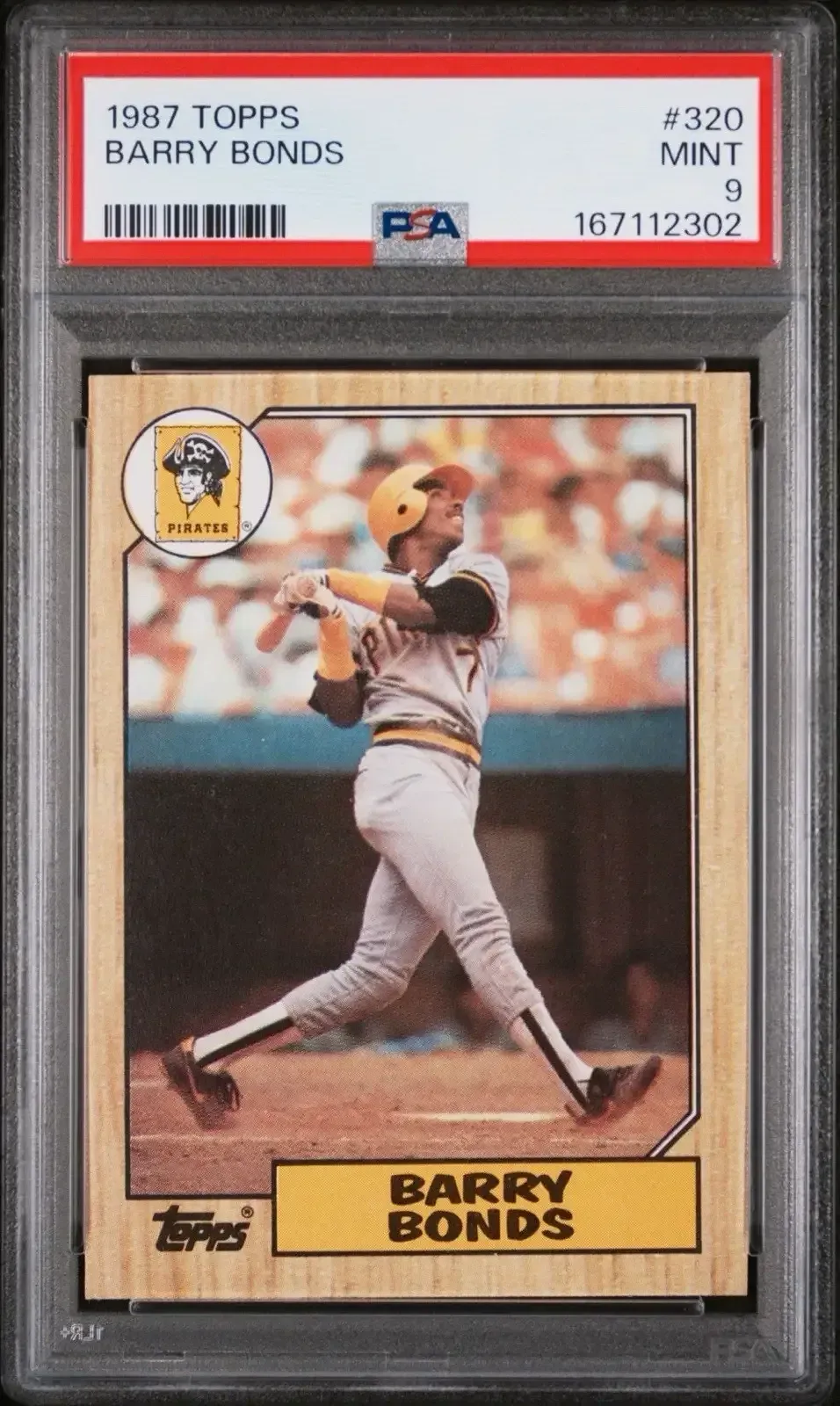
No baseball card design is more closely associated with the 1980s than 1987 Topps. Its wood-grain borders were inspired by the 1962 Topps set, but for an entire generation of collectors, the design became the visual shorthand for the Junk Wax Era.
The checklist is packed with major rookie cards, including Barry Bonds, Bo Jackson, Mark McGwire, Barry Larkin, and Rafael Palmeiro. The set was produced in enormous quantities, with an estimated 2.5 million copies per card, which is why most examples remain inexpensive today despite the strength of the rookie class.
1987 Topps Tiffany
An estimated 30,000 factory sets of 1987 Topps Tiffany were produced. While that number may sound high, it was still very limited for a late-1980s baseball card release. Recent PSA 10 sales cited for the Tiffany version include Barry Bonds at $5,800 and Bo Jackson at $1,830.
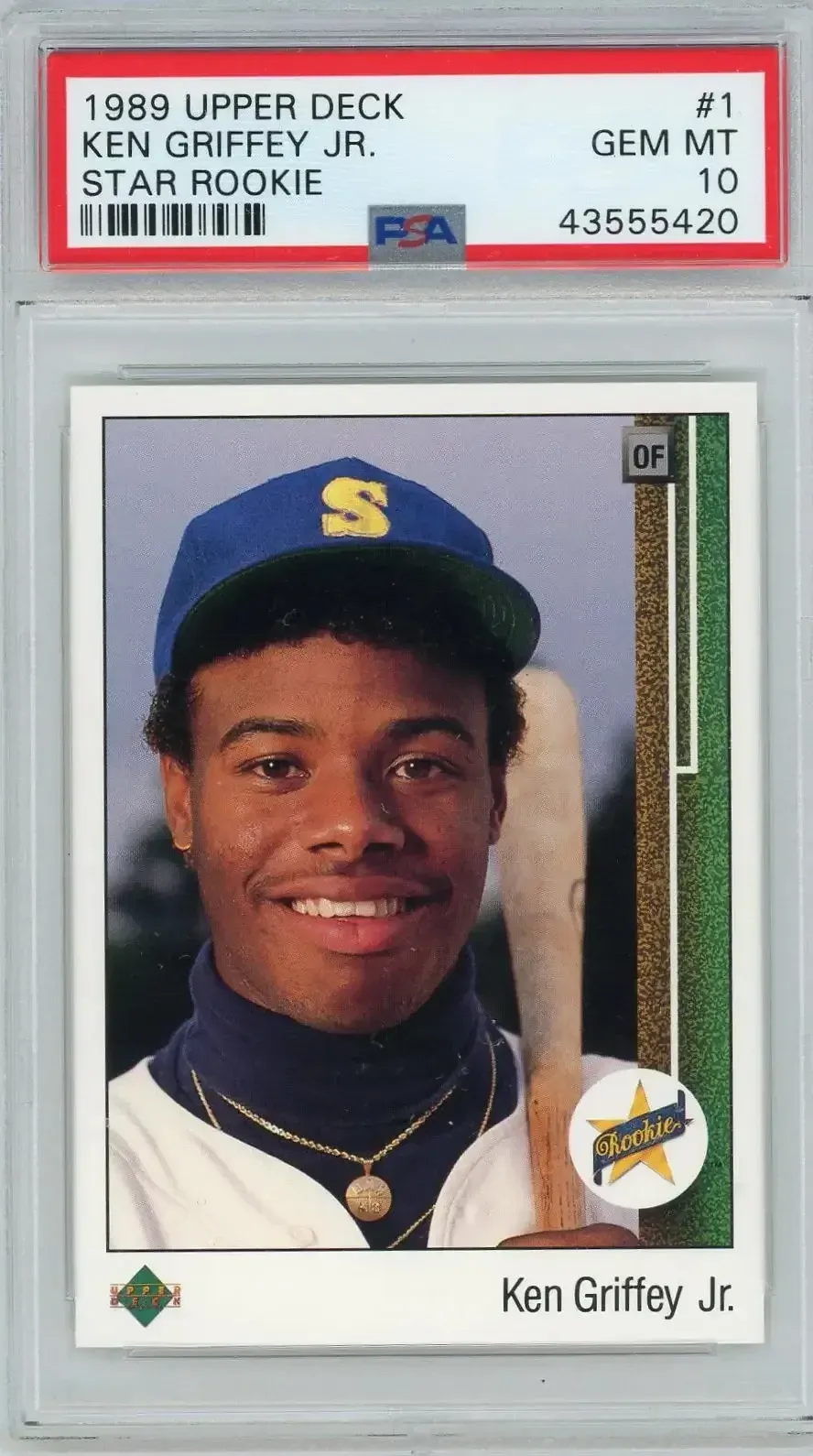
1. 1989 Upper Deck
1989 Upper Deck changed baseball cards by introducing premium quality to the industry. The company moved away from traditional flimsy cardboard and used high-quality white cardstock, strong photography, and holographic seals on the back. At 99 cents per pack, the product was expensive for the time, especially compared with the 45-cent price of a pack of 1989 Topps.
Ken Griffey Jr.’s Star Rookie became the face of Upper Deck and one of the most recognizable modern baseball cards ever made. Placing Griffey as card No. 1 proved to be one of the most important checklist decisions in hobby history. The set also includes rookie cards of Randy Johnson, John Smoltz, and Gary Sheffield, giving it both a landmark presentation and a strong rookie class.
Collector demand for Griffey remains unusually strong across grades, and the set’s importance to the hobby has only grown over time. Recent PSA 10 prices cited for key cards include Griffey at $5,000, Dale Murphy’s Reverse Negative Error at $2,000, and Randy Johnson’s rookie card at $307.
Even decades later, 1989 Upper Deck stands as the release that helped redefine what a baseball card product could look and feel like, making it the most iconic baseball card set of the 1980s.
Join the Sports Card Portal Page thread for this story.
Comments
0You must be signed in to comment.
Sign In