

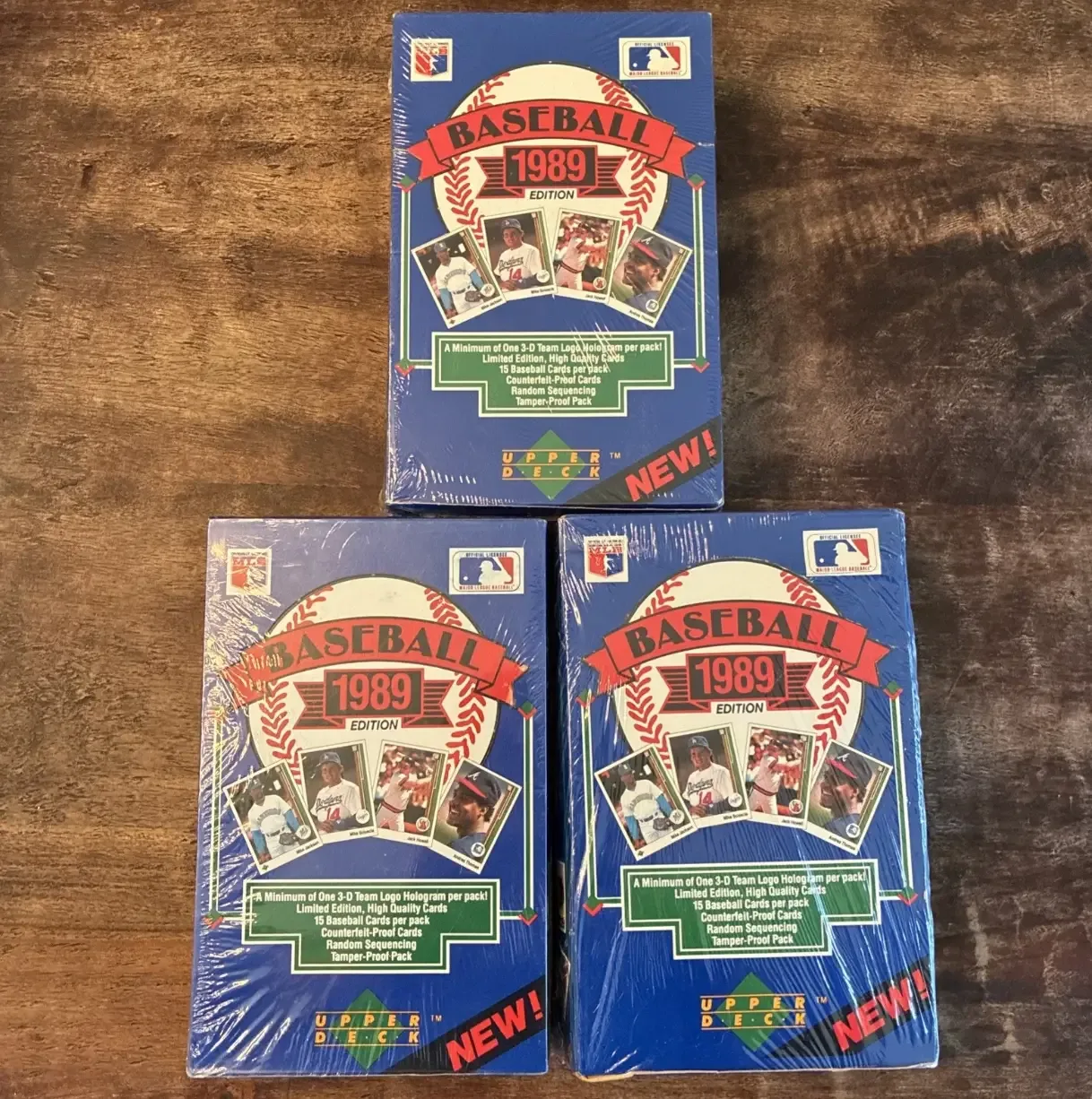
Why 1989 Upper Deck Changed Baseball Cards
When Upper Deck entered the baseball card market in 1989, its 99-cent packs were considered expensive compared with the 45-cent packs collectors were used to buying from Topps. What seemed pricey at the time quickly became one of the most important releases of the Junk Wax Era. Upper Deck was not simply charging more for a standard product. The company introduced a cleaner look, tamper-resistant foil packs, full-color photography on both sides of the cards, and a hologram on the back of every card to help deter counterfeiting. It also left out the traditional stick of bubble gum that often stained cards in older packs.
The result was a premium-feeling set that collectors embraced immediately. Demand rose so quickly that packs with a suggested retail price of 99 cents soon sold for much more. In July 2026, an unopened 36-pack hobby box sold for $4,650, showing how much interest the set still commands decades later.
Upper Deck also built an 800-card checklist loaded with rookies, stars, and memorable variations. The set is best known for Ken Griffey Jr.'s rookie card, but several other cards from the release have become important to collectors for their scarcity, errors, and long-term appeal.
The Story Behind the 1989 Upper Deck Checklist
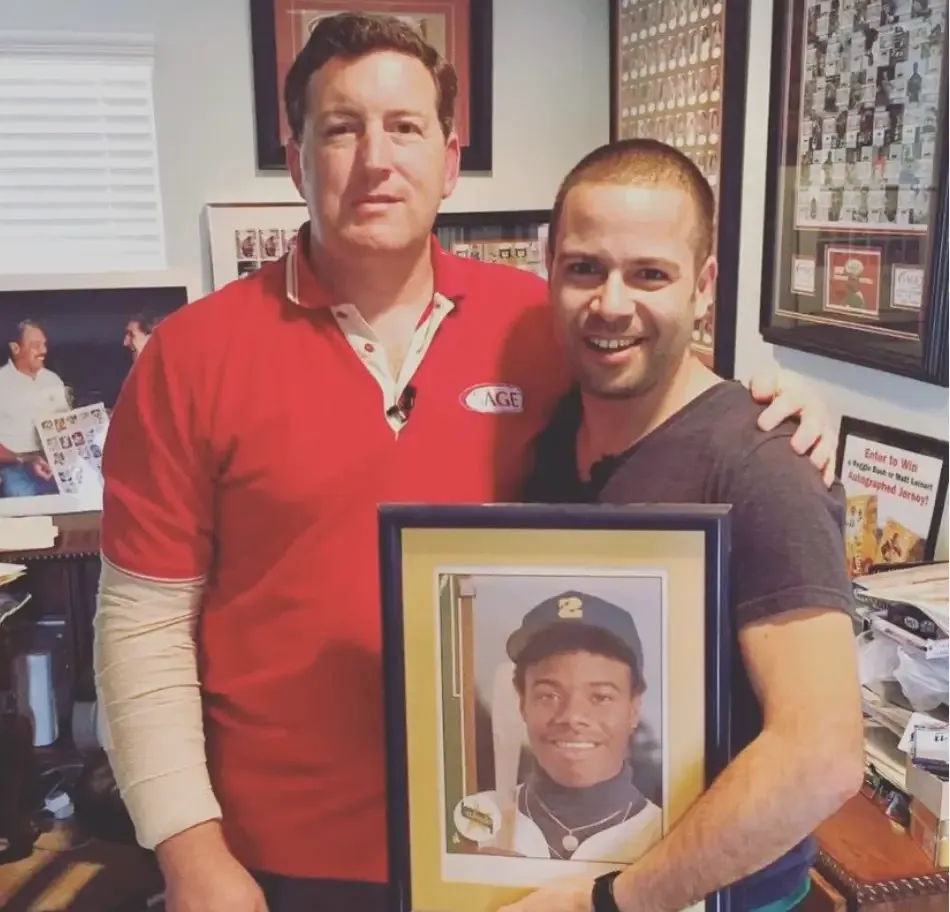
One of the more surprising details from the set's creation is that Tom Geideman, who was only 18 years old and Upper Deck's first employee, helped shape the checklist. Geideman had worked in an Anaheim, California card shop while still in high school and developed a reputation for identifying young players he believed would become valuable. When the shop's owners helped launch Upper Deck, they brought him in to help build the new brand.
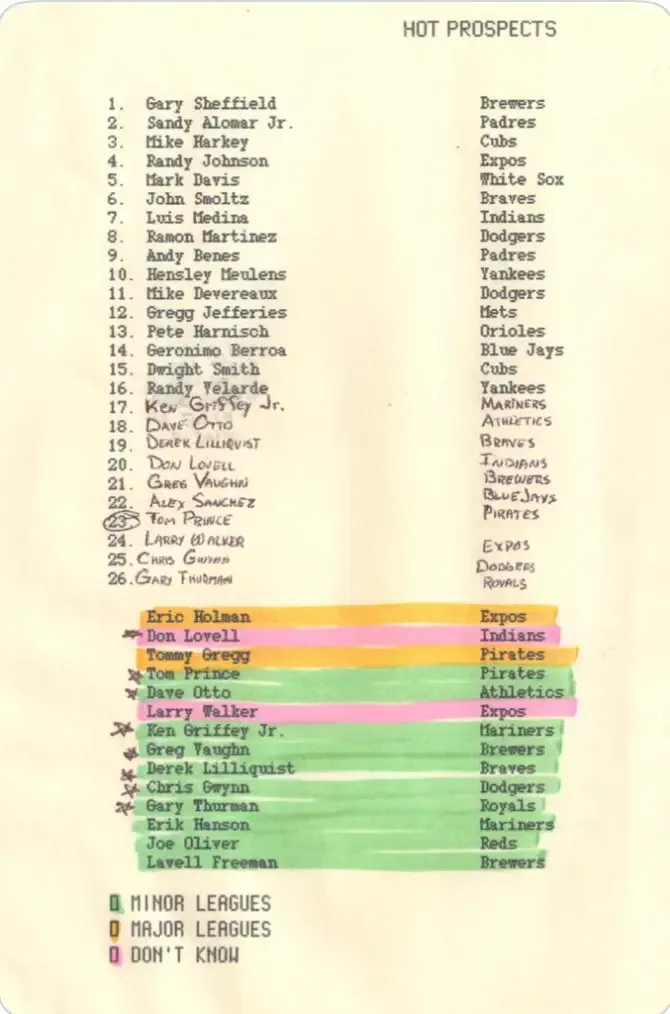
For the Star Rookie subset, Geideman reportedly used a Baseball America magazine to narrow the field. Among the names he considered were Gregg Jefferies, Gary Sheffield, Sandy Alomar Jr., and Ken Griffey Jr. Griffey was not the obvious choice at the time. Jefferies had already reached the majors and was one of the sport's most hyped prospects entering 1989, while Griffey had not yet played a Major League game and had not advanced beyond Double-A. Geideman, however, was a Mariners fan and chose Griffey, helping create one of the most recognizable baseball cards ever produced.
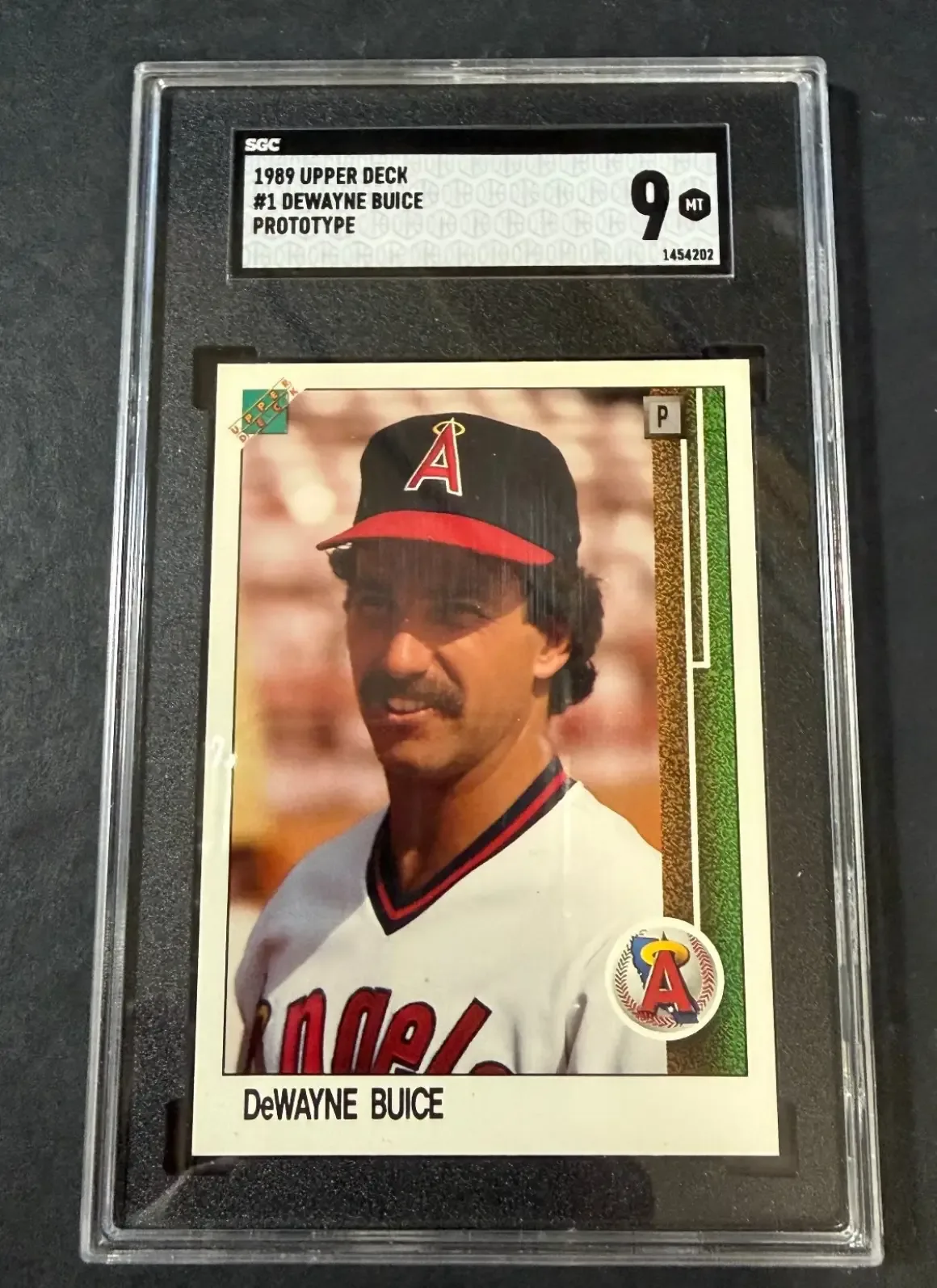
Before the set reached collectors, Upper Deck also produced prototype cards of DeWayne Buice to promote the new brand to dealers. That early step helped build anticipation for a product that would soon become a benchmark for modern baseball card design.
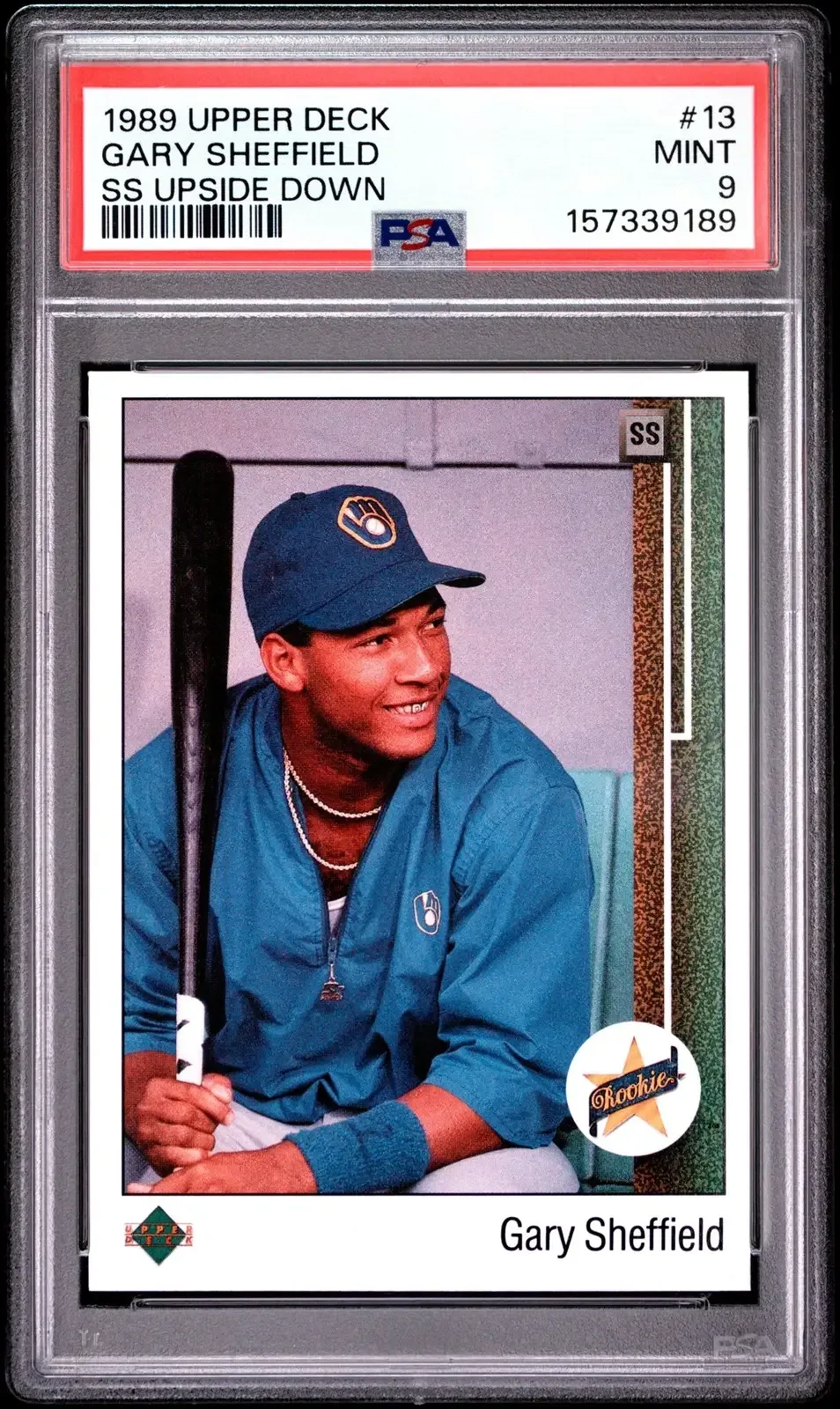
6. Gary Sheffield 1989 Upper Deck #13 Star Rookie
Gary Sheffield's 1989 Upper Deck rookie card is one of the set's key early cards and a reminder of how loaded the checklist was. Sheffield was ranked No. 1 on Geideman's original prospect list, ahead of Griffey, and went on to build a career that would have put him in Hall of Fame conversation even without the controversy that has followed his name.
Collectors also chase a notable printing variation on this card. During early printing runs, the small text graphic containing the SS position was accidentally printed upside down. The standard card remains far more common, while the upside-down SS version is much scarcer. PSA population data in the source shows 9,884 total graded examples of the regular card and only 670 graded examples of the error version.
Related coverage includes The 1989 Upper Deck Baseball Cards That Still Define the Set.
Recent sales cited in the source include a PSA 10 regular card at $56 and a PSA 9 at $5.50. For the upside-down SS variation, a PSA 10 sold for $500 and a PSA 9 sold for $35.
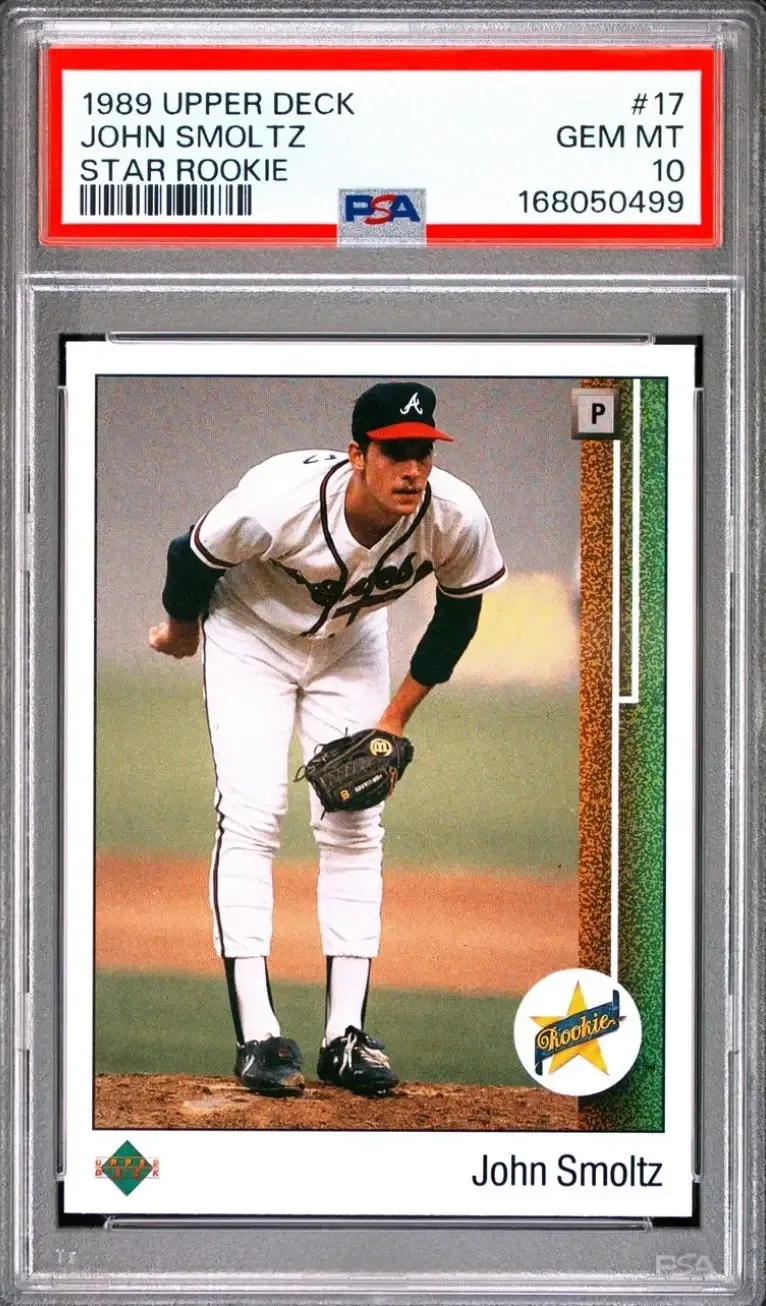
5. John Smoltz 1989 Upper Deck #17 Star Rookie
John Smoltz's rookie card is widely regarded as his most desirable mainstream rookie from the era. The card stands out because of its action shot, which felt fresh compared with the posed portraits and close-up headshots common on baseball cards in the late 1980s.
Smoltz went on to become a Hall of Fame pitcher, and the card has remained a favorite among collectors who focus on key rookies from the set. The source notes a recent PSA 10 sale of $75 and a PSA 9 sale of $15, with PSA population totals of 7,252. It also notes that a PSA 10 autographed version recently sold for $491.
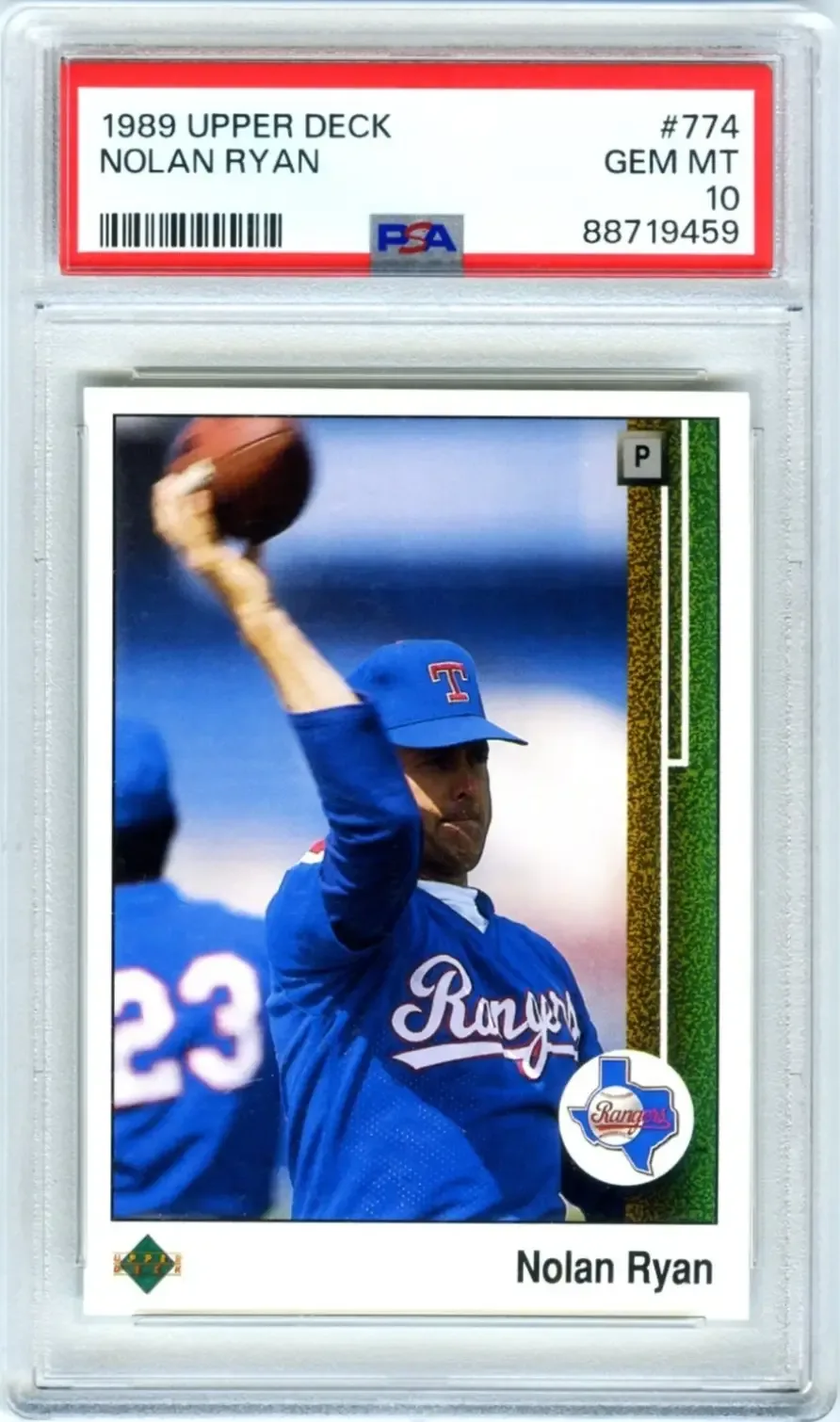
4. Nolan Ryan 1989 Upper Deck #774
Nolan Ryan appears twice in 1989 Upper Deck, but card No. 774 is the one collectors often refer to as the Nolan Ryan Throwing Football card. Ryan was famous for using a football during warmups and between starts, a routine he said helped stretch his arm and keep his shoulder loose. The image on this card captures that part of his preparation and gives the card a different feel from many of the set's standard baseball action shots.
Ryan's other appearance in the set is card No. 145, which features a triple-exposure pitching image. Together, the two cards show how Upper Deck used photography in ways that were more dynamic than many earlier issues.
The source lists a recent PSA 10 sale of $198 for card No. 774 and a PSA 9 sale of $38. PSA population totals are 3,401. It also notes that an autographed version of the card reached an all-time high of $1,078 on September 1.
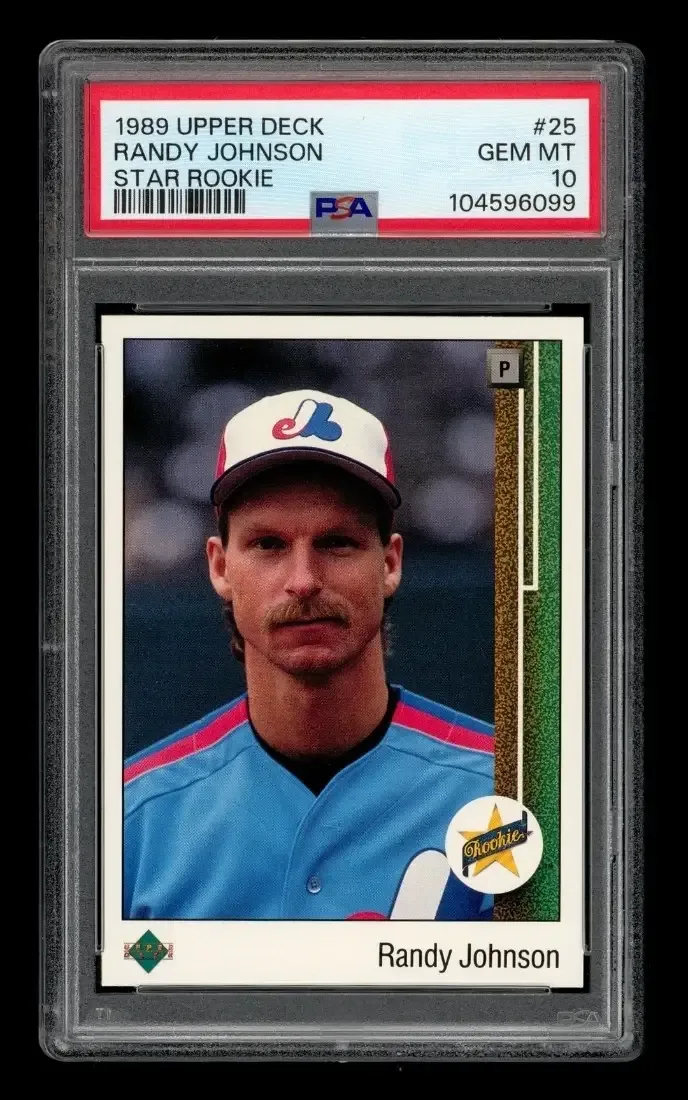
3. Randy Johnson 1989 Upper Deck #25 Star Rookie
Randy Johnson's rookie card remains one of the most recognizable cards from the set, and it is still relatively affordable compared with several other major rookies from the same release. Despite Johnson's five Cy Young Awards and status as one of the greatest pitchers in baseball history, the card is not priced at the level many collectors might expect.
The source says raw copies often cost less than $5. It also notes that collectors sometimes search for Marlboro errors on this card, but that confusion stems from his 1989 Fleer rookie rather than this Upper Deck issue.
PSA population data in the source shows 37,878 total graded examples. Recent sales listed include a PSA 10 at $267 and a PSA 9 at $36.
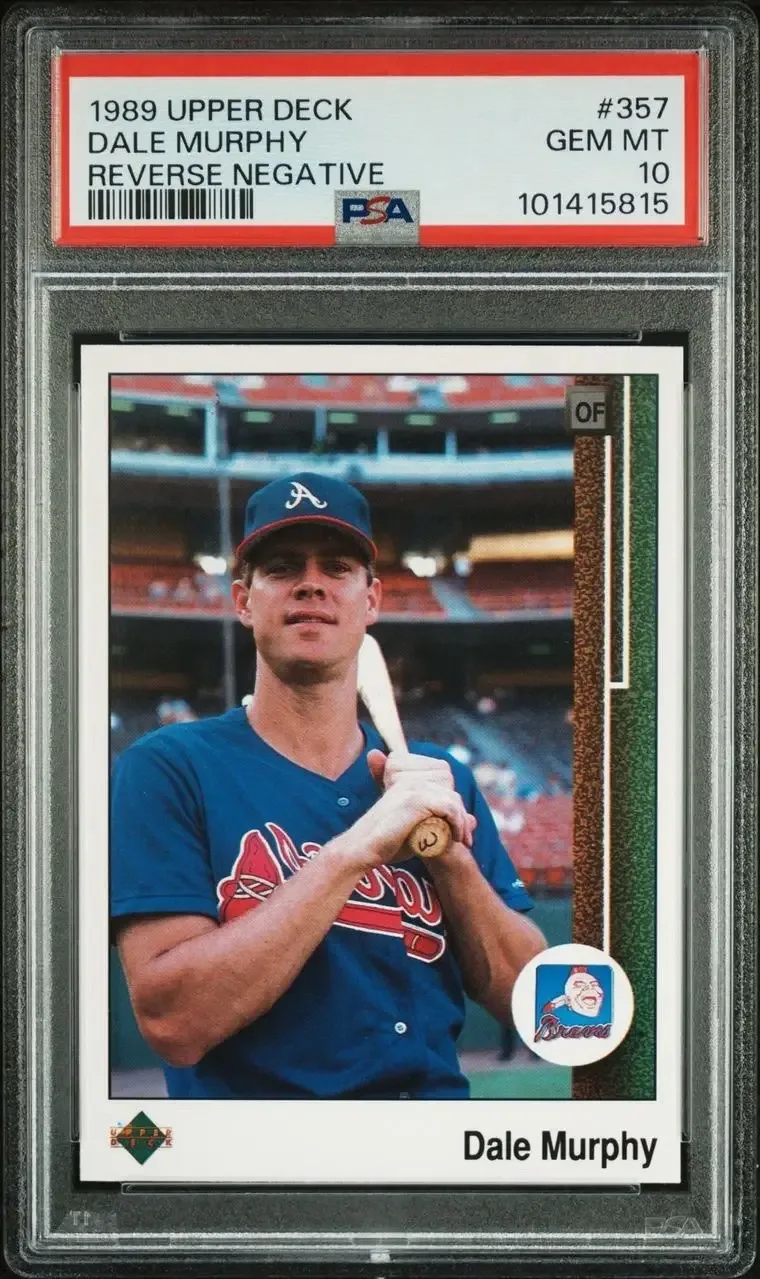
2. Dale Murphy 1989 Upper Deck #357 Reverse Negative
Dale Murphy's Reverse Negative card is one of the most interesting error cards in the set. Murphy was a two-time National League MVP, seven-time All-Star, and five-time Gold Glove winner, and the card's value is helped by both his career profile and the unusual nature of the mistake.
The error happened when the photo negative was accidentally flipped during the printing plate stage. Because Murphy was a right-handed batter, the reversed image makes him appear to bat left-handed. The error was corrected quickly, which is why the reverse negative version is scarce.
Collectors also need to be careful with this card because its popularity and value have led to counterfeits. The source advises looking for the metallic Upper Deck hologram on the lower back of the card as part of the authentication process.
Recent sales cited include a PSA 10 at $2,000 and a PSA 9 at $400. PSA population totals are 1,134.
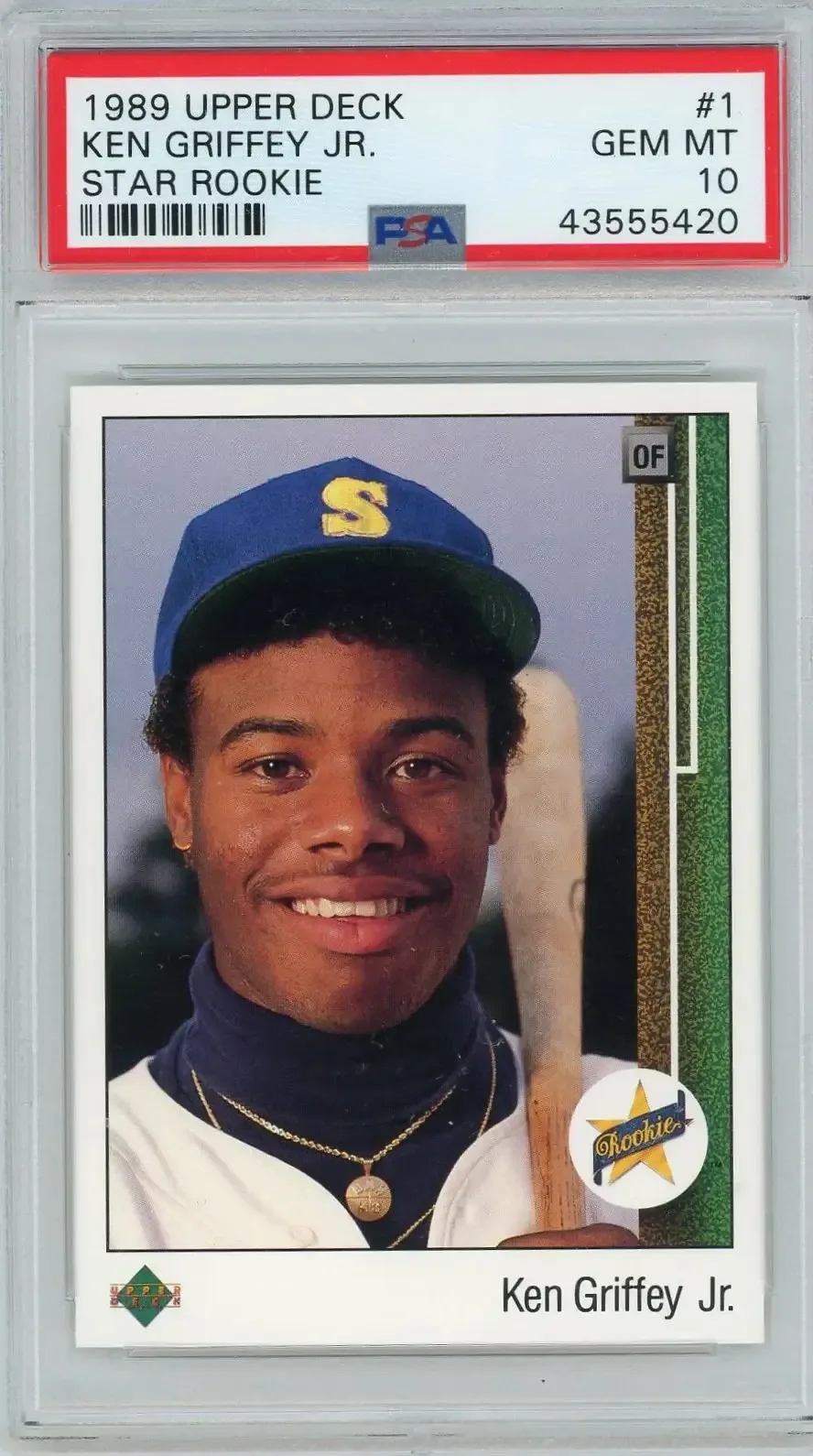
1. Ken Griffey Jr. 1989 Upper Deck #1 Star Rookie
Ken Griffey Jr.'s rookie card is the defining card of 1989 Upper Deck and one of the most famous baseball cards ever made. It is also the card that helped turn the set into a hobby landmark. Griffey was not the most obvious choice for the top spot when the checklist was being assembled, but the decision to place him at No. 1 proved to be one of the most important in modern card history.
The source says Upper Deck reportedly printed special 100-card sheets made entirely of Griffey rookies to help meet demand. It also notes that the 1989 Upper Deck Griffey is the most graded sports card of all time, with more than 200,000 graded copies. PSA population data in the source lists 130,663 total graded examples, including 4,252 PSA 10s and 33,866 PSA 9s.
The original photo showed Griffey wearing a San Bernardino Spirit hat and uniform. Upper Deck airbrushed the image to remove the Spirit logo and add a Seattle Mariners S, creating the version collectors know today. Recent sales cited in the source include a PSA 10 at $6,215 and a PSA 9 at $496.
Why 1989 Upper Deck Still Matters to Collectors
1989 Upper Deck remains one of the most important baseball card sets ever released because it changed expectations for what a modern card product could look and feel like. The set introduced premium packaging, better photography, anti-counterfeiting measures, and a checklist that blended superstar power with rookie depth. It also produced several cards that still draw attention for their scarcity, errors, and historical significance.
For collectors, the set offers a wide range of entry points. Griffey is the flagship card and the one most people associate with the release. Sheffield, Smoltz, Johnson, Murphy, and Ryan each bring a different layer of appeal, whether it is a rookie card, a notable error, a memorable action shot, or a star veteran appearance. That combination is a big reason 1989 Upper Deck continues to hold a special place in the hobby.
Even now, the set's design and checklist continue to resonate with collectors who value both nostalgia and historical importance. From the hologram on the back to the clean photography and the unforgettable Griffey rookie, 1989 Upper Deck remains a defining release from the era that helped shape modern baseball card collecting.
Join the Sports Card Portal Page thread for this story.
Comments
0You must be signed in to comment.
Sign In