


A baseball card collection gets easier to enjoy when it has a purpose. That sounds simple, but it matters more than most collectors admit. If you do not decide whether you are building a set, chasing a player, or narrowing your focus to one product family, the hobby can quickly turn into a pile of cards with no clear shape.
That is especially true in modern baseball, where a single release can include base cards, image variations, inserts, autographs, and multiple parallel tiers. A collection that starts as a simple idea can drift into a series of side quests unless you set rules early and keep them visible.
This is where planning beats impulse. A focused collection does not need to be expensive or rare to feel complete. It needs a scope, a finish line, and a sensible policy for grading, storage, and authenticity. If you want a broader companion piece on card care, see How to Protect a Card Collection from Moisture, Heat, Sunlight, and Handling Damage.
The best plans are usually not the most ambitious ones. They are the ones you can still understand six months later, after the market has changed and the new release cycle has tempted you in a dozen directions. In baseball collecting, clarity is often the real collector’s edge.
What should your collection actually be trying to do?
Before you buy anything, decide what your collection is meant to accomplish. Topps’ own start-collecting guidance treats the decision as foundational: first define the kind of collector you want to be, then choose the product or format that matches that goal. That approach works because it turns collecting into a plan instead of a reaction.
The three most practical goals are simple. You can build a set, collect a player, or collect a product line. Each one creates a different kind of finish line. A set collector wants completeness, a player collector wants depth around one subject, and a product collector wants consistency across annual releases or a single brand family.
The important part is not which lane you choose. It is that you choose one lane on purpose. A focused baseball collection becomes much easier to manage once you know whether you are trying to complete a checklist, build a personal collection around one player, or stay loyal to a single format year after year.
- Set collector: follow one defined checklist and work toward completion.
- Player collector: build around one player or a small, deliberate group.
- Product collector: stay within one brand or one release family.
- If you cannot explain the finish line in one sentence, the scope is probably too wide.
Which format is right for a focused baseball collection?
The biggest format choice is usually between flagship-style base sets and Chrome-style chase products. Topps’ complete set pages present the annual base set as a contained release with a defined checklist and the biggest names in the game. Chrome, by contrast, is built around chromium stock, refractors, inserts, autographs, and variations.
That difference matters because it changes what “complete” means. In a base-set model, completeness is straightforward: you are trying to assemble the cards listed in the set. In a Chrome model, the checklist can expand into base cards, image variations, rare parallels, and autograph cards, which makes the same player or set much more complicated to finish.
For a new or more disciplined collector, a base-set approach is often the cleanest place to start. Chrome can be rewarding, but it is naturally more chase-oriented. If you prefer a bounded project, the base set usually gives you a better chance to finish something without constantly reopening the budget.
- Base set: simpler, more finite, and easier to define.
- Chrome-style product: more layers, more scarcity, more chase.
- If you want a bounded project, start with the format that has the fewest layers.
- If you want a long-term chase, Chrome-style collecting offers more depth but less certainty.
How do you choose players without turning the collection into hype chasing?
A smart player target is chosen by role, not just by buzz. A good target should mean something to you, appear often enough in the product line to make collecting practical, and have a card type you can actually focus on. That could be base cards, parallels, image variations, autographs, or a rookie-focused subset.
One useful method is to assign each player a role. Pick one anchor player as the center of the collection, then add one or two supporting names only if they fit the same format. This keeps the collection from sprawling across too many sub-goals. It also helps if the products you are buying change from year to year, because your rules stay the same even when the checklist shifts.
The biggest mistake is choosing players only because they look hot at the moment. That can make sense for short-term flipping, but it is a fragile collecting strategy. A more stable plan is to choose players you want to keep collecting even if the market cools, the product cycle changes, or the scarcity tiers get more complicated.
- Choose an anchor player first, not five maybe-maybe-not targets.
- Add supporting players only if they fit the same card format.
- Prefer players with enough checklist presence to make the project sustainable.
- Avoid building your plan around temporary excitement alone.
What does a finish line look like in real collecting terms?
A good finish line is specific enough that you can tell when you have reached it. “Collect baseball cards I like” is not a finish line. “Build one annual Topps base set” is. “Collect one player’s base cards from one product family” is also clear. The best plans use an end condition that matches the collector’s budget and patience.
For some collectors, the finish line might be one raw copy of each card in a set. For others, it might be one graded example of a favorite player’s key card, or one base card plus one premium version if the product offers it. The key is to avoid vague goals that always leave room for one more purchase.
This is especially important with modern products that offer image variations and parallel tiers. In a Chrome-style release, you can own a card that looks like a base card but belongs to a different scarcity tier. If you do not define whether those count, your project can keep expanding after it should already be done.
- Examples of clear finish lines: complete base set, complete one player’s base run, or one graded key card.
- Decide in advance whether variations count as part of the goal.
- Write the finish line down before you start shopping.
- If the goal can expand forever, it is not really a goal.
Should you collect raw cards, graded cards, or both?
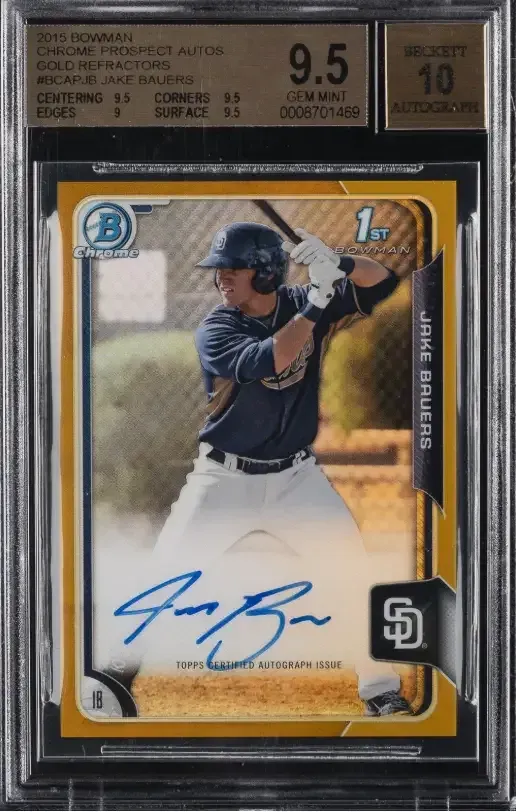
Raw, authentic-only, and numeric-grade holders are not interchangeable. Beckett’s grading materials make the distinction clear: a card can be returned in a numeric grade holder, or it can be authenticated without receiving a numeric condition score. That difference matters because one outcome tells you condition, while the other mainly tells you the card is genuine and protected.
If your project is condition-sensitive, a numeric grade may be more useful than an authentic-only holder. If your project is focused on ownership, protection, or display, a raw card or authentic-only holder may be enough. The right answer depends on your goal, not on a general rule that every card should be slabbed.
A practical way to avoid confusion is to set a grading policy by card type. For example, you might collect base cards raw, grade only your best condition-sensitive purchases, and leave lower-value filler cards ungraded. That keeps grading fees from overtaking the actual collecting plan.
- Raw: no third-party encapsulation.
- Authentic-only: genuine, protected, but not numerically graded.
- Numeric grade: condition is evaluated and shown on the label.
- Set your grading policy before you buy, not after you buy.
How do you protect yourself when buying graded cards?
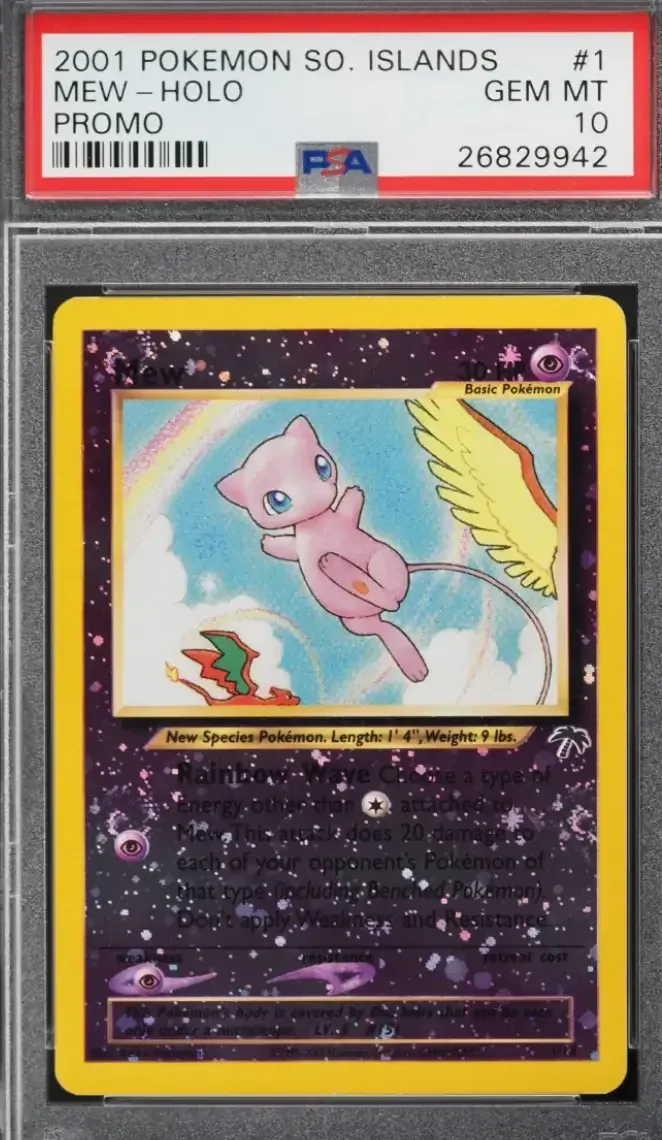
Certification lookup is useful, but it is not the whole security story. PSA’s materials explain that its holders use tamper-evident features, labels include verification tools, and certification numbers can be checked publicly. PSA also notes that counterfeiters can copy documents and use public certification numbers as part of fraud attempts.
That means a valid cert number is only one layer of buying with confidence. You also want to inspect the holder, the label, and the card itself. Does the item look like it belongs in that slab? Does the label appear intact? Is there any sign that the holder has been opened or altered? Those questions matter because a certificate lookup alone does not prove the physical item is original.
A focused collector does not need to become paranoid, but the collector does need a process. The simplest one is to verify the cert, inspect the holder, and make sure the card matches the label and expected issue. If any one of those layers seems off, it is better to pause than to force the purchase.
- Check the cert number, but do not stop there.
- Inspect the holder and label for tampering or inconsistency.
- Make sure the card inside matches the issue and description.
- Use verification as one tool, not as a substitute for judgment.
How much chase is too much for one collection?
The more a product leans into parallels, variations, and autographs, the more your collection can drift from a project into a chase. That is not inherently bad. It just means the hobby is asking more of your budget, your patience, and your willingness to accept incomplete runs. Chrome products are a good example of this tension because they combine base cards with multiple scarcity layers.
A useful rule is to decide what counts as an upgrade and what counts as a distraction. If you already collect a player’s base cards, a single parallel might be a meaningful add-on. But if every parallel becomes a new target, the collection stops being focused and starts being reactive. That can also make it harder to compare cards across different years and product lines.
The healthiest chase limit is usually one that keeps the project visible. If you cannot explain why a card belongs in the collection without inventing a new rule on the spot, it probably does not belong. The goal is not to eliminate excitement; it is to prevent excitement from rewriting the plan every week.
- Define one or two upgrade paths before the chase begins.
- Treat every new parallel as a possible exception, not an automatic buy.
- If a card needs a new rule to justify itself, consider passing.
- Keep the project visible enough that you can still describe it simply.
What kind of budget rules actually help?
A budget works best when it includes limits, not just a total. The most helpful rule is to decide what you will not buy. That may sound negative, but it is one of the clearest ways to preserve a focused collection. If you know you are avoiding duplicate side quests, low-priority parallels, or unrelated products, you create room for the cards that truly fit.
Another practical rule is to separate core purchases from optional ones. Core purchases are the cards that directly advance the plan. Optional purchases are cards you like but did not originally budget for. If you do not separate them, the collection can swell with impulse buys that feel productive in the moment but do not move the project forward.
A disciplined budget also helps you survive release cycles. Baseball products change, checklist styles change, and premium tiers can appear where you did not expect them. A budget with guardrails makes it easier to say yes to the cards you planned for and no to the ones that only look urgent.
- Set a ceiling, then set exclusions inside that ceiling.
- Separate core purchases from impulse or bonus purchases.
- Make room in the budget for the cards that matter most to the project.
- Use spending rules to protect the collection’s shape, not just the wallet.
What is the simplest collection plan that still feels complete?
The simplest good plan is usually a single product family, one anchor player, and one finish line. That gives you enough structure to make decisions without turning every card aisle into a debate. A collector can do a lot with a plan that says, for example, “one annual Topps base set, plus one favorite player card in graded form,” or “one product family and only base cards unless a variation replaces a lower-priority buy.”
If you want more variety, add one controlled layer, not five. A second player or a single parallel tier can make the collection feel richer without destroying the project’s shape. The trick is to add complexity only where it improves the story of the collection, not where it merely increases the number of things you can buy.
The strongest collection plans are memorable because they are easy to repeat. If your rules are simple enough to recall in one breath, they are simple enough to follow in the wild. That is what keeps a baseball collection focused: not perfection, but a plan that survives contact with the hobby.
- One product family, one anchor player, one finish line is a strong starting model.
- Add only one new layer at a time if you want more variety.
- Favor rules you can remember without checking a note every time.
- A complete-feeling collection is often the one that matches its original plan.
Frequently Asked Questions
Is it better to collect a set or a player?
Neither is universally better. A set is easier to define and finish, while a player collection is more personal and flexible. Choose the one that best matches your budget, patience, and interest.
Do Chrome cards make collection planning harder?
Usually yes, because Chrome-style products often add parallels, inserts, image variations, and autographs. That creates more ways for a collection to expand beyond the original plan.
Should I buy raw cards or graded cards for a focused collection?
Buy the format that matches your goal. Raw is simpler, authentic-only protects and verifies but does not give a numeric condition grade, and graded cards are best when condition matters most.
How do I avoid buying cards that do not fit my plan?
Write down your scope, finish line, and upgrade rules before you start shopping. If a card does not fit those rules, treat it as a distraction unless you deliberately change the plan.
What is the most important first step?
Decide whether you are building a set, a player collection, or a product collection. Once that choice is clear, the rest of the decisions become much easier.
Written with AI assistance. Featured image: AI-generated editorial illustration.
Comments
0You must be signed in to comment.
Sign In