

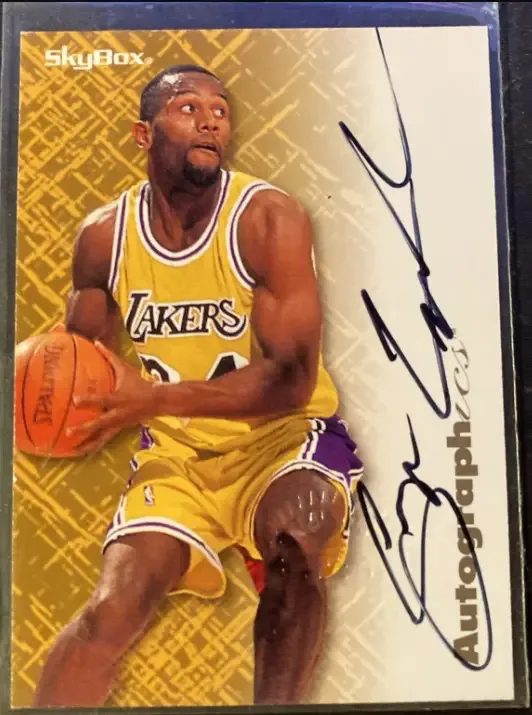
Skybox Autographics and the 1996 autograph breakthrough
For many basketball card collectors who grew up in the 1990s, the first pack-pulled autograph they ever found came from Skybox Autographics. The 1996 debut turned signed cards from a rare novelty into a defining chase, and it did so with a simple idea that felt new at the time: make autographs the centerpiece of the product.
The experience of pulling one of those cards left a lasting impression on collectors. Even a signature from a role player could feel like a major hit because it was an actual NBA player signing the card in the pack. That sense of surprise and possibility helped make Autographics one of the most memorable basketball inserts of the decade.
What made the 1996 set different
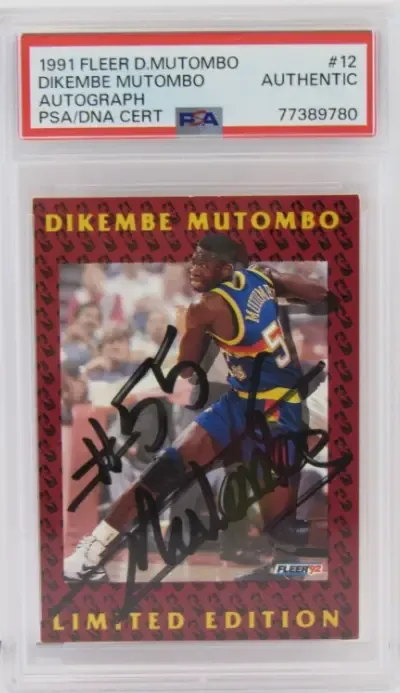
Pack-issued autographs existed before 1996, but they were scattered and uncommon. Earlier releases from Fleer, Upper Deck, Hoops, and Skybox had included signed cards in limited form, sometimes as redemptions or at very low odds. Skybox took the concept further by building an entire line around autographs and spreading it across multiple 1996 products.
The original Autographics checklist featured 95 players, a mix of stars, reserves, and rookies. That broad approach made the set accessible to a wide range of collectors while still delivering marquee names. It also helped establish a template that card companies would follow for years, as autograph cards became a central part of modern basketball releases.
Checklist depth and collector appeal
The 1996 Autographics checklist includes several Hall of Famers and notable players from the era. Among the names mentioned in the set are Hakeem Olajuwon, Kevin Garnett, Scottie Pippen, Grant Hill, and Ray Allen. The checklist also includes players from the celebrated 1996 rookie class, adding another layer of appeal for collectors who chase first-year talent.
Because the set spans stars and lesser-known players, it has remained attractive to both player collectors and set builders. For many collectors, the appeal is not limited to the biggest names. The set’s importance comes from being the first widely recognized autograph chase for a generation of basketball card buyers.
Black-ink autographs and blue-ink parallels
The standard black-ink Autographics cards were inserted at a rate of 1:72 packs. That made them a legitimate chase item, especially in an era when signed cards were still relatively scarce.
Skybox also offered blue-ink parallels, which were reported to have a print run of 100 with a few exceptions. Those blue versions added another layer of scarcity and remain highly sought after today. In some cases, the color distinction matters significantly because certain players signed mostly in one ink color, making the other version much tougher to find.
Related coverage includes Why 1996 SkyBox Autographics Became Basketball Cards’ Signature Moment.
Condition is another major factor in the market. Many of the signatures have faded over time, and the black border on the back makes chipping more noticeable. As a result, high-grade examples are difficult to find, especially for collectors looking for strong eye appeal and clean surfaces.
Notable sales and market interest
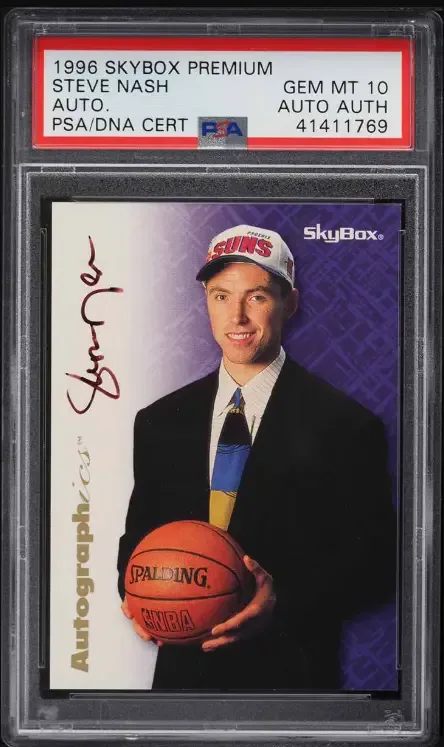
The market for 1996 Autographics has remained active, with top sales often tied to the biggest names in the set. Steve Nash has produced the highest single-card sales mentioned, including a PSA 10 black-ink example that sold for $3,150 on September 4 and a BGS 9 blue-ink card with a 10 autograph grade that reached $2,900 in December 2021.
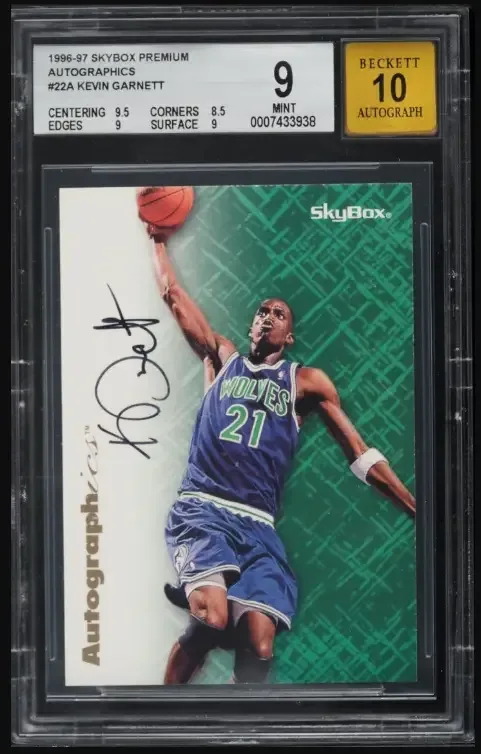
Kevin Garnett has also drawn strong interest, particularly because his black-ink Autographics cards are rarer than the blue parallel. A BGS 9 black-ink example sold for $1,495 on March 16, which was the highest sale noted for any veteran in the source material. Damon Stoudamire also reached $1,475 on July 17 with a raw card sale.
Other players who have topped $1,000 in sales include Grant Hill and Ray Allen. Hakeem Olajuwon is another notable name in the set, though the source notes that he signed all of his cards in blue, which limits the availability of a rarer ink-color variation for his cards.
George McCloud and the short-print mystery
Most of the cards in the set are widely available in the $5 to $10 range, but one unexpected exception stands out. Cards of former Mavericks forward George McCloud are described as notoriously difficult to find for set collectors, and his raw Autographics card last sold for $300 on September 6.
The source does not explain why McCloud is so scarce, but the card has become a notable chase within the set. That kind of unexpected short print adds another layer of intrigue to a product already known for its mix of star power and collector nostalgia.
How Autographics expanded after 1996
Skybox continued the Autographics basketball line for four more seasons after the debut. The brand later expanded beyond basketball into baseball, football, and hockey, showing how influential the concept had become across the hobby.
In 1997, later Autographics basketball sets introduced Century Marks parallels hand-numbered to 100. Additional /250 and /50 versions appeared in later years, further building on the original autograph chase. By 2003, Skybox had spun Autographics off as a standalone product with base cards and multiple signed parallels.
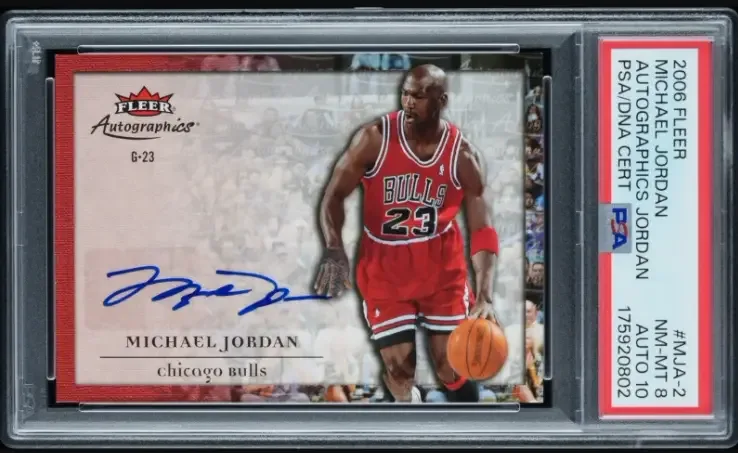
When Upper Deck acquired the Fleer-Skybox properties in 2005, it revived the brand in basketball. The 2006 Fleer release brought collectors a Michael Jordan Autographics card, a major moment for the line. Later Retro releases also revisited original Autographics designs for a new generation of collectors.
Why the 1996 debut still matters
Even with all the autograph cards that followed, the 1996 Skybox Autographics set still stands out because of its timing and simplicity. It arrived before autographs became a standard expectation in basketball products, and it made the chase feel special in a way that collectors still remember.
For many hobbyists, the set represents a specific era in both basketball and card collecting, when pulling a signed card from a pack could feel like a genuine event. That is part of why the original Autographics checklist continues to attract attention from collectors who want a piece of hobby history, whether they are chasing Hall of Famers, rookie-era signatures, or the nostalgia of that first unforgettable pull.
The legacy of 1996 Skybox Autographics is not just about the cards themselves. It is about the moment the hobby realized how powerful pack-pulled autographs could be, and how quickly that idea would reshape basketball cards for years to come.

Join the Sports Card Portal Page thread for this story.
Comments
0You must be signed in to comment.
Sign In