

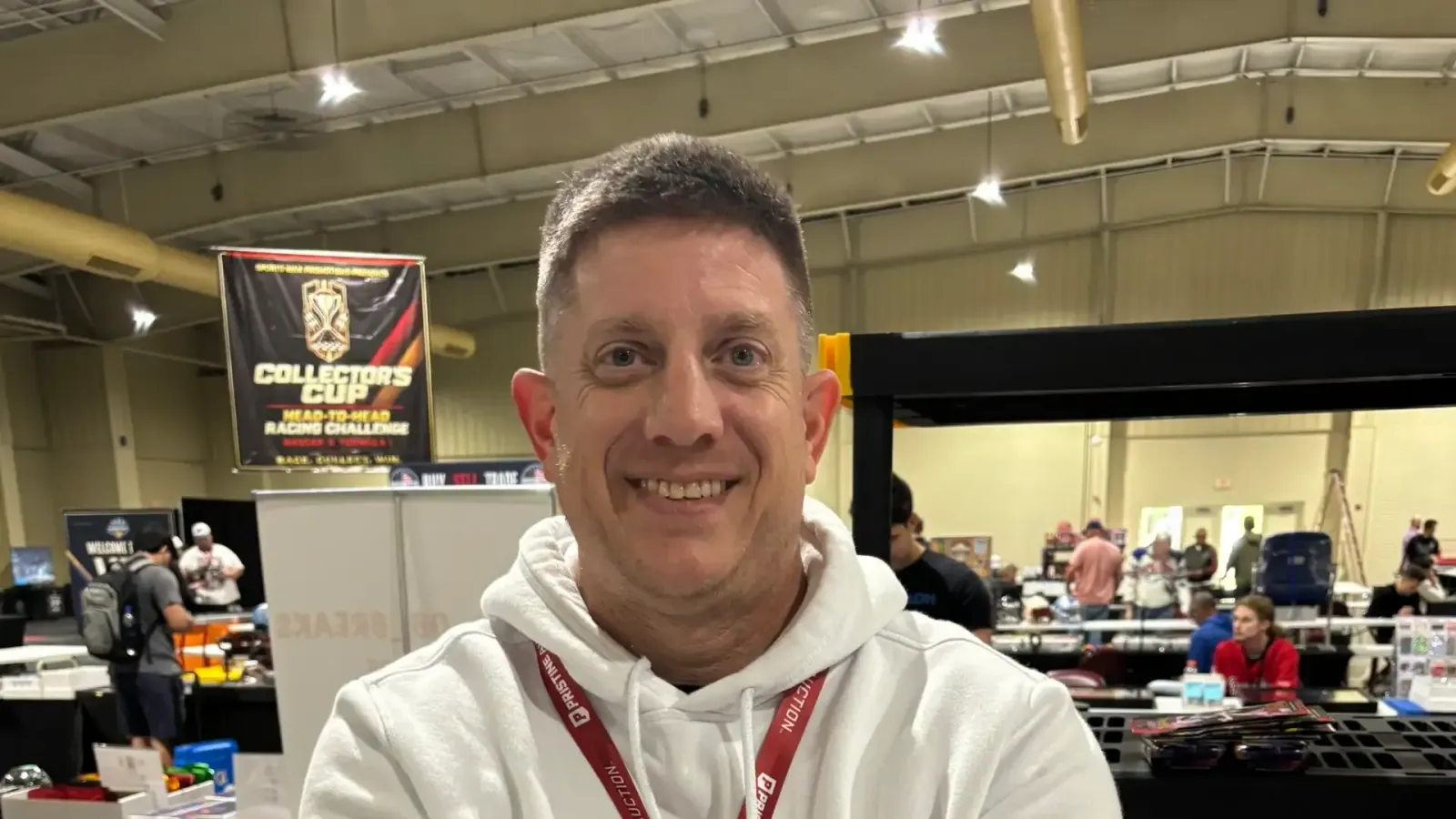
Football cards remain active at Concord show
Football cards may not be commanding the same broad attention as baseball and basketball in some parts of the hobby, but dealers and collectors at the Sports Wax Promotions Collectors Showcase in Concord, N.C., said the category is still very much alive.
The Oct. 9-11 event at Cabarrus Arena and Event Center near Charlotte featured more than 500 tables, with NFL cards prominently displayed across the show floor as the season moved toward its midway point. While recent trends have pointed to softer fan interest and lower dollar values for football cards compared with other major sports, many vendors said the market has not disappeared. Instead, it continues to shift quickly, with prices often tied to weekly performance, player popularity and scarcity.
The NFL’s status as the top sports brand in the United States, along with its growing international footprint, has not translated into stability for the football card market. Even with the league scheduled to play a record nine games across seven countries in 2026, dealers said football cards remain a category defined by fast movement and frequent swings in value.
Quarterbacks continue to drive the market
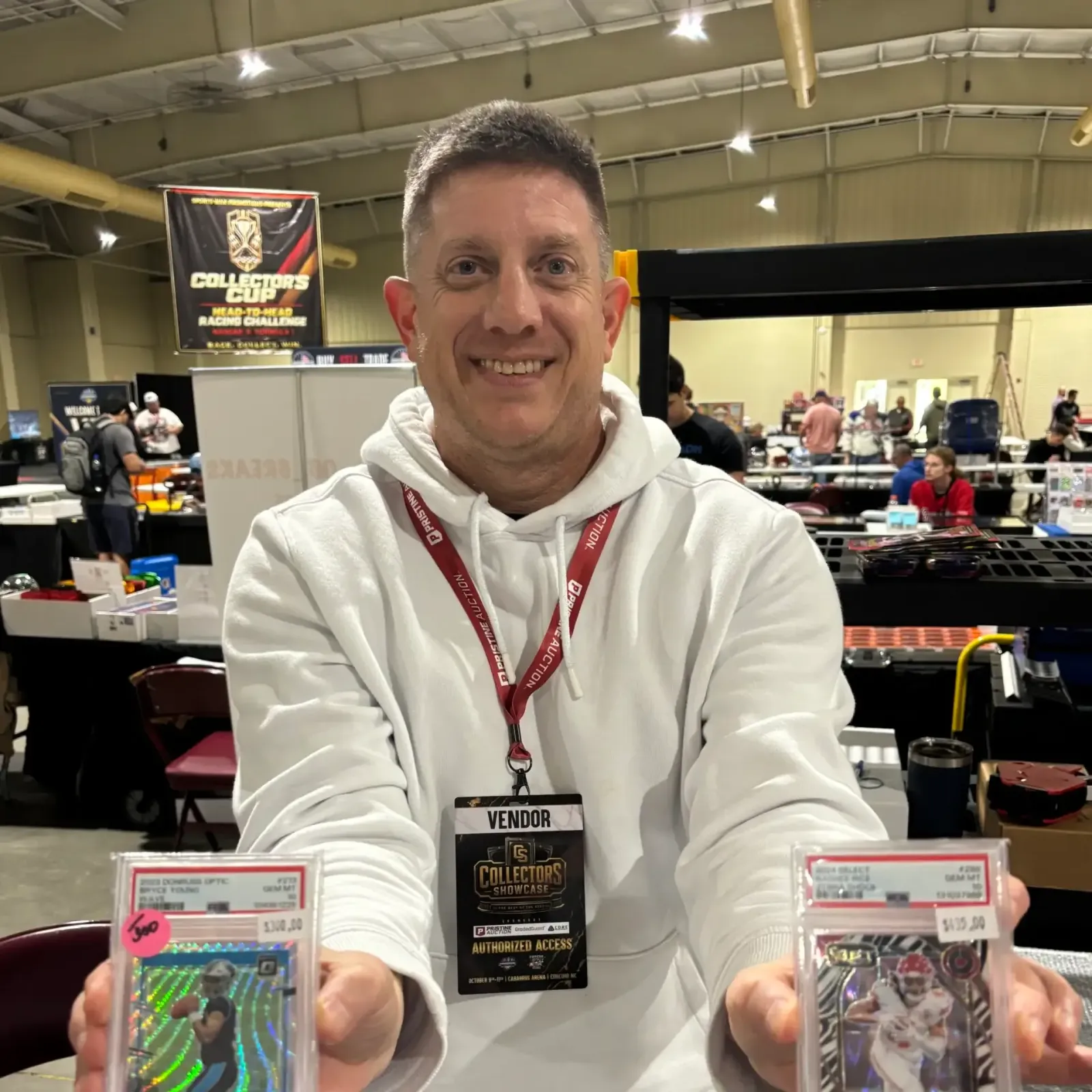
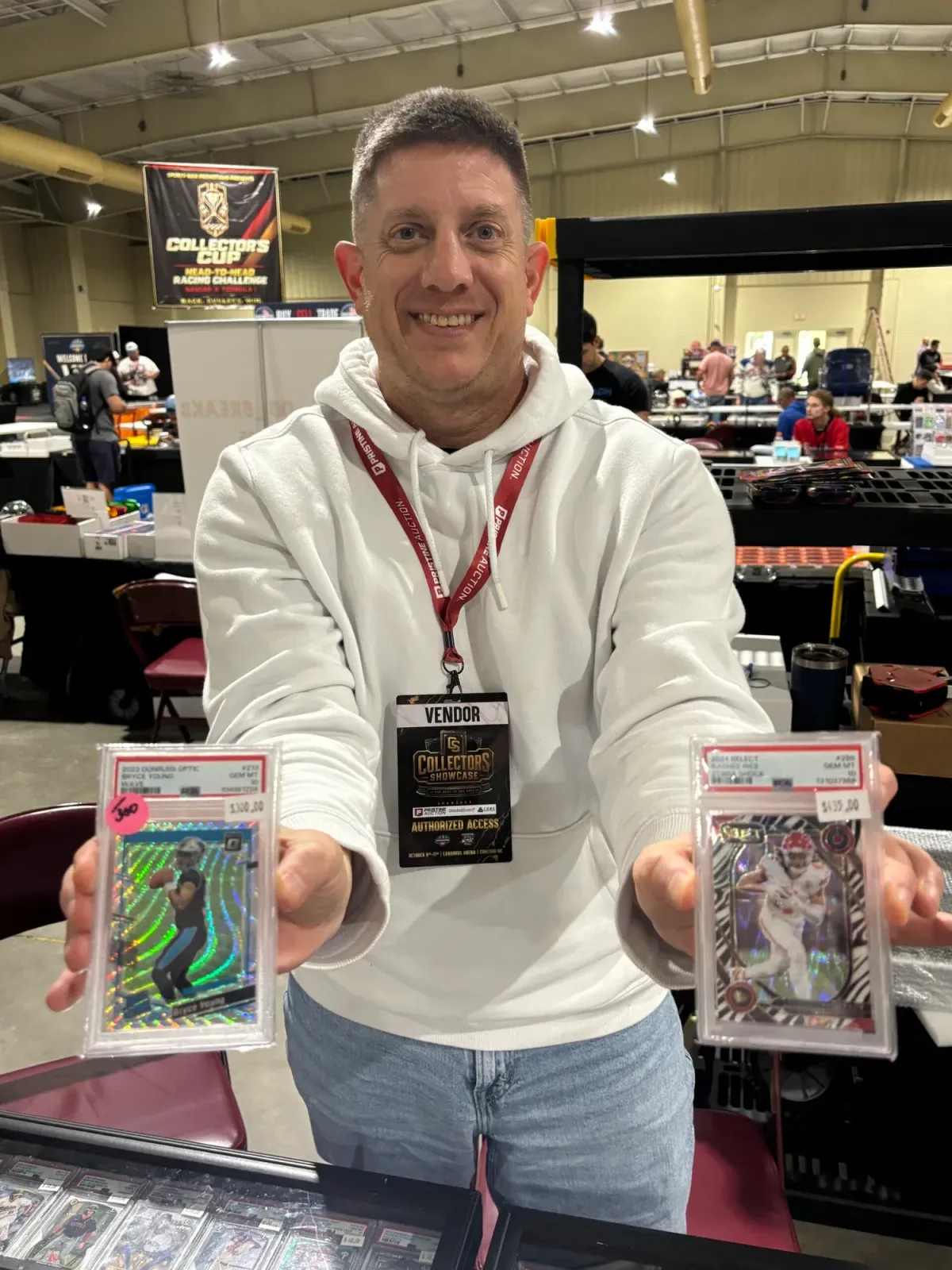
At the show, quarterback cards were the clear focal point. Carolina Panthers quarterback Bryce Young was among the names drawing attention, with one vendor pricing his 2023 Donruss Optic rookie card at $300. On the high end, SCD spotted one-of-one cards for quarterbacks Lamar Jackson at $2,500 and Shedeur Sanders at $2,000.
At the opposite end of the market, vintage Topps cards of Hall of Fame quarterbacks Terry Bradshaw, Joe Theismann and Len Dawson were marked at $5 at one table. Dealers said that kind of pricing reflects how uneven football card values can be, especially when compared with the reputations of the players involved.
Collectors and dealers said quarterbacks remain the most sought-after football cards, followed by wide receivers and running backs. The position premium is nothing new, but it can create sharp swings in value when a quarterback has a big game or suffers a setback. A strong performance can lift a card quickly, while an injury or poor outing can send demand in the other direction just as fast.
Why football cards behave differently
Several factors were cited for the volatility. Dealers pointed to the shorter NFL season, the smaller overall production runs for football cards and the scarcity that can come with those lower print totals. Fantasy football also plays a major role, with collectors often chasing cards tied to the players and teams they roster in fantasy leagues.
That combination makes football cards feel different from other sports in the hobby. The NFL is the most-watched league on television, but the card market can still be highly reactive from week to week. A player who looks like a breakout star one Sunday can see his card prices cool quickly if the next game goes poorly.
Related coverage includes Football Cards Remain Fast Movers Despite a Volatile Market.
Curtis Van Duren, a dealer and collector from Davidson, N.C., said football cards are among the most liquid assets in the hobby. In his view, values can change weekly across the country because football is such a dominant television product and because collectors react so quickly to what happens on the field.
Van Duren also said the lower end of the market can move especially fast. Before the general public entered the show, he sold several slabbed football cards during VIP access and said they moved so quickly he did not even have time to note which cards had sold.
He described $30 to $100 slabbed cards as easy movers and said football boxes can offer broad appeal because many cards in a product can have value. In his view, even lower-end cards can find buyers because every week can create a new story, and even lesser-known players can become relevant in a hurry.
Dealers say football is undervalued overall
Michael Heffner, a Cherryville, N.C., dealer and owner of Card Sharks Sports Cards, said football cards are undervalued in general, especially when it comes to vintage players. He pointed to the contrast between established legends and younger quarterbacks whose cards can sell for more despite having far less accomplished careers.
Heffner said Joe Montana’s rookie card is listed at $300, while some newer quarterbacks have seen much higher prices. He also cited Cam Ward as an example of how strong the market can be for a young quarterback, saying Ward’s cards were selling for $1,000 after he came out last year as a rookie with the Titans.
For Heffner, the lesson is simple: if a collector does not land the quarterback, the investment can be risky. That makes football a tougher category for some buyers, even as it remains one of the most talked-about areas of the hobby.
Football is the top mover for some shops
Not every dealer sees the football market the same way. Regina Wheeler, who runs Wheeler Sports Collectibles in Sanford, N.C., said football cards are the No. 1 mover in her store, followed by baseball. She said her shop attracts a strong NFL audience, including a notable number of Chicago Bears fans.
That kind of local demand helps explain why football can still be a strong category in brick-and-mortar settings even when broader market sentiment seems mixed. For some shops, the sport’s week-to-week drama and the constant cycle of player performances keep collectors engaged.
Panthers market shows mixed demand
In the Carolina Panthers' home market, interest in some current players appeared uneven. Dealers at the Concord show said there was not much buzz around Bryce Young cards or cards tied to Tetairoa McMillan, the Panthers wide receiver who won NFL Rookie of the Year last season.
At one table, a 2025 Topps Chrome Tetairoa McMillan card graded PSA 9 carried a $225 price tag. Beyond that higher-priced example, collector Kelly Crisco of Albemarle, N.C., said some McMillan rookies were priced around $5.
Crisco said the gap was surprising. In his view, the cards should have climbed more sharply based on the player’s profile, but the market had not responded the way he expected.
Collector strategy centers on college quarterbacks
Crisco said his own collecting approach focuses on college quarterbacks he believes could make an impact in the NFL. One example he mentioned was New York Giants quarterback Jaxon Dart, though injuries have affected his first two years in the league.
He said he does not collect as a dealer or as part of a business strategy. Instead, he views the hobby as a way to enjoy the cards he pulls while trying to recoup enough value to buy more cards he likes.
For Crisco, that means staying realistic about what cards are worth and what collectors are actually willing to pay. He said the hobby works best when buyers understand that value is shaped by demand, not just by personal attachment to a player or team.
He has also passed that mindset on to his nephew, Sawyer McDaniel, who worked the Concord show alongside him. Crisco said he tries to teach him that a card is only worth what someone is willing to pay for it, and that a seller has to be realistic about pricing.
At the same time, he said there is still plenty of opportunity for collectors who enjoy the chase. In his view, buyers can find strong cards at $3, $5, $10 and $20 price points, and those smaller purchases often come from true collectors rather than investors.
Football cards still reward quick decisions
The overall picture from Concord was not one of decline, but of constant movement. Dealers said football cards can be the fastest-moving cards in the hobby, especially when buyers are focused on quarterbacks and low-end slabs that can be flipped quickly.
That makes the category appealing to some collectors and challenging to others. The same volatility that can create sudden gains can also make football a difficult place to chase long-term value, particularly for buyers who are not targeting the right position or the right player at the right moment.
Even so, the show floor suggested that football cards continue to have a strong place in the hobby. From vintage Hall of Famers to current quarterbacks and rookie cards, the category drew attention across a wide price range, with deals being made quickly and collectors still looking for the next player to break out.
Join the Sports Card Portal Page thread for this story.
Comments
0You must be signed in to comment.
Sign In