

Card Care and Card Alteration Are Not Always the Same
Sports card collectors usually agree on the obvious examples of alteration. Trimming an edge or recoloring a damaged corner crosses the line for most people. Wiping away a fingerprint, on the other hand, is generally viewed as harmless. The difficult part is everything in between.
That gray area includes questions collectors ask all the time. Is it acceptable to flatten a warped card? What about pressing a raised corner? Can humidity and pressure be used to reduce an indentation? Is it still alteration if the goal is only to remove dirt or residue that was never part of the card in the first place?
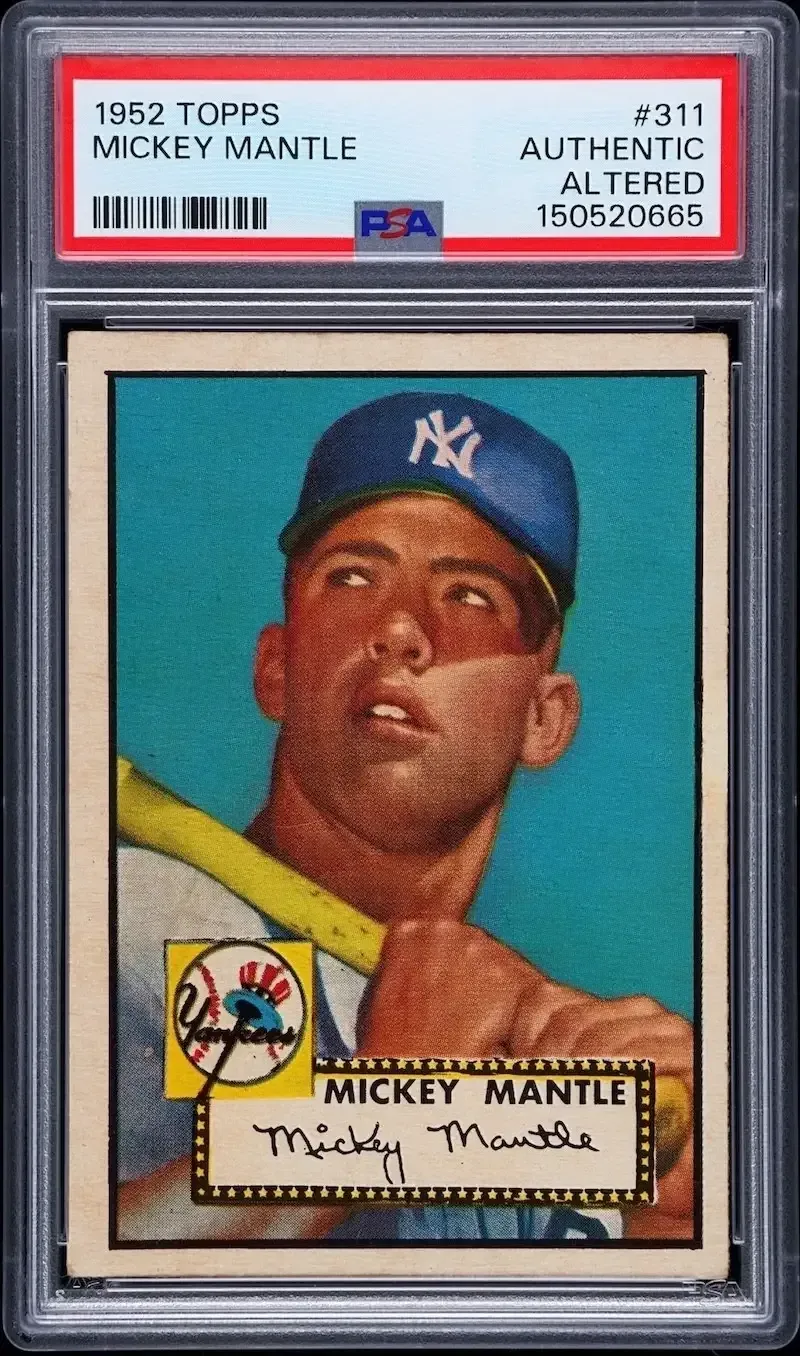
Those questions matter because altered cards can still be highly desirable. Some of the hobby’s most famous cards have complicated histories, and collectors do not always let an alteration label erase a card’s significance or value.
Why PSA Draws a Harder Line on Sports Cards
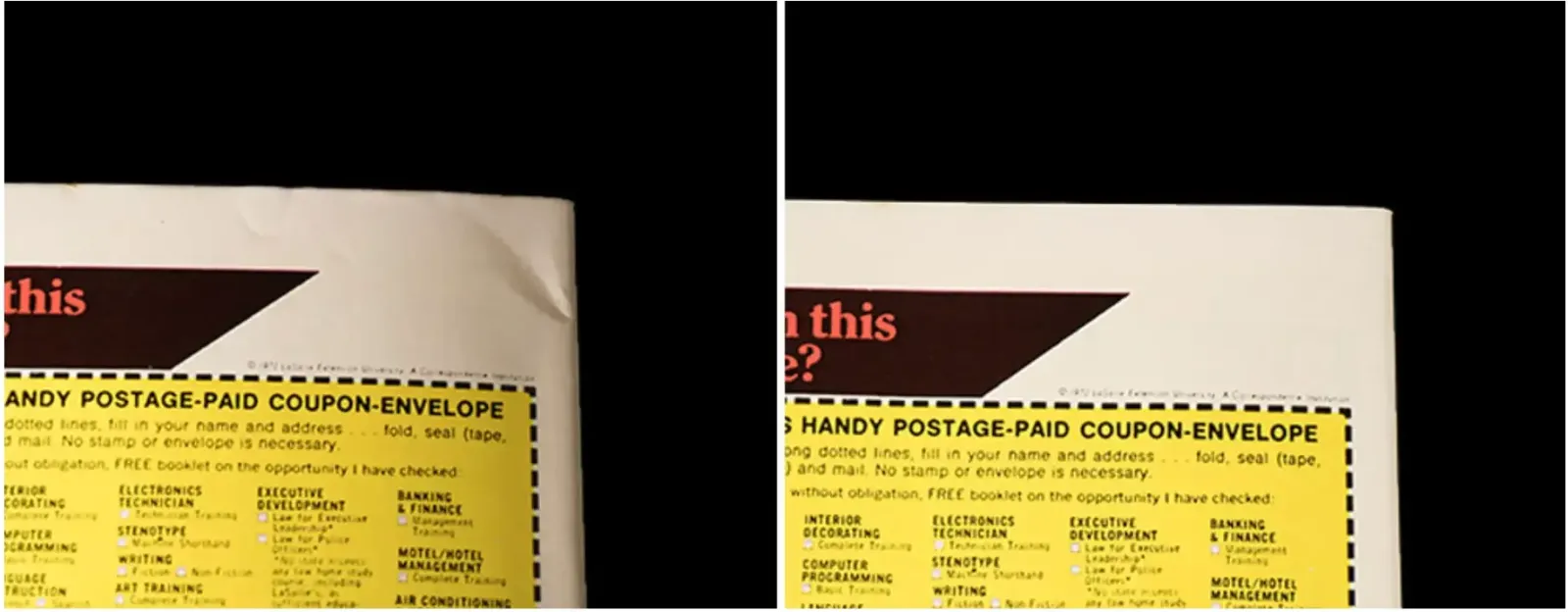
PSA’s approach to sports cards is stricter than its approach to some other collectibles. The company offers professional pressing and cleaning for comics and magazines before grading, and PSA says those services can reduce wrinkles, waves, folds, and other defects while potentially improving a comic or magazine’s grade.
For sports cards, PSA treats crease or wrinkle pressing as a form of alteration. That difference raises an obvious question: if pressing is acceptable preparation for one type of collectible, why is it considered alteration for another?
PSA points to the materials themselves. Comics and magazines are thinner and can sometimes be pressed without leaving a noticeable trace, while pressing thicker card stock can change a card’s dimensions. PSA also notes that comic and magazine collectors have historically been more accepting of pressing, while sports card collectors have placed more value on preserving original condition.
That explanation helps, but it does not fully settle the debate. If a card develops a curl, raised corner, or indentation from storage, is flattening it really alteration if nothing is trimmed, recolored, or added? Humidity can also make card stock more flexible before pressing, which makes the line between preparation and alteration even less clear.
Altered Cards Can Still Bring Strong Prices
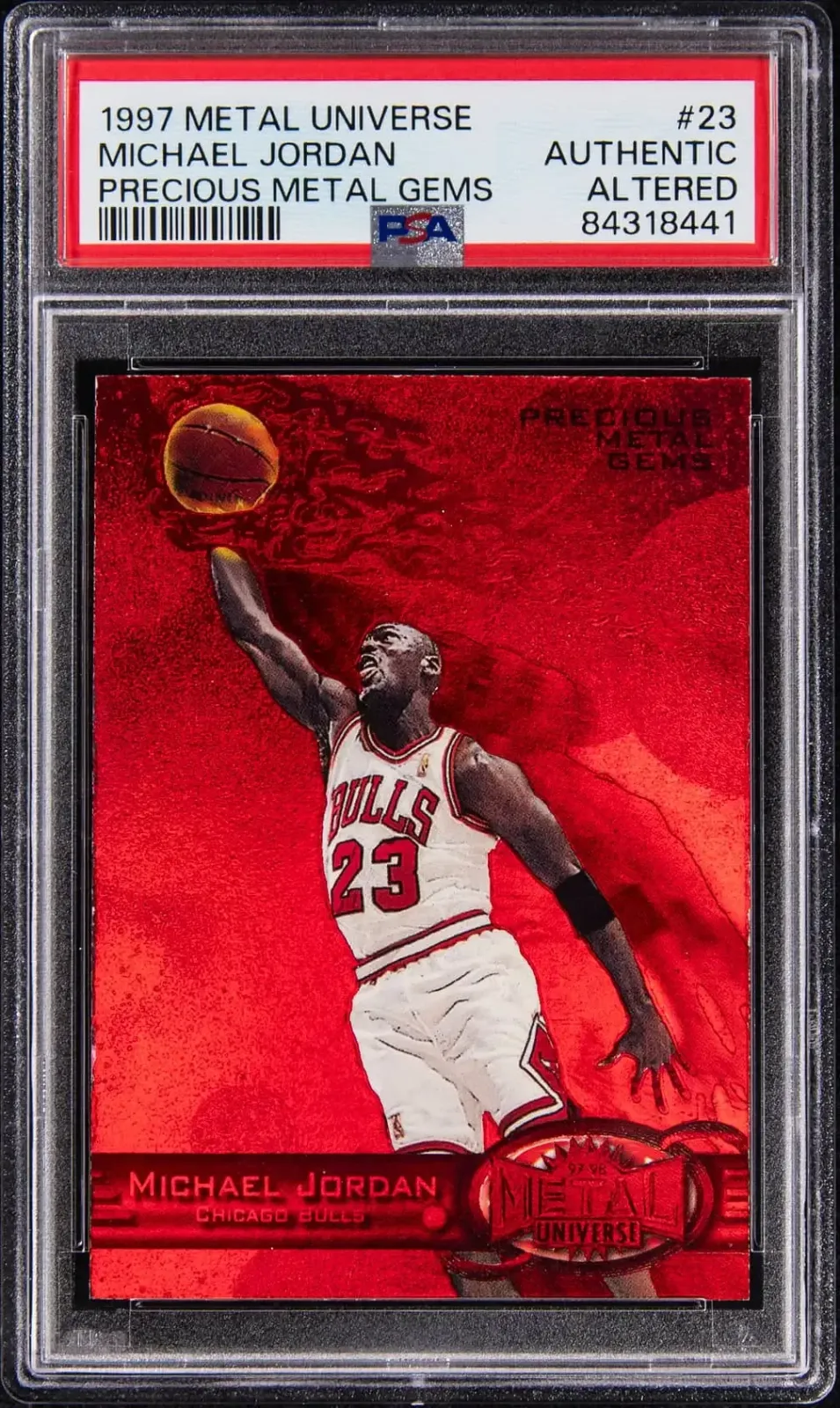
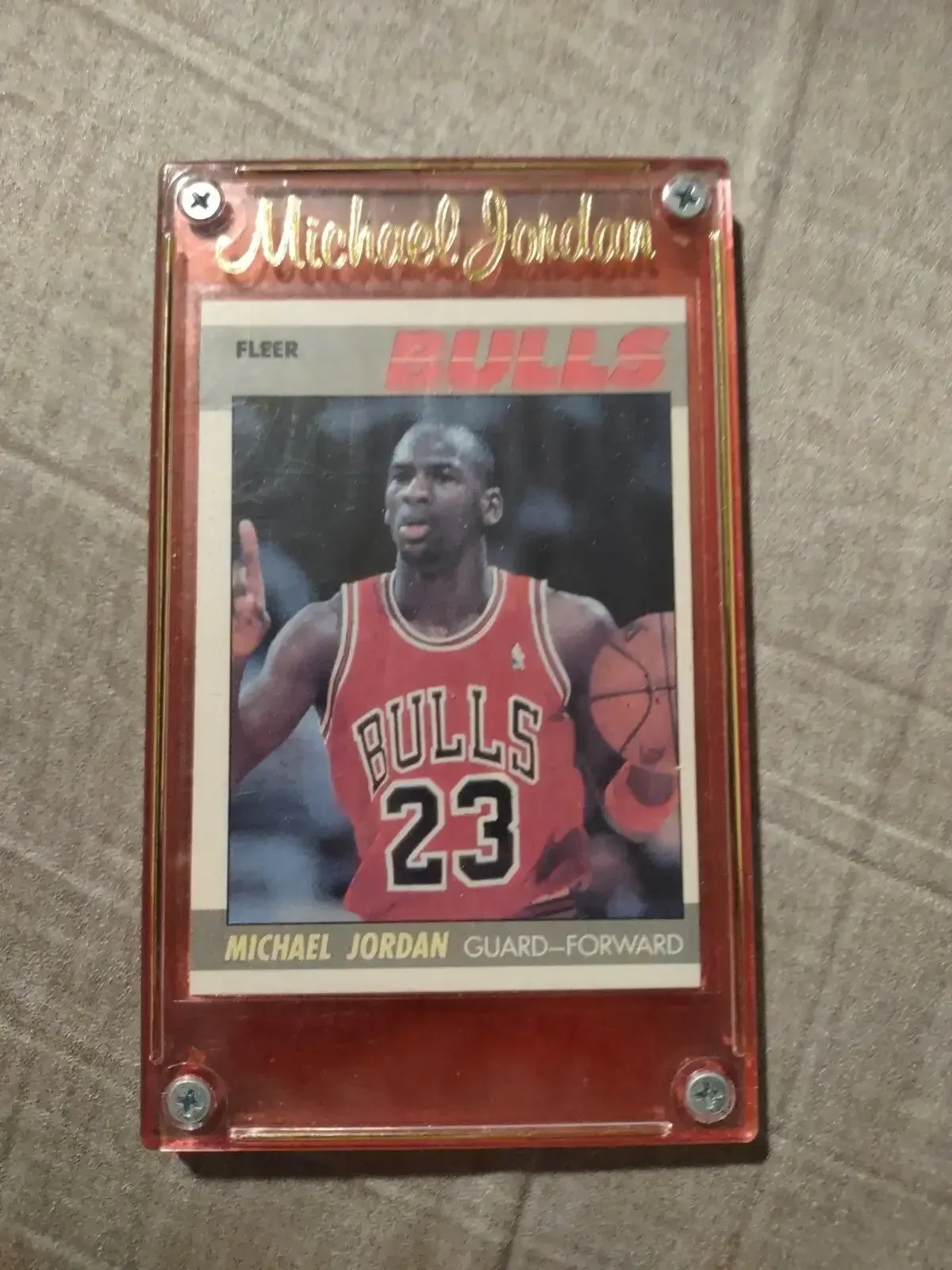
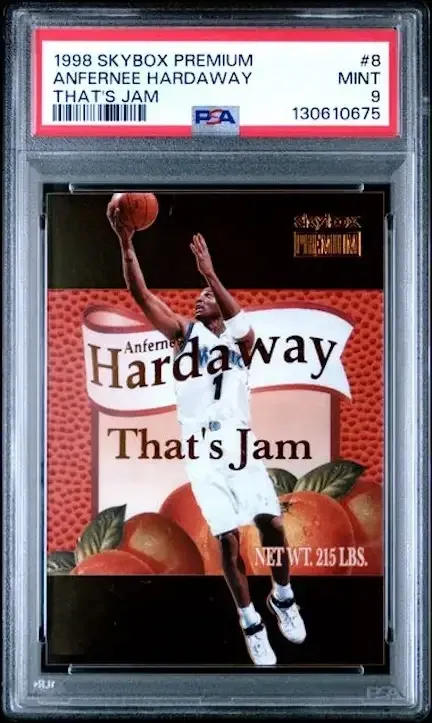
Even when a card receives an altered designation, it can still command major interest. A 1997 Metal Universe Michael Jordan Precious Metal Gems Red, numbered to 90, recently sold for $244,000 despite being labeled “Authentic Altered” by PSA. PSA’s label does not identify the specific alteration, but altered cards are often associated with trimming intended to improve edges or corners.
Related coverage includes Card Care or Card Alteration? The Grading Line Is Still Debated.
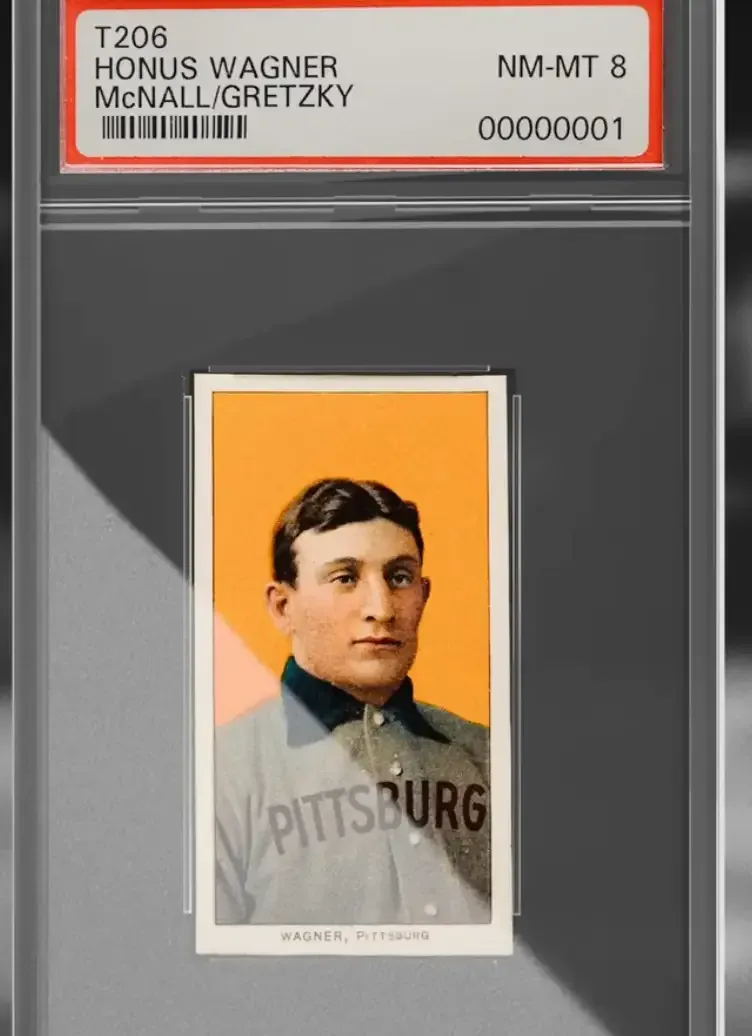
Another famous example is the T206 Honus Wagner once owned by Wayne Gretzky. It was the first card graded by PSA, receiving a PSA 8 and certification number 00000001. Bill Mastro later admitted that he had trimmed the card before it was graded. Despite that history, many collectors still consider it the greatest sports card of all time.
That kind of example shows why the subject remains so divisive. A card can be altered and still be historically important, visually appealing, and extremely valuable.
Kurt’s Card Care Sees the Line Differently
Kurt, the founder of Kurt’s Card Care, has spent years teaching collectors how to clean and care for sports cards. He does not believe pressing or cleaning a card automatically means it has been altered.
“I don’t consider it alteration at all,” Kurt said. “What is considered altered? Adding something, taking it away, or damaging something so bad that a grading service calls it altered.”
For Kurt, trimming and recoloring clearly cross the line. Removing dirt or residue that landed on the card later is different. “Don’t trim cards. You don’t color cards,” Kurt said. “Anything that landed on a card, dirt-wise or anything like that, that’s not the alteration. It’s just simply cleaning a card and getting cards back in shape.”
That view creates a different framework from PSA’s. PSA focuses on whether a card has gone through certain treatments, while Kurt focuses more on whether the original card has actually been added to, taken away from, or permanently changed.
That does not mean the process is risk-free. Anyone who uses a cleaning product on a card and later submits it to a grading company is taking a chance that the card could be considered altered. PSA’s standards make clear that certain cleaning products and treatments can make a card ineligible for a numerical grade.
Examples of Card Care That Changed the Outcome
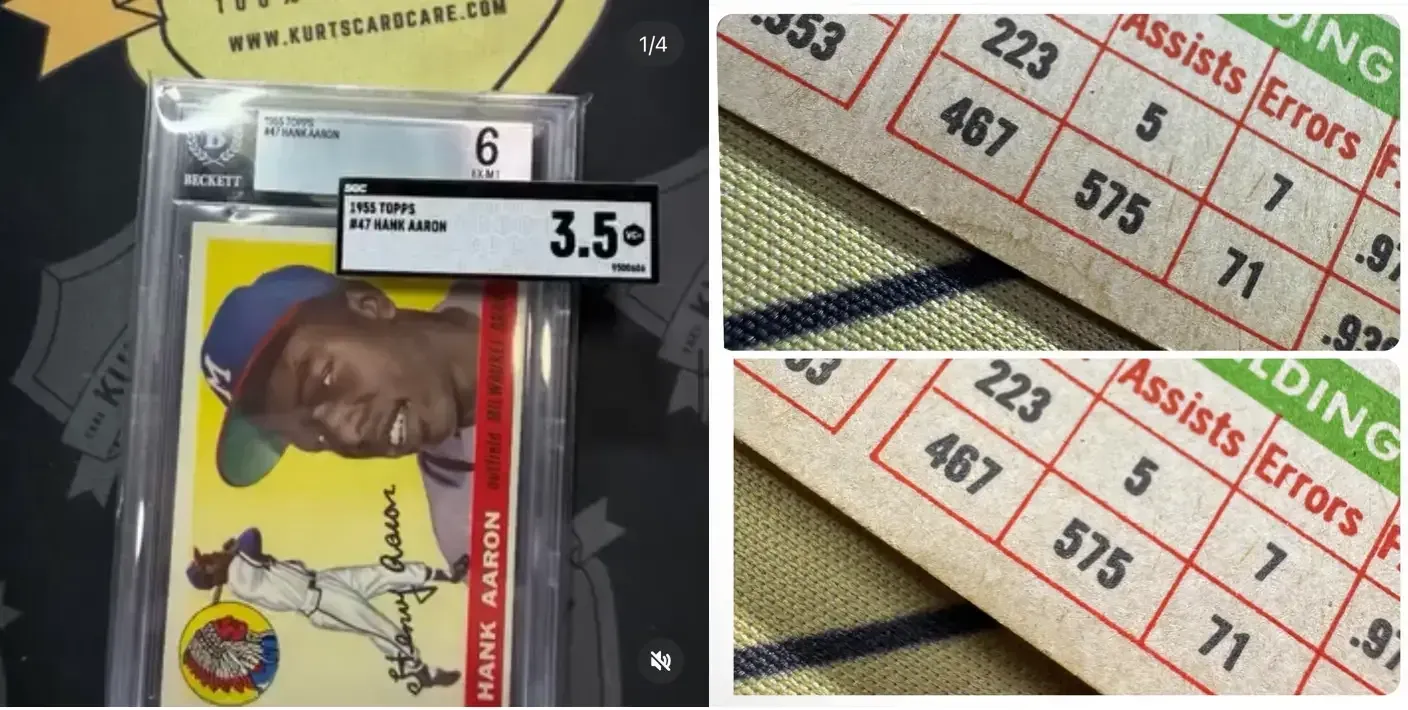
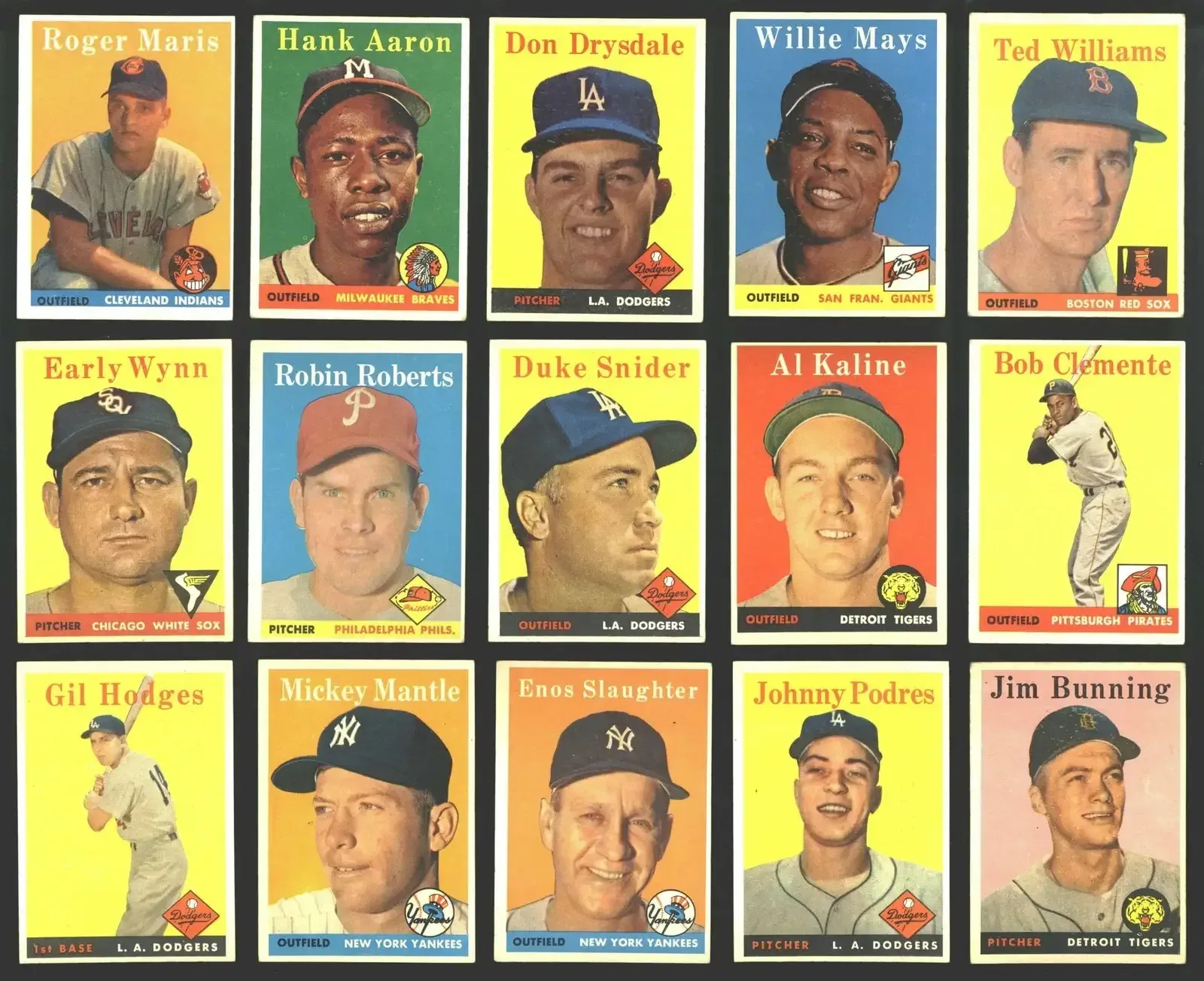
Card care can sometimes make a noticeable difference in how a card is ultimately graded. A 1955 Topps Hank Aaron was originally graded SGC 3.5. After Kurt’s Card Care worked on the crease shown in the image, the card later received a BGS 6, a 2.5-point increase, without receiving an altered designation.
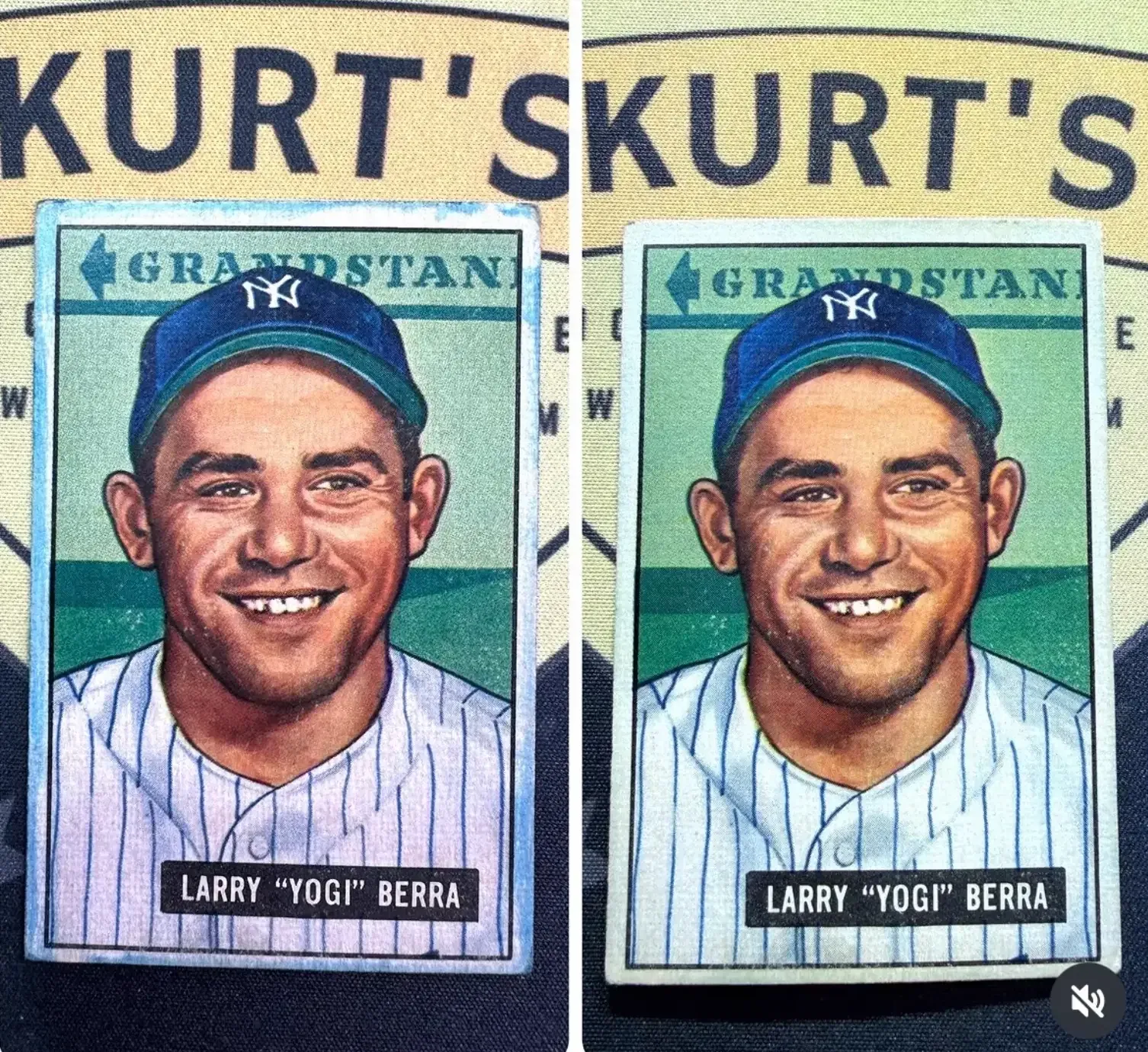
Another example involved a 1951 Bowman Yogi Berra card. Kurt’s Card Care removed blue marker from the card, and it later received a BGS 4 grade. Kurt describes that kind of work as removing foreign material rather than altering the card itself.
Those examples help explain why some collectors see card care as restoration rather than alteration. If the work improves the card without adding new material or changing the original design, they argue that the card is simply being brought closer to its original state.
Cleaning Raises Even More Questions Than Pressing
Cleaning is often more complicated than pressing. Wiping off a fingerprint with a microfiber cloth is harmless to most collectors, but applying a chemical product to a card surface is a different matter. PSA’s standards make clear that certain cleaning methods can lead to an altered designation.
Kurt argues that the product being used and the person using it matter a great deal. He said collectors can damage cards by using the wrong products or by trying techniques they do not fully understand.
“There could absolutely be major long-term effects if people don’t know what they’re doing,” Kurt said. “If you’re out there trying to do too much to a card, you’re going to damage it.”
Kurt also said he has a background in chemistry and product manufacturing. He described himself as a registered chemical manufacturer in the United States and said he has spent years working in product manufacturing and chemistry. His company says its products were developed specifically for trading cards rather than using household or automotive cleaners.
One of PSA’s biggest concerns is what happens years later. A card may look better immediately after treatment, but a grading company cannot always know how a substance will react with card stock, ink, or coating 10 or 20 years down the road.
PSA Has Considered a Limited Cleaning Service
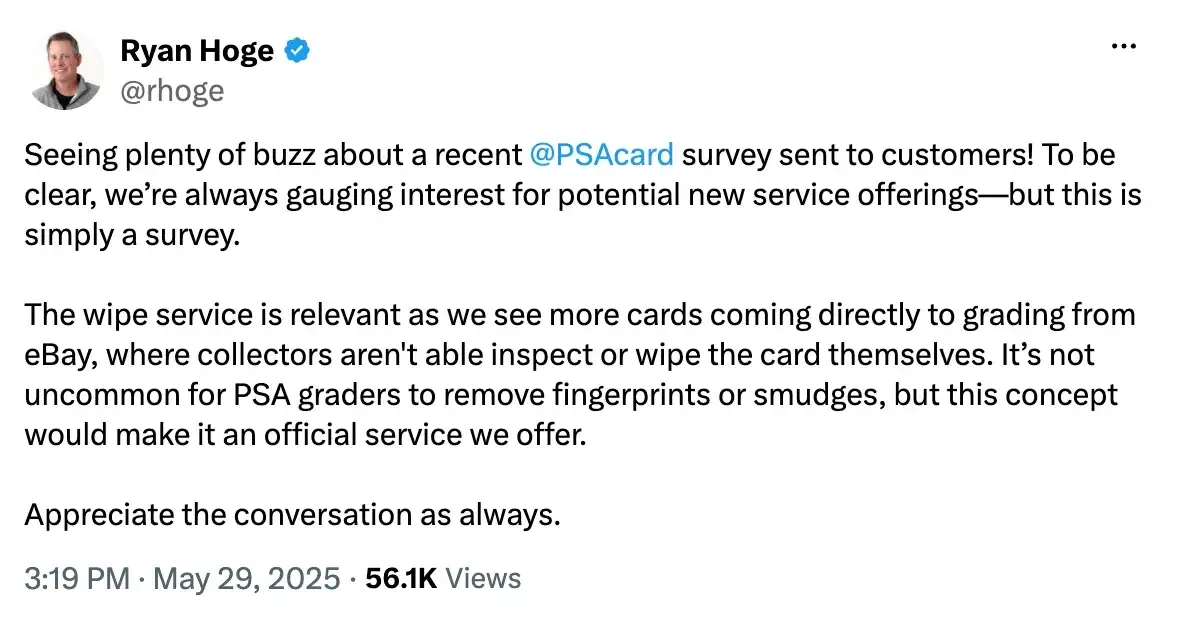
PSA has also shown some interest in the idea of limited card cleaning. In 2025, PSA surveyed customers about a possible service before PSA President Ryan Hoge clarified that the concept would primarily involve wiping away fingerprints, smudges, and dirt. Hoge noted that PSA graders already sometimes remove fingerprints and smudges from cards, but the proposed service would make the practice official.
Hoge discussed the issue in an interview with Geoff Wilson. Because PSA financially guarantees its grades, a treatment that temporarily improves a card before wearing off could leave PSA standing behind a grade that no longer accurately reflects the card. From that perspective, PSA’s caution makes sense.
Kurt’s view is that professionally developed card-care products should not automatically be treated the same as household chemicals or homemade mixtures. He points to more than 20 years working with card care and says experience, proper formulation, and proper use matter.
“There’s not a person alive that’s put in more hours into card care than me,” Kurt said. “It’s something I’ve done 20-plus years. I built a whole business around this. I built all these custom products around this.”
Card Care Matters Even for Collectors Who Never Grade
The grading debate is only part of the story. Many collectors never submit cards to a grading company, especially when it comes to vintage cards they prefer to keep raw. For those collectors, card care is not about chasing a higher grade. It is about preserving the collection properly.
Kurt said that is a major reason he focuses on education. “I want to empower every collector out there to know how to take care of their collection,” he said. “It’s like if you owned a bunch of nice automobiles, but you don’t know how to take care of them.”
That philosophy has helped his business grow from something he started on his own into a company with staff and its own facility. For collectors who keep cards raw, the question is not whether a grading company would accept a treatment. It is whether the card is being cared for responsibly.
Where the Hobby Draws the Line
Not every improvement to a sports card should automatically be considered an alteration. Trimming an edge, recoloring a corner, or adding material clearly changes the card itself and should be treated as alteration. Reducing an indentation or removing something that was never originally part of the card is harder to classify.
Collectors still need to respect grading-company policies. Anyone who cleans, presses, or otherwise treats a card before submission is taking a risk that PSA or another grader could consider the card altered. PSA has legitimate reasons to be cautious because it cannot know exactly what has been applied to every card or what the long-term effects will be.
At the same time, the debate continues because many collectors see a difference between changing a card and restoring it. For them, the key question is whether the original card has actually been added to or removed from. Restoring a card closer to its original state is not the same thing as trimming, recoloring, or creating something that was never there.
That is why the line between card care and card alteration remains one of the hobby’s most debated subjects, especially as more collectors look for ways to preserve cards without losing sight of originality.

Join the Sports Card Portal Page thread for this story.
Comments
0You must be signed in to comment.
Sign In