

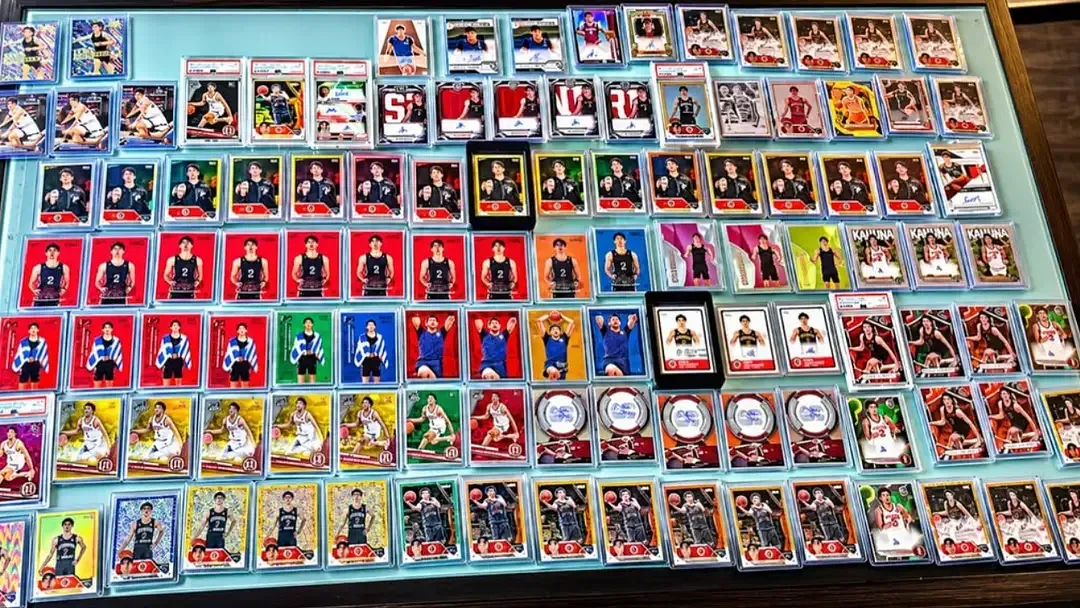
Opening a box for a big hit and tracking what a card might sell for are familiar parts of the hobby. Building a personal collection starts with a different question: What would you be happy to own even if its price never went up? The answer might be a card of a favorite player, an autograph from a school alum, or a piece of memorabilia tied to the minor league team you watched as a kid.
Collectors often shorten personal collection to PC. The term says nothing about what the cards cost or how many belong in it. A PC can be as specific as the one Mike has discussed with Jesse on the Sports Cards Nonsense podcast: Topps Five Star autographs of members of baseball's 500 Home Run Club. It can also be a loose assortment of inexpensive cards with a shared personal connection. These six approaches show how differently a PC can take shape.
1. Collect Favorite Teams Across Different Eras
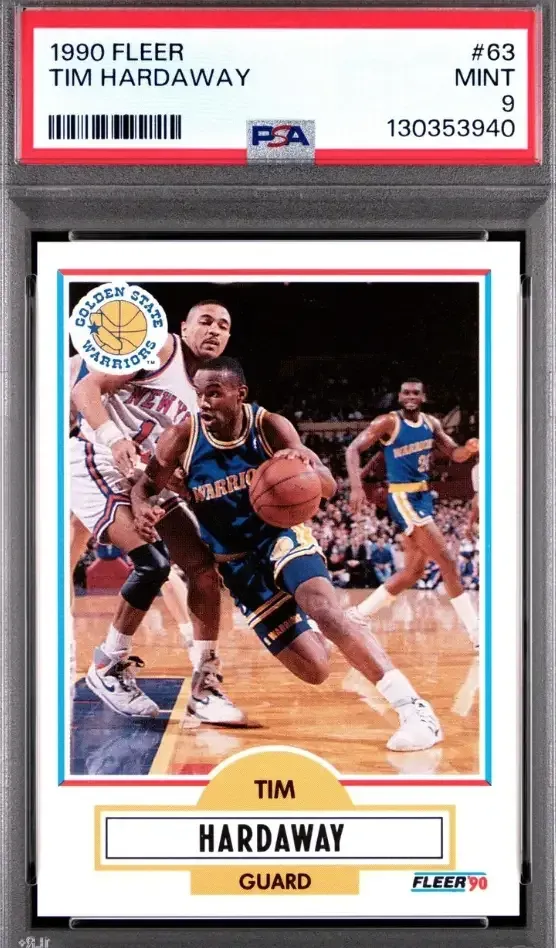
A team collection can start with its biggest stars. For a San Francisco Bay Area fan, that might mean Stephen Curry with the Warriors, Joe Montana with the 49ers, or Barry Bonds with the Giants. But the best-known names do not have to define the collection. A former fan favorite or a role player from a team that never won a championship can bring back just as many memories, often at a fraction of the price.
One way to give a team PC a clearer focus is to think about which years actually made you a fan. The first roster you remember following or the teams you watched with family can offer a more personal starting point than a list of franchise greats. That also leaves room for players whose cards do not attract much attention outside the local market.
Geography can matter when shopping for those cards. A player who draws interest at a hometown card show might be easier to find at a lower price at a show or hobby shop outside the area. For collectors who enjoy browsing, that makes boxes of less expensive cards worth a look. The card that best captures a particular season may not be the one displayed in the showcase.
2. Build a College Collection Across Sports
Collecting by school gives a PC a consistent identity without limiting it to one sport. A Stanford collection, for instance, could include football standouts Andrew Luck and John Elway, basketball player Cameron Brink, and Olympic swimmers Katie Ledecky and Torri Huske. Christian McCaffrey fits two collecting interests for a Stanford alum who also follows the 49ers.
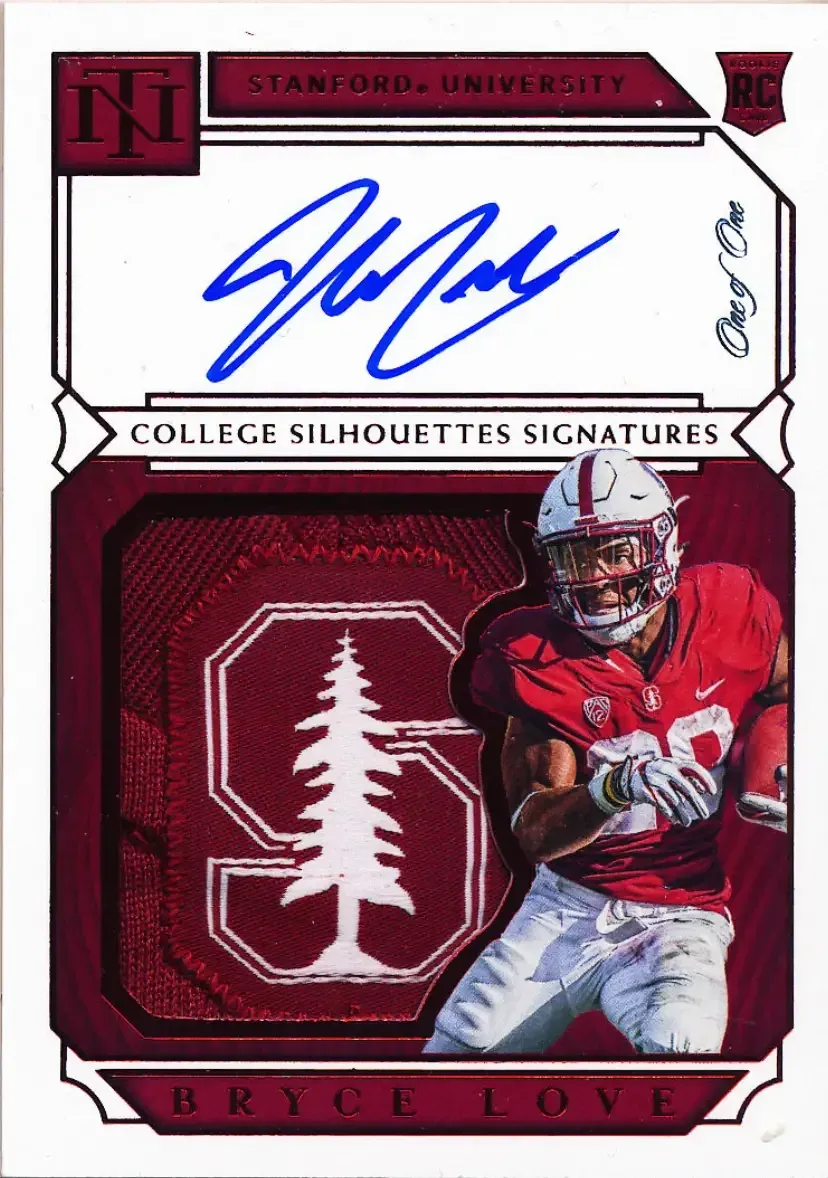
The uniform can be as important as the athlete. While many collectors prefer cards showing players with their professional teams, a college-focused PC can put those cards aside in favor of images from campus days. Bryce Love cards that show him in Stanford uniform fit that approach. A Pac-12 patch offers an even narrower target for a collector interested in memorabilia tied to that era.
A school collection can also extend beyond cards pulled from packs. Former Stanford baseball players and major leaguers Mike Mussina and Jack McDowell are examples of athletes whose signatures have been collected through the mail. Through-the-mail autograph collecting can sometimes yield a signed item for less than $20, though that is not a guaranteed cost or outcome for a particular player. The appeal is that a signed item can fit the same college theme even if it was acquired differently from the rest of the collection.
Related coverage includes How to Build a Personal Trading Card Collection That Actually Feels Like Yours.
3. Follow One Player Beyond the Big Hits
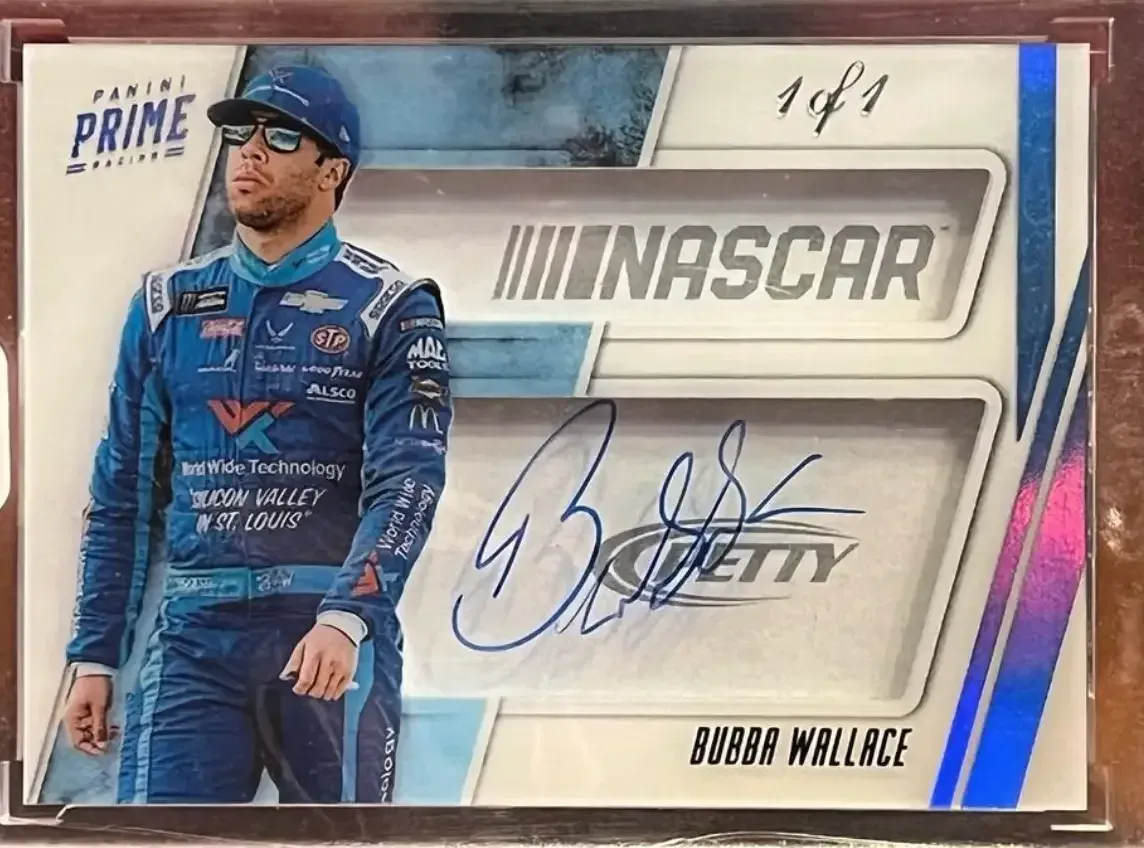
Picking a single athlete lets a collector go deep without having to keep up with every breakout rookie. NASCAR driver Bubba Wallace offers one example. His move to 23XI Racing, the team associated with Michael Jordan and Denny Hamlin, gave a Wallace collector another reason to follow races and connect with others who collect his cards.
A player PC does not have to lean exclusively toward premium cards. For Wallace, the chase can include race-used patch cards, autographs, and one-of-ones alongside inexpensive cards that fill gaps. A common card can still be a satisfying find if it is one the collector has not seen or does not already own. Conversely, a collector who likes a more selective approach might stick to just the autographs or memorabilia cards that matter most to them.
The useful distinction is between collecting broadly and trying to own everything. A one-of-one can be an interesting target without becoming a requirement for the rest of the collection to feel worthwhile. Keeping track of the cards already on hand can also make the search more rewarding, especially when most additions are ordinary cards rather than headline pulls.
4. Collect Hometown, Family, and Personal Connections
Some of the most distinctive collections begin with a place or a memory rather than a favorite team. The late David McCarty had two connections for a Stanford graduate who grew up in Visalia: He attended Stanford and played for the Visalia Oaks, the minor league club now known as the Rawhide. A signed minor league bat from the early 1990s carried added meaning because the collector had seen McCarty play at multiple levels.
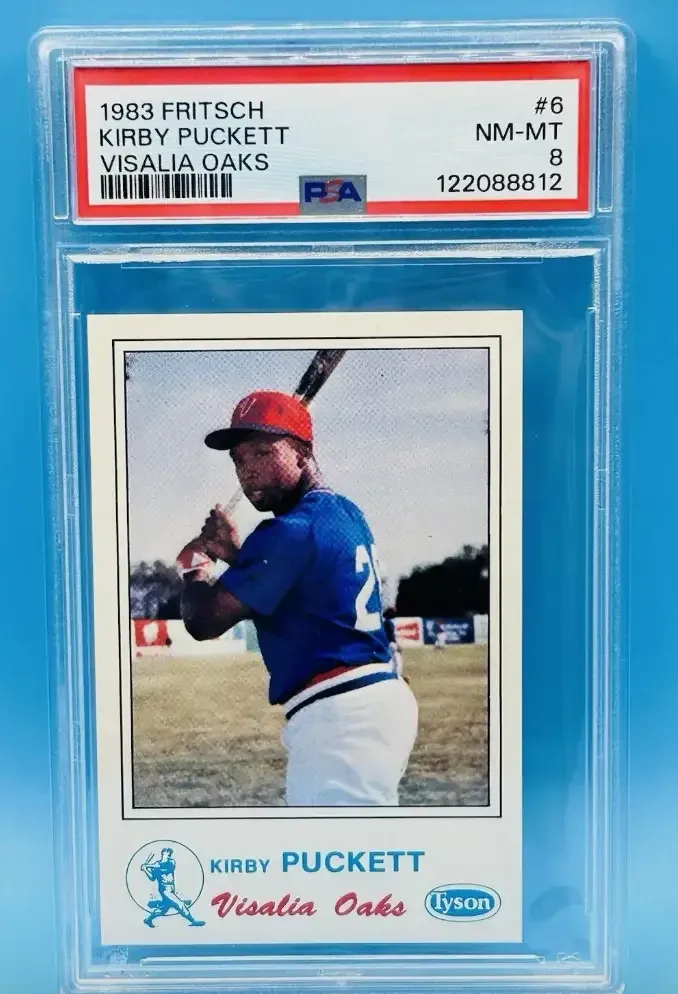
A hometown PC could center on athletes who went to a local high school, grew up nearby, or spent time with a minor league club in the area. The Oaks connection, for example, also brings Kirby Puckett into the picture. A collector drawn to that part of his career is looking for something different from someone assembling a collection around his years in the majors. The connection, not the player's fame, is what gives the collection its shape.
Family collections can develop along similar lines. An inherited group of cards might point toward a parent's favorite player, or an unfinished set might give the next collector a specific project. In either case, the cards already in hand help define what belongs next. A modest addition can matter because of the gap it fills or the person who started the collection, not because it changes what the collection is worth.
5. Build a Theme Around What Appears on the Card
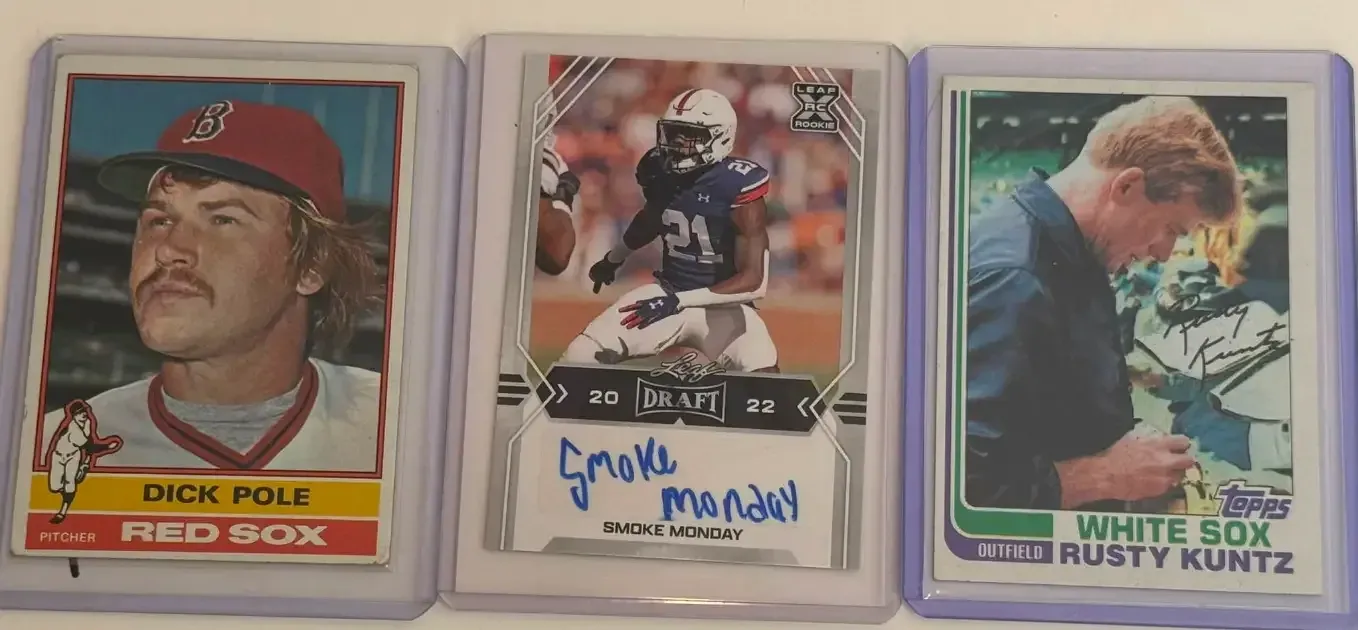
A PC need not be organized by the name on the front. Unusual uniforms, unexpected photographs, funny player names, or athletes who share a birthday can all supply a theme. A favorite insert or autograph series offers another option. The appeal of a visual theme in particular is that it changes how a collector looks through cards: A detail that would ordinarily go unnoticed becomes the reason a card belongs.
Some themes lend themselves to a well-defined checklist. A fan might seek one autograph from every member of a favorite championship roster. That is a different project from collecting only the stars of that team, since a reserve's signature fills a spot just as surely as the MVP's does. It also gives each addition a place in the broader story of the roster.
Other themes work precisely because the checklist is open. A collection of quirky photographs can expand as new examples turn up, without any need to decide in advance how many cards will qualify. A series-based collection offers a more structured search, while a theme based on an image or a name leaves more room for chance finds. Both can give collectors a reason to look past the usual names and prices.
6. Look Beyond Sports Cards for Personal Connections
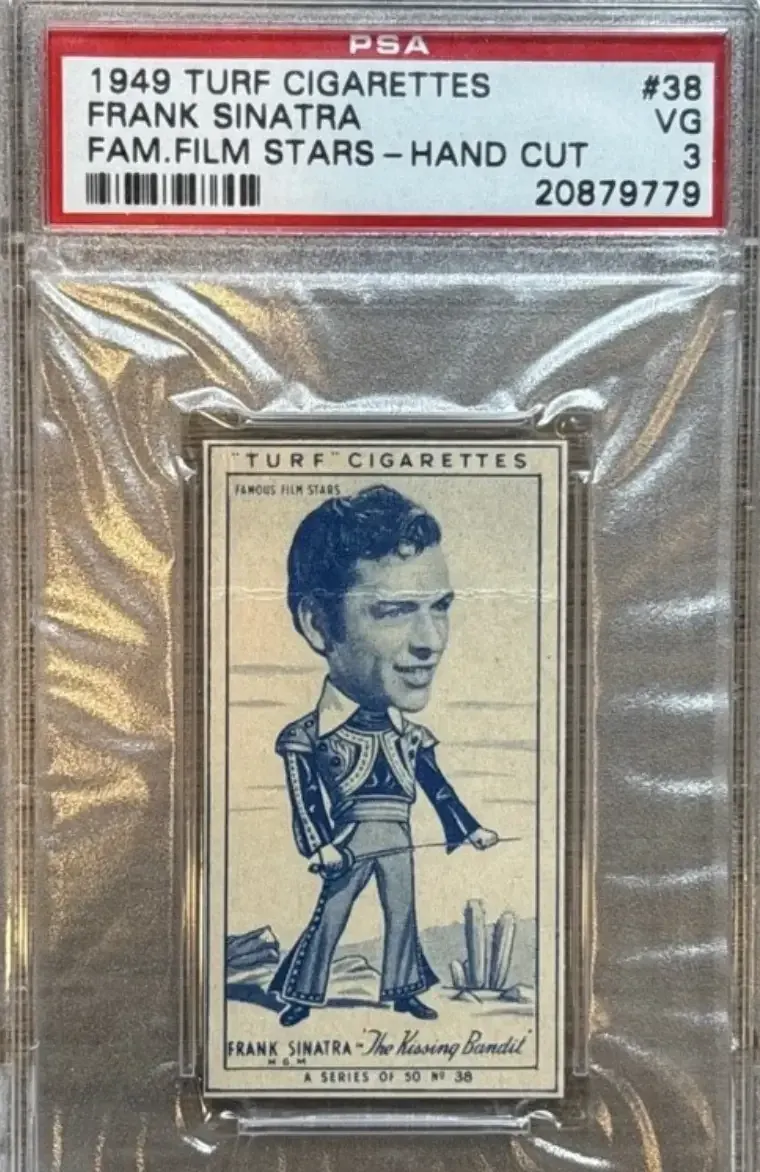
The same approach works outside sports. An interest in Palm Springs and its entertainment history can lead to a collection featuring Frank Sinatra, Dean Martin, and Jayne Mansfield. A 1949 Turf Cigarettes card of Sinatra is one example of how a familiar entertainer can turn up in a format that looks quite different from a modern trading card.
Entertainment collecting can bring together vintage postcards, international cigarette cards, and gum cards. The organizing thread might be a musician, a film or television interest, or the history of a place. Politics offers another possible subject for collectors who want to explore older material outside sports and entertainment.
Searching by subject as well as format helps keep this kind of collection from being limited to conventional trading cards. A Sinatra cigarette card and an old postcard can belong in the same PC if both speak to the entertainment history that inspired it. The difference in format is part of what makes them worth collecting together.
Join the Sports Card Portal Page thread for this story.
Comments
0You must be signed in to comment.
Sign In