

1956 Topps Baseball Still Stands Out in Vintage Collecting
The 1956 Topps Baseball set remains one of the most admired vintage issues in the hobby. With its clean white borders, colorful artwork, dual image design and deep roster of stars, the 340-card release continues to draw attention from collectors nearly 70 years after it was produced.
Collectors and hobby veterans often point to the set’s visual appeal as a major reason for its staying power. Each card combines a profile image with an action scene, giving the release a look that is instantly recognizable to vintage baseball card fans. The design, paired with a strong lineup of players, has helped 1956 Topps maintain a prominent place in set collecting, player collecting and the PSA Set Registry.
Why the Design Still Resonates
The 1956 Topps format is one of the most distinctive in the company’s history. The cards feature full-color artwork, white borders and a layout that shows two different views of the player. That combination gives the set a lively feel that separates it from many other vintage baseball releases.
Collectors often cite the action image as one of the set’s most important innovations. It was among the earliest Topps baseball designs to show a player in motion in a way that felt more dynamic than a standard portrait card. The result is a set that looks modern in some ways while still carrying the charm of mid-1950s cardboard.
The larger card size also adds to the set’s identity. Topps used the 2 5/8-by-3 3/4 format in 1956, its final year producing oversized cards before moving to the standard 2 1/2-by-3 1/2 size in 1957. That larger canvas gave the artwork room to breathe and helped the cards stand out in binders, albums and display cases.
Mickey Mantle’s Return to Topps Was a Major Moment
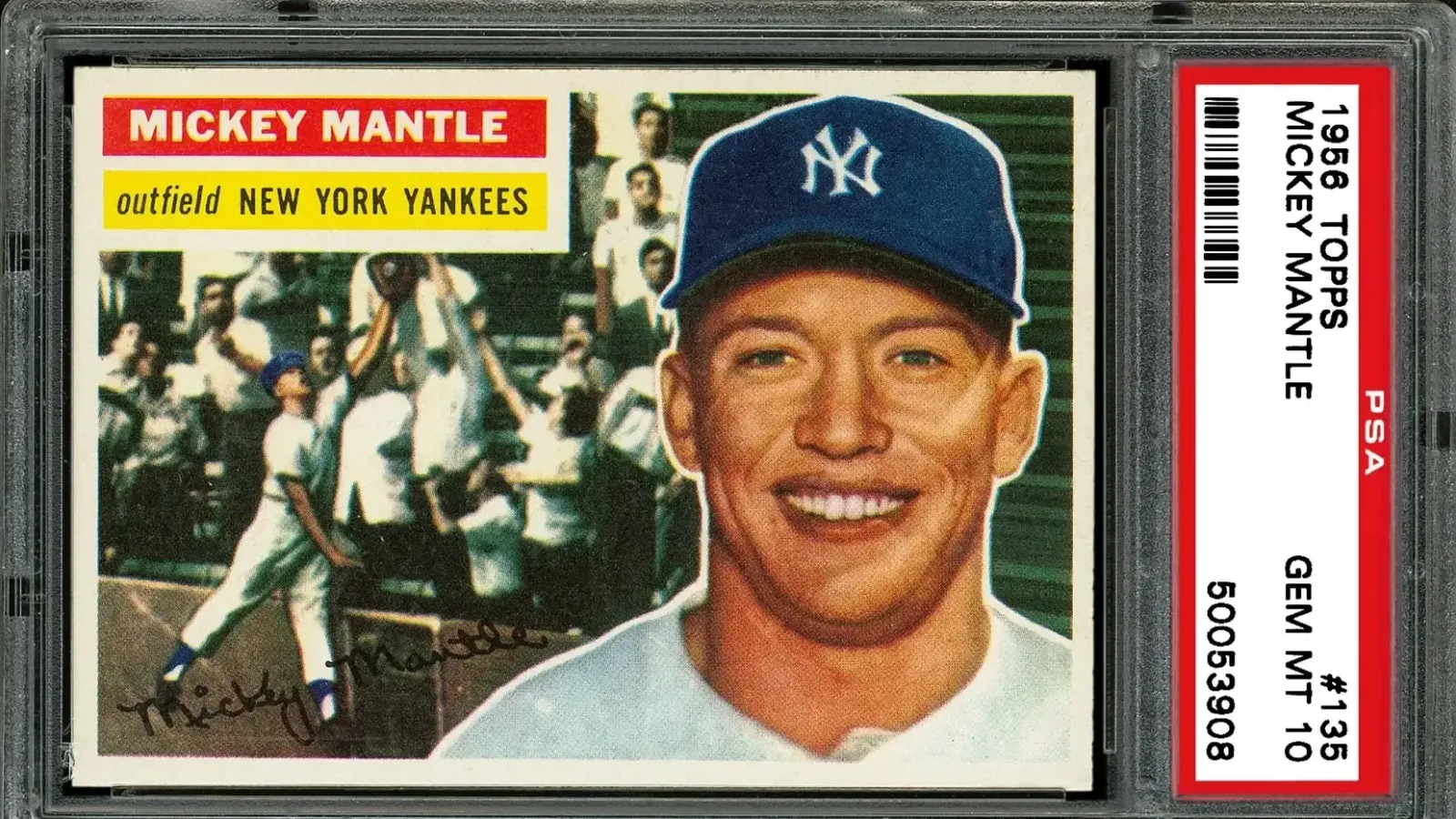
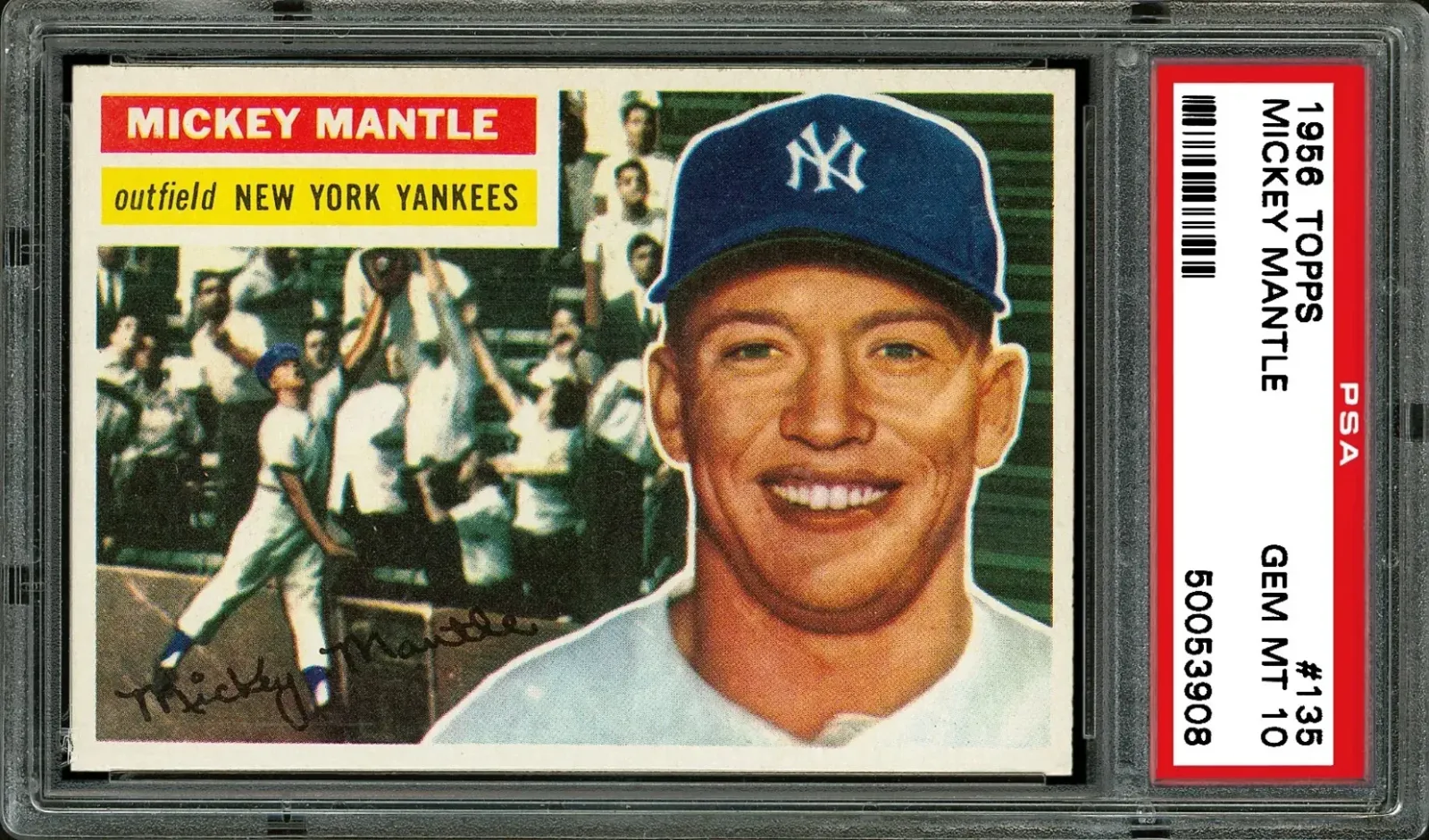
Mickey Mantle is the centerpiece of the set and one of the biggest reasons collectors continue to chase 1956 Topps. Mantle had appeared in Topps’ 1952 and 1953 sets, but Bowman signed him to an exclusive contract that kept him out of Topps’ 1954 and 1955 releases. After Topps bought out Bowman in January 1956, Mantle returned to the company’s baseball cards along with Whitey Ford and Bob Feller.
That return mattered. Mantle was one of the most popular players in baseball, and his inclusion gave the set immediate star power. In 1956, he also won the Triple Crown, adding another layer of significance to his card and to the set as a whole.
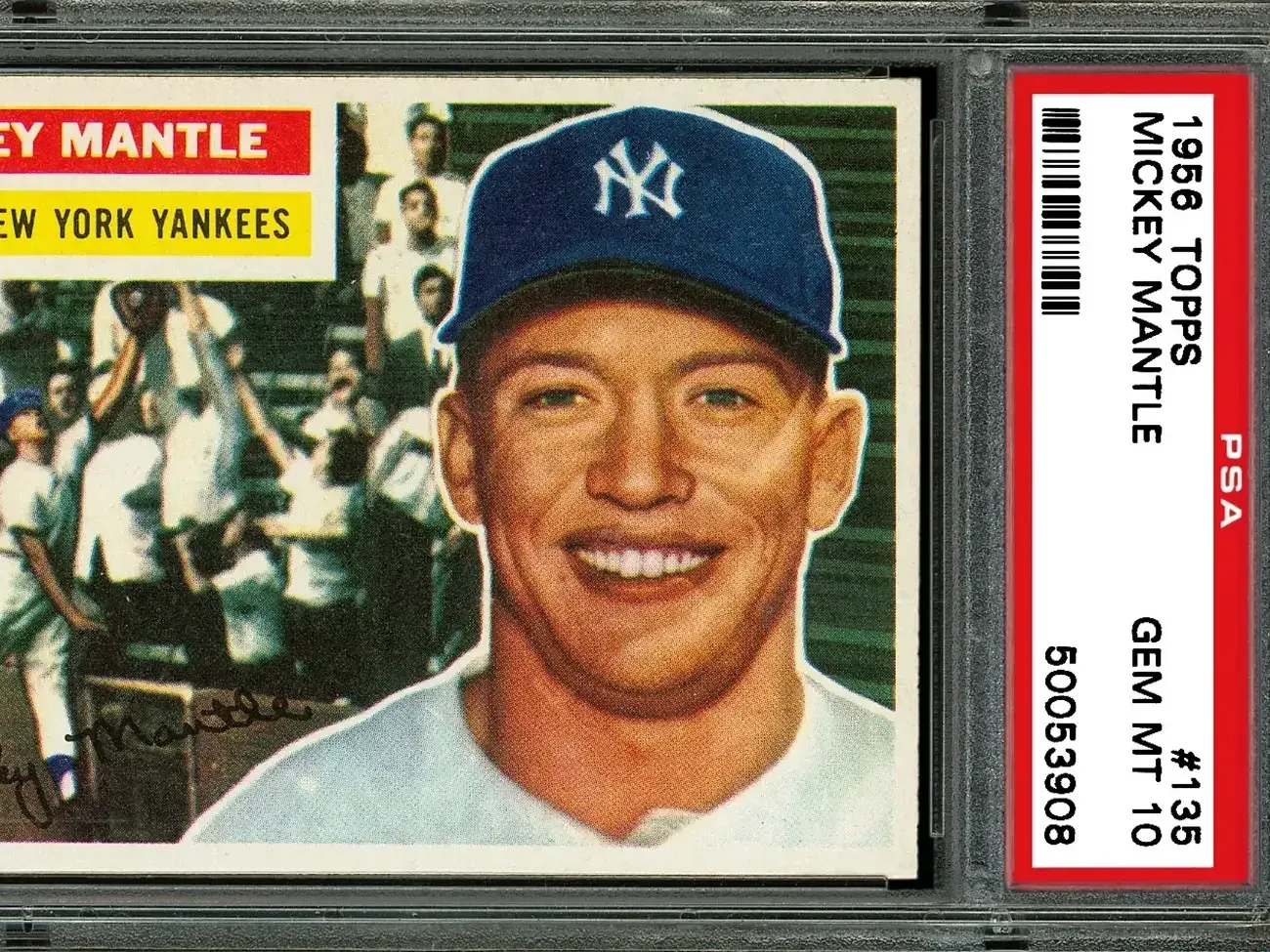
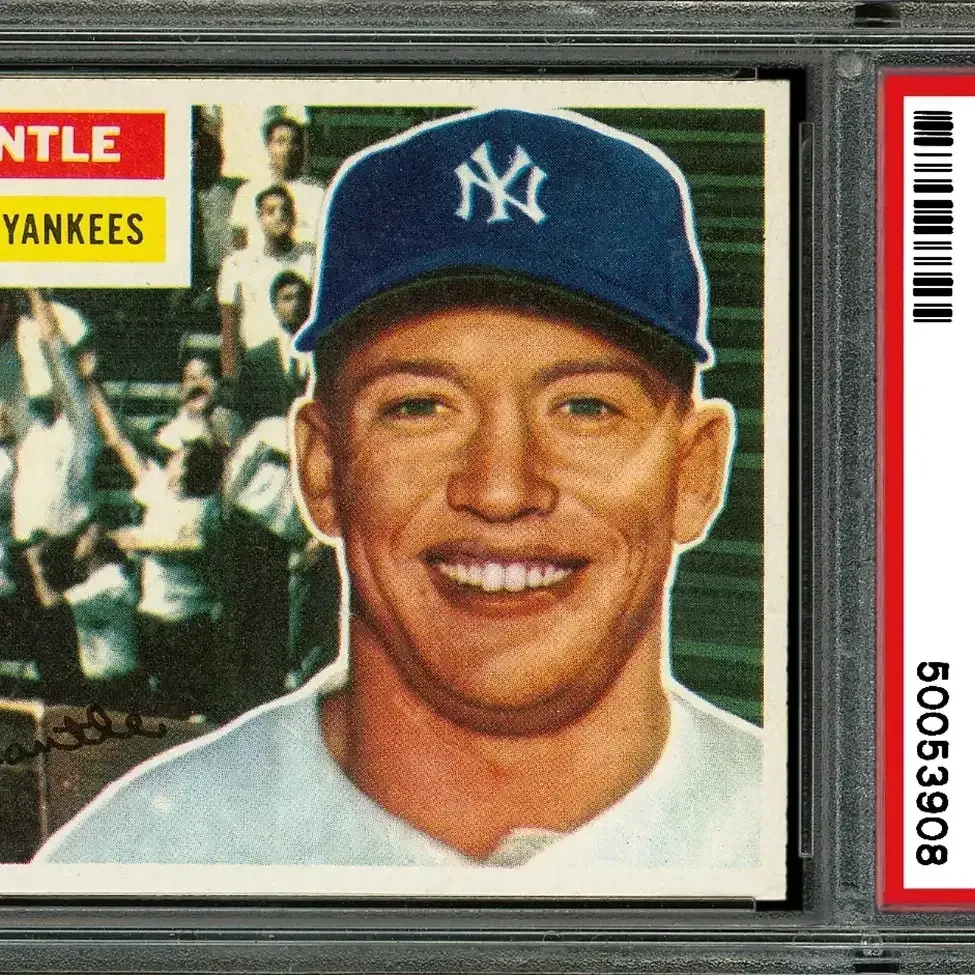
The 1956 Mantle is the only horizontal card in his Topps run, and its design is a big part of its appeal. One side shows Mantle smiling in a portrait image, while the other includes an action shot of him making a leaping grab into the stands. The combination of images and the card’s layout have made it one of the most sought-after Mantle cards in the hobby, alongside his 1952 and 1953 Topps issues.
Related coverage includes 1956 Topps Baseball Still Has the Cleanest Card UI in the Vintage League.
Star Power Runs Deep Across the Checklist
While Mantle is the headliner, the 1956 checklist is packed with Hall of Famers and major names from the era. The set includes cards of Ted Williams, Jackie Robinson, Al Kaline, Willie Mays, Sandy Koufax, Roberto Clemente, Harmon Killebrew, Hank Aaron, Whitey Ford and Bob Feller, among others.
That depth is one of the set’s biggest strengths. It is not built around a single rookie class in the way some other 1950s issues are. Instead, it offers a broad collection of stars and early-career cards that appeal to both set collectors and player collectors.
The set includes second-year cards of Koufax, Clemente and Killebrew, along with early cards of Mantle, Mays and Aaron. Luis Aparicio is the notable rookie card in the set, and while it is an important card, the release is remembered more for the overall concentration of stars than for one marquee rookie.
That balance has helped the set remain popular with collectors who value eye appeal and star power over a single chase card. For many, the appeal is in the sheer number of important names represented across the 340-card checklist.
Print Run, Population and Availability
Topps increased production for 1956 after the success of the 1955 set, and that larger print run is reflected in PSA population data. As of the end of January 2026, PSA had graded 391,296 cards from the 1956 Topps set, compared with 212,795 from the 1955 set.
That availability has made the set more approachable for collectors than some other 1950s Topps issues. Singles are available in raw and graded form, and complete sets can still be assembled with patience and budget discipline. The higher supply also means collectors have a better chance of finding strong examples in top condition.
There are nearly 80,000 PSA 8 copies or higher in the population report, and 305 cards have reached PSA 10. Those numbers show that high-grade examples exist in meaningful quantity, especially when compared with many other vintage sets from the same era.
The white borders likely help the cards grade a little better as well. Collectors often note that border color can affect how vintage cards hold up over time, and the clean design of 1956 Topps has helped preserve eye appeal across a wide range of grades.
White Back and Gray Back Variations Add Another Layer
One of the most interesting features of the 1956 Topps set is its back variation structure. Cards numbered 1 through 180 were printed with either white backs or gray backs, and the distribution is not even across the checklist. For cards numbered 1 through 100, white backs are more common. For cards numbered 101 through 180, gray backs are more common.
That variation gives collectors another challenge and another reason to study the set closely. Some cards are significantly scarcer in one back type than the other, and those differences can affect both price and collector demand.
For example, Ted Williams card No. 5 has a PSA population of 5,319 for white backs and 2,344 for gray backs. Mantle’s card No. 135 has been graded 10,334 times in gray back form and 1,109 times in white back form. Those population differences help explain why some versions of the same card command a premium.
Recent sales have shown the gap in value as well. A Mantle white back in PSA 5 sold in October 2025 for $4,500, while a gray back in the same grade sold for $2,800 in January 2026. For collectors who focus on back variations, the set offers a meaningful layer of scarcity without changing the core checklist.
Why High-Grade Examples Are So Popular
The combination of strong design, broad star power and relatively healthy supply has made 1956 Topps a favorite among collectors who pursue high-grade vintage cards. The set is challenging enough to feel rewarding, but not so scarce that it becomes unreachable for many hobbyists.
Collectors who work on the PSA Set Registry often gravitate toward 1956 Topps because it offers a realistic path to assembling a strong, high-grade run. The set’s availability also helps create competition among collectors who want to improve their rankings by upgrading individual cards.
That competitive environment has made the set especially active in the market. Collectors continue to chase better copies of key stars, and the most desirable examples can move quickly when they appear.
Longtime collectors note that the set’s condition profile is also favorable. Many examples fall in the PSA 6 to PSA 8 range, which gives set builders plenty of room to pursue attractive cards without needing to chase only the highest-end copies.
Set Collectors Keep the 1956 Issue in Demand
For dedicated set builders, 1956 Topps remains a benchmark release. John Evanoff, a longtime collector with multiple completed Topps baseball runs, finished his 1956 set in 2015 and later continued upgrading it for the PSA Set Registry. His experience reflects how the set can evolve from a collecting goal into an ongoing competition for better grades.
Evanoff’s approach shows how the set appeals to collectors who enjoy the chase as much as the final product. Once a set is assembled, the next step often becomes upgrading key cards, improving the overall grade average and competing for a better registry position.
That kind of collecting keeps demand strong for the biggest names in the set. Mantle, Aaron, Mays, Robinson and other stars remain central to the market, and high-grade examples can reach significant prices as collectors continue to refine their runs.
Other collectors have also found the set to be a natural fit for their interests. Lanny Ribes, for example, has appreciated the 1956 design more over time, especially because of the action image and the bright color palette. For many collectors, the set grows on them the longer they study it.
Sealed Wax Is Far Harder to Find Than Singles
While individual cards from 1956 Topps are widely available compared with many vintage sets, sealed wax and unopened wrappers are much tougher to locate. Collectors have not seen major discoveries of large quantities of unripped packs over the years, which makes sealed material a far different market from singles and graded cards.
That scarcity adds another layer to the set’s hobby profile. Most collectors encounter 1956 Topps through individual cards, partial sets or graded examples, while sealed examples remain elusive and highly specialized.
For collectors focused on the cards themselves, the set offers a mix of accessibility and challenge that is hard to match. The stars are there, the design is memorable and the back variations create additional collecting paths. Those factors have kept 1956 Topps Baseball firmly in the conversation whenever vintage baseball card sets are discussed.
Seventy years after production, the set still offers something for nearly every type of collector, from player collectors chasing Mantle or Williams to set builders working through the checklist one card at a time.



Join the Sports Card Portal Page thread for this story.
Comments
0You must be signed in to comment.
Sign In