

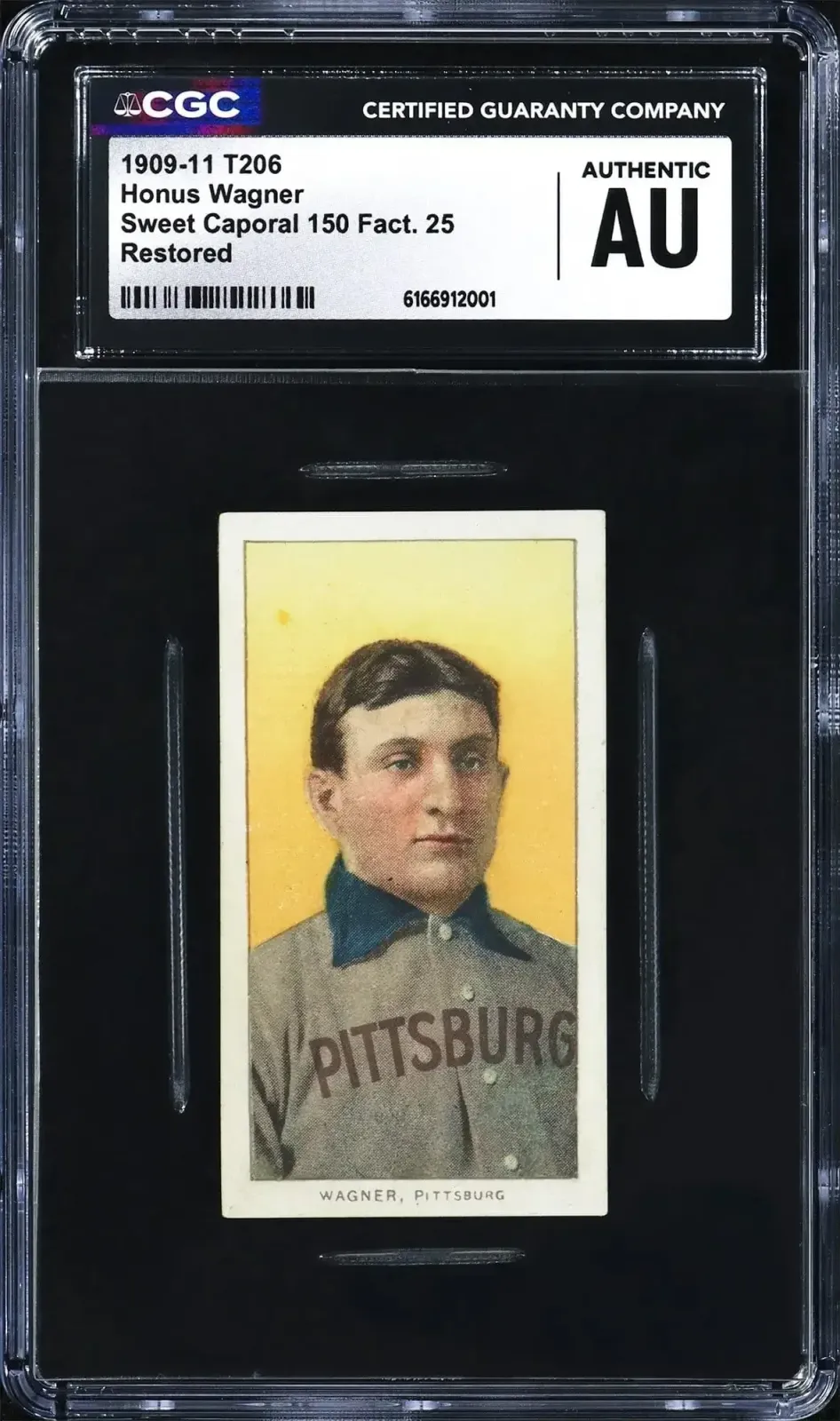
A T206 Honus Wagner with a controversial past is drawing major attention
The T206 Honus Wagner has long stood alone as the hobby’s most famous card, a true centerpiece for high-end collectors and one of the most recognizable collectibles in sports. While record sales in the modern era have pushed the market to new heights, the Wagner remains the card that many collectors still call the ultimate prize.
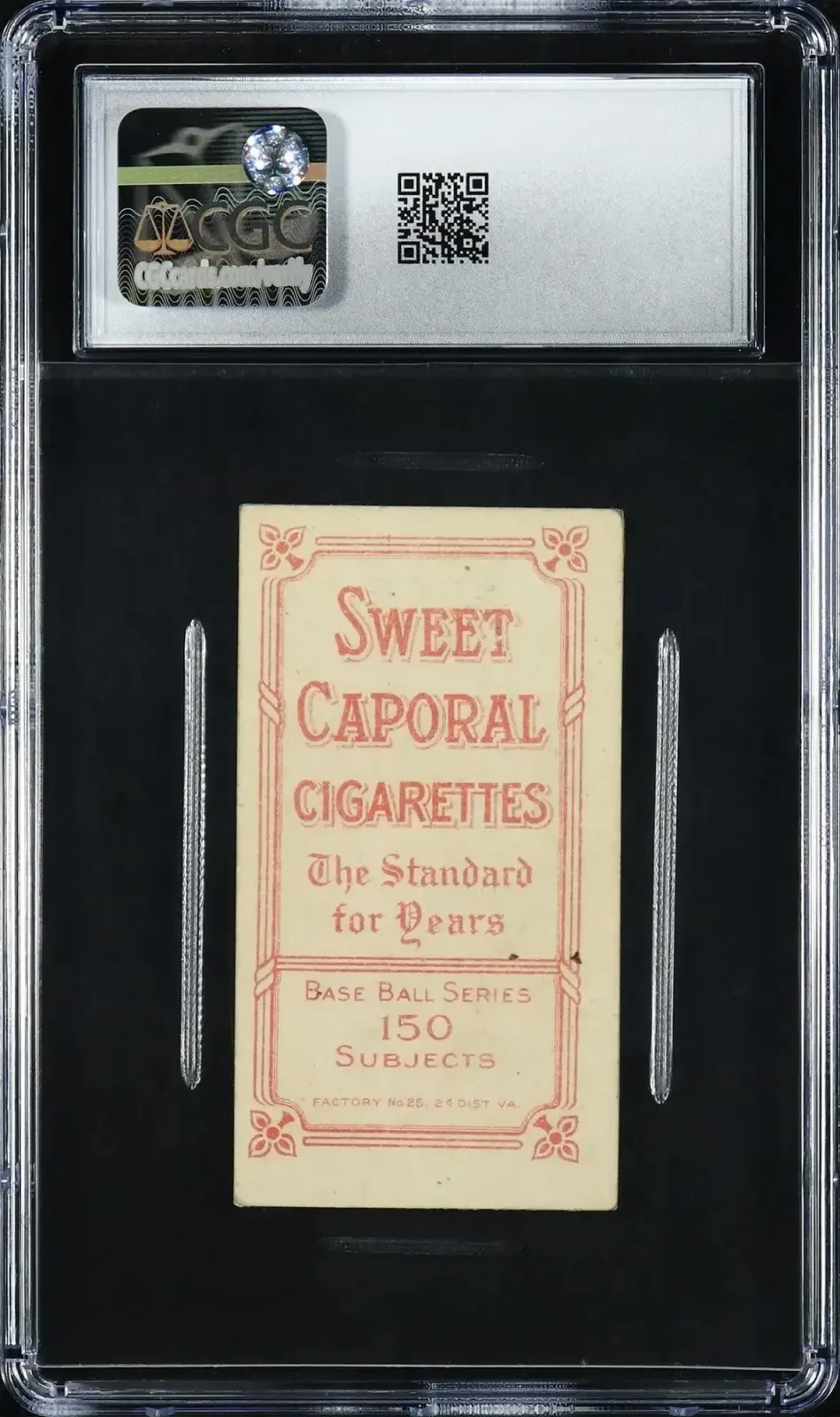
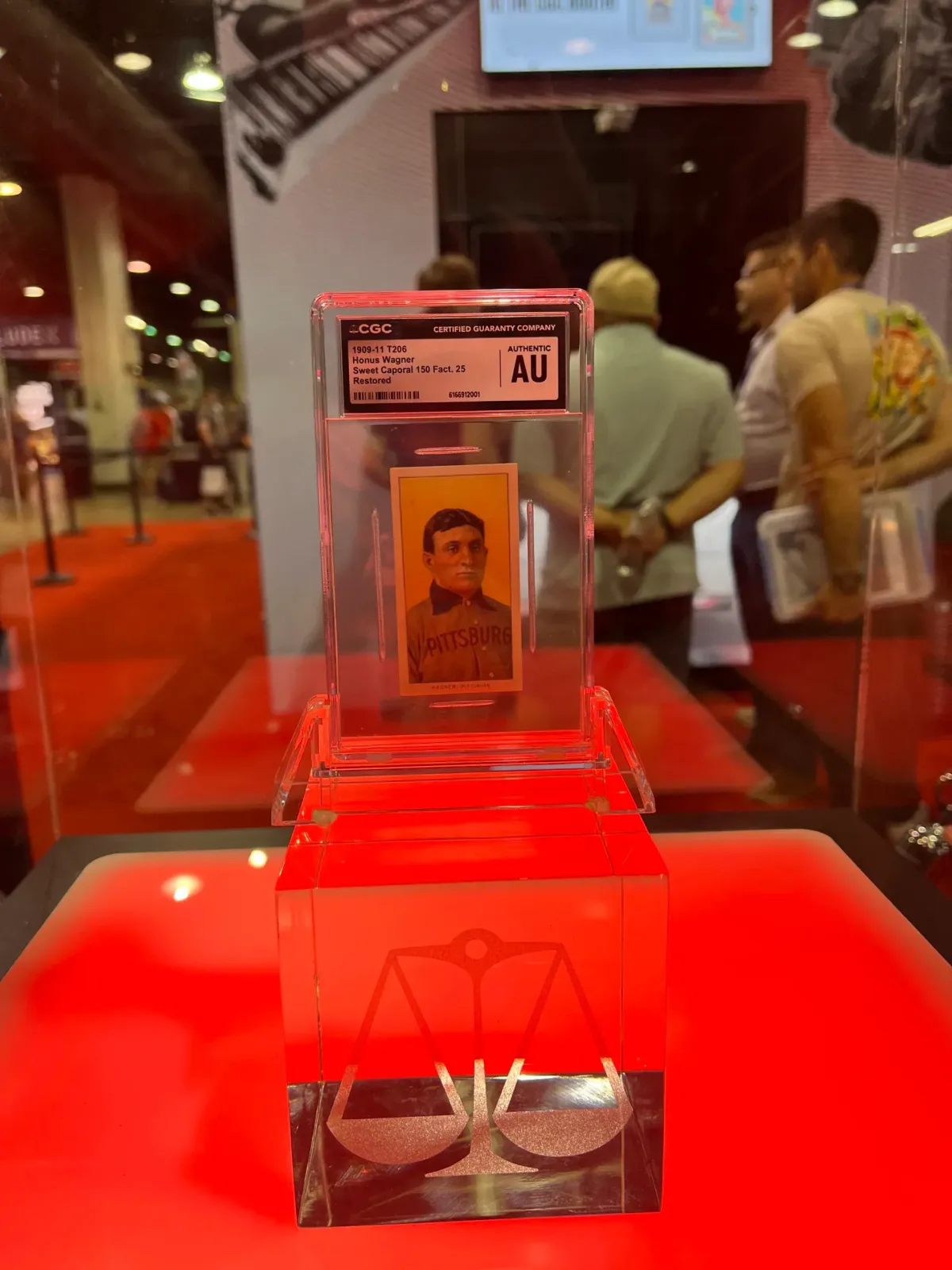
That status is part of why a heavily restored example now up for bid at Love of the Game Auctions has become one of the most talked-about cards at the National Sports Collectors Convention in Chicago. The card, known as the “Die-Cut Wagner,” is graded Authentic Restored by CGC and had a current bid of $1.1 million as of the report.
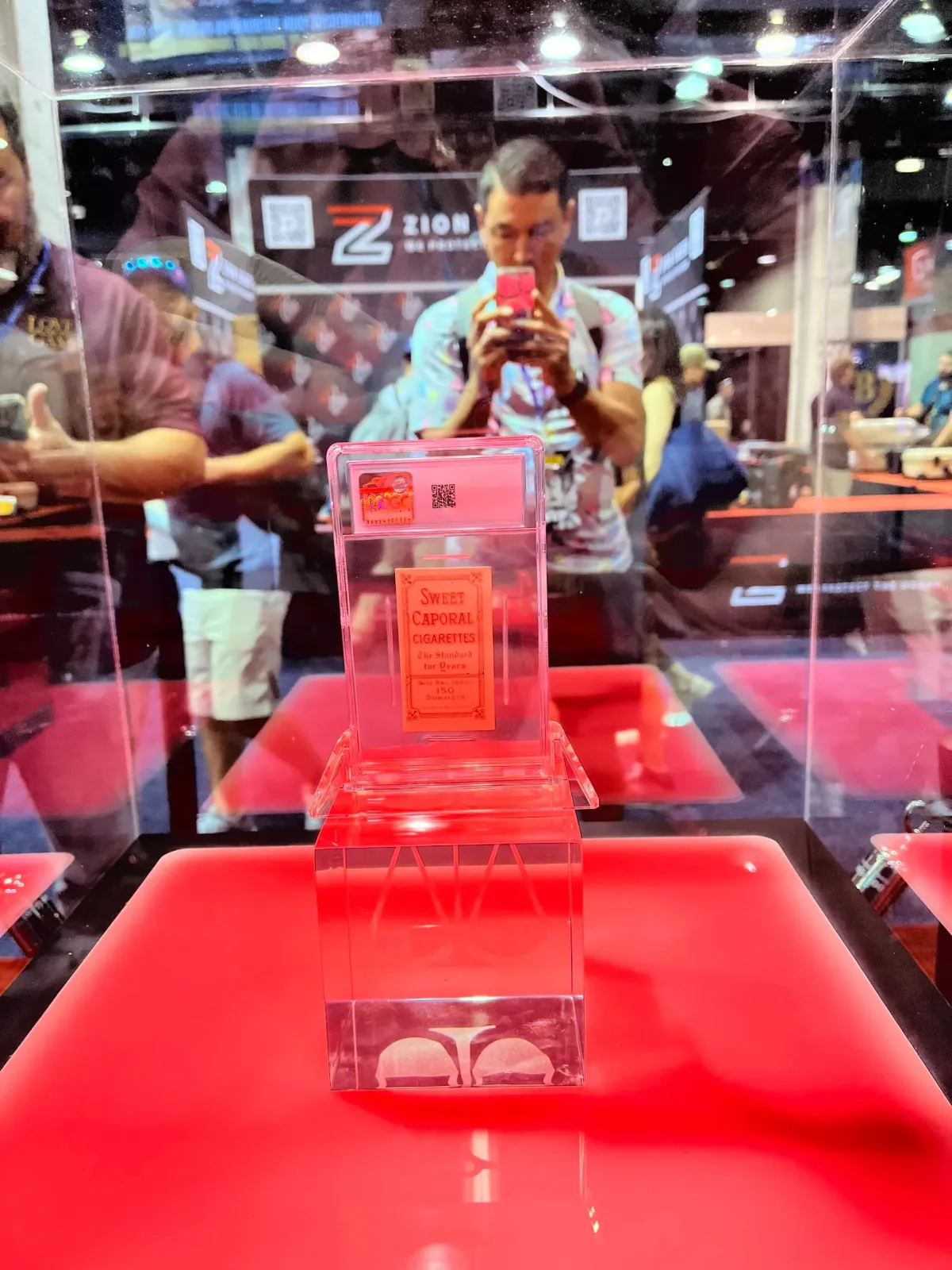
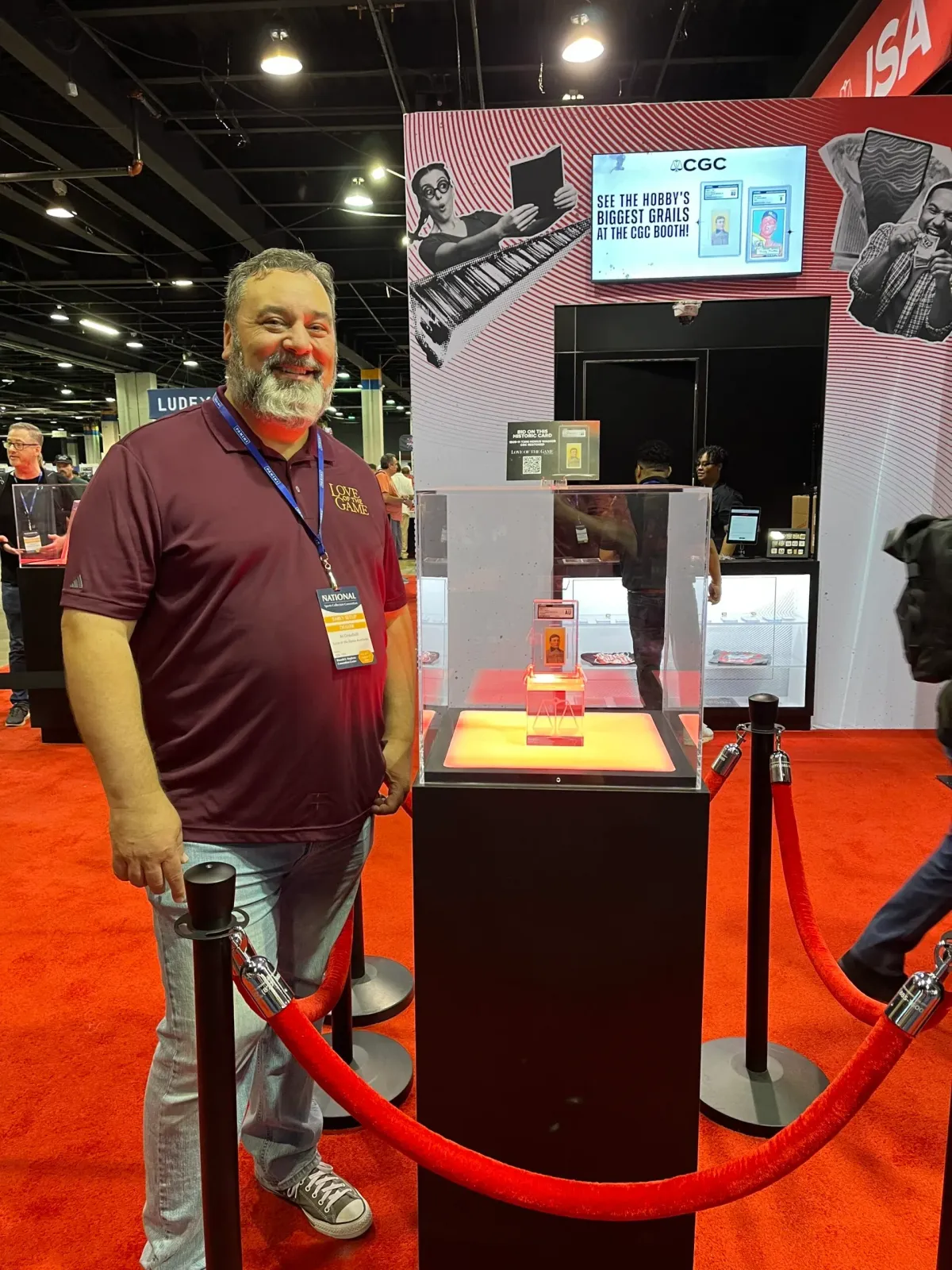
The card was on display at the CGC booth at The National and has sparked a broader discussion about restoration, disclosure and whether a card that has been rebuilt in such a dramatic way should be treated as a legitimate collectible.
Why the T206 Honus Wagner still matters
The 1909-11 T206 Honus Wagner is one of the rarest and most coveted cards in the hobby. Fewer than 70 copies are believed to exist, and each example tends to carry its own complicated story. The card’s mythology has only grown over the decades, fueled by books, movies and constant references across hobby culture.
Collectors and auction executives say the Wagner’s appeal is unlike anything else in the market.
Al Crisafulli, founder and auction director of Love of the Game Auctions, said the card has been chased for more than a century and remains unmatched in terms of recognition and significance.
Chris Ivey, director of sports auctions at Heritage Auctions, called it the original and said it will always symbolize the hobby’s holy grail.
The restored card at Love of the Game Auctions
The Love of the Game example is especially unusual because the card was almost completely restored after being severely damaged. According to the source, the original Wagner had been trimmed down so extensively that the background and three borders were removed, leaving only the head and torso silhouette. The back of the card was also missing.
Crisafulli said the card surfaced in a New Jersey card shop in 1975, where it was purchased for $1. The owners later advertised it in SCD in 1976 and sold it to collector Rob Lifson for $200. Lifson eventually sold it to Richard Gelman, the son of Topps card director Woody Gelman, for $500. Richard Gelman later consigned it to REA, where it sold for $12,000 in 1996.
Around that time, longtime collector and ESPN sportscaster Keith Olbermann became interested in card restoration and sent a card to a paper conservator who had restored other cards. Crisafulli said the conservator suggested doing a high-profile card and told Olbermann he had a lead on a Wagner. Olbermann agreed.
After several years of restoration work, Olbermann was reportedly stunned by the result. Crisafulli said the card was so dramatically improved that Olbermann bought both the card and the restoration work itself, even though he had never seen the card before the project was completed.
Olbermann later kept the restored Wagner in a Lucite screw-down holder and, according to Crisafulli, used it like an expensive paperweight for roughly 30 years. The card eventually became one of three Wagners in his collection, but it was the first one he owned.
What makes the card controversial
Restoration has long been a sensitive subject in the hobby, especially when alterations are not disclosed. Trimmed cards, recolored cards and other forms of doctoring have often been viewed as taboo, and in some cases have been associated with fraud.
What makes this Wagner different, Crisafulli said, is the level of disclosure. The card is being sold as restored, and the auction house believes that transparency is part of why collectors are paying attention.
Crisafulli said the card is not an attempt to pass off a damaged item as original or untouched. Instead, he described it as a dramatic before-and-after example of what paper conservators can do when working on a historically significant card.
He also said the sale could encourage more honesty in the hobby when cards have been altered or repaired.
According to Crisafulli, there is still value in a restored card when the work is fully disclosed, even if it will never approach the value of a natural, untouched example in comparable condition.
How the other major Wagner auctions compare
The restored Love of the Game card is not the only Wagner drawing attention at The National.
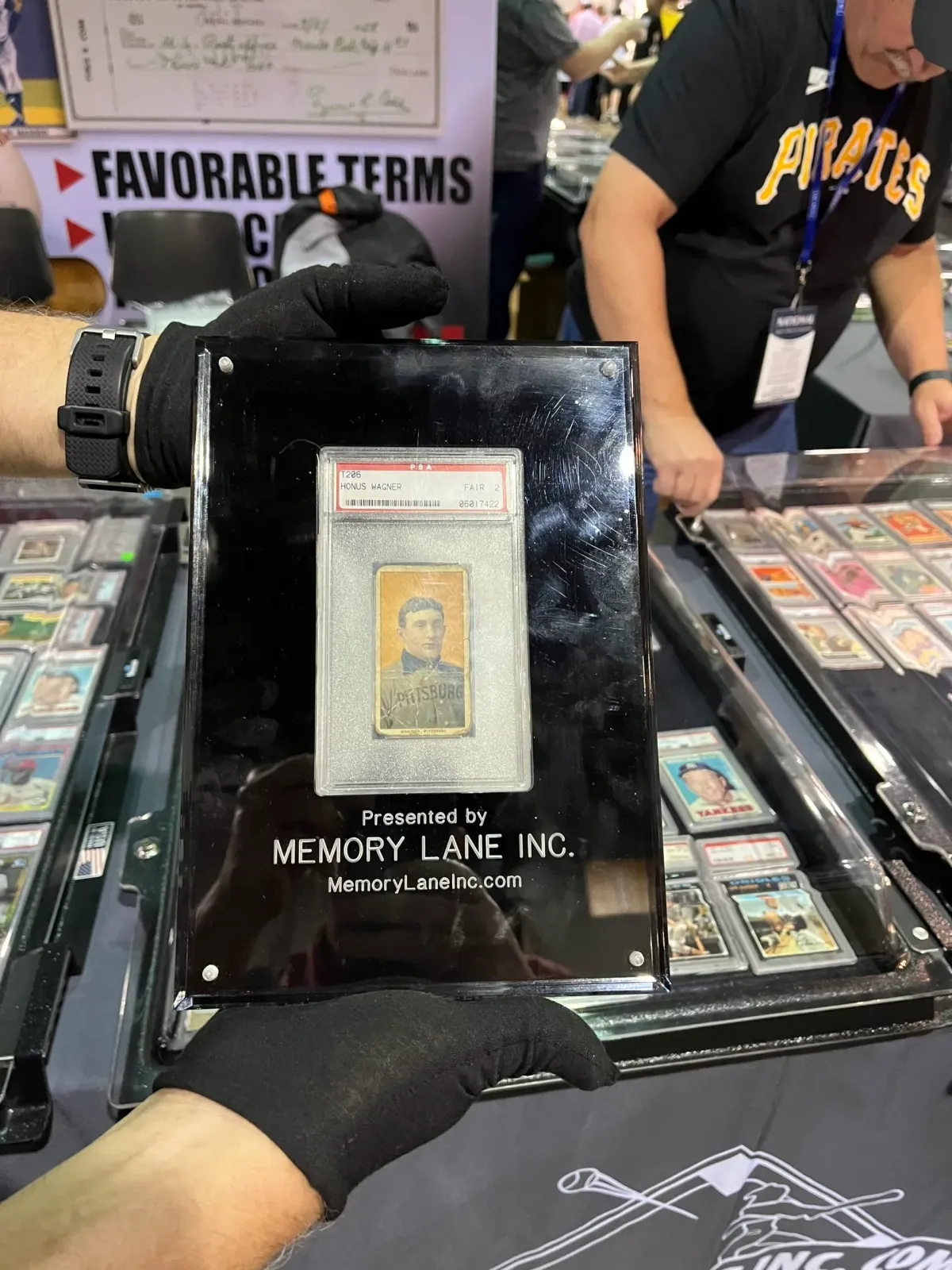
Memory Lane Inc. had a T206 Wagner graded PSA Fair 2 on display, and collectors reportedly stopped by throughout the show to take photos and examine it closely.
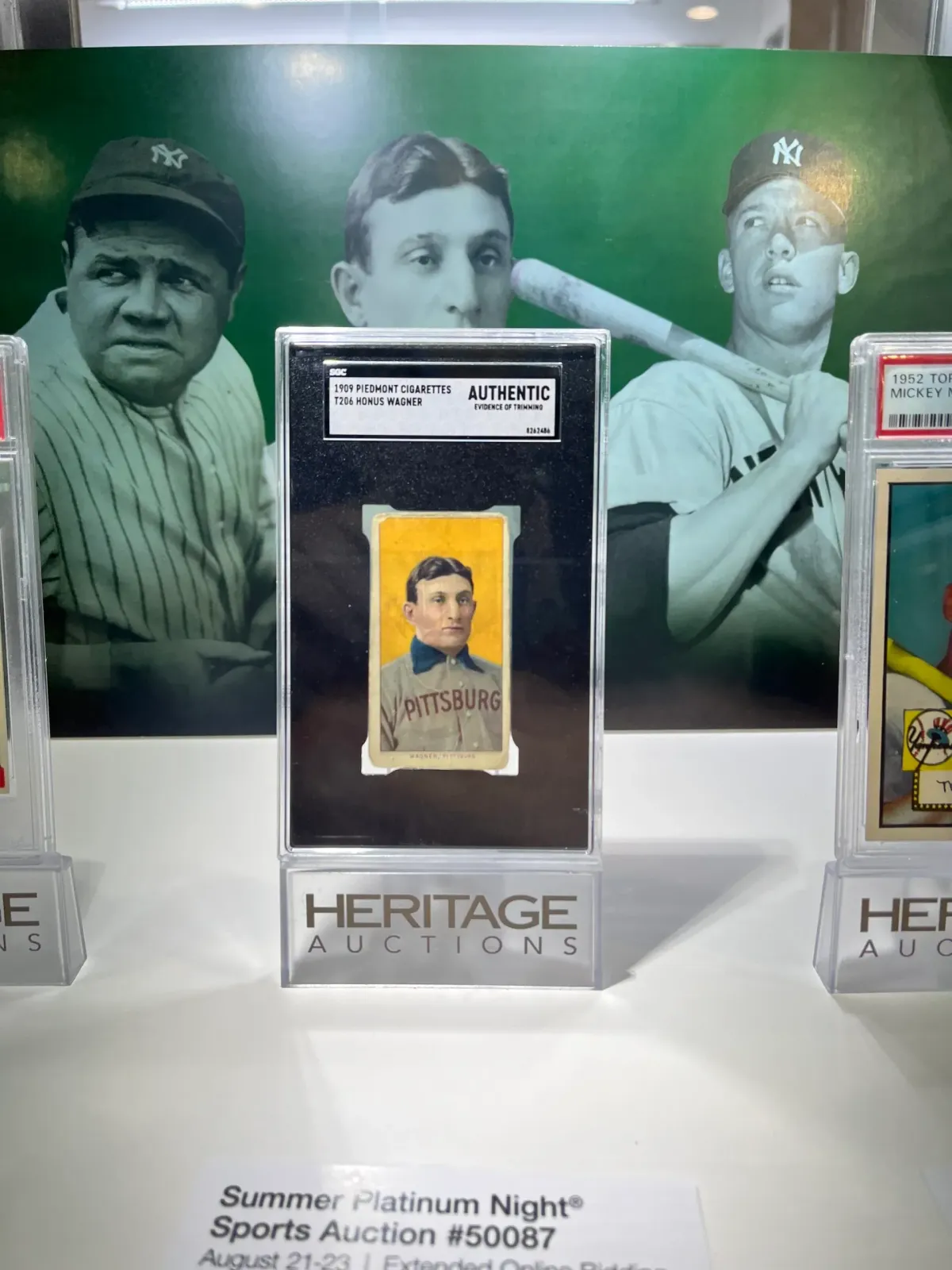
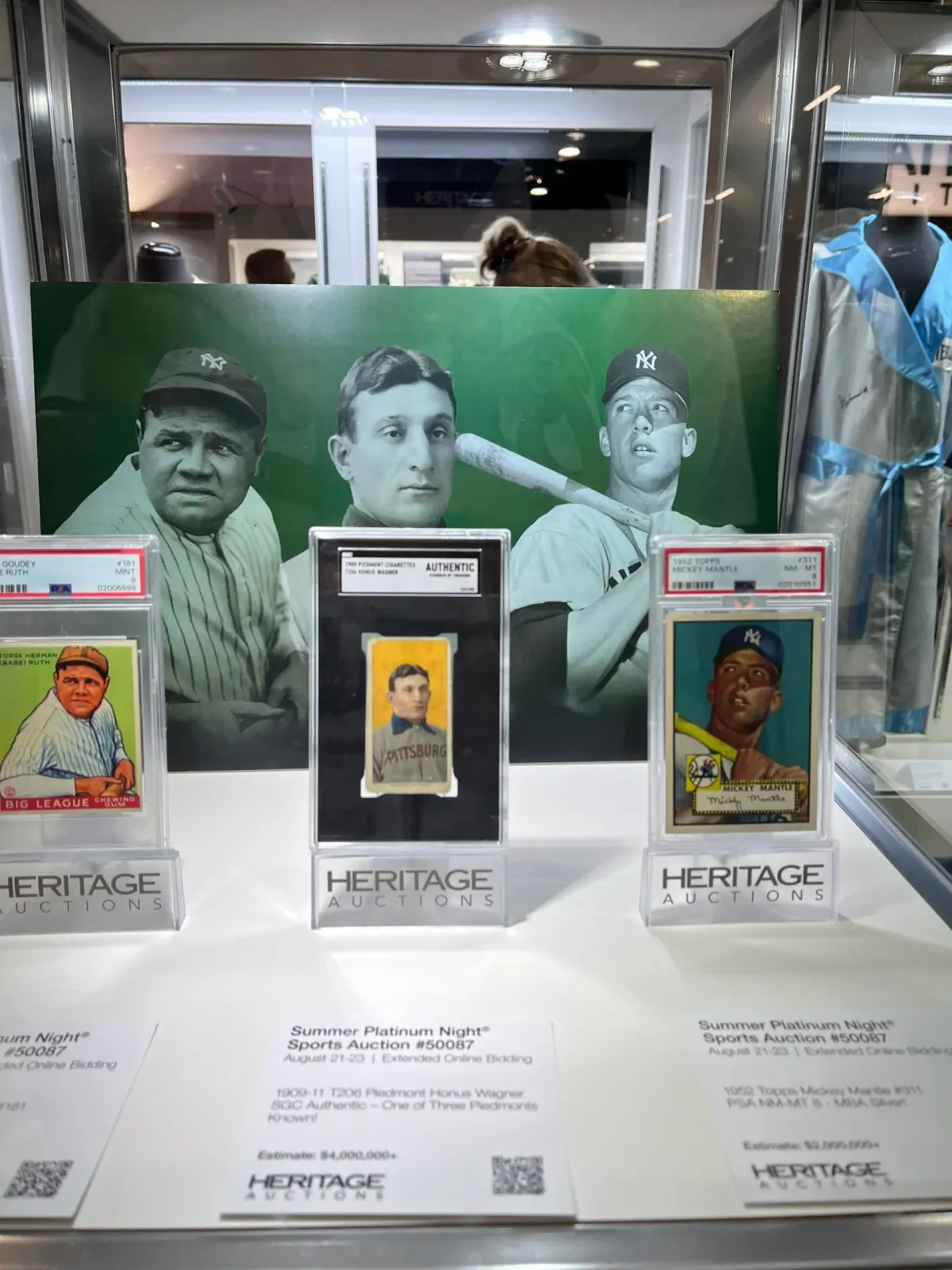
Heritage Auctions also has a T206 Wagner in its Summer Platinum Night Sports Auction. That card is graded SGC Authentic with evidence of trimming and is one of only three known examples with a Piedmont back instead of the more typical Sweet Caporal advertising.
Ivey said the Piedmont back makes the Heritage card especially interesting because the cards were considered printer’s scraps rather than factory cut, which explains the trimming designation. He also noted that the card has had only two owners, remaining with the original family until it was consigned in 2000. The winning bidder would become only the third owner.
The Heritage card also includes a historic letter from collector Charles Bray, who was considered the first full-time baseball card dealer. In the 1958 letter, Bray was offered $25 for the card.
Heritage has placed an estimate of $4 million-plus on that Wagner, and Ivey said he believes it has a real chance to exceed that figure.
Why collectors are watching the result closely
The restored Wagner has become more than just another high-end auction lot. It is now a test case for how the hobby values disclosed restoration on a card with unmatched name recognition.
Some collectors will always prefer original, untouched examples. Others see the appeal in owning a card that would otherwise be far beyond reach, especially when the card remains clearly labeled and the work is fully explained.
Ken Goldin, founder and CEO of Goldin, said many collectors are drawn to the idea of owning something this rare in a slab, even if the card has issues. He pointed out that he owns a complete T206 set but does not own a Wagner, which is exactly the kind of collecting gap that a card like this can fill for some buyers.
Goldin also suggested that the sale could influence owners of severely damaged Wagners to consider restoration, depending on where the final price lands.
Crisafulli said that is part of the larger message behind the auction. In his view, restoration has a place in the hobby when it is disclosed openly, but hiding repairs or alterations crosses a line. He said the card’s history is now part of its value and that the hobby will ultimately decide how much that story is worth.
For a card that has already lived through more than a century of hobby lore, the next chapter may be just as important as the last. The bidding total, the restoration debate and the public display at The National have made this Wagner one of the most closely watched cards in the market right now.
With the auction running through Aug. 8, collectors are watching to see whether the final price will reinforce the idea that even a restored Honus Wagner can command extraordinary money when the story, rarity and disclosure all line up.
Comments
0You must be signed in to comment.
Sign In