

ONIT enters a new chapter under Seven Seven Six
ONIT is looking to help define what the college trading card market can become. The officially licensed college sports card company was acquired in late June by Seven Seven Six, the venture capital firm founded by Reddit co-founder Alexis Ohanian.
Ohanian, who is married to tennis legend Serena Williams, has built a portfolio that includes Chelsea FC Women, Angel City FC, Los Angeles Volleyball, LA Golf Club and ATHLOS Track and Field. His interest in ONIT fits a broader focus on emerging sports and women’s athletics, while also bringing a collector’s mindset to the business.
ONIT’s new CEO, Evan Parker, told SCD that Ohanian’s interest in the hobby and in underdeveloped sports markets played a major role in the acquisition. Ohanian said the purchase also fulfilled a childhood dream of owning a card company.
“Of course, I bought ONIT because I think it is a great business that we can continue to grow, but the fact that it helps me live out a childhood dream is a pretty sweet bonus,” Ohanian said.
Why NIL changed the college card landscape
Name, image and likeness has transformed college athletics, and ONIT believes it has also created the conditions for a real college card market to grow. Parker said the NIL era finally made it possible to build licensed products around student-athletes in a meaningful way.
“This is a chance to build something that just right now hasn’t existed. We can help pioneer and create a market,” Parker said.
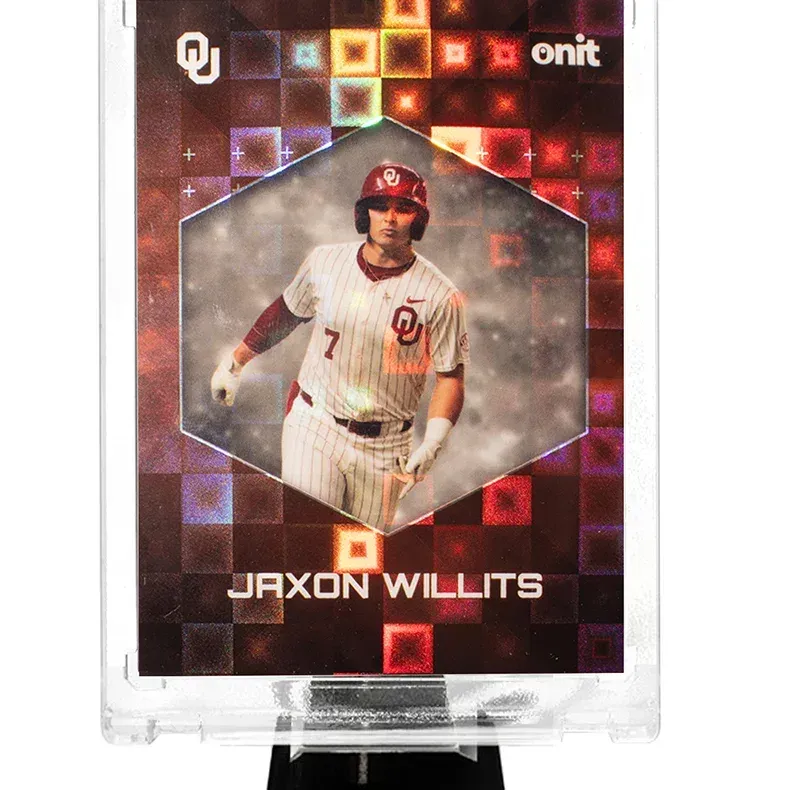
ONIT’s business is built around that idea. The company produces licensed college trading cards that allow student-athletes, schools and the brand itself to benefit from the products being sold. Parker said that when ONIT includes autographs in a set, the athletes are paid for signing and their schools also receive money.
“It’s really cool to be working on something that benefits the institutions and benefits the athletes directly,” Parker said.
How ONIT approaches college card releases
ONIT has traditionally released products in team set format, giving schools their own card sets rather than focusing only on a single national checklist. That approach has allowed the company to work across a wide range of programs and sports.
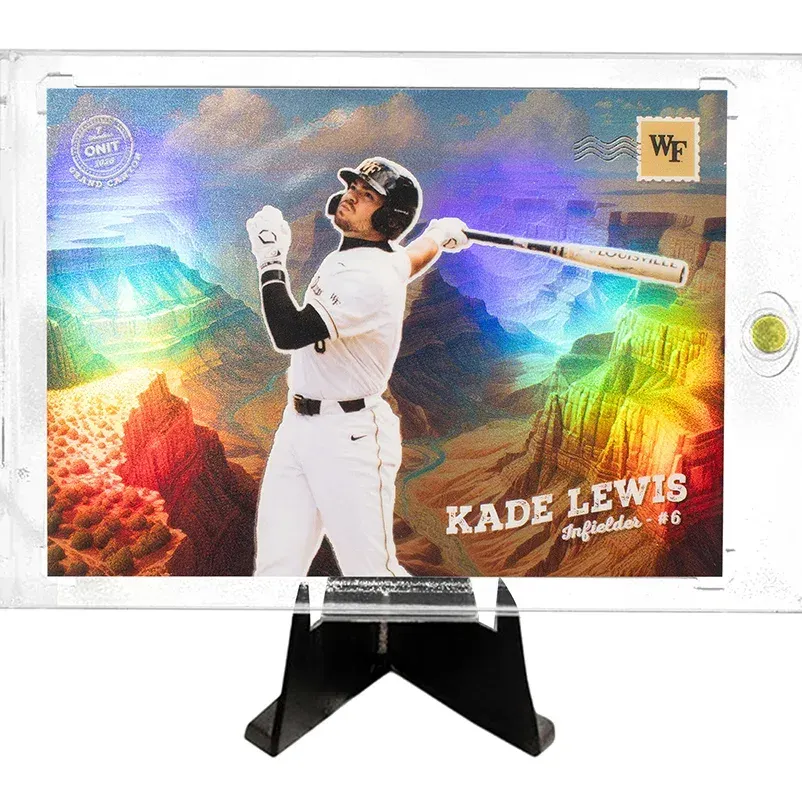
During the 2024-25 academic year, ONIT produced team-specific trading card sets for 212 teams across 67 Division I schools. The company worked with 8,055 student-athletes, including more women’s sports athletes than all other trading card companies combined, according to the company.
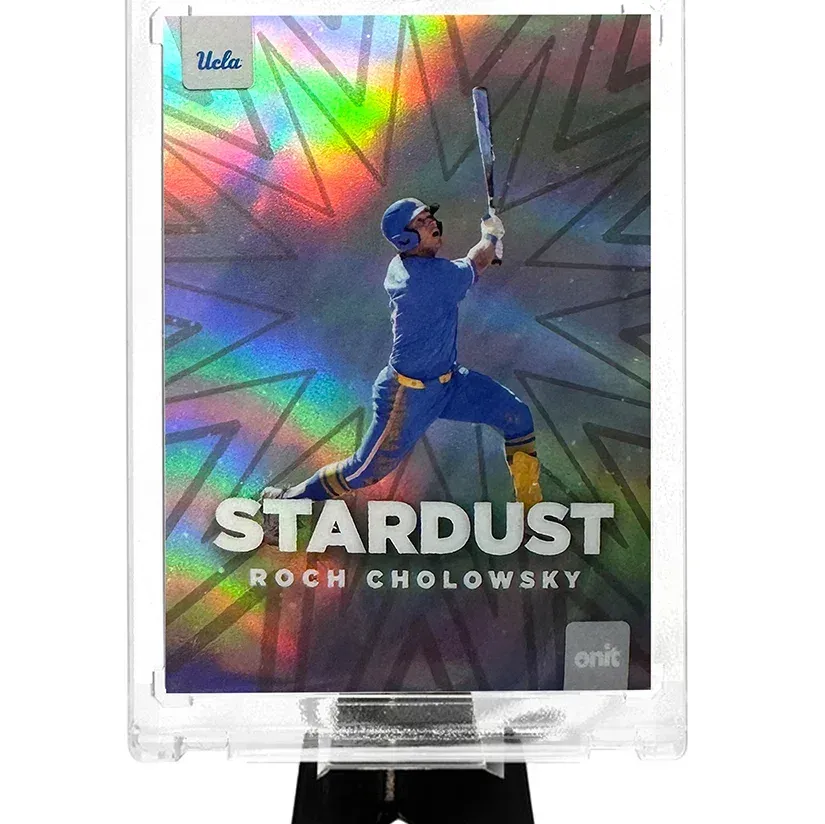
ONIT is heading into its fifth season producing cards when the 2026-27 academic year begins. The company’s reach extends well beyond football, basketball and baseball. Its products also include hockey, gymnastics, wrestling, volleyball, soccer and softball.
Parker said the company’s goal is to work with every school that is not already exclusive with another company.
“If they’re able to work with us, we’re going to work with them. That’s the plan and that’s the expectation,” Parker said.
On-card autographs and licensed school branding
ONIT is trying to separate itself from other college card options through a combination of licensed school branding, solid cardstock and on-card autographs. Parker said the company wants its cards to feel premium and collectible while still serving a broader college fan base.
Ohanian said ONIT’s products are made in the U.S., are fully licensed and feature on-card autographs.
“Everything ONIT produces is top quality, made in the U.S., and licensed and all autos are on-card,” Ohanian said.
That emphasis on quality is part of the company’s pitch to both hobby collectors and fans who may be new to trading cards. ONIT wants to reach collectors who chase early cards of future stars, but it also wants to appeal to school supporters, alumni and fans of non-revenue sports who may not have seen themselves represented in the hobby before.
“We want to expose more people to collecting,” Ohanian said. “Fans of non-revenue sports that rarely have cards, young girls looking up to the stars of the volleyball or softball team, and people who love their alma mater or local school but haven’t found the hobby to be accessible.”
Why college cards can still grow
Parker, who also serves as CEO of Mantel, a social network and community platform for collectors, said the college card market has room to grow because the audience for college sports is already massive, but the collectible side has not kept pace.
He pointed to the difference between the size of college football and the size of the college football card market as evidence of the opportunity.
“You think about the NFL and how big it is and how much of that translates to collectability, that hasn’t happened in college,” Parker said. “Part of the reason why that hasn’t happened in college is the college space is fractured and complicated. Part of it is because you’ve only been able to create these cards with the athletes involved over the last few years from when the NIL rules changed. Part of it is because there just hasn’t been as much focus on that space and college-specific trading card sets.”
ONIT sees that gap as an opening to build a niche brand that becomes closely tied to college athletics. The company believes it can serve both the traditional hobby audience and fans who may not yet think of themselves as collectors.
Early cards for athletes before they become stars
One of ONIT’s biggest advantages is the ability to produce cards early in an athlete’s college career, before that player becomes a national name. Parker said that gives collectors a chance to chase a player’s earliest licensed cards while also supporting the athlete and school at the same time.
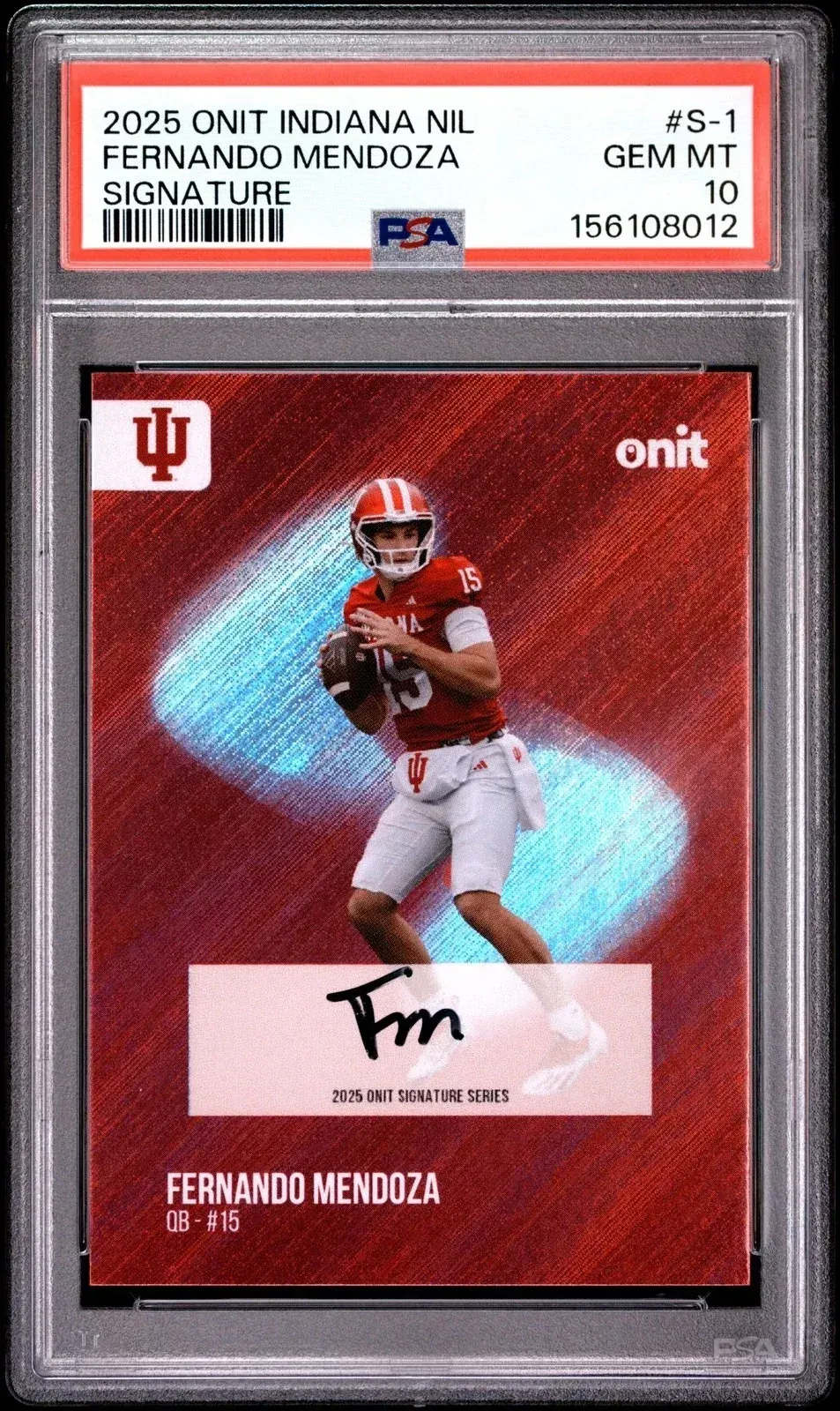
He pointed to Fernando Mendoza as an example of how early college cards can matter. In ONIT’s 2025 football product, the company released cards of the Indiana quarterback. Mendoza later led the Hoosiers to an undefeated season that ended with a national championship, then went on to become the No. 1 overall pick in the 2026 NFL Draft.
For collectors who acquired Mendoza’s ONIT cards before his rise, the early timing added significant appeal.
ONIT also includes more than just the stars and starters. The company makes cards for athletes across rosters, including players such as the football team’s long snapper or the 12th player on a basketball bench.
“A lot of athletes are able to be part of this in a way that they never were able to before,” Parker said. “For some of these athletes, it will be the only card that they get in their entire careers.”
How NIL and college licensing benefit athletes and schools
Ohanian said NIL has made ONIT possible in a way that would not have existed only a few years ago. He said the company’s model is built around helping student-athletes and universities earn money from the cards that feature them.
“None of this was possible just five years ago,” Ohanian said. “Now these athletes can benefit from their NIL, which has enabled companies like ONIT to exist. We love the fact that royalties from our card sales go directly to student athletes and universities.”
That structure is central to ONIT’s identity. The company says every athlete on every team it works with has a chance to appear on a trading card and earn money because that card exists.
Parker said that responsibility matters because many of these athletes will eventually move on from sports and into other careers, making their college card one of the few lasting collectibles tied to their athletic careers.
“It’s an honor to be able to create somebody’s only card that they’ll cherish, that their family will cherish, that their fans will cherish,” Parker said.
Competition in the college trading card market
ONIT is not operating in a vacuum. Fanatics owns a license to produce collegiate cards and has released products through Bowman and Topps in recent years. Leaf and Wild Card also produce college cards, though neither is licensed, which means school logos and decals are not permitted in their products.
ONIT is trying to stand out by offering licensed cards with school branding and on-card autographs, while also focusing heavily on team-specific releases and a wide range of sports. The company believes that combination can help it build a recognizable place in the hobby.
“It’s a really satisfying experience and you’re able to pull cards of some of these athletes that are going to go on to be incredibly big, while also contributing to putting money in the athletes’ pocket and supporting the school that you love,” Parker said.
Retail expansion and wider availability
ONIT, which is headquartered in Boise, Idaho, has also been expanding where collectors can find its cards. The company’s products are now available at Walmart, Best Buy and Meijer, along with many campus bookstores, alumni shops and hobby shops.
That wider distribution gives ONIT a chance to reach both dedicated hobby buyers and casual college sports fans who may encounter the products in mainstream retail settings or on campus.
Parker said that broader exposure is important to the company’s long-term growth, especially as it tries to introduce more collectors to the college card category.
“Collecting is something that I’m incredibly passionate about,” Parker said. “I’ve been collecting cards since I was a kid.”
For Parker, the job is personal as well as professional. He said he has long collected cards and now gets to work on products tied to schools he already supported as a fan, including Maryland and UCLA.
“How many times in your career do you get a chance to go work for something that you’re already spending money on and you’re already passionate about?” Parker said.
What ONIT is trying to build next
With new ownership, a broader retail footprint and a growing NIL-driven product model, ONIT is positioning itself as more than just another college card brand. The company wants to help create a market that has not fully existed yet, one that connects college sports fandom with the collecting habits that have long defined the hobby.
That means serving multiple audiences at once. ONIT is targeting school fans who want licensed collectibles tied to their teams, collectors who chase early cards of future stars and fans of sports that have often been overlooked in trading cards.
As Parker described it, the opportunity is to build something that can matter to hobbyists, athletes and schools at the same time, while helping shape what college sports cards look like in the NIL era.
Comments
0You must be signed in to comment.
Sign In