

Few Hall of Fame second basemen left a mark on the game like Joe Morgan. For different generations of baseball fans, Morgan can represent different eras, from his early days with Houston to his championship years with Cincinnati and his final seasons across the league. His 22-year major league career, which began in 1963 and ended in 1984 with the Oakland Athletics, placed the Texas-born, Oakland-raised star among the all-time greats at second base.
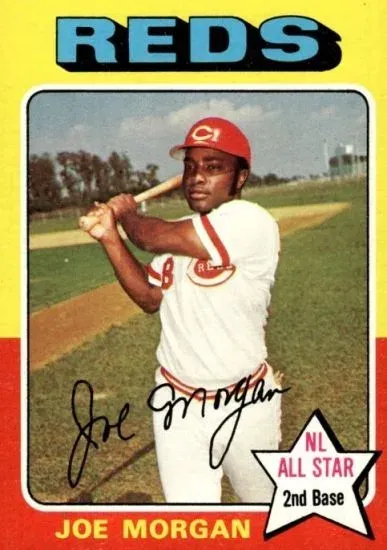
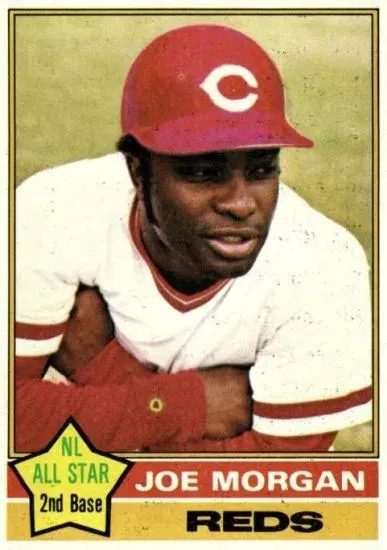
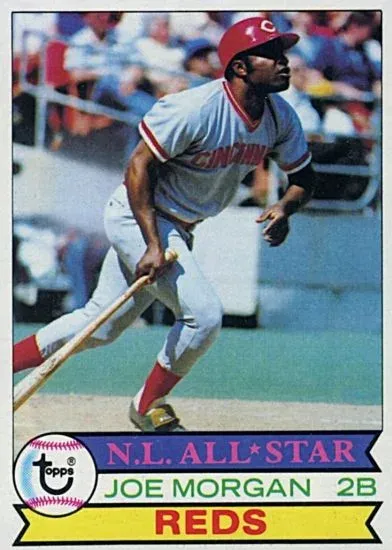
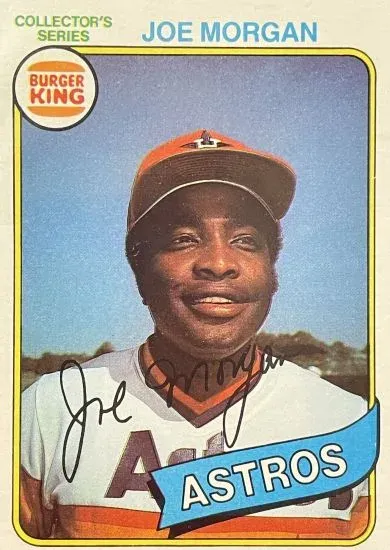
Through those 22 seasons, a series of baseball cards helps tell the story of Morgan's rise, peak, and lasting legacy. From his rookie-era issues to later career cards and post-retirement releases, Morgan's cardboard trail mirrors one of baseball's most accomplished careers.
The Early Years in Oakland and Houston
Morgan grew up in East Oakland and attended East Oakland High School, also known as Castlemont, before moving on to Oakland City College. Scouts quickly noticed his talent, and in 1962 the Houston Colt .45s signed him as a free agent. Morgan reached the majors in 1963, appearing in eight games, and followed that with 10 games in 1964.
Those early seasons set the stage for what would become a Hall of Fame career. Morgan's combination of patience, speed, and power would soon make him one of the game's most complete second basemen.
Joe Morgan's Rookie Card and First Big League Breakthrough
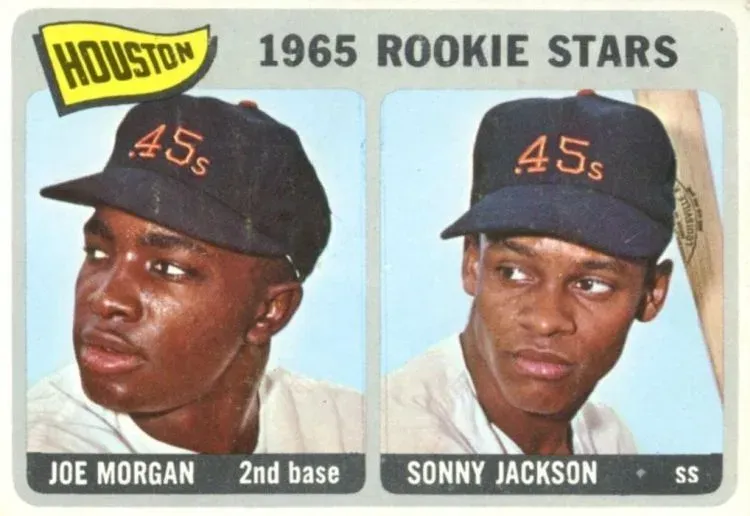
Morgan was honored by Topps and O-Pee-Chee with a rookie card in 1965, which also featured Houston teammate Sonny Jackson. That season, Morgan hit .271 with 14 home runs and 40 RBI. He also led the league with 97 walks, showing the plate discipline that would become one of his defining traits.
There was another side to his early development as well. Morgan also led the league with 27 errors at second base, a reminder that even future legends can have growing pains while learning the position at the highest level.
All-Star Recognition and a Growing Reputation
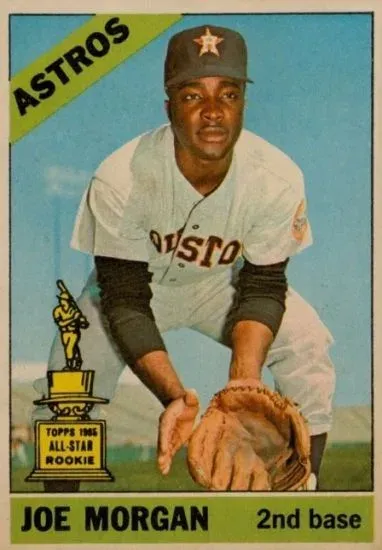
Morgan earned his first of 10 All-Star selections in 1966. He hit .285 in 122 games, but his season was interrupted by a freak accident during batting practice when he was struck by a line drive and suffered a broken kneecap. Even with the injury, Morgan continued to establish himself as one of the National League's most valuable players.
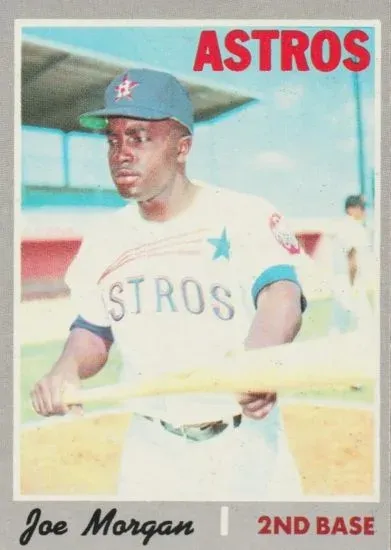
By 1970, Morgan was back among the league's elite. He made his second All-Star team after rebounding from a down 1969 season, raising his average to .268 and drawing 102 walks for the second straight year. His command of the strike zone was becoming a signature part of his game.
The Trade That Changed Everything
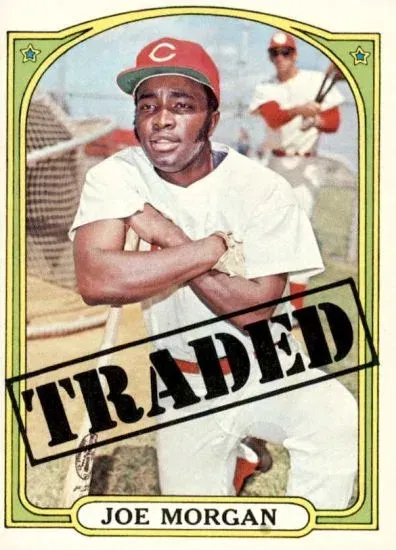
After the 1971 season, Houston traded Morgan to Cincinnati, and the move helped add another key piece to the legendary Big Red Machine. Morgan had led the league in triples with 11 that year, and his arrival in Cincinnati would help define the next chapter of his career.
His 1972 season was a breakout on a new level. Morgan posted a personal-best .292 batting average while leading the league in walks with 115 and runs with 122. He added 16 home runs, 73 RBI, 23 doubles, and four triples. The All-Star Game came calling again after a two-year absence, and Morgan was now firmly established as one of the game's premier second basemen.
The 1975 and 1976 Seasons at the Peak of His Career
Morgan's 1975 season cemented his place in baseball history. He hit .327 with 17 home runs and 94 RBI while leading the league with 132 walks. In modern terms, his 11.0 WAR reflected just how dominant he was across all phases of the game.
That year, the Big Red Machine captured the World Series, and Morgan drove in the winning run in Game 7. He was also named the National League's best player, adding an MVP award to a season already packed with accomplishments.
He followed that with another brilliant year in 1976. Morgan hit .320, the second and final time he would finish above .300 in his career, and set personal bests with 27 home runs and 111 RBI. He also added 30 doubles and five triples. For the second straight season, Morgan led the league in WAR at 9.6, becoming the first National League second baseman to win back-to-back MVP awards. Cincinnati won the World Series again, and Morgan's place among the game's greats was secure.
Later Reds Years and Continued Excellence
Morgan's final season with Cincinnati came in 1979, when he earned his eighth consecutive All-Star selection and his last. Over eight seasons with the Reds, he hit .288 with 152 home runs, 612 RBI, and 816 runs. Those numbers reflect both his consistency and the impact he had in the heart of one of baseball's most famous lineups.
Even as he moved into his mid-30s, Morgan remained productive. He signed a one-year deal with Houston for the 1980 season and helped the club win the NL West title. That year he also led the league with 93 walks, showing that his approach at the plate remained as sharp as ever.
Final Seasons Across the National League and Return to Oakland
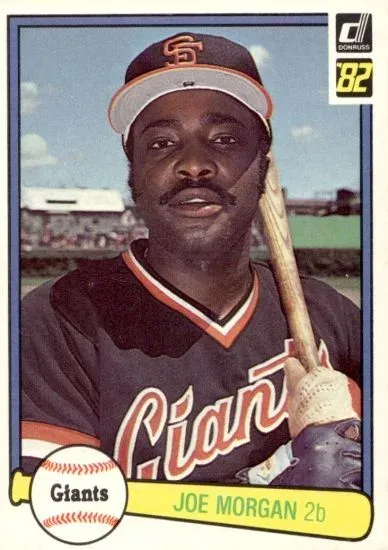
After another year in Houston, Morgan signed a two-year deal with the San Francisco Giants. His 1981 season was limited to 90 games, but he bounced back in 1982 by hitting .289 with 14 home runs and 61 RBI.
Philadelphia acquired Morgan before the 1983 season, reuniting him with former Cincinnati teammates Pete Rose and Tony Perez. The Phillies advanced through the NLCS by defeating the Los Angeles Dodgers three games to one, sending Morgan to his fourth and final World Series against the Baltimore Orioles.
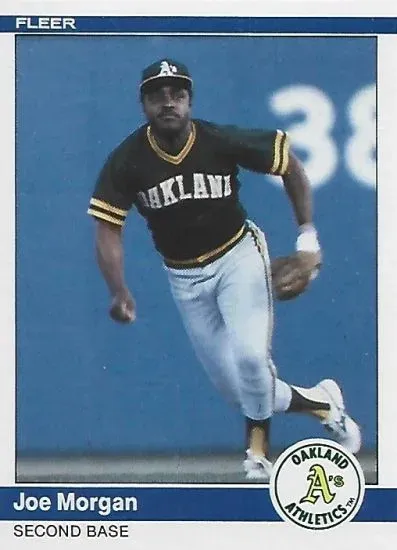
Morgan finished his major league career where he had grown up, returning to Oakland for his final season in 1984. He appeared in 116 games and hit .244 at age 40. Over 22 seasons, Morgan compiled 2,517 hits, 268 home runs, and 1,650 runs scored while finishing with a .271 batting average.
Post-Retirement Cards and Hall of Fame Recognition
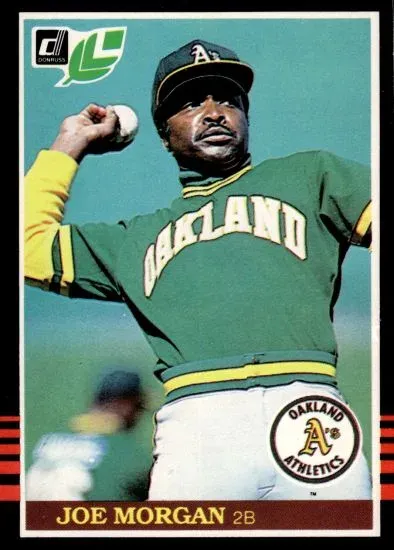
Although Morgan retired after the 1984 season, baseball cards continued to be produced for him in 1985 sets. His card history did not end with his playing career, and his legacy only grew stronger as the years passed.
The Baseball Hall of Fame elected Morgan on his first ballot in 1990. He entered Cooperstown alongside Orioles pitching legend Jim Palmer, a fitting recognition for one of the most complete second basemen the game has ever seen.
Why Joe Morgan Remains a Key Name for Baseball Card Collectors
Joe Morgan's card run reflects more than just a Hall of Fame career. It captures the evolution of a player who began as a young Houston prospect, became a centerpiece of the Big Red Machine, and remained productive well into his late 30s. His rookie card, All-Star-era issues, championship-season cards, and later career releases all help document a player whose impact reached far beyond the box score.
For collectors, Morgan's cards offer a direct look at one of baseball's most important second basemen and a career that spanned multiple teams, multiple championships, and one of the strongest Hall of Fame résumés at the position.
Join the Sports Card Portal Page thread for this story.
Comments
0You must be signed in to comment.
Sign In