

Hideki Matsui Returns to the Yomiuri Giants
Hideki Matsui is back where his professional baseball story began. The Yomiuri Giants introduced Matsui, 52, as their new manager on October 23, giving one of Japan’s most recognizable baseball figures a new role with the franchise that drafted him out of high school.
The move carries added meaning because of Matsui’s long connection to the Giants and to the late Shigeo Nagashima, one of the most iconic figures in Japanese baseball history. Nagashima, known as “Mr. Giants,” had long hoped Matsui would one day return to manage the club. Matsui’s appointment now gives that hope a new layer of significance for fans and collectors alike.
The Giants remain one of the most historically important and polarizing teams in Nippon Professional Baseball, with a fan base that stretches far beyond Tokyo. Matsui’s return places him back in the center of that spotlight, this time as the face of the dugout rather than the batter’s box.
Why Shigeo Nagashima Still Matters to Matsui Collectors
Nagashima’s influence on Matsui’s career has become part of Japanese baseball lore. He spent his entire playing career with the Yomiuri Giants from 1958 to 1974, then managed the club from 1975 to 1980 and again from 1993 to 2001, during the years Matsui was on the roster.
At Nagashima’s funeral, his daughter Mina said her father “loved Matsui more than anything in the world,” adding that she had seriously thought that if Matsui and she were drowning at the same time, her father would save Matsui first. She also recalled that when Matsui retired at age 38, Nagashima noted that he had retired at 38 as well, and she said he looked both sad and proud in that moment.
Matsui also shared a story about Nagashima encouraging him to stay in the outfield rather than move to third base. Nagashima told him he wanted him to be “Joe DiMaggio,” a message Matsui did not fully understand until he later saw a DiMaggio bat and photo at Nagashima’s home. Matsui eventually used that memory when he told Nagashima he was heading to the Yankees, a decision that drew a smile from the Giants legend.
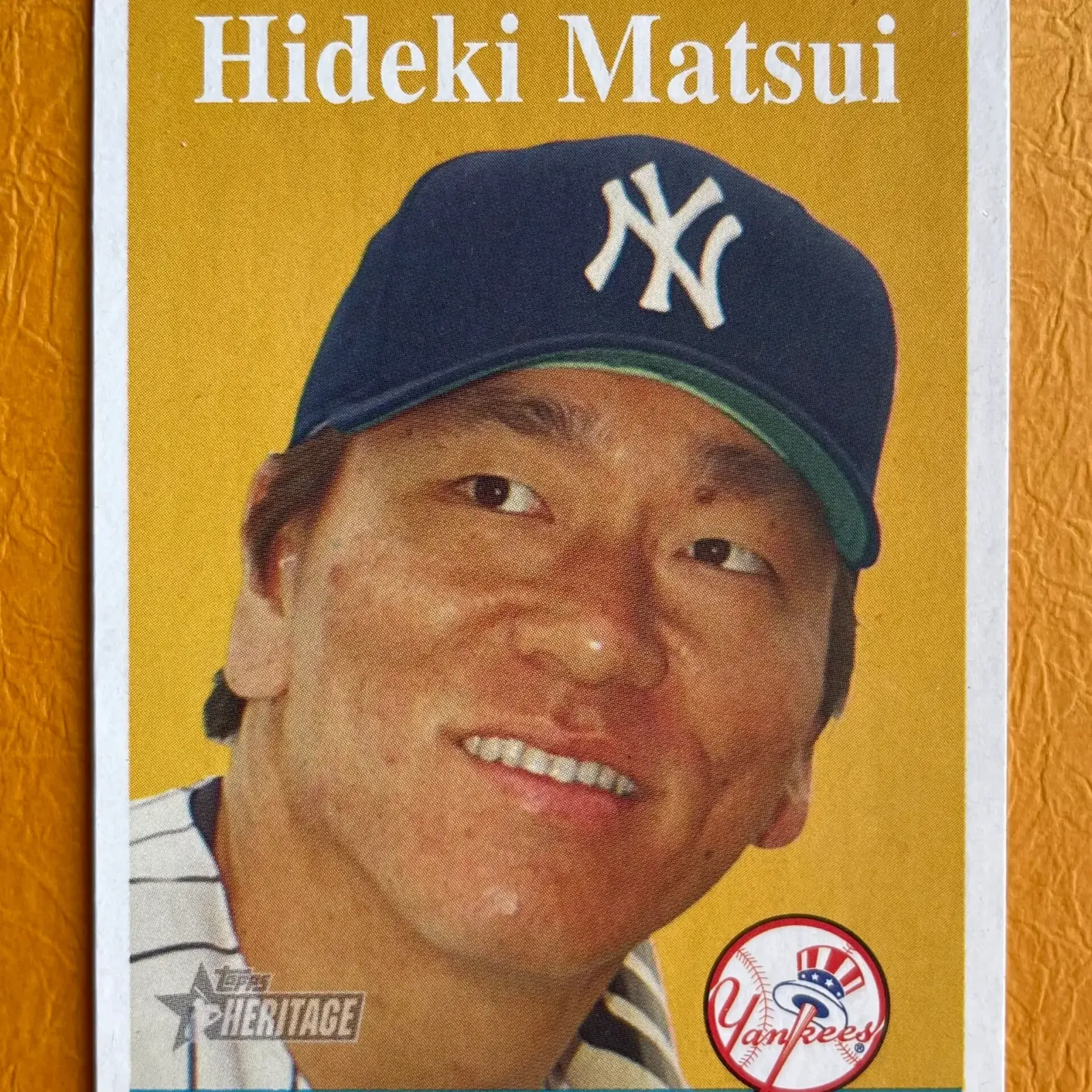
That history gives Matsui’s cards added context. His return to the Giants does not just revive interest in a former star. It also reconnects his collecting story to one of the most important names in Japanese baseball.
Matsui's Playing Career and Card Significance
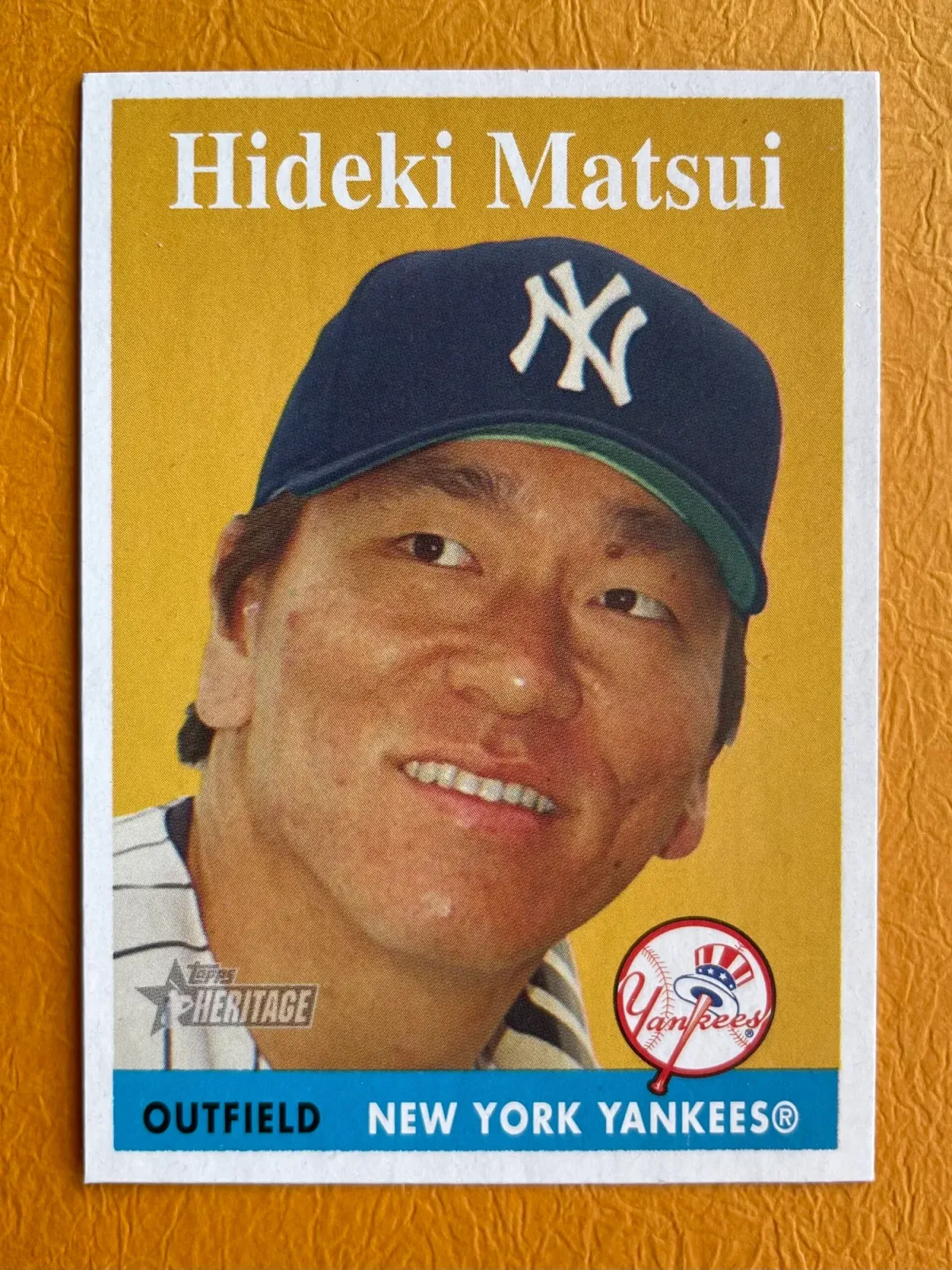
Matsui was drafted by the Giants out of high school and became one of the most accomplished players in Japanese baseball before moving to Major League Baseball. He hit 332 home runs over 10 seasons with the Giants from 1993 to 2002, then added 175 more in the majors with the Yankees, Angels, A’s, and Rays.
Related coverage includes Hideki Matsui Returns to the Yomiuri Giants as Manager, Bringing Fresh Attention to His Key Baseball Cards.
His resume includes three MVP awards in Japan and the 2009 World Series MVP with the Yankees. For collectors, that combination of Japanese stardom and MLB success has made Matsui one of the most important cross-market names of his era.
His cards reflect that dual legacy. Japanese issues from the early 1990s remain especially notable because they document the start of a career that would later become internationally significant. With Matsui now back in a Giants uniform as manager, those early cards take on even more historical weight.
Hideki Matsui's Key Japanese Rookie Cards
Matsui’s main Japanese rookie card is #423 in the 1993 BBM set. That set is also known for including Ichiro Suzuki’s rookie card, making it one of the more discussed Japanese baseball releases of the era.
According to the source material, Matsui’s 1993 BBM rookie often sells for around $30, while Ichiro’s rookie can bring $200 or more. The gap in market value does not diminish Matsui’s importance, especially now that his career is being viewed through the added lens of his managerial return to the Giants.
Collectors should also be aware of a reprint tied to the 2002 BBM “The Legend of Hideki Matsui” set. That card is clearly marked “REPRINT” on the back, which makes it important to verify before buying.
Two other 1993 rookie cards were produced by Takara and Calbee. Recent sales cited in the source include a Takara graded PSA 8 that sold for $120 and a Calbee graded PSA 6 that sold for $95.
1993 Matsui cards mentioned in the source
- 1993 BBM #423 rookie card
- 1993 Takara rookie card
- 1993 Calbee rookie card
- 2002 BBM “The Legend of Hideki Matsui” reprint card
Home Run Card Sets Add Another Layer to Matsui's Market
One of the most distinctive Matsui collectibles is the Nippon Television card set that celebrates each of his 507 home runs. The set began in 1993 and continued throughout his career, with the major league home run cards later produced by Upper Deck and then Topps.
These cards are unusual because the photos capture a moment from each home run, whether Matsui is at the plate or rounding the bases. That makes the set both a statistical record and a visual archive of his power-hitting career.
A collection of the NTV home run cards is displayed at the Matsui Hideki Baseball Museum in Ishikawa prefecture, which is operated by Matsui’s family. The museum also houses other Matsui memorabilia, giving collectors and fans a place where his career is preserved in a more complete form.
For card collectors, the home run set is significant because it documents the full arc of Matsui’s production in a way few player issues do. With 507 home runs represented across Japanese and MLB issues, the set stands as one of the most unique player-specific card projects tied to a Japanese baseball star.
What Matsui's Return Means for Japanese Card Interest
Matsui’s appointment as Giants manager gives collectors a fresh reason to revisit his Japanese cards, especially the early issues that trace his rise with the franchise. His number 90 managerial uniform also adds a new visual chapter to his collecting story, since it matches the number Nagashima wore when he began managing the Giants.
That detail matters because Japanese baseball collecting often places strong emphasis on team history, uniform numbers, and legacy connections. Matsui’s return ties together several of those themes at once: the Giants, Nagashima, his playing career, and the long afterlife of his cards.
Collectors who focus on Japanese baseball cards have long valued Matsui as a key name from the 1990s and 2000s. Now, with a managerial role that places him back in the public eye, his cards may draw renewed attention from both longtime hobbyists and newer collectors looking at Japanese legends with fresh eyes.
The timing also reinforces how closely Matsui’s story remains linked to Nagashima’s. From the early advice to stay in the outfield to the symbolism surrounding his return to the Giants, the connection between the two men continues to shape how Matsui is remembered in Japanese baseball history and in the hobby.
For collectors, that means Matsui’s rookie cards, home run issues, and Japanese team cards are not just reminders of a great player. They are part of a larger story that now includes his return to the same organization that launched his career.

Join the Sports Card Portal Page thread for this story.
Comments
0You must be signed in to comment.
Sign In