

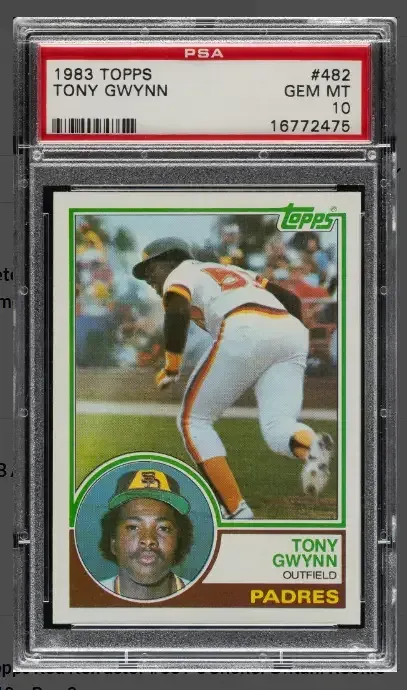
1983 Topps Baseball Still Draws Strong Interest
The 1983 Topps Baseball set remains one of the most recognizable issues of the mid-1980s, and its rookie cards continue to attract attention from collectors who follow high-grade vintage and modern-era classics alike. Among the cards that stand out most in PSA 10 are the rookie cards of Tony Gwynn, Ryne Sandberg, Wade Boggs and John Stuper.
Each of these cards has its own place in the hobby, whether because of Hall of Fame credentials, long-term demand or, in the case of John Stuper, the surprising strength of a lower-population card in top grade. The set’s PSA 10 market has stayed relevant for years, with public sales showing how much collectors value pristine examples from this release.
Tony Gwynn Rookie Card Leads the Group
Tony Gwynn’s 1983 Topps rookie card, Card #482, is one of the most recognizable cards in the set. The card features the San Diego Padres star and remains a key target for collectors building a PSA 10 run from the issue.
Raw copies of the card generally sell for $15 to $25, but graded examples command much more attention. According to the source data, there are 753 PSA 10s, 6,657 PSA 9s and 17,963 PSA 8s in circulation through PSA population reporting.
Card Ladder lists the highest public sale of a PSA 10 at $9,225, with that transaction taking place on April 19, 2016 through REA. That result helps explain why Gwynn remains one of the centerpiece rookie cards from the set, even with a relatively large PSA 10 population.
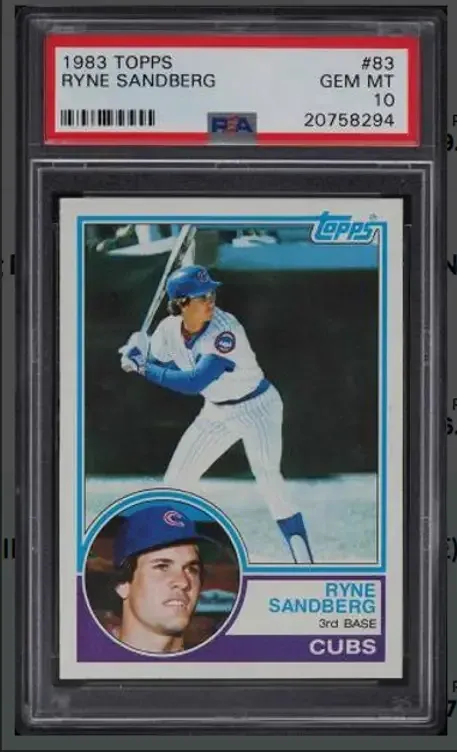
Ryne Sandberg Remains a Key 1983 Topps Rookie
Ryne Sandberg’s rookie card, Card #83, is another major holdover from 1983 Topps that continues to draw collector interest. Featuring the Chicago Cubs second baseman, the card is one of the most important rookies in the set and one of the most familiar to vintage baseball card collectors.
Raw copies generally sell for $10 to $20, while graded versions bring stronger prices. The PSA population figures cited in the source show 826 PSA 10s, 7,845 PSA 9s and 10,596 PSA 8s.
Card Ladder notes that the highest public PSA 10 sale reached $3,807 on February 15, 2021 through Fanatics. While that figure trails Gwynn’s top result, it still reflects sustained demand for a Hall of Fame rookie from a heavily collected flagship set.
Related coverage includes Four 1983 Topps PSA 10 Rookies Show How Condition Can Rewrite a Card’s Value.
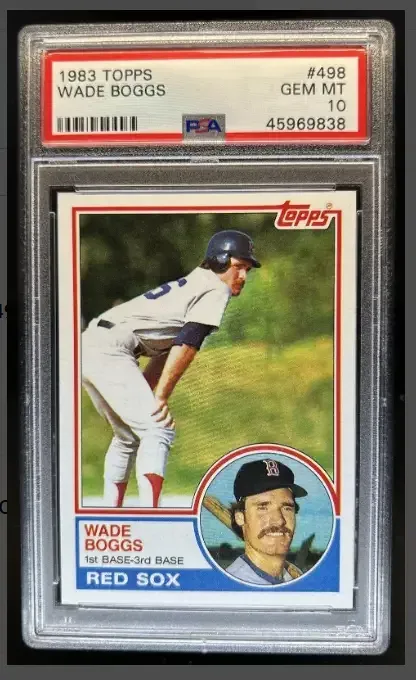
Wade Boggs Rookie Card Continues to Stand Out
Wade Boggs’ rookie card, Card #498, rounds out the group of major stars from 1983 Topps. The Boston Red Sox third baseman is another Hall of Fame name whose rookie card has remained a staple in the hobby for decades.
Raw copies generally sell for $20 to $35. In PSA 10, the card is scarcer than the Gwynn and Sandberg rookies, with a reported 417 PSA 10s, 4,210 PSA 9s and 9,260 PSA 8s.
The highest public PSA 10 sale listed by Card Ladder was $5,822 on September 27, 2026 through Fanatics. That result places Boggs among the stronger performers from the set and underscores how a lower PSA 10 population can support stronger high-end prices.
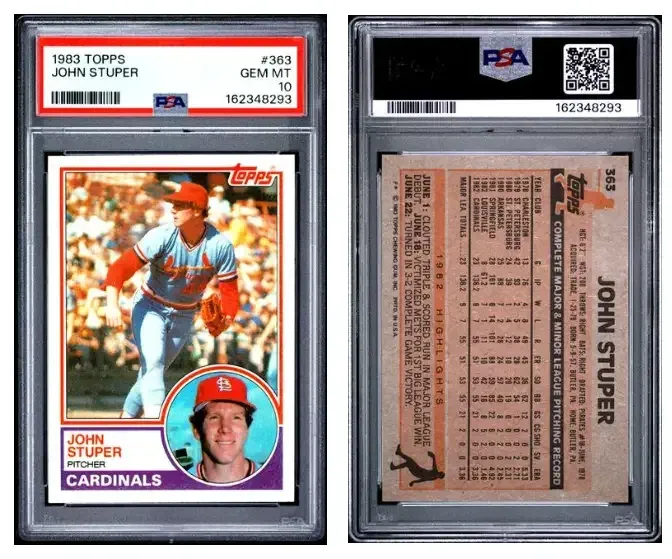
John Stuper Shows the Strength of Lower-Population Cards
John Stuper’s rookie card, Card #363, may not carry the same broad name recognition as the other three cards in this group, but it provides an important example of how scarcity in top grade can matter in the 1983 Topps market. The St. Louis Cardinals pitcher’s card is one of the lower-profile rookies from the set, yet it still draws collector attention in PSA 10.
Raw copies generally sell for $3 to $7, but the graded market tells a different story. The source lists only 22 PSA 10s, along with 13 PSA 9s and 6 PSA 8s. That is a much smaller population than the star rookies in the set and helps explain why the card can still post a meaningful sale despite its modest raw value.
Card Ladder records the highest public PSA 10 sale at $330 on March 1, 2026 through Fanatics. For a card with limited name recognition, that result highlights the ongoing demand for tough high-grade examples from 1983 Topps.
Why 1983 Topps PSA 10s Keep Getting Attention
One of the main reasons collectors continue to focus on 1983 Topps is the combination of iconic rookie names and strong demand for high-grade copies. The set has become a familiar benchmark for vintage and vintage-style collectors because its best-known rookies have remained relevant in the market for years.
The source material points to a broader trend as well: PSA 10s from the set continue to sell well beyond the raw-card market. Even cards with relatively common availability in lower grades can show meaningful premiums once they reach the top of the grading scale. That is especially true for the Gwynn, Sandberg and Boggs rookies, which have all maintained consistent collector interest.
At the same time, the John Stuper example shows that the market is not limited to Hall of Fame names. Lower-population cards from 1983 Topps can still generate attention when the grade is high enough and the supply is limited enough.
Population Data Adds Context to the Market
The PSA population figures in the source help illustrate how the market has developed around these cards. Gwynn’s rookie card has the largest PSA 10 total among the four cards listed, while Sandberg also has a sizable number of top-grade copies. Boggs, with a noticeably smaller PSA 10 population, has posted a strong high-end sale that reflects the premium collectors place on scarcer examples.
John Stuper stands apart because of how few PSA 10s exist relative to the other cards in the group. That scarcity does not automatically make every example a major auction result, but it does help explain why the card can still sell for a meaningful amount in top grade.
For collectors tracking the 1983 Topps set, these population numbers are part of the appeal. They provide a clearer picture of how widely available a card may be in PSA 8 or PSA 9, while also showing how much more selective the market becomes at PSA 10.
Raw Prices Versus Graded Demand
The raw-card price ranges in the source also show how much grading can change the conversation around 1983 Topps rookies. Gwynn’s raw card generally sells for $15 to $25, Sandberg for $10 to $20, Boggs for $20 to $35 and Stuper for $3 to $7. Those figures are modest compared with the top PSA 10 results listed for each card.
That gap between raw and graded value is one of the clearest signs of collector demand for pristine copies. For a set as well known as 1983 Topps, condition matters a great deal, and the best examples can separate themselves quickly from the rest of the market.
Collectors who focus on the set often look at both the star power of the rookie class and the availability of high-grade copies. In this case, the combination of Hall of Fame talent and PSA 10 scarcity has helped keep the set in the spotlight.
A Set That Still Resonates With Collectors
1983 Topps Baseball continues to resonate because it offers a mix of iconic rookie cards, recognizable design and a grading market that still rewards top-condition examples. The cards of Tony Gwynn, Ryne Sandberg and Wade Boggs remain among the most important rookies from the issue, while John Stuper provides a reminder that even lesser-known names can matter when the population is low enough and the grade is high enough.
For collectors following the set, the PSA 10 market remains one of the best ways to measure its long-term strength. The public sales cited in the source show that demand has stayed active across multiple cards from the checklist, with each example offering a different angle on why 1983 Topps continues to hold a strong place in the hobby.

Join the Sports Card Portal Page thread for this story.
Comments
0You must be signed in to comment.
Sign In