

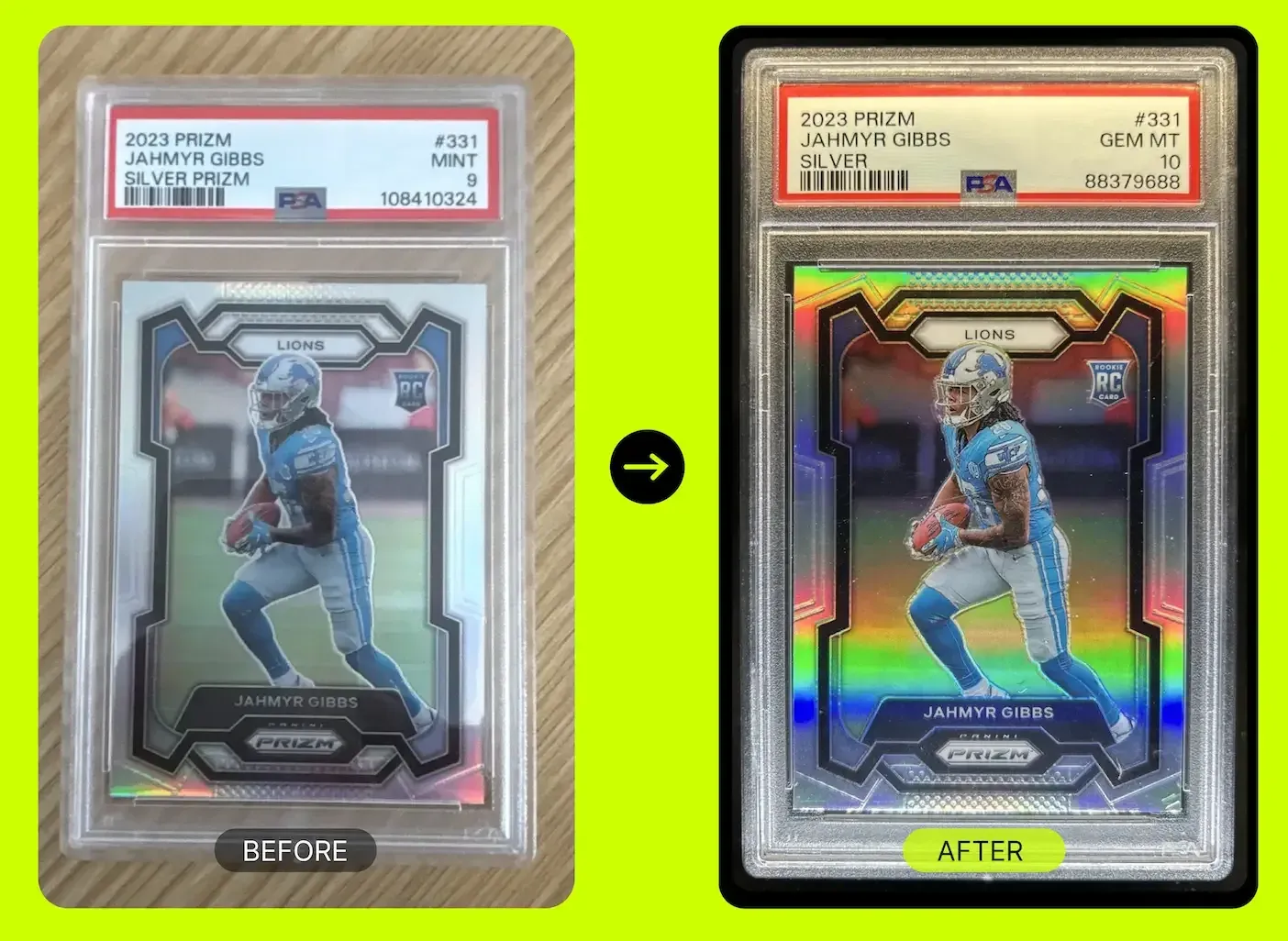
Heystack Targets One of the Slowest Parts of Selling Cards
Anyone who has tried to photograph sports cards or trading cards for sale knows the routine. A card that looked sharp in hand can suddenly lose its appeal under a desk lamp or on a phone screen. Foil, shimmer, and refractor finishes often create glare, while the seller is left adjusting angles, moving lights, and trying to avoid capturing their own reflection in the image.
That process can become even more time-consuming when it is repeated card after card. A single photo may need to be cropped, straightened, and moved to a computer before a listing can even begin. For sellers working through large volumes, the time adds up quickly.
Heystack is positioning itself as a way to remove that bottleneck. The company says its Heystack One imaging device, paired with the Heystack app, is designed to produce consistent card photos with a single tap on a phone screen.
How the Heystack One and App Work Together
The core idea behind Heystack is straightforward: make card imaging faster and more consistent without requiring sellers to constantly adjust lighting or camera position. According to the company, the Heystack One device and app work together to capture a card's true color and full refraction while reducing the glare that often causes problems in card photography.
That lighting setup is especially useful for cards with reflective surfaces. Heystack says it helps bring out the visual effect on cards that are difficult to photograph cleanly, including cards with swirl patterns or foil finishes. The goal is to show the card as accurately as possible while avoiding the phone reflection that can appear in a typical image.
For sellers, the appeal is not just better-looking photos. It is also about consistency. When a seller is imaging a large inventory, a repeatable process can save time and reduce the need to reshoot cards that do not photograph well the first time.
Speed Is a Major Selling Point
Heystack says the system is built to help sellers move faster from card capture to listing. That speed is one of the biggest themes in the company’s pitch, and it is backed by feedback from sellers using the platform.
A representative from consignment company MC Sports Cards said the business went from listing about 500 cards a day to 1,500 cards a day after using Heystack. The representative also described Heystack as the best listing software the company has used.
Related coverage includes Heystack One Targets the Slowest Part of Card Selling: Photos, Identification and Listings.
That kind of increase matters in a hobby where inventory volume can determine how efficiently a business operates. For consigners, dealers, and other high-volume sellers, saving time on imaging can free up more hours for sorting, pricing, and customer service.
From Photo Capture to Marketplace Listing
Heystack is not presented as just a camera tool. The company says its software is designed to carry the process further by helping automate the steps that usually follow the photo session.
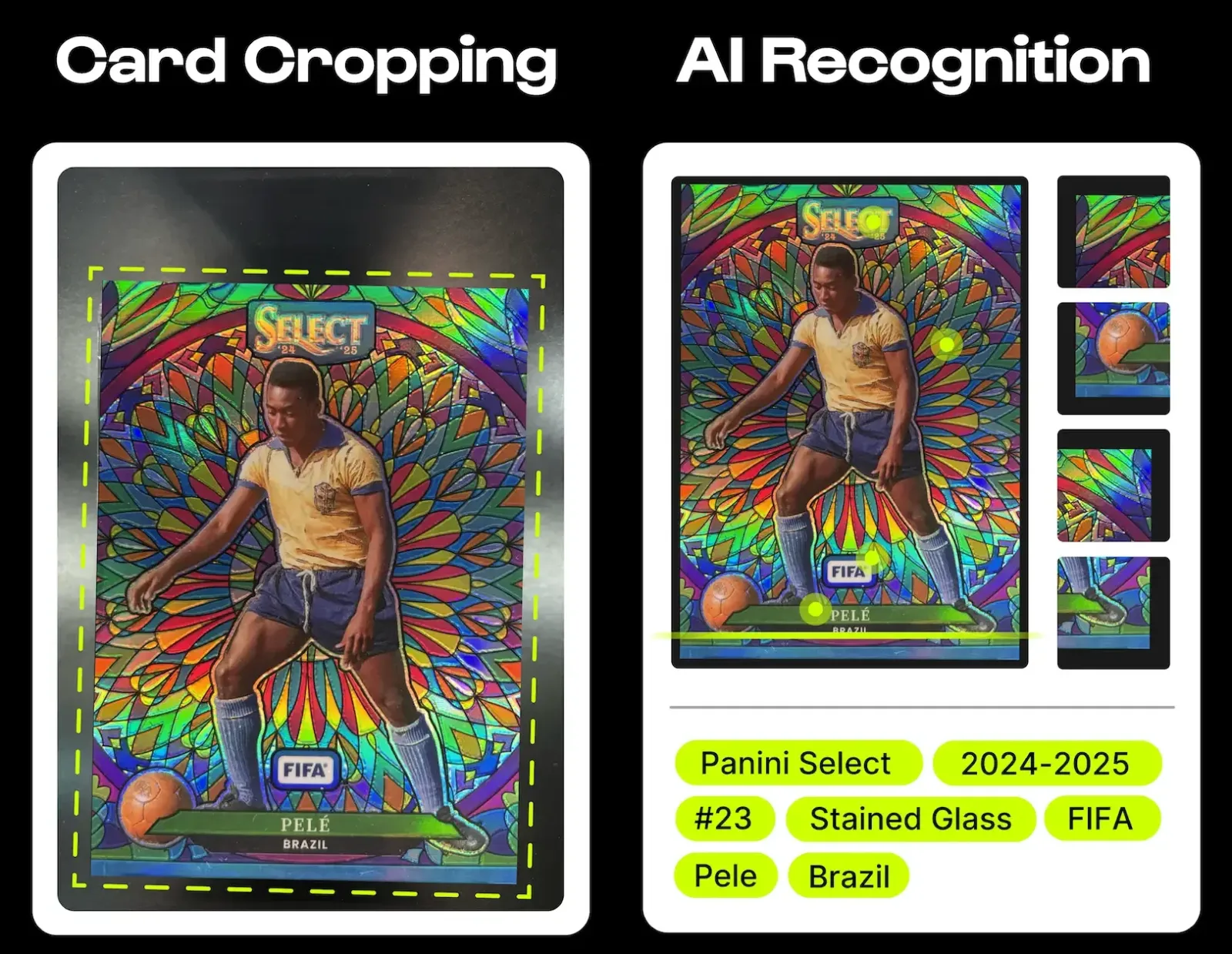
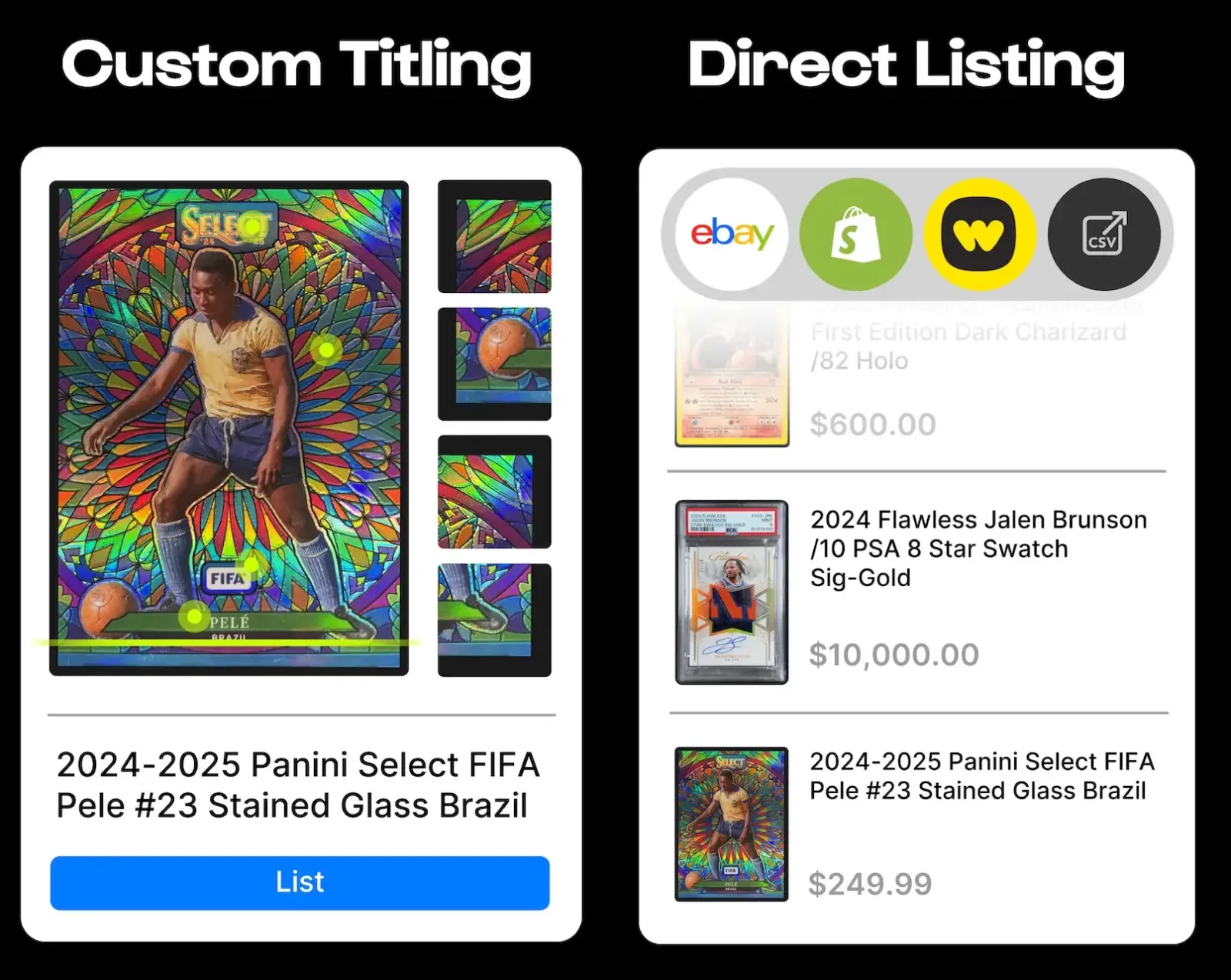
Once a card is captured, Heystack says the software automatically crops, rotates, and titles the image. From there, it is prepared for one-click listing on eBay or Shopify. For sellers who use other platforms, Heystack says downloadable CSV files are available for additional marketplaces.
That workflow is meant to reduce the manual work that often slows down card businesses. Instead of handling photos and listing data separately, the system is designed to keep the process connected from image capture through marketplace upload.
Card Identification and Matching Are Part of the Pitch
Another part of Heystack's appeal is its card identification software. For many sellers, identifying cards accurately and titling them correctly can be one of the most tedious parts of the job, especially when dealing with large quantities of inventory.
Blez, a business that uses the platform, said that card identification had been a major bottleneck before Heystack. According to Zach from Blez, the matching percentage has been especially helpful. He said the system has been a major part of the operation's growth and added that the business would not exist without Heystack.
That kind of feedback points to the broader role software can play in the card market. Imaging is only one part of the workflow, but when it is paired with identification and listing tools, it can affect how quickly inventory moves from raw cards to active listings.
Why Card Sellers Care About Better Imaging
Card photography has always been tied to sales performance. Buyers want to see surface quality, color, centering, and eye appeal before making a purchase. When glare or poor lighting gets in the way, the listing may not present the card as well as it should.
That is especially true for cards with strong visual effects. Refractors, sparkles, and other reflective finishes can look impressive in person but difficult to capture on camera. A system that helps preserve those details while minimizing unwanted reflection can make a meaningful difference in how a card is presented online.
Heystack's pitch is that it helps sellers solve that problem without adding extra steps. The company says the process can be reduced to a single tap, with the device and app handling the rest.
A Workflow Built for Volume
The larger message behind Heystack is that card businesses do not just need better photos. They need a faster workflow. Imaging, cropping, titling, and listing all take time, and the more cards a seller handles, the more those tasks can slow operations down.
By combining a dedicated imaging device with software features that support listing and identification, Heystack is aiming at the full chain of work that comes with selling cards online. The company’s examples from MC Sports Cards, Midwest Collects, and Blez suggest that the platform is being used by sellers who need efficiency as much as image quality.
For card businesses that spend hours fighting glare and cleaning up images, the promise is simple: spend less time on setup and editing, and more time moving inventory.

Join the Sports Card Portal Page thread for this story.
Comments
0You must be signed in to comment.
Sign In