

The 1970s changed baseball cards and the hobby around them
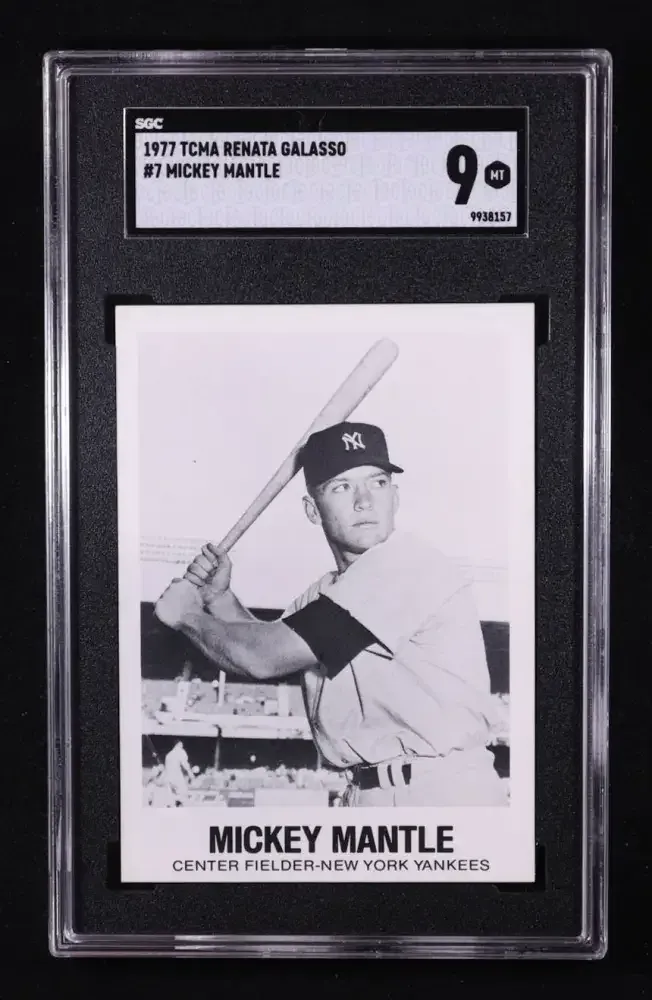
The 1970s opened with a notable absence from packs: Mickey Mantle. His final Topps card from his playing days appeared in 1969, ending a run that had made him one of the most familiar annual chases for collectors in the 1950s and 1960s. Even as Mantle disappeared from regular Topps issues, the hobby kept moving forward with a new wave of stars and a changing collecting culture.
That shift was not limited to the cards themselves. Small collector gatherings in 1969 helped set the stage for a larger public card convention in Detroit in 1970. Throughout the decade, card shows gave collectors more ways to meet, trade, and buy cards beyond their local markets. At the same time, Topps changed how it released its baseball sets. Through 1973, the company issued its annual set in separate series during the season, which made the late cards especially difficult to track down. In 1974, Topps released all 660 cards in its main set at once, ending a practice that had been in place since 1952.
The decade also helped cement the rookie card as a major hobby concept. As Hank Aaron’s pursuit of Babe Ruth’s home run record reached its peak in 1974, collectors increasingly chased first-year cards and early issues of the game’s biggest names. Bold colors, memorable photography, and future Hall of Famers gave 1970s cardboard a distinct identity that still resonates today.
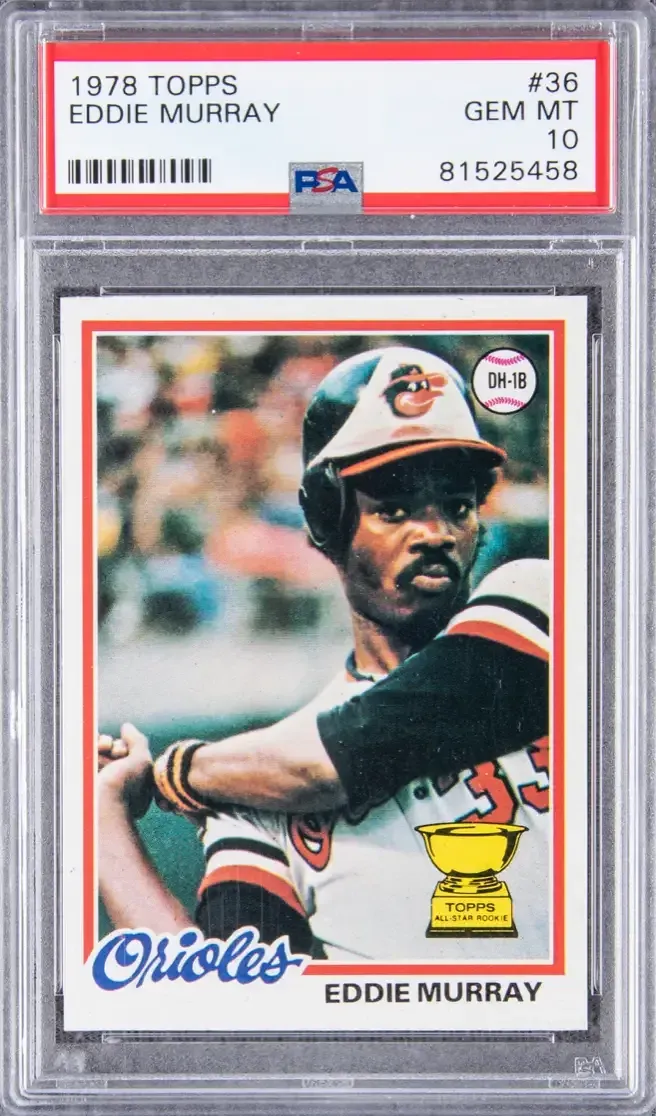
7. 1978 Topps Eddie Murray #36
Eddie Murray’s 1978 Topps rookie is one of the most recognizable first-year cards of the late 1970s, helped by the classic Topps All-Star Rookie trophy logo in the bottom right corner. Murray went on to become one of only seven players in the 500 home run and 3,000 hit club, joining Hank Aaron, Albert Pujols, Willie Mays, Miguel Cabrera, Alex Rodriguez, and Rafael Palmeiro.
The card has also drawn strong hobby attention at the top end of the market. Its all-time high sale was $59,040 for a PSA 10, sold through Goldin on March 8, 2021. Recent PSA 9 pricing was listed at $1,508, with PSA 8 at $225. The total PSA population stands at 17,309, including 18 PSA 10s.
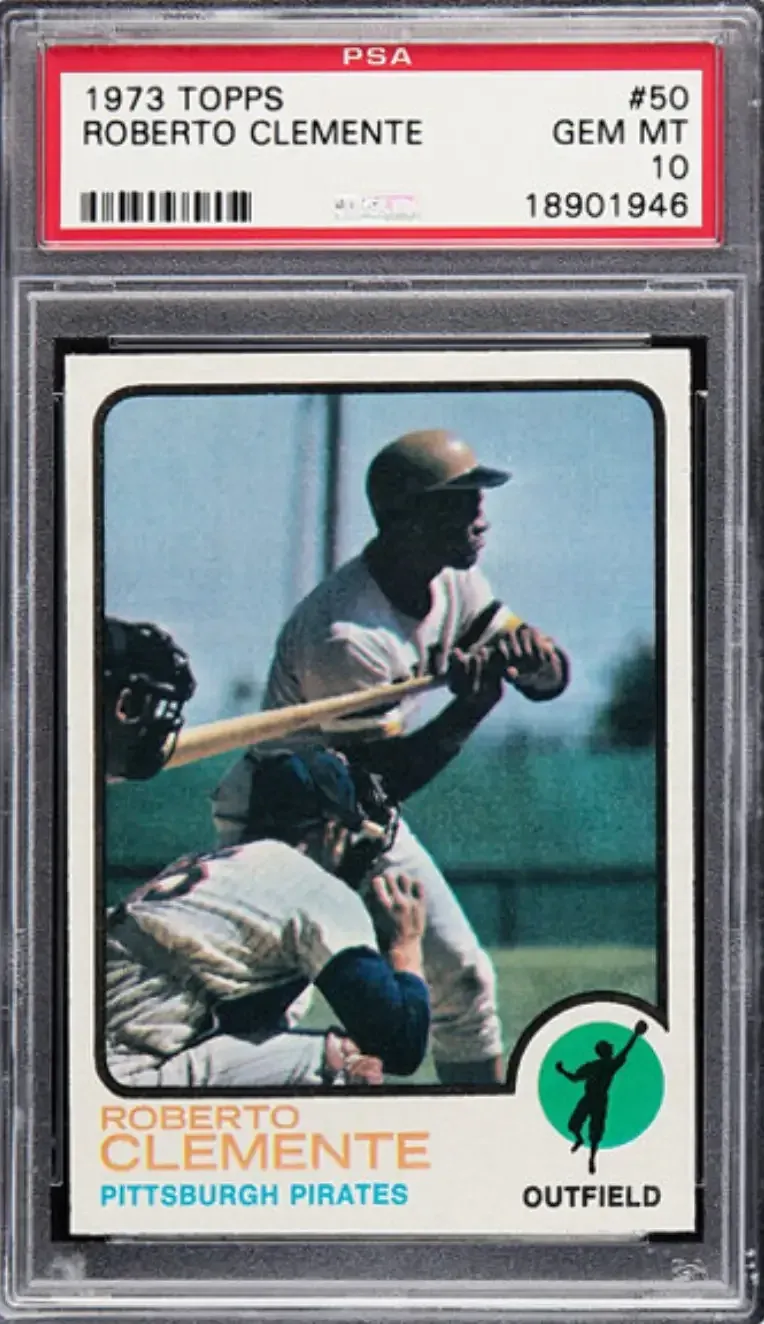
6. 1973 Topps Roberto Clemente #50
Roberto Clemente’s 1973 Topps card carries a powerful place in hobby history because of the timing surrounding its release. Clemente died in a plane crash on December 31, 1972, while delivering aid to victims of the Nicaraguan earthquake. The card had already been designed and scheduled for print before his death, and Topps released it as planned.
The image is often described as a sunset shot, and the result is a card that feels like a quiet artistic farewell to one of baseball’s most beloved figures. Clemente’s card reached an all-time high sale of $105,000 for a PSA 10 through Heritage Auctions on January 27, 2023. Recent PSA 9 pricing was $3,295, with PSA 8 at $340. The PSA population is 10,064, including 8 PSA 10s.
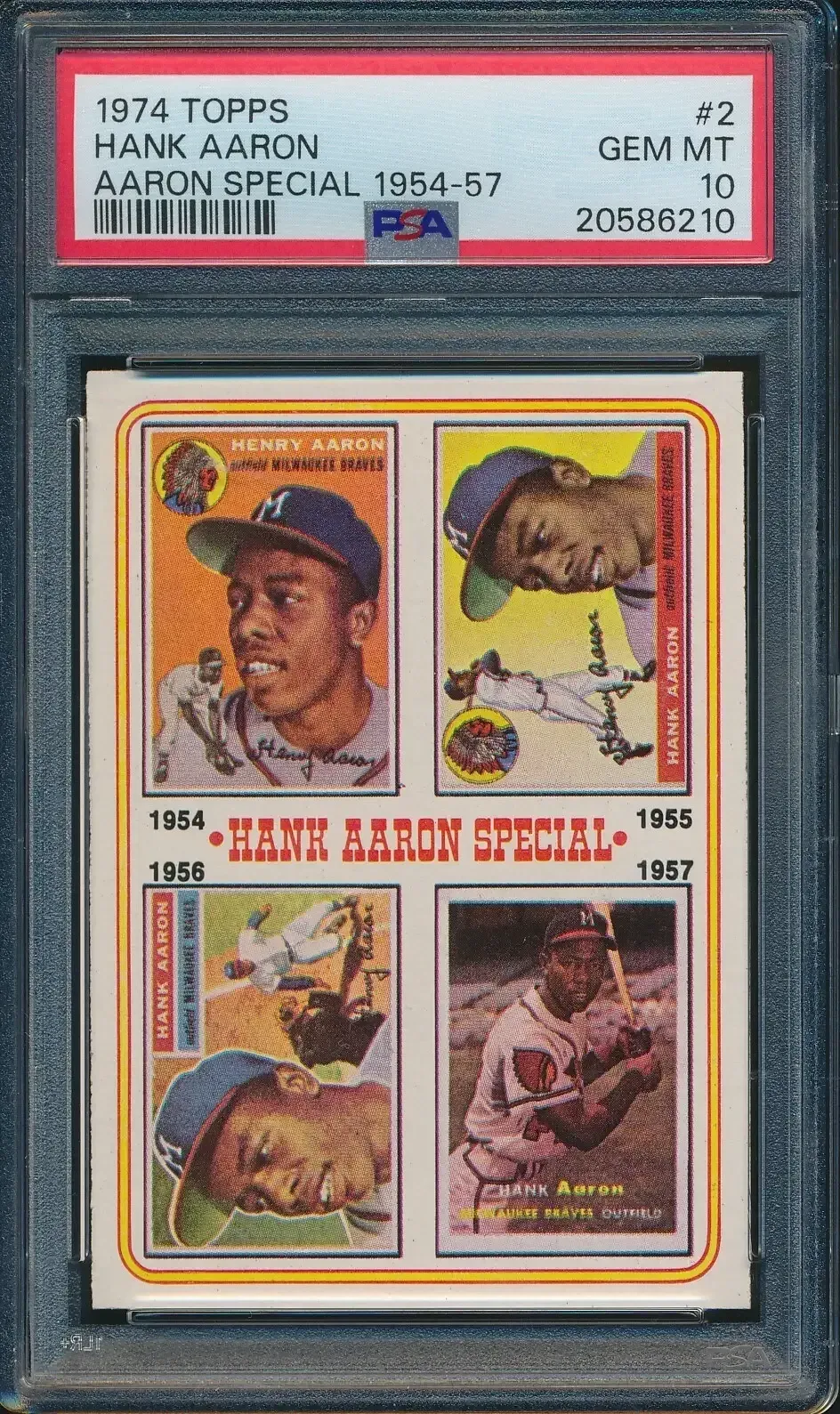
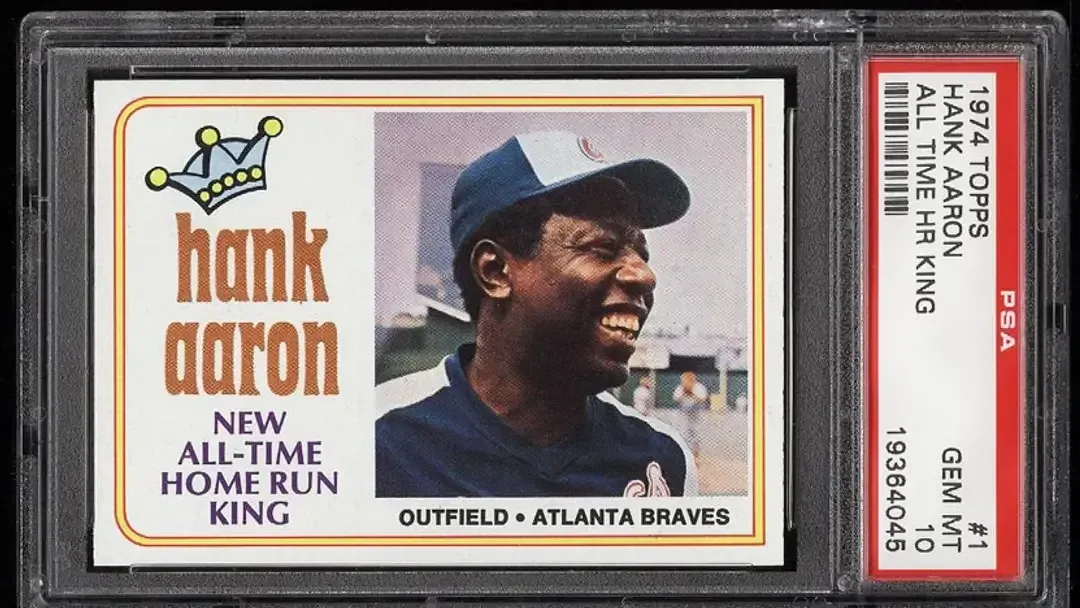
5. 1974 Topps Hank Aaron #1 New All-Time Home Run King
Hank Aaron’s 1974 Topps card is one of the most culturally significant baseball cards ever printed. Aaron’s chase of Babe Ruth’s home run record was the biggest baseball story of the decade, and the card reflects that moment in unmistakable fashion. When the 1974 Topps set was produced and released in January 1974, Aaron had 713 career home runs, one shy of tying Ruth’s 714. Even before the record was actually broken, Topps printed New All-Time Home Run King across the front of card #1.
Related coverage includes The 7 Most Iconic Baseball Cards of the 1970s and Why Collectors Still Chase Them.
The card also reflects the pressure Aaron endured during the chase, including racism, hate mail, and death threats. Its all-time high sale was $23,299 for a PSA 10, sold through PWCC on July 19, 2016. Recent PSA 9 pricing was $8,235, with PSA 8 at $510. The PSA population is 5,460, with one PSA 10.
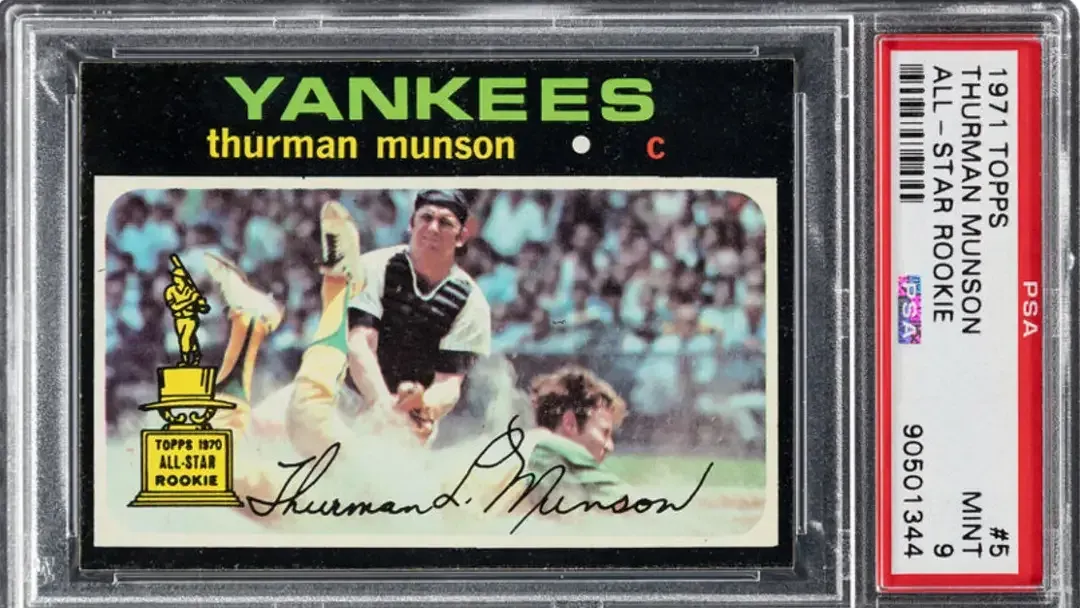
4. 1971 Topps Thurman Munson #5 All-Star Rookie
Thurman Munson’s 1971 Topps card stands out for its dramatic in-game photography. The image shows Munson mid-tag at home plate with dirt flying through the air, making it one of the earliest action shots to appear on a Topps base card. Although it is not Munson’s rookie card, it is his first solo card and celebrates his 1970 American League Rookie of the Year season.
The card is also notoriously difficult to find in high grade because of its black borders, which chip easily. That scarcity has helped drive strong demand. Munson’s card reached an all-time high sale of $199,999 for a PSA 9 through Heritage Auctions on May 13, 2022. Recent PSA 9 pricing was listed at $192,000, with PSA 8 at $7,200. The PSA population is 6,140, and there are no PSA 10s.
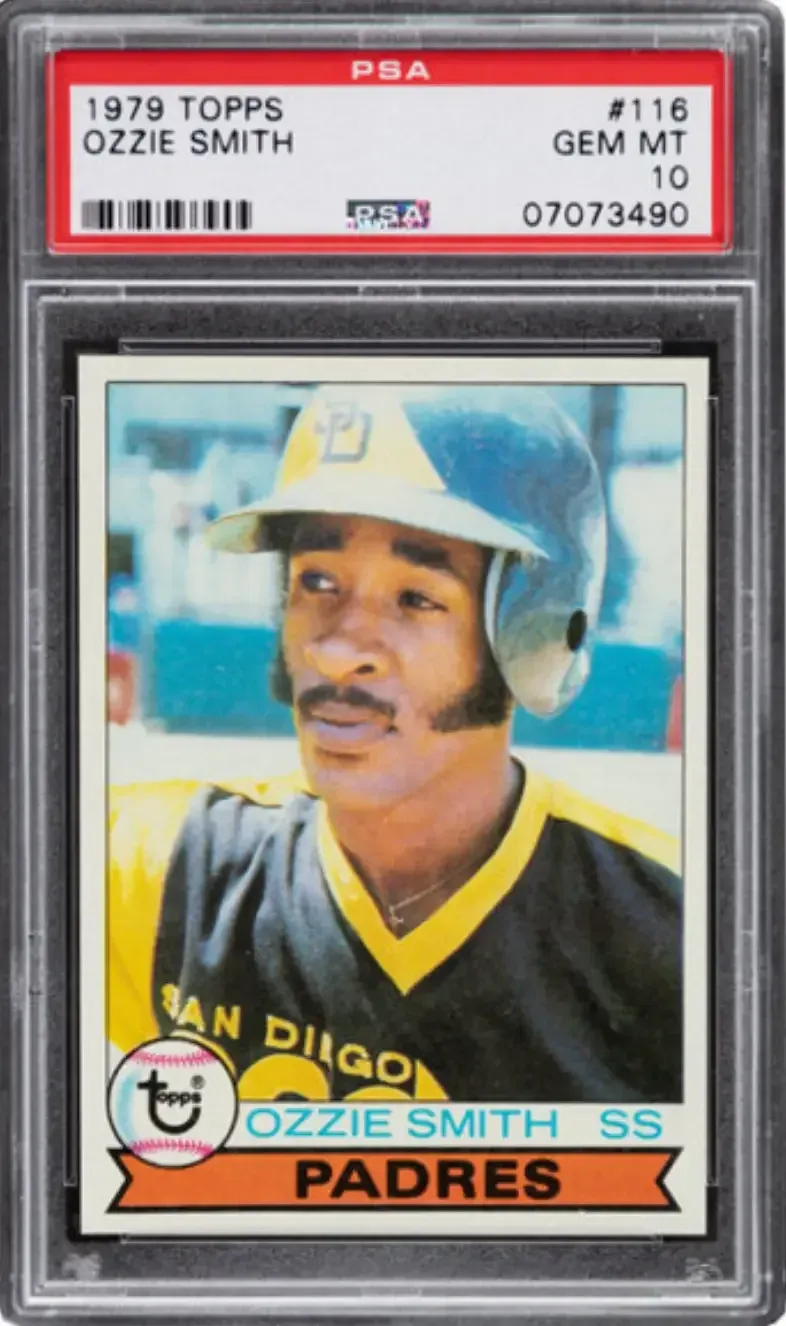
3. 1979 Topps Ozzie Smith #116
Ozzie Smith’s 1979 Topps rookie is one of the most recognizable cards of the decade, even though his reputation was built primarily on defense. Smith won 13 consecutive Gold Gloves and is widely regarded as baseball’s greatest defensive shortstop. His rookie card shows him with the Padres before he became a Cardinals legend and earned the nickname The Wizard.
Collectors have long gravitated to the card because of both Smith’s legacy and its place in the late 1970s Topps run. The card’s all-time high sale was $222,000 for a PSA 10 through Heritage Auctions on February 26, 2021. Recent PSA 9 pricing was $5,033, with PSA 8 at $441. The PSA population is 18,267, including 5 PSA 10s.
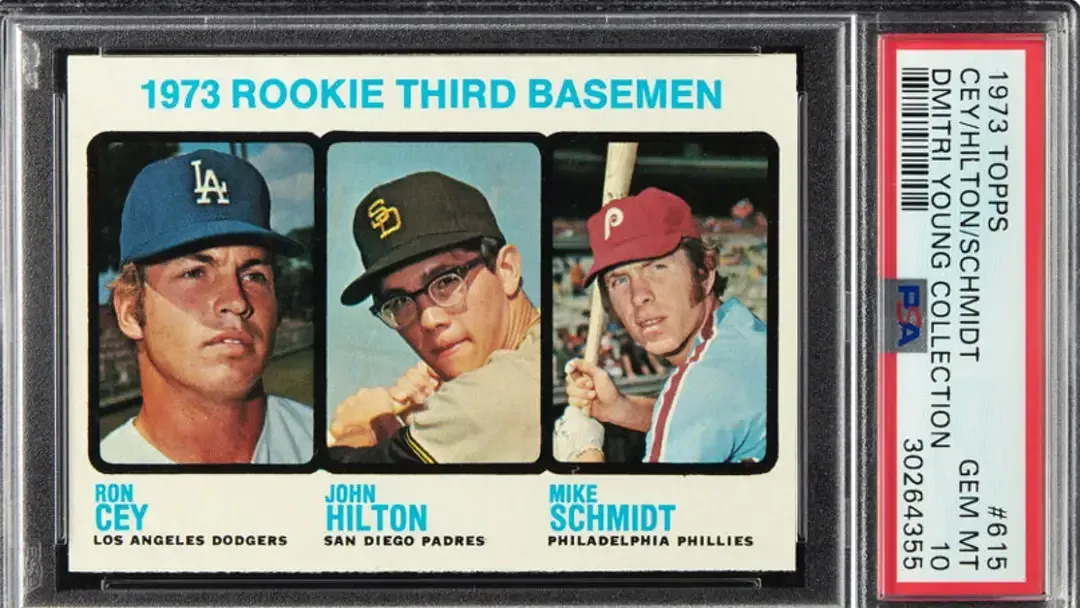
2. 1973 Topps Mike Schmidt Rookie Card Rookie Third Basemen #615
Mike Schmidt’s 1973 Topps rookie card is one of the most important rookie issues of the era. Schmidt is widely considered baseball’s greatest third baseman, with three MVP awards, 10 Gold Gloves, and 548 home runs. His rookie appeared in Topps’ final high series in 1973, just before the company switched to releasing its full annual set at once in 1974.
The card is a shared rookie featuring Schmidt alongside Ron Cey, who became a six-time All-Star and the 1981 World Series co-MVP with Padres infielder John Hilton. Schmidt’s card reached an all-time high sale of $353,800 for a PSA 10 through Heritage Auctions on December 19, 2025. Recent PSA 9 pricing was $13,700, with PSA 8 at $3,225. The PSA population is 13,302, including 5 PSA 10s.
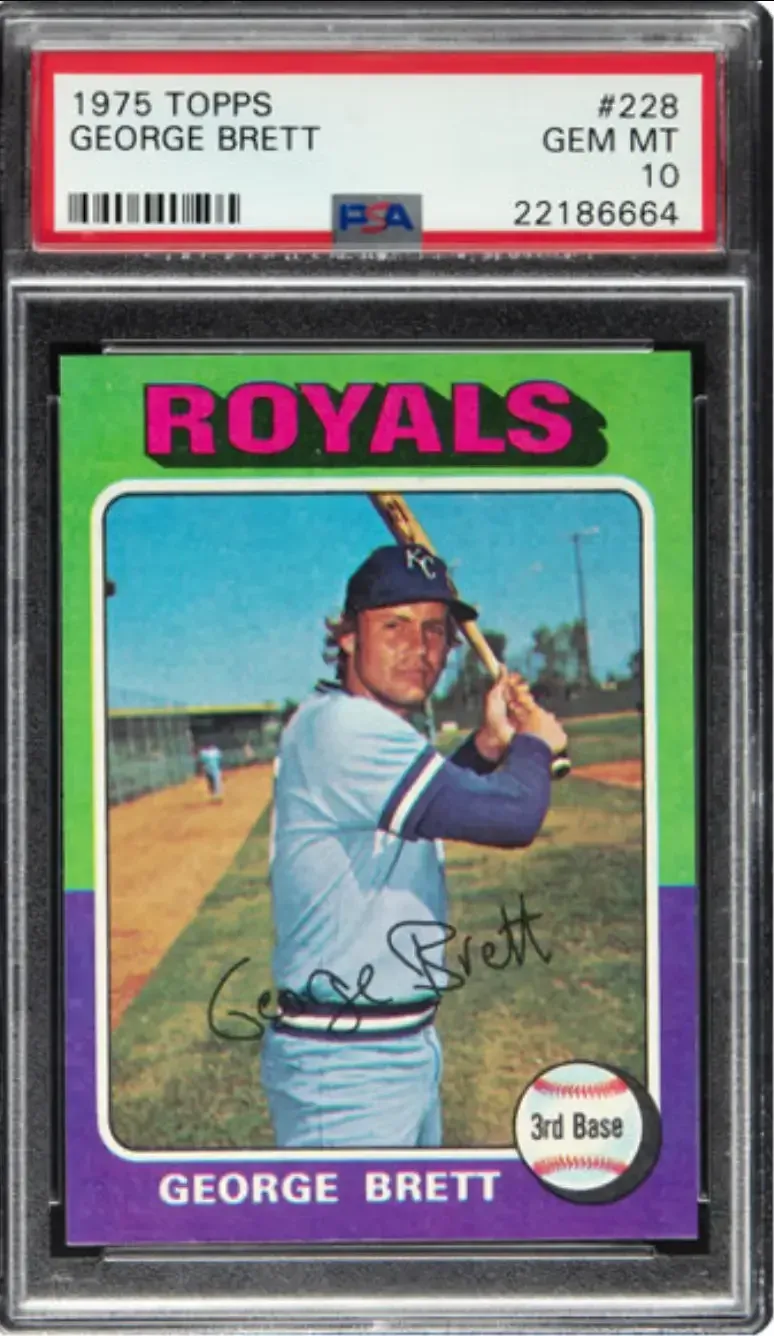
1. 1975 Topps George Brett Rookie Card #228
George Brett’s 1975 Topps rookie earns the top spot because of its unmistakable 1970s look. The green and purple borders make it one of the first cards many collectors picture when they think about the decade. While Mike Schmidt’s rookie has a stronger case as the scarcer and more expensive card, Brett’s issue is often viewed as the defining baseball card design of the 1970s.
Brett also has the kind of career that adds to the card’s appeal. He is one of only five players with a .300 career average, 3,000 hits, and 300 home runs, and his pursuit of .400 in 1980 remains one of baseball’s most memorable batting achievements. The card’s all-time high sale was $158,600 for a PSA 10 through Heritage Auctions on December 19, 2025. Recent PSA 9 pricing was $10,200, with PSA 8 at $1,010. The PSA population is 20,534, including 11 PSA 10s.
Honorable mentions from the decade
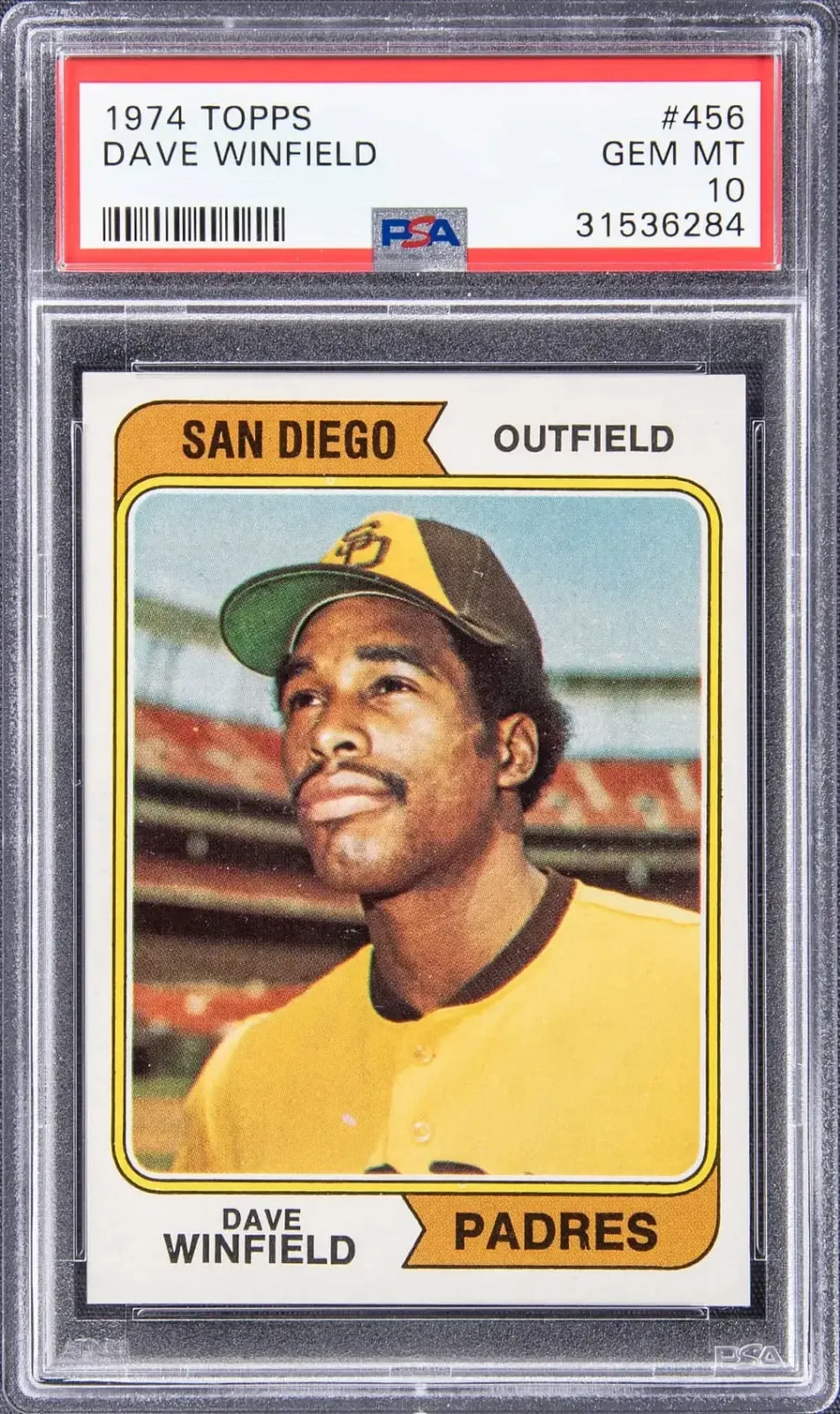
Several other 1970s cards also remain highly significant in the hobby, including the 1974 Topps Dave Winfield rookie, the 1975 Topps Robin Yount, the 1972 Topps Carlton Fisk, the 1978 Topps Paul Molitor and Alan Trammell rookie, and the 1971 Topps Nolan Ryan.
The 1974 Topps Dave Winfield rookie reached an all-time high sale of $106,750 for a PSA 10 through Heritage Auctions on February 28, 2026. These additional cards underscore how deep the decade was in both star power and hobby relevance, with rookie cards and iconic designs continuing to define the era for collectors.
Why 1970s baseball cards still matter
The 1970s were a turning point for baseball card collecting. The decade bridged the gap between the classic era of Mantle and the modern hobby shaped by card shows, rookie-card demand, and more recognizable set structures. It also produced cards that remain among the most sought after in the market because they combine historical significance with memorable designs and legendary players.
From Aaron’s record chase to Clemente’s poignant final Topps issue, from Munson’s action shot to Brett’s iconic border design, the decade produced cards that still define what collectors mean when they talk about 1970s baseball cardboard.
Join the Sports Card Portal Page thread for this story.
Comments
0You must be signed in to comment.
Sign In