

Jim Brown's 1958 Topps rookie leads this ranking of five vintage football cards, with a PSA 8.5 copy selling for $360,000. His second-year Topps card is next at $205,200, while releases from Philadelphia, Fleer and Topps round out the list. Ranked by the top reported sale for each card, the five span seven release years and offer several distinct looks at the Hall of Fame running back during his NFL career.
The prices below reflect individual transactions, not current estimates for every copy. Where a PSA population is listed, it refers to the number of copies reported in that specific grade, not the card's total graded population or original print run.
Jim Brown's Career Before and During His Football Card Run
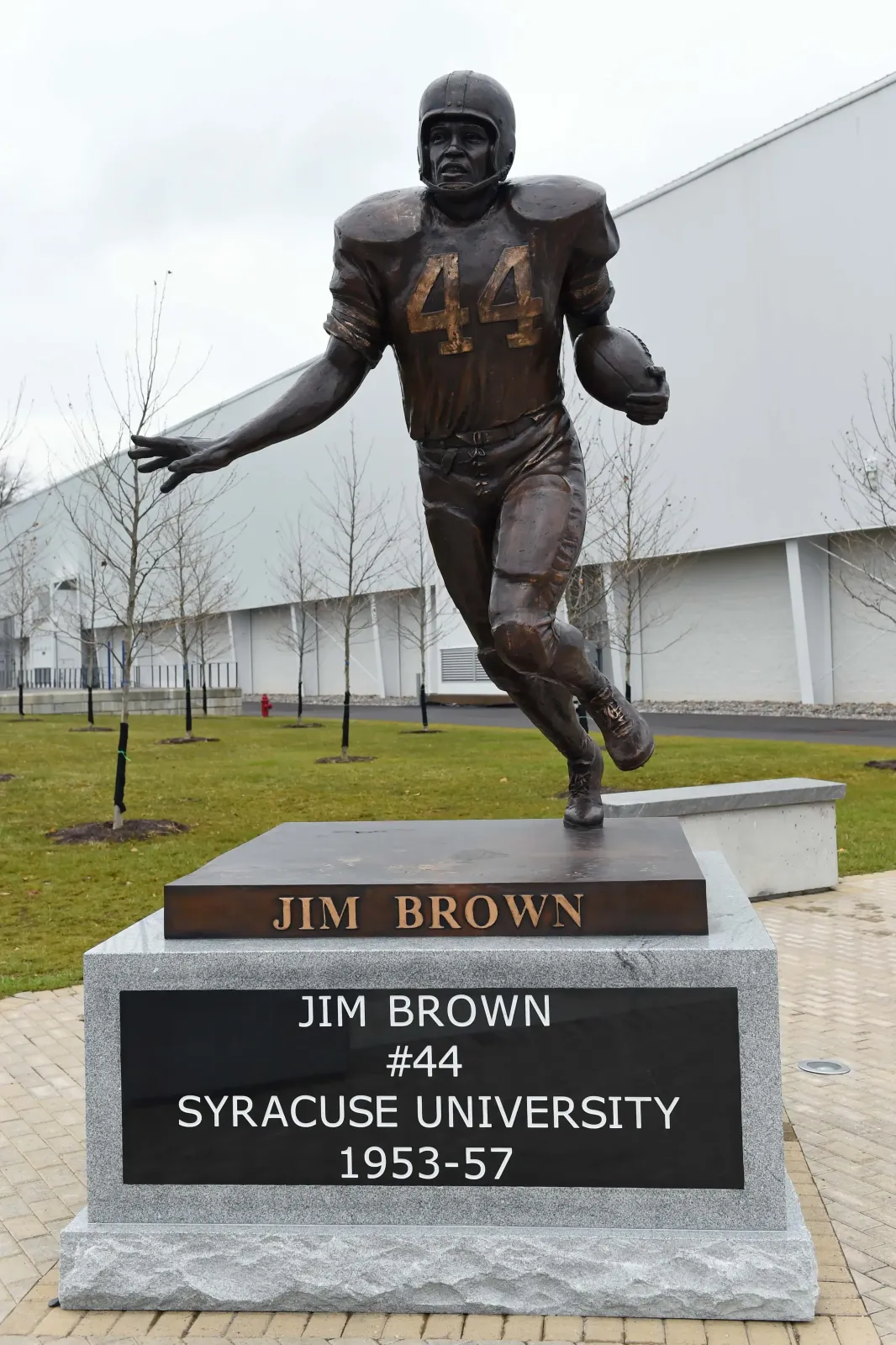
Brown was a dominant NFL running back from 1957 to 1965, but football was only one of the sports he played at Syracuse University. He also competed in lacrosse, track and basketball for the Orangemen. His reputation in lacrosse endures alongside his football legacy, and a bronze statue at Syracuse depicts him wearing his college No. 44.
On the cards, collectors will find both Jim and Jimmy Brown. The 1958, 1959 and 1962 Topps cards on this list use Jimmy, while the Fleer and Philadelphia entries are listed under Jim. The cards also show how differently manufacturers presented the same player, from a carefully framed portrait to a photograph with a parked car in the background.
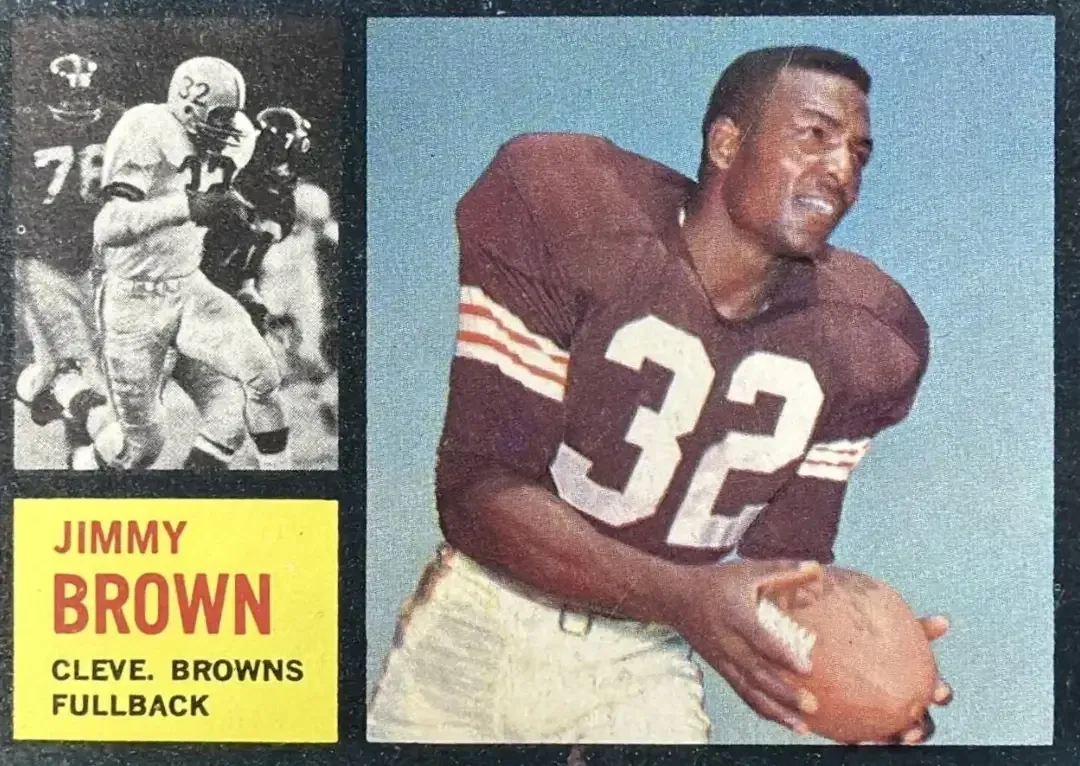
5. 1962 Topps Jimmy Brown #28
A PSA 8.5 copy of the 1962 Topps Jimmy Brown #28 sold for $33,193 through Memory Lane on September 9, 2023. The reported PSA population in that grade was three.
Topps used two photographs on the card. A posed color image offers a clear look at Brown, while a black-and-white photograph shows him running down the field. The change in both color and subject separates the images: one presents Brown for the camera, and the other shows him in motion.
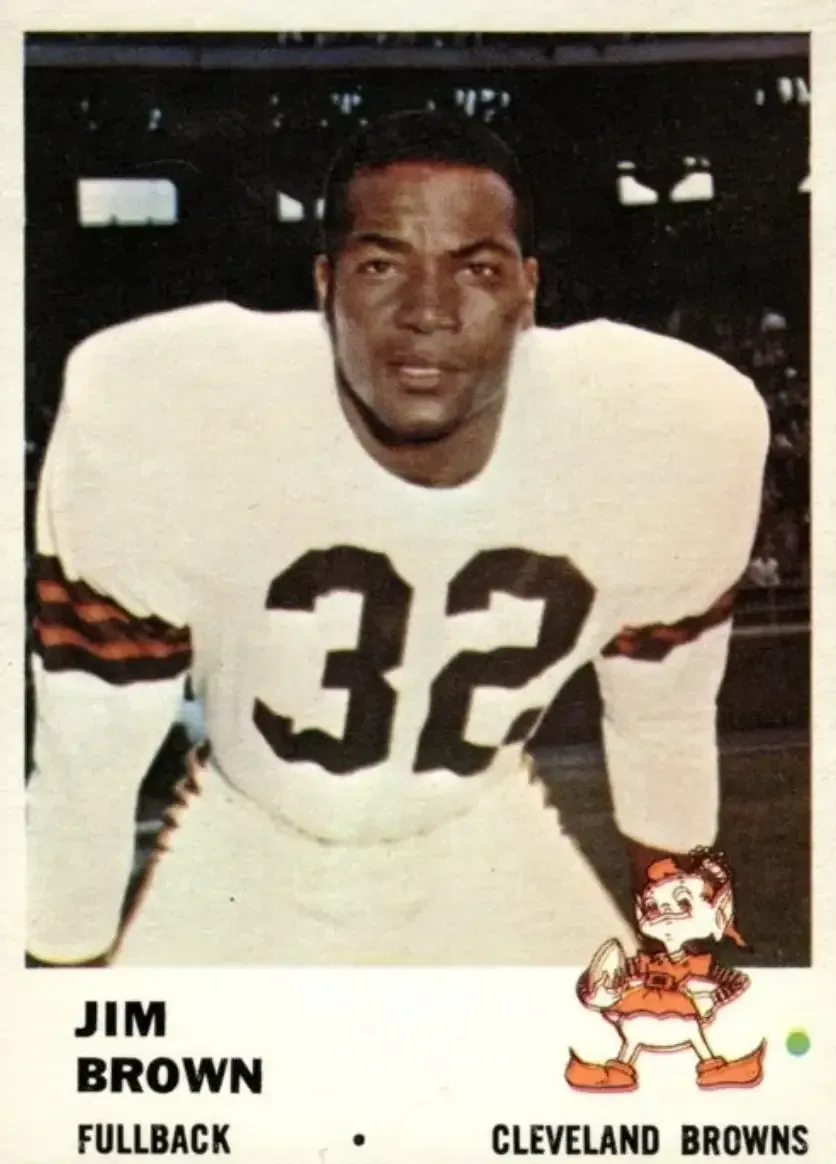
4. 1961 Fleer Jim Brown #11
The 1961 Fleer Jim Brown #11 sold for $54,259.20 through Mile High on September 12, 2024.
Related coverage includes Top 3 Most Valuable Jim Brown Football Cards.
Fleer took a more straightforward approach than Topps did on its 1962 card. Brown wears a white jersey with three-quarter-length sleeves, and his No. 32 is plainly visible. The uniform is the focus of the photograph, making this one of the simpler designs among the five cards ranked here.
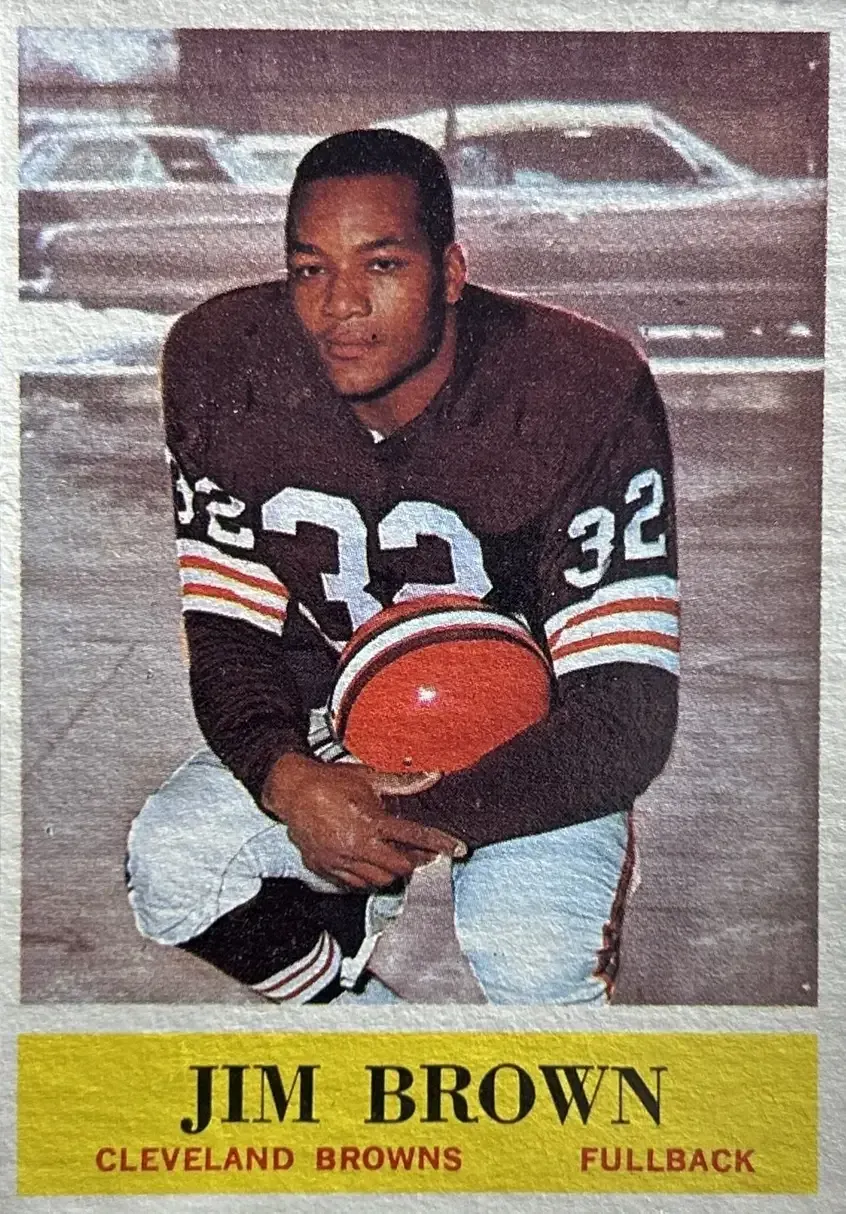
3. 1964 Philadelphia Jim Brown #30
The 1964 Philadelphia Jim Brown #30 sold for $117,585.60 through Mile High on April 14, 2024. It is the only card outside the Topps lineup to reach six figures in this ranking.
What sets the Philadelphia card apart is the setting. Brown is pictured against a backdrop that includes pavement, concrete, a chain-link fence and a large car. Those everyday details give the photograph a sense of place that the solid backgrounds and framed portraits of the Topps cards do not have. It's also the latest release among the five cards, arriving a year before Brown's final NFL season.
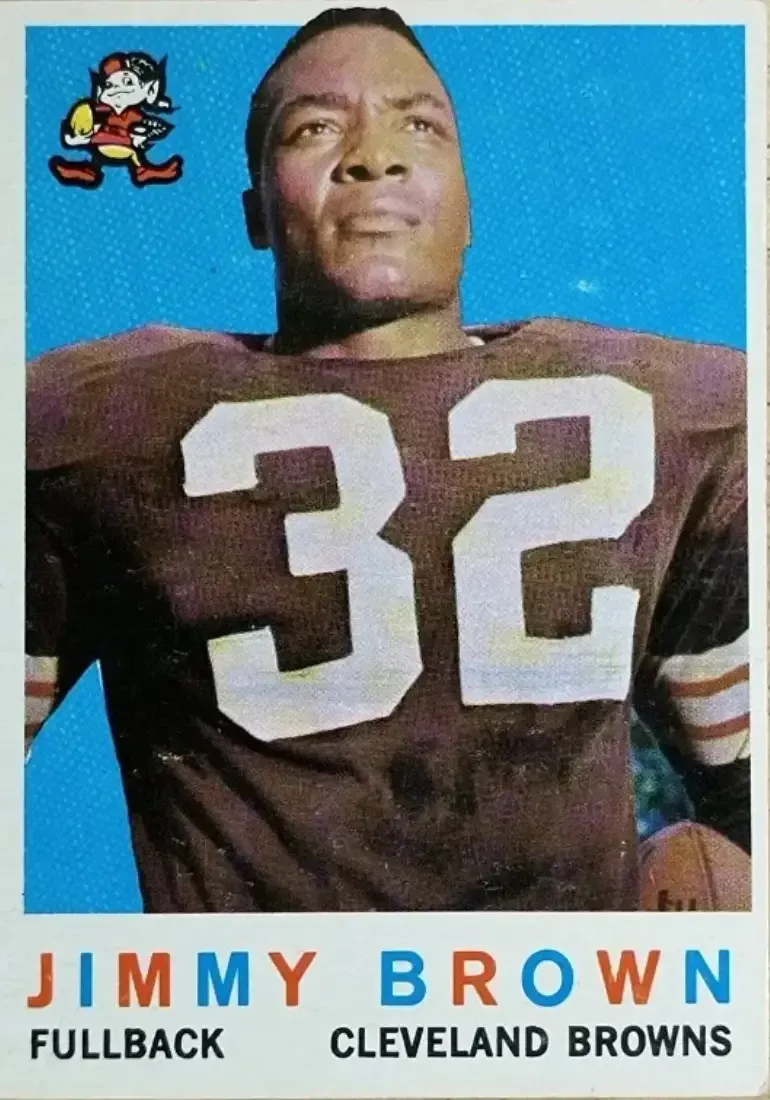
2. 1959 Topps Jimmy Brown #10
A PSA 10 copy of the 1959 Topps Jimmy Brown #10 sold for $205,200 through Goldin Auctions on March 8, 2021. The reported PSA population in that grade was three.
Brownie the Elf appears over Brown's right shoulder, adding a recognizable team detail to his second-year Topps card. Alternating text colors and a largely solid background give the design much of its character. A small space under Brown's left arm breaks up that field of color, a detail that's easy to miss on a first look.
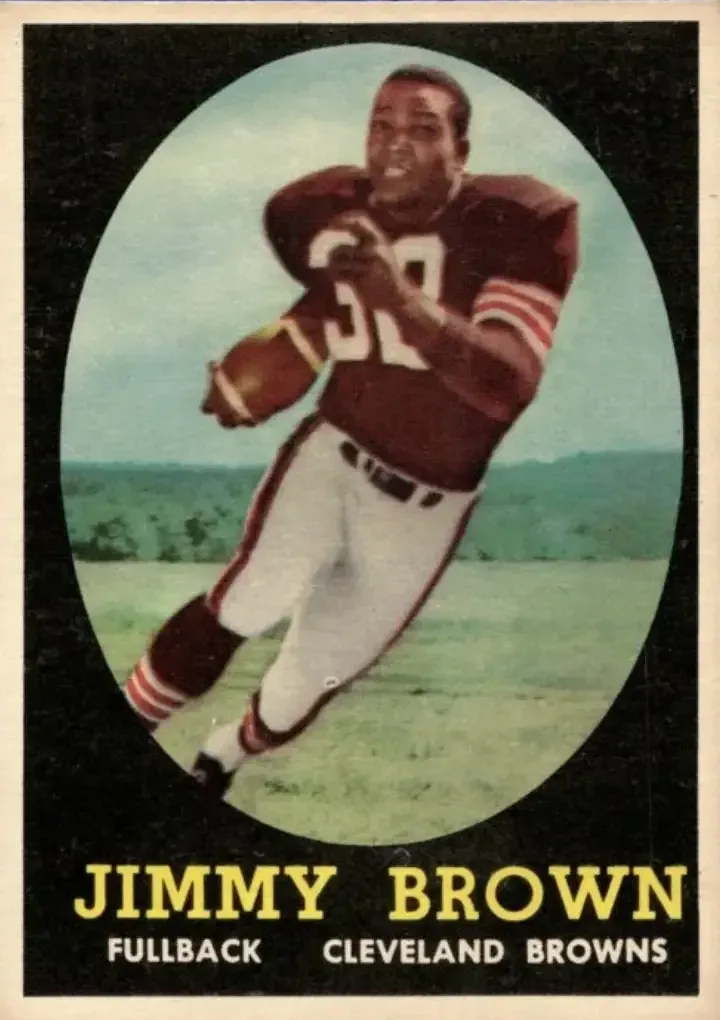
1. 1958 Topps Football Jimmy Brown #62 Rookie Card
A PSA 8.5 copy of the 1958 Topps Football Jimmy Brown #62 rookie card sold for $360,000 through eBay on February 11, 2022. The reported PSA population in that grade was seven.
Like the 1962 Topps card, the rookie pairs a portrait with a running image, but the layout and setting are different. The portrait sits inside an oval frame that gives it a matted appearance, while the action image shows Brown running across an open field with hills behind him.
The rookie's reported sale was $154,800 higher than the PSA 10 sale of Brown's 1959 Topps card, even though the rookie sold in a lower numerical grade. The two results came from different venues and dates, so that gap measures the difference between those specific transactions rather than a fixed premium for the rookie.


Join the Sports Card Portal Page thread for this story.
Comments
0You must be signed in to comment.
Sign In